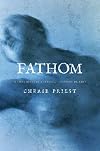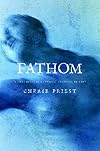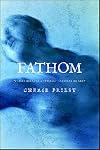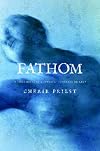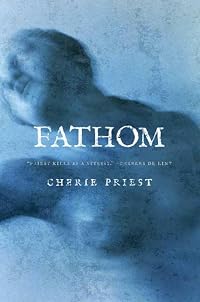
Fathom
by Cherie Priest
On This Page
Description
Before God created the earth as we know it, the planet was home to a race of monsters. In order to prepare for humans, He either banished or killed most of these native creatures; but those who remain in exile have not forgotten. One ancient tale encourages their vengeance, speaking of an angel with the power to wipe out a quarter of the world's population. Together, the old ones form a plot to catch this being and use him to reassert their reign. But not every prophecy is a show more promise.Scattered throughout the globe a handful of unwilling heroes are preparing to intervene. One of these sits frozen in stone, mistaken for a statue and abandoned in a courtyard for 80 years. Though Nia finds it difficult to believe, that strange prison was her rescue - a cocoon that transformed and protected her until her story could truly begin.Fathom is an unapologetic mix of horror and urban fantasy that will appeal to fans of both genres. The resulting book is a sexy biblical monster story that will hold the attention of readers who appreciate a good fairy tale with an unusual point of view. show lessTags
Recommendations






Member Recommendations

bmlg mortals caught in elemental wars
Member Reviews
For an unknown purpose, a sort of earth elemental convinces a man to build a tower in a specific place. In pursuit of a way to awaken her father (Levithan), a kind of water goddess takes a drowning girl and changes her into something new. The girl's cousin is turned into a statue and set in a garden near the shore for reasons which we don't find out until much later.
The book follows a number of different threads and it's not obvious until far into the story how they relate and who is good or bad.
Actually, it's never entirely clear, but if I were a human living in that world, I know who I would want to win.
It's rare to find a book where not having answers is as fascinating as having them would be. But in this book, in which very little show more has concrete explanations and most of the characters aren't human (even if they once were), the story is more important than the explanations, and I loved it. show less
The book follows a number of different threads and it's not obvious until far into the story how they relate and who is good or bad.
Actually, it's never entirely clear, but if I were a human living in that world, I know who I would want to win.
It's rare to find a book where not having answers is as fascinating as having them would be. But in this book, in which very little show more has concrete explanations and most of the characters aren't human (even if they once were), the story is more important than the explanations, and I loved it. show less
Fathom is an entertaining horror novel once it gets going. The problem is that Cherie Priest spends the first 100 pages of her novel setting a scene, complete with pages upon pages of infodumps. One character will tell another character a story about a third character, for instance, or a character will have a prolonged recollection of a scene from his past. In addition, the time in which the novel is set does not become apparent until the last few chapters of the novel. A reader could easily conclude that the novel is set in the present day until the last 50 pages or so, when suddenly that appears not to be so, and all that has gone before must be reassessed. The Cherie Priest of Fathom does not seem to be the assured writer who turned show more out the superior Four and Twenty Blackbirds.
Priest starts her story (after a short initial chapter that has no meaning until much later in the book; really a prologue) with two strongly contrasting characters, Nia and Bernice. We learn quickly that the latter young woman is a spoiled rich kid with pronounced overtones of extreme violence, while the latter is a poor kid up from the farm who finds herself in over her head, both literally and figuratively, very quickly. It isn’t long before Bernice is in the arms of Arahab, a water witch, and Nia is turned into stone, a decorative figure in the garden of the home that was to have been her residence for a summer’s visit.
Arahab has plans for which she needs Bernice and Jose Gaspar, a sea pirate from eighteenth-century Spain. She wants to waken the long-sleeping Leviathan, which she hopes will destroy the modern human world and bring the old gods back to their prominence. Bernice and Gaspar are set lose in the world in order for Bernice to savor her new-found immortality and the free reign she has been given to inflict as much damage on humans as she likes. That is not their only purpose on land, however, for they have a task to accomplish to aid Arahab in her quest. This requires a trip to see Mr. Poppo, a metalworker with pronounced similarities to the god Vulcan, in Ybor City, Florida.
Another elemental has plans for Nia; she will not spend the rest of her life as sentient stone. For a time she is an object of worship to those who apparently think that she is a representation of Arahab – and who think, as well, that Arahab is interested in their worship. With the help of Sam, an insurance fire investigator, the nameless elemental “hatches” Nia to a new life in order that she might stop Arahab.
Once all the characters are gathered in Ybor City, this novel really begins to cook. Suddenly the status exposition and conversation with random bursts of action becomes all action, and dramatic, high-tension action at that. This is the point at which the underpinnings of the novel start to make sense, and a devoted reader will now find it hard to set this novel aside without finishing it.
One gets the impression that Fathom could have benefited from a final rewrite. Priest has what it takes to write original, exciting horror, as the last half of this novel demonstrates. Moving the characters into place, though, poses a difficulty for Priest here. It will be interesting to read her next book to see whether she can pull together her considerable skills for a truly consistent, frightening story. show less
Priest starts her story (after a short initial chapter that has no meaning until much later in the book; really a prologue) with two strongly contrasting characters, Nia and Bernice. We learn quickly that the latter young woman is a spoiled rich kid with pronounced overtones of extreme violence, while the latter is a poor kid up from the farm who finds herself in over her head, both literally and figuratively, very quickly. It isn’t long before Bernice is in the arms of Arahab, a water witch, and Nia is turned into stone, a decorative figure in the garden of the home that was to have been her residence for a summer’s visit.
Arahab has plans for which she needs Bernice and Jose Gaspar, a sea pirate from eighteenth-century Spain. She wants to waken the long-sleeping Leviathan, which she hopes will destroy the modern human world and bring the old gods back to their prominence. Bernice and Gaspar are set lose in the world in order for Bernice to savor her new-found immortality and the free reign she has been given to inflict as much damage on humans as she likes. That is not their only purpose on land, however, for they have a task to accomplish to aid Arahab in her quest. This requires a trip to see Mr. Poppo, a metalworker with pronounced similarities to the god Vulcan, in Ybor City, Florida.
Another elemental has plans for Nia; she will not spend the rest of her life as sentient stone. For a time she is an object of worship to those who apparently think that she is a representation of Arahab – and who think, as well, that Arahab is interested in their worship. With the help of Sam, an insurance fire investigator, the nameless elemental “hatches” Nia to a new life in order that she might stop Arahab.
Once all the characters are gathered in Ybor City, this novel really begins to cook. Suddenly the status exposition and conversation with random bursts of action becomes all action, and dramatic, high-tension action at that. This is the point at which the underpinnings of the novel start to make sense, and a devoted reader will now find it hard to set this novel aside without finishing it.
One gets the impression that Fathom could have benefited from a final rewrite. Priest has what it takes to write original, exciting horror, as the last half of this novel demonstrates. Moving the characters into place, though, poses a difficulty for Priest here. It will be interesting to read her next book to see whether she can pull together her considerable skills for a truly consistent, frightening story. show less
Water witches are ambitious folk, always climbing that corporate witch ladder, not above dirty little tricks to get a rung up. Like putting two tons of water witch keister in the face of an earth witch reaching for the same rung, or repeatedly stomping on the knuckles of a fire elemental; only briefly satisfied when they’ve finally been promoted to President of Evil Doings. The Head Honcho of Hell on Earth, the big fish in an evil ocean.
And once minted in their new corporate top-dog position, with their high-tech ergonomic faux leather chair, and eager minions who salivate way too much—that’s when they go for the big Evil, the one that shakes things up. The kind of Evil that ruins the world for the rest of us, the little people. show more
And they cackle, maliciously, while doing it, like a scheming investment banker huddling over spreadsheets.
Stepping into the Chief Evil Doer role in Cherie Priest’s excellent novel “Fathom” is Arahab, water witch and bane of humanity. See Arahab has a plan, an ambitious plan, one that humanity isn’t going to like very much. Since it means their complete and utter destruction.
But she needs help pulling it off; someone to do the legwork for her. Someone who can actually walk across the land, and isn’t confined to bodies of water. Can’t get much evil accomplished if you’re stuck in a swimming pool. So she needs minions. Evil minions. Quicker than you can say winged monkeys, an opportunity arises. Two girls, cousins, running along the beach, crash into the surf. Into her world. One cousin Arahab will choose, one she’ll leave behind. To be unexpectedly chosen by another.
Cherie Priest’s “Those Who Went Remain There Still” was an incredible surprise, a three-ton jack-in-the-box of a novel, and an introduction to a new and unique voice in the genre. A voice so impressive it immediately plunged me into a mini-Cherie Priest bender. A lost weekend of fantasy/horror debauchery spent splashing around in delicious southern-flavored monster stories, consuming “Fathom” as if it came packaged in dime bags. This is the good stuff.
Priest’s novels are familiar, but unique. How? Imagine Greek mythology—the terrible monsters roaming the land; the larger-than-life gods, always bickering, always meddling, trying to get a leg up on their rival deity, using ignorant humans to accomplish their ends. Now beer-batter that Greek mythology up, coat it real good, maybe give it a dash of Gothic seasoning, and throw it in some sizzling grease. And fry it up—Kentucky style. That’s Deep South mythology. That’s “Fathom.” That’s Cherie Priest. She’s Neil Gaiman—if Neil Gaiman wrote about hillbillies, and the monsters that burp them up.
“Fathom” feels short, almost a tease, to the point where the characters still have an air of mystery afterwards. They still have hidden layers to reveal, their exposure far from complete, a few clothing articles short of a Full Monty. It’s like a charming dinner party conversation, brief but utterly engaging, almost addictively so. A tantalizing slice of life of the most interesting person you can imagine. You desire to know more, to see more, and to go beyond the introductory chit-chat. To hear other stories. Please—you beg—more. The end bringing only one question: then what happens?
Last Word:
Cherie Priest has quickly become one of my favorite writers for her ability to deliver unique and engaging stories; stories that embody a Southern-flavored mythos, about country bumpkins and the things that bump them back. It’s one half Greek mythology, one half Southern Comfort; the resulting concoction percolated out of some backwater still. It’s both exciting, and scary. Like moonshine from Hell. Because one taste can change you forever. “Fathom” exemplifies this, proudly; chin high up in the air. Taste it. It’s worth it. show less
And once minted in their new corporate top-dog position, with their high-tech ergonomic faux leather chair, and eager minions who salivate way too much—that’s when they go for the big Evil, the one that shakes things up. The kind of Evil that ruins the world for the rest of us, the little people. show more
And they cackle, maliciously, while doing it, like a scheming investment banker huddling over spreadsheets.
Stepping into the Chief Evil Doer role in Cherie Priest’s excellent novel “Fathom” is Arahab, water witch and bane of humanity. See Arahab has a plan, an ambitious plan, one that humanity isn’t going to like very much. Since it means their complete and utter destruction.
But she needs help pulling it off; someone to do the legwork for her. Someone who can actually walk across the land, and isn’t confined to bodies of water. Can’t get much evil accomplished if you’re stuck in a swimming pool. So she needs minions. Evil minions. Quicker than you can say winged monkeys, an opportunity arises. Two girls, cousins, running along the beach, crash into the surf. Into her world. One cousin Arahab will choose, one she’ll leave behind. To be unexpectedly chosen by another.
Cherie Priest’s “Those Who Went Remain There Still” was an incredible surprise, a three-ton jack-in-the-box of a novel, and an introduction to a new and unique voice in the genre. A voice so impressive it immediately plunged me into a mini-Cherie Priest bender. A lost weekend of fantasy/horror debauchery spent splashing around in delicious southern-flavored monster stories, consuming “Fathom” as if it came packaged in dime bags. This is the good stuff.
Priest’s novels are familiar, but unique. How? Imagine Greek mythology—the terrible monsters roaming the land; the larger-than-life gods, always bickering, always meddling, trying to get a leg up on their rival deity, using ignorant humans to accomplish their ends. Now beer-batter that Greek mythology up, coat it real good, maybe give it a dash of Gothic seasoning, and throw it in some sizzling grease. And fry it up—Kentucky style. That’s Deep South mythology. That’s “Fathom.” That’s Cherie Priest. She’s Neil Gaiman—if Neil Gaiman wrote about hillbillies, and the monsters that burp them up.
“Fathom” feels short, almost a tease, to the point where the characters still have an air of mystery afterwards. They still have hidden layers to reveal, their exposure far from complete, a few clothing articles short of a Full Monty. It’s like a charming dinner party conversation, brief but utterly engaging, almost addictively so. A tantalizing slice of life of the most interesting person you can imagine. You desire to know more, to see more, and to go beyond the introductory chit-chat. To hear other stories. Please—you beg—more. The end bringing only one question: then what happens?
Last Word:
Cherie Priest has quickly become one of my favorite writers for her ability to deliver unique and engaging stories; stories that embody a Southern-flavored mythos, about country bumpkins and the things that bump them back. It’s one half Greek mythology, one half Southern Comfort; the resulting concoction percolated out of some backwater still. It’s both exciting, and scary. Like moonshine from Hell. Because one taste can change you forever. “Fathom” exemplifies this, proudly; chin high up in the air. Taste it. It’s worth it. show less
I picked up this book because I really enjoyed Priest's Eden Moore series. That also meant I hadn't read anything about it -- including reviews or the inside cover summary. So, it was much to my surprise when I realized this book wasn't the horror story/ghost story that I had expected. Instead, it was something rather different and quite awesome. Priest tells us one story from multiple points of view. While in other books this might be tedious, it was not for Fathom. Instead, we learn to love the different characters, even when they do things we don't understand/agree with. I think this was what made the story so good. Instead of just focusing on a third person omniscient narrator or a single, first person point of view, we got show more variations on both of those. What Priest created was a stunning story set in a world not unlike our own, while at the same time, altogether different. She draws on unknown (including, though not necessarily central to the plot, ghosts) as main characters who are in a battle to save the human race. Priest does not shy away from heartache, violence and death, and that is one of the things that makes this book so good. show less
I read this book in one sitting, too engrossed to remember the tea I'd left steeping or that (for the first thirty minutes) I should probably sit down. I've read Four and Twenty Blackbirds, also by Cherie Priest, and it was good, but it was nowhere near as good as this.
This book makes me want to geek out in so many ways. It's a story that clearly references myths and mythical characters, but itself follows many of the elements of myths; the cyclic nature, the importance of kin, the notion of family (both inclusion into and exile from), and duty, and rebirth, and transformation. At the same time, though, it's a rather grim tale of saving the world, and not the kind of saving the world where the hero is armed with magical swords and is show more foretold by prophecy.
Mrs. Priest, I'll be buying more. You've impressed me.
As an aside, someone on Amazon commented that this work is much like Tim Powers's books, which is so very much true; this is like an inverted version of Last Call. show less
This book makes me want to geek out in so many ways. It's a story that clearly references myths and mythical characters, but itself follows many of the elements of myths; the cyclic nature, the importance of kin, the notion of family (both inclusion into and exile from), and duty, and rebirth, and transformation. At the same time, though, it's a rather grim tale of saving the world, and not the kind of saving the world where the hero is armed with magical swords and is show more foretold by prophecy.
Mrs. Priest, I'll be buying more. You've impressed me.
As an aside, someone on Amazon commented that this work is much like Tim Powers's books, which is so very much true; this is like an inverted version of Last Call. show less
This is an odd little book, in a mostly good way. Typical of Priest, the cosmology is heavy on the folkloric feel and the setting is pure South (albeit the Florida kind of South, which is not quite the same and was interesting.) None of the characters are entirely likeable but they're all intriguing, and while I would have liked a broader scope (or maybe a narrower one - Fathom isn't quite a pure character piece, nor is it really an epic adventure) the action works well enough for me.
Short version: not the best of Priest's generally excellent work, but a good read nonetheless.
Short version: not the best of Priest's generally excellent work, but a good read nonetheless.
A tale of elemental magic.
A young woman goes to visit a troubled cousin that she barely knows - and nearly immediately, both the women are thrown into the ancient plots and machinations of an ancient water witch and her earth-magic-wielding rival.
The fate of the planet may be at stake - but which of these beings that seek to use humans as pawns should we really be rooting for?
The book does an excellent job of portraying powerful, inhuman forces of nature personified. There's a nicely eerie, weird feel to it, and strange, lovely imagery.
However, I did feel it would have worked even better if the 'human' elements of the story had felt more grounded. There's a strange, floating timelessness to them, as well as some extreme events show more introduced very abruptly and never fully explained, that make the non-supernatural elements here feel almost as incomprehensibly alien as the magical ones. It's interesting, but I'm not sure it fully worked for me. show less
A young woman goes to visit a troubled cousin that she barely knows - and nearly immediately, both the women are thrown into the ancient plots and machinations of an ancient water witch and her earth-magic-wielding rival.
The fate of the planet may be at stake - but which of these beings that seek to use humans as pawns should we really be rooting for?
The book does an excellent job of portraying powerful, inhuman forces of nature personified. There's a nicely eerie, weird feel to it, and strange, lovely imagery.
However, I did feel it would have worked even better if the 'human' elements of the story had felt more grounded. There's a strange, floating timelessness to them, as well as some extreme events show more introduced very abruptly and never fully explained, that make the non-supernatural elements here feel almost as incomprehensibly alien as the magical ones. It's interesting, but I'm not sure it fully worked for me. show less
Members
- Recently Added By
Author Information

48+ Works 14,815 Members
Cherie Priest was born in Tampa, Florida on July 30, 1975. She received a B.A. from Southern Adventist University in Collegedale, Tennessee in 1998 and an M.A. in rhetoric/professional writing from University of Tennessee at Chattanooga in 2002. She is the author of the Eden Moore series, The Clockwork Century series, and Borden Dispatches series. show more She won the PNBA Award and the Locus Award for Best Science Fiction Novel for Boneshaker. (Bowker Author Biography) show less
Some Editions
Common Knowledge
- Original publication date
- 2008-12-09
- Dedication
- To the Sunshine State, and my relatives who originated there.
(Yes, that's pretty much all of them.) - First words
- It's as if you've asked me to build an ark.
- Last words
- (Click to show. Warning: May contain spoilers.)"So it's just me and you, then, huh?"
Classifications
Statistics
- Members
- 263
- Popularity
- 122,643
- Reviews
- 19
- Rating
- (3.47)
- Languages
- English
- Media
- Paper, Ebook
- ISBNs
- 3
- ASINs
- 4