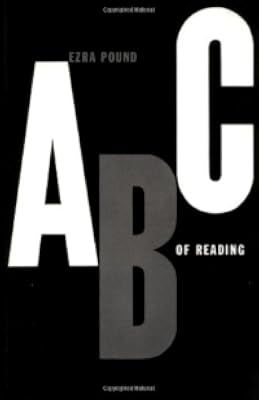
ABC of Reading
by Ezra Pound 
On This Page
Description
This important work, first published in 1934, is a concise statement of Pound's aesthetic theory. It is a primer for the reader who wants to maintain an active, critical mind and become increasingly sensitive to the beauty and inspiration of the world's best literature. With characteristic vigor and iconoclasm, Pound illustrates his precepts with exhibits meticulously chosen from the classics, and the concluding "Treatise on Meter" provides an illuminating essay for anyone aspiring to read show more and write poetry. ABC of Reading displays Pound's great ability to open new avenues in literature for our time. show lessTags
Recommendations












Member Recommendations
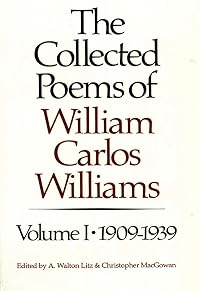
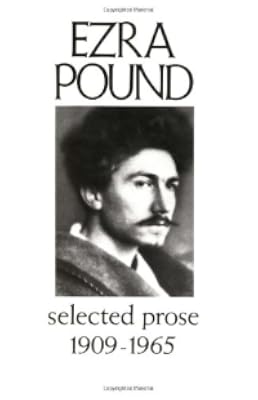
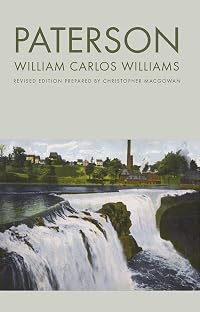
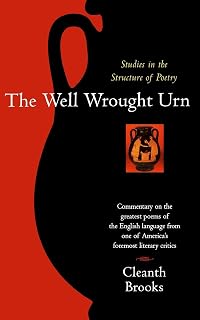
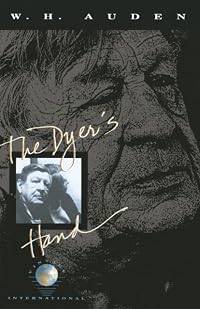
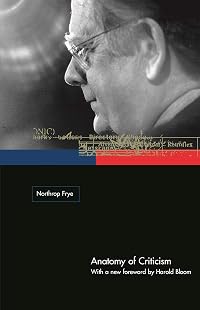
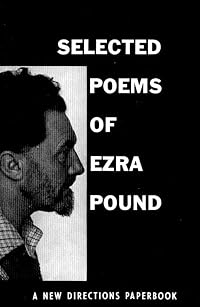
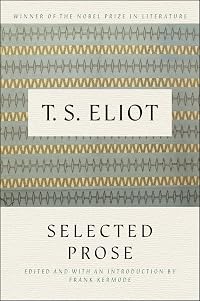
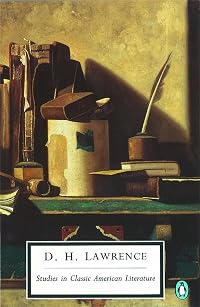
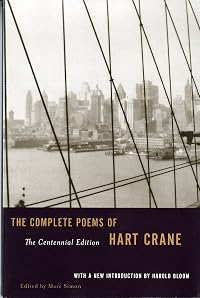
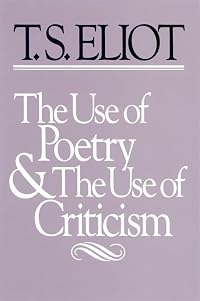
aulsmith Two literati writing about literature. I recommend reading them as much for style as for content

by anonymous user
Member Reviews
There hardly seems to be a more direct way to describe this book than to call it a somewhat snobby defense of the literary canon … the WESTERN literary canon. In this book, Pound lays out an argument for a "scientific" way to discover those works that belong to the canon and those that do not. Authors and poets who fall outside of Pound’s ordering of quality writing go mostly unnamed (except for Whitman) and those who do represent the best are largely presented self-evidently as such. All that was interesting but not really what I was after.
I was interested in Pound’s book as a critical reflection on the practice of reading, a skill that is in decline today. A 2024 report from the National Endowment for the Arts (NEA) noted that show more in 2022 “48.5 percent of adults reported having read at least one book in the past year, compared with 52.7 percent five years earlier, and 54.6 percent ten years earlier” (https://www.arts.gov/stories/blog/2024/federal-data-reading-pleasure-all-signs-show-slump). It was a decline that even the pandemic did not reverse. And this decline in the amount of reading is correlated with a decline in reading skill, which is really the more worrisome trend. In an age of Gen AI, when the bar for generating text has been so lowered, we are swamped with texts, an increasing number of which are being produced not by people recording or orienting readers to an outlook on the world but by machines generating texts from models. When we read AI generated texts, we are not encountering a mind at work. We, readers, must be the ones who supply the thinking.
This is the reason why I picked up Pound, because he offers a guide to critical, systematic reading that I can appreciate even if I disagree with the ends to which the work was put. He notes that “[T]he good writer chooses his words for their ‘meaning’, but that meaning is not a set, cut-off thing like the move of knight or pawn on a chess-board. It comes up with roots, with associations, with how and where the word is familiarly used, or where it has been used brilliantly or memorably” (36). Although Pound is referencing a literary history or a poetic tradition out of which words reach us, I think we can read this more broadly: the roots and associations and places where words are used familiarly are places, situations, contexts of life that we embody, live in, and perhaps live in, vicariously, through the work of poetry and fiction.
Pound describes his approach to critical reading as "scientific." He wants to resist the temptation to describe poetry and prose that retreats to abstractions that are themselves retreating from the realm of human experience (19). Instead, he wants to elevate writing that speaks truth and does so with efficiency and still grounds out in the distinctness of human experience (26). “Good writing” Pound says “is coterminous with the writer’s thought, it has the form of the thought, the form of the way the man feels his thought” (113). And readers can be trained to investigate this efficiency and profundity of expression across three aspects of language: phanopoeia (visual meaning), melopoeia (meaning through sound or rhythm), and logopoeia (meaning through denotative word usage) (37, 47). Some aspects (e.g., melopoeia) apply more readily to poetry, but I would argue that all three aspects can and do apply to other kinds of writing, even the humblest of texts.
What makes Pound’s approach scientific is in the careful selection and exclusion of texts that allow one to sample and catalog diversity, sketch the edges of genres or literary traditions, identify exemplars, and use those bodies of texts to designate eras and traditions of a (Western) literary past. Careful readers need diversity because one “can’t judge any chemical’s action merely by putting it with more of itself. To know it, you have got to know its limits, both what it is and what it is not. What substances are harder and softer, what more resilient, what more compact” (60). He argues that pieces that do not expand these boundaries are of no use. Again, I can’t agree with this exclusionary look at literature and poetry unless we were to adopt a more inclusive sense of what meaningful diversity is. The point, however, is that it is on readers to approach texts systematically and with an eye toward identifying value and truth, a skill worth cultivating and preserving. I just happen to think that one builds up a skill through practice, lots of practice, with texts that are similar and different.
Although I disagree that one would develop reading skills in order to elevate one kind of writing or writer above others, I have to say that I’m sympathetic to Pound’s project of cultivating an ability to tell a difference between writing that speaks truth and does it well or that engages readers effectively in thinking for themselves and writing that doesn't. I’m way less interested, however, in reading as a practice of “appreciation” of what is true and beautiful than I am in reading that is a critical practice of engagement. “The reader’s first and simplest test of an author will be to look for words that do not function; that contribute nothing to the meaning OR that distract from the MOST important factor of the meaning to factors of minor importance” (63). show less
I was interested in Pound’s book as a critical reflection on the practice of reading, a skill that is in decline today. A 2024 report from the National Endowment for the Arts (NEA) noted that show more in 2022 “48.5 percent of adults reported having read at least one book in the past year, compared with 52.7 percent five years earlier, and 54.6 percent ten years earlier” (https://www.arts.gov/stories/blog/2024/federal-data-reading-pleasure-all-signs-show-slump). It was a decline that even the pandemic did not reverse. And this decline in the amount of reading is correlated with a decline in reading skill, which is really the more worrisome trend. In an age of Gen AI, when the bar for generating text has been so lowered, we are swamped with texts, an increasing number of which are being produced not by people recording or orienting readers to an outlook on the world but by machines generating texts from models. When we read AI generated texts, we are not encountering a mind at work. We, readers, must be the ones who supply the thinking.
This is the reason why I picked up Pound, because he offers a guide to critical, systematic reading that I can appreciate even if I disagree with the ends to which the work was put. He notes that “[T]he good writer chooses his words for their ‘meaning’, but that meaning is not a set, cut-off thing like the move of knight or pawn on a chess-board. It comes up with roots, with associations, with how and where the word is familiarly used, or where it has been used brilliantly or memorably” (36). Although Pound is referencing a literary history or a poetic tradition out of which words reach us, I think we can read this more broadly: the roots and associations and places where words are used familiarly are places, situations, contexts of life that we embody, live in, and perhaps live in, vicariously, through the work of poetry and fiction.
Pound describes his approach to critical reading as "scientific." He wants to resist the temptation to describe poetry and prose that retreats to abstractions that are themselves retreating from the realm of human experience (19). Instead, he wants to elevate writing that speaks truth and does so with efficiency and still grounds out in the distinctness of human experience (26). “Good writing” Pound says “is coterminous with the writer’s thought, it has the form of the thought, the form of the way the man feels his thought” (113). And readers can be trained to investigate this efficiency and profundity of expression across three aspects of language: phanopoeia (visual meaning), melopoeia (meaning through sound or rhythm), and logopoeia (meaning through denotative word usage) (37, 47). Some aspects (e.g., melopoeia) apply more readily to poetry, but I would argue that all three aspects can and do apply to other kinds of writing, even the humblest of texts.
What makes Pound’s approach scientific is in the careful selection and exclusion of texts that allow one to sample and catalog diversity, sketch the edges of genres or literary traditions, identify exemplars, and use those bodies of texts to designate eras and traditions of a (Western) literary past. Careful readers need diversity because one “can’t judge any chemical’s action merely by putting it with more of itself. To know it, you have got to know its limits, both what it is and what it is not. What substances are harder and softer, what more resilient, what more compact” (60). He argues that pieces that do not expand these boundaries are of no use. Again, I can’t agree with this exclusionary look at literature and poetry unless we were to adopt a more inclusive sense of what meaningful diversity is. The point, however, is that it is on readers to approach texts systematically and with an eye toward identifying value and truth, a skill worth cultivating and preserving. I just happen to think that one builds up a skill through practice, lots of practice, with texts that are similar and different.
Although I disagree that one would develop reading skills in order to elevate one kind of writing or writer above others, I have to say that I’m sympathetic to Pound’s project of cultivating an ability to tell a difference between writing that speaks truth and does it well or that engages readers effectively in thinking for themselves and writing that doesn't. I’m way less interested, however, in reading as a practice of “appreciation” of what is true and beautiful than I am in reading that is a critical practice of engagement. “The reader’s first and simplest test of an author will be to look for words that do not function; that contribute nothing to the meaning OR that distract from the MOST important factor of the meaning to factors of minor importance” (63). show less
The committed student needs to be wide awake, to look and listen closely, to slow down, scrutinize and reflect. The language of poetry is so dense, so multivalent, that it demands a concentrated act of attention — and offers its greatest rewards only to those who reread.
Predictably didactic and teeming with bombast, this is a sound primer to poetry and an illuminating insight into the turns and shifts Pound was making as the 1930s released a greasy slip into global catastrophe. Intriguing as Cranky Ezra proclaims Chaucer the father of European Verse and then picks examples of the subsequent tradition, many of which have since lapsed into obscurity. Prime those shovels, ye exhumers!
Predictably didactic and teeming with bombast, this is a sound primer to poetry and an illuminating insight into the turns and shifts Pound was making as the 1930s released a greasy slip into global catastrophe. Intriguing as Cranky Ezra proclaims Chaucer the father of European Verse and then picks examples of the subsequent tradition, many of which have since lapsed into obscurity. Prime those shovels, ye exhumers!
Mount Parnassus in Greek mythology is a mountain in central Greece where the Muses lived; it is known as the mythological home of music and poetry. The ABC of Reading is Ezra Pound's iconoclastic view of stages on the way to Parnassus -- to knowing the nature and meaning of literature. Pound was there at the beginning of the Modernist movement in literature. In fact one could argue that he invented it and he both discovered and encouraged fellow writers, T. S. Eliot is a prominent example, to persevere and "make it new". This spirit permeates this book and I believe it has not diminished over the decades. My beat up copy was obtained in Madison, Wisconsin at a used book store near the University. What an appropriate setting, for this show more book reads like an extension of the University expanding my education in time and through imagination. There are more ideas packed into just over two hundred pages in this little book than in many much larger tomes. The ideas are at one striking and sublime. Plus there are bon mots like this-- "Great literature is simply language charged with meaning to the utmost possible degree."(p 36) --in every chapter.
This classic retains "a certain eternal and irrepressible freshness" that makes it worth reading today; both for the challenge and for the insights into the nature of poetry and literature. show less
This classic retains "a certain eternal and irrepressible freshness" that makes it worth reading today; both for the challenge and for the insights into the nature of poetry and literature. show less
A passionate, rambling introduction to poetry. One easily imagines Pound as a manic tenured professor, standing on top of his desk, and haranguing the students to follow his lead, but remain independent and critical lovers of poetry.
His standards are maddening. One must learn several languages in order to begin. French, Italian, Latin, have a grasp of Chinese. One must read so many contemporaries. He also includes a massive reading list and some exercises at the end. (e.g. Let the pupil write a description of a tree. Edit the description so that it cannot be mistaken for any other tree.)
Although, of course, he advises students to read and think for themselves, and write for themselves. No critic worth his salt has not at least tried to show more write something on his own.
Treat this like you would a course from a brilliant, if not utterly mad professor. If you can stand him, you will learn a lot. If you hate his dogmatism, you can drop the thing on page 5 and save your time. show less
His standards are maddening. One must learn several languages in order to begin. French, Italian, Latin, have a grasp of Chinese. One must read so many contemporaries. He also includes a massive reading list and some exercises at the end. (e.g. Let the pupil write a description of a tree. Edit the description so that it cannot be mistaken for any other tree.)
Although, of course, he advises students to read and think for themselves, and write for themselves. No critic worth his salt has not at least tried to show more write something on his own.
Treat this like you would a course from a brilliant, if not utterly mad professor. If you can stand him, you will learn a lot. If you hate his dogmatism, you can drop the thing on page 5 and save your time. show less
Thought provoking and often hilarious. I wish I read Greek or Latin (and know Mr. Pound is disgusted, or at least dismayed, that I don't), but even so, I was able to enjoy this book tremendously. My favorite sections are the Exhibits and the Treatise on Metre, which has a really interesting discussion of the relationship between music and poetry.
This classic work of literary criticism was very amusing to me, with its draconian pronouncements and caustic contempt for the sub-literate and sloppy. Pound has very strong likes and dislikes, and while his enthusiasms are often eccentric (Walter Savage Landor? Fitzgerald's translation of Rubaiyat?), the energy and certainty with which he trumpets them are refreshing. There's a critical worldview in there somewhere, albeit one based on aphorism and epigram rather than systematic analysis.
I read, and continue to read, and become less and less convinced by literary criticism. I just seem to doubt the worth of it all.
I doubt if Literature is 'the NEWS that stay NEWS'. I wonder to what extent The Illiad, and all its themes of Glory, Homecoming and Honor, needs to remain NEWS in a society that does not share these themes as values (something that can be evidenced in the lack of common ground between the awful Brad Pit movie and the source material). That the piece has lasted this long is a testimony of how badly we care to leave the signposts of our history around us, and our attempts at reassembling it in a desperate search for a relevant and contemporary meaning is a testimony to our attachment to a barbaric past.
"Chaucer show more had a deeper knowledge of life than Shakespeare. Let the reader contradict that after reading both authors, if he chooses to do so."
I can think of little more absolutely and stunningly stupid as claiming that there is a solid unified whole that can be called life, or that a single author can somehow be more authoritative on it. One can, at best, be authoritative on extremely modest segments on life. But by whatever calculation, where I now sit is closer to 1616 than 1400, although soon both of these writers will be sufficiently removed from our experience as to be equally irrelevant.
"Great literature is simply language charged with meaning to the utmost possible degree." Not really. We, as readers, inscribe meaning into what we read. No book, no matter how great, is inherently charged with any significant meaning. Rather, the reader puts meaning into it where he finds it (and here a plug to the wonderful essay 'Shakespeare in the bush' is necessary.)
Literary Criticism is little more than a brazen attempt to justify one's own tastes. show less
I doubt if Literature is 'the NEWS that stay NEWS'. I wonder to what extent The Illiad, and all its themes of Glory, Homecoming and Honor, needs to remain NEWS in a society that does not share these themes as values (something that can be evidenced in the lack of common ground between the awful Brad Pit movie and the source material). That the piece has lasted this long is a testimony of how badly we care to leave the signposts of our history around us, and our attempts at reassembling it in a desperate search for a relevant and contemporary meaning is a testimony to our attachment to a barbaric past.
"Chaucer show more had a deeper knowledge of life than Shakespeare. Let the reader contradict that after reading both authors, if he chooses to do so."
I can think of little more absolutely and stunningly stupid as claiming that there is a solid unified whole that can be called life, or that a single author can somehow be more authoritative on it. One can, at best, be authoritative on extremely modest segments on life. But by whatever calculation, where I now sit is closer to 1616 than 1400, although soon both of these writers will be sufficiently removed from our experience as to be equally irrelevant.
"Great literature is simply language charged with meaning to the utmost possible degree." Not really. We, as readers, inscribe meaning into what we read. No book, no matter how great, is inherently charged with any significant meaning. Rather, the reader puts meaning into it where he finds it (and here a plug to the wonderful essay 'Shakespeare in the bush' is necessary.)
Literary Criticism is little more than a brazen attempt to justify one's own tastes. show less
Members
- Recently Added By
Lists

Modernism
140 works; 8 members

Five star books
1,755 works; 108 members

Personal 2026 reads
28 works; 1 member
Author Information

390+ Works 10,756 Members
Ezra Pound, 1885-1972 Ezra Weston Loomis Pound ("Ezra Pound"), along with T. S. Eliot, was one of the two main influences on British and U.S. poetry between the two world wars. Pound was born in a small, two-storey house in Hailey, Idaho Territory on October 30, 1885. Between 1897 and 1900 Pound attended Cheltenham Military Academy, sometimes as a show more boarder, where he specialized in Latin. Pound graduated from the University of Pennsylvania and went abroad to live in 1908. The collection of his Letters, 1907--1941 revealed the great erudition of this most controversial expatriate poet. His first book, A Lume Spento, a small collection of poems, was published in Venice in 1908. With the publication of Personae in London in 1909, he became the leader of the imagists abroad. Pound's writings have been subject to many foreign influences. First he imitated the troubadours; then he came under the influence of the Chinese and Japanese poets. The Cantos (1925--60), his major work, to which he added for many years, is a mixture of modern colloquial language and classical quotation. The Pisan Cantos (1948), written during his imprisonment in Italy, is more autobiographical. Pound's prose, as well as his poetry, has been extremely influential. The Spirit of Romance (1910) is a revision of his studies of little-known romance writers. ABC of Reading (1934) is an exposition of his critical method. His critical writings include Literary Essays of Ezra Pound (1954), Instigations (1920), and Guide to Kulchur (1938). Pound was a linguist, whom Eliot called "the inventor of Chinese poetry for our time." His greatest translating achievements from Japanese, Chinese, Anglo-Saxon, Italian, Provencal, and French are collected in The Translations of Ezra Pound (1933). Among his other writings are Make It New: Essays; Jefferson and/or Mussolini, a discussion of American democracy and capitalism and fascism; and The Classic Noh Theatre of Japan, with Ernest Fenollosa. Living in Italy, Pound felt that some of the practices of Mussolini were in accord with the doctrines of social credit, in which he had become interested in the 1920s and 1930s. He espoused some of the general applications of fascism and also was a strong advocate of anti-Semitism. During World War II, he broadcast a pro-Fascist series of programs addressed to the Allied troops on Italian radio. Indicted for treason and brought to the United States to stand trial in 1946, he was judged mentally incompetent to prepare a defense and was committed to St. Elizabeth's Hospital in Washington, D.C. for over 12 years. After a concerted appeal to the federal government by American poets, led by Robert Frost, Pound was at last released in 1958 and returned to Italy. Pound died on November 1, 1972. (Bowker Author Biography) show less
Ezra Pound has a Legacy Library. Legacy libraries are the personal libraries of famous readers, entered by LibraryThing members from the Legacy Libraries group.
Some Editions
Awards and Honors
Series
Belongs to Publisher Series
Common Knowledge
- Canonical title*
- L'ABC del leggere
- Original title
- ABC of Reading
- Original publication date
- 1934
- Original language
- English
*Some information comes from Common Knowledge in other languages. Click "Edit" for more information.
Classifications
Statistics
- Members
- 1,181
- Popularity
- 21,155
- Reviews
- 20
- Rating
- (3.64)
- Languages
- 10 — Danish, English, Estonian, Finnish, French, German, Italian, Portuguese, Spanish, Swedish
- Media
- Paper, Ebook
- ISBNs
- 15
- ASINs
- 22