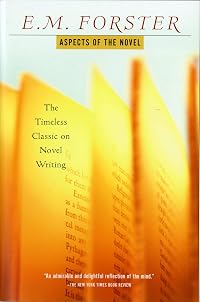
Aspects of the Novel
by E. M. Forster
On This Page
Description
E. M. Forster, one of England's most distinguished writers, shares what he believes are the seven important aspects of fiction: story, people, plot, fantasy, prophecy, pattern, and rhythm.Tags
Recommendations













Member Recommendations
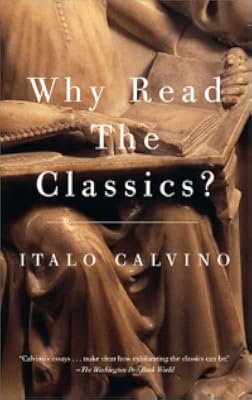
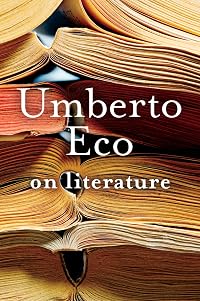
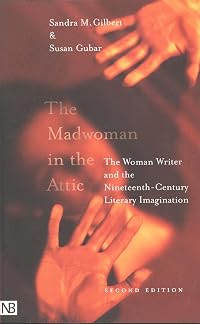
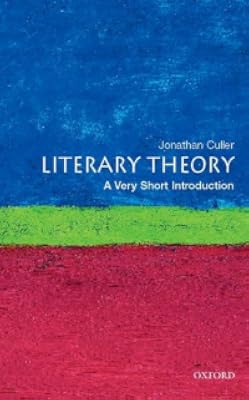
aulsmith Two literati writing about literature. I recommend reading them as much for style as for content


by anonymous user
Member Reviews
The king died. Then the queen died.
The king died. Then the queen died of grief.
The king died. Then some say the queen died of grief.
That little classic ditty above explaining Story, Plot, and Mystery, is an original from this book and from the singular mind of E. M. Forster.
Aspects of the Novel is based on a series of lectures given by him at Trinity College Cambridge in 1927. He decided to eschew formal literary terms in order that he could talk about "aspects" of the novel in a fresh way, without all the heavy scholarship (and without pseudo-scholarship, he also noted). A decision that I'm sure was much appreciated by students, otherwise awash in professorial pomp.
Reading this a hundred years later and being no scholar but only a show more frequent and happy novel-reader, I too, like Trinity College students, very much appreciated his approach. It was an eye-opener, exactly what I was looking for: expanding my appreciation of the novel and novelists.
Forster recounts seven aspects: story, plot, character, fantasy, prophecy, pattern, and rhythm. In each of them are valuable insights for gaining more pleasure and depth from novels. I am a little sorry that some of his terms were his own and are not in use at large. (Prophecy was an especially fascinating aspect and I am curious what term is used to describe it in traditional scholarship, if it is.) But ultimately, the exact terminology doesn't matter, the concept does.
When Forster writes about "fantasy" in novels. he's not using the term like we use it today to indicate a major genre. Rather, Forster's term is anything that doesn't happen in real life, or at least anything we generally agree doesn't happen. When a novelist uses it, Forster says the novelists is asking the reader to be willing to "pay extra" for admittance into the tale. The fantasy and the payment can be big or small. Under this wider definition, I was surprised to observe that I had encountered a lot of pieces of fantasy in novels I had recently read, especially surprising because I don't generally read Fantasy. Even in Jane Eyre where all spooky things were explained away as real, there remained "Jane! Jane! Jane!" by Rochester. By Bronte including it and leaving it fantastical, the reader will and should think about its purpose, and even consider if it is necessary.
A more complicated example where I used Forster's fantasy aspect to review a recent novel I read was To the Wedding by John Berger; I sent it through the Forster fantasy aspect filter. It is not considered a fantasy novel but the story is fundamentally dependent on a fantastical premise: a blind Greek seer. That's more than a mere nod to Classic Greek Literature, it's a fantasy begging the question why, why is that necessary? The answer to that question will change the novel. Either you believe Berger used the Greek like the Greeks would, a throwback artistic device of drama so as to make a parallel of AIDS with epic tragedy. Or, this is my take, it indeed serves to elevate the story by comparison but does not require the visions to be real; they are visions--visions evoking what would have been and what was lost to the disease. Epic, indeed.
Forster did a lot of fun things in this work, beyond the aspects. He was opinionated, witty, and gossipy. He was also humble and self-deprecating. I also found this helpful: for each aspect, he began with a special requirement needed from a reader in order to access full appreciation of the novel. Like for "prophesy", which in his definition here is not foretelling the future and not necessarily religious, the reader must bring humility and leave behind humor. Interesting, no?
It wasn't all smooth sailing, and not simply when the concepts were complex but sometimes because Forster was writing, as one would expect, like a novelist would, not always revealing the full definition up front but rather slowly building toward it. (The work isn't long, so nothing was a long, excruciating build.) Luckily he also used a lot of examples from novels, mostly well-known ones--up to 1927 of course--to illustrate his meaning. I made lots of notes from the text in my Reading Journal, and then wrote my thoughts and put recent novels I've read through the Foster filter, as I called it. I was fired up by what I was learning and didn't want to miss a morsel.
Now, he said some things that you may heartily not agree with about certain works and writers--some real zingers, in fact--but that's all the more reason to read this. It will have you in a deep conversation with Forster about something you love: novels.
Highly recommend! show less
The king died. Then the queen died of grief.
The king died. Then some say the queen died of grief.
That little classic ditty above explaining Story, Plot, and Mystery, is an original from this book and from the singular mind of E. M. Forster.
Aspects of the Novel is based on a series of lectures given by him at Trinity College Cambridge in 1927. He decided to eschew formal literary terms in order that he could talk about "aspects" of the novel in a fresh way, without all the heavy scholarship (and without pseudo-scholarship, he also noted). A decision that I'm sure was much appreciated by students, otherwise awash in professorial pomp.
Reading this a hundred years later and being no scholar but only a show more frequent and happy novel-reader, I too, like Trinity College students, very much appreciated his approach. It was an eye-opener, exactly what I was looking for: expanding my appreciation of the novel and novelists.
Forster recounts seven aspects: story, plot, character, fantasy, prophecy, pattern, and rhythm. In each of them are valuable insights for gaining more pleasure and depth from novels. I am a little sorry that some of his terms were his own and are not in use at large. (Prophecy was an especially fascinating aspect and I am curious what term is used to describe it in traditional scholarship, if it is.) But ultimately, the exact terminology doesn't matter, the concept does.
When Forster writes about "fantasy" in novels. he's not using the term like we use it today to indicate a major genre. Rather, Forster's term is anything that doesn't happen in real life, or at least anything we generally agree doesn't happen. When a novelist uses it, Forster says the novelists is asking the reader to be willing to "pay extra" for admittance into the tale. The fantasy and the payment can be big or small. Under this wider definition, I was surprised to observe that I had encountered a lot of pieces of fantasy in novels I had recently read, especially surprising because I don't generally read Fantasy. Even in Jane Eyre where all spooky things were explained away as real, there remained "Jane! Jane! Jane!" by Rochester. By Bronte including it and leaving it fantastical, the reader will and should think about its purpose, and even consider if it is necessary.
A more complicated example where I used Forster's fantasy aspect to review a recent novel I read was To the Wedding by John Berger; I sent it through the Forster fantasy aspect filter. It is not considered a fantasy novel but the story is fundamentally dependent on a fantastical premise: a blind Greek seer. That's more than a mere nod to Classic Greek Literature, it's a fantasy begging the question why, why is that necessary? The answer to that question will change the novel. Either you believe Berger used the Greek like the Greeks would, a throwback artistic device of drama so as to make a parallel of AIDS with epic tragedy. Or, this is my take, it indeed serves to elevate the story by comparison but does not require the visions to be real; they are visions--visions evoking what would have been and what was lost to the disease. Epic, indeed.
Forster did a lot of fun things in this work, beyond the aspects. He was opinionated, witty, and gossipy. He was also humble and self-deprecating. I also found this helpful: for each aspect, he began with a special requirement needed from a reader in order to access full appreciation of the novel. Like for "prophesy", which in his definition here is not foretelling the future and not necessarily religious, the reader must bring humility and leave behind humor. Interesting, no?
It wasn't all smooth sailing, and not simply when the concepts were complex but sometimes because Forster was writing, as one would expect, like a novelist would, not always revealing the full definition up front but rather slowly building toward it. (The work isn't long, so nothing was a long, excruciating build.) Luckily he also used a lot of examples from novels, mostly well-known ones--up to 1927 of course--to illustrate his meaning. I made lots of notes from the text in my Reading Journal, and then wrote my thoughts and put recent novels I've read through the Foster filter, as I called it. I was fired up by what I was learning and didn't want to miss a morsel.
Now, he said some things that you may heartily not agree with about certain works and writers--some real zingers, in fact--but that's all the more reason to read this. It will have you in a deep conversation with Forster about something you love: novels.
Highly recommend! show less
This is great! Even without having read all the authors mentioned or even having heard of a couple whose reputations have faded out since 1927 when this series of talks were given, there is so much here! And it is so lightly delivered. Forester does underestimate Austen's capabilities, but then as a man perhaps what he didn't see displayed he assumed didn't exist.
With little patience for long introductions, one sentence stands out:
"Books have to be read (worse luck, for it takes a long time);
it is the only way of discovering what they contain."
Unfortunately, Forster adds little more humor and strands us with:
"History develops, Art stands still." Hmm or Huh.
Well...not for the brilliant art and music and words which have been created
in his time and since...
The author proceeds with examples dominated by negativity,
maybe so he can reinforce his own critical judgements, with
disturbing "tapeworm" imagery.
Toward the middle, he makes a memorable point:
"...the inherent defect of novels: they go off at the end."
With "round' and "flat" characters, he immerses into his cycle
of supremely tedious verbiage, show more with little relenting. show less
"Books have to be read (worse luck, for it takes a long time);
it is the only way of discovering what they contain."
Unfortunately, Forster adds little more humor and strands us with:
"History develops, Art stands still." Hmm or Huh.
Well...not for the brilliant art and music and words which have been created
in his time and since...
The author proceeds with examples dominated by negativity,
maybe so he can reinforce his own critical judgements, with
disturbing "tapeworm" imagery.
Toward the middle, he makes a memorable point:
"...the inherent defect of novels: they go off at the end."
With "round' and "flat" characters, he immerses into his cycle
of supremely tedious verbiage, show more with little relenting. show less
It is a great pity that youtube was not around in 1927, to capture Forster delivering these lectures. We have them now in the book form as a series of essays, but they still sparkle with wit, knowledge, common sense and some fine writing. There are some arresting images: the authors all sitting together in a circular room struggling with their compositions, and the gaping shock headed cavemen listening to the story teller, which Forster uses to have a swipe at the film industry "The movie public: modern day descendants of the gaping cavemen."
For me it all really comes alive in essays/lectures six and seven, when Forster can let himself go and lecture with passion and imagination about the authors he loves. He says:
"For the first five show more lectures of this course we have used more or less the same set of tools. This time and last we have had to lay them down. Next time we shall take them up again, but with no certainty that they are the best equipment for a critic or that there is such a thing as critical equipment".
The lectures he is referring to are Fantasy and Prophecy. He has previously given us the critics tools to discuss aspects of the story, people, the plot and pattern and rhythm, but when he launches into his lecture on fantasy his own writing takes off. He starts with the wonderful image of the ascending bird and its shadow that resemble each other less and less as the bird flies higher, and goes on to say there is more in the novel than time or people and logic, but of course like the birds shadow it is not quite so distinct, not so easy to grasp. There is however a bar of light that can illuminate everything and Forster says "We shall give that bar of light two names fantasy and prophecy.
At last Forster can talk about the books and those things that go beyond the tools of the trade to make them special. He presents us with some surprising selections in his lecture on fantasy: Tristram Shandy, Flecker's Magic and Zuleika Dobson by Max Beerbohm. He cheekily includes Ulysses, before ending with the Magic Flute.
It is his lecture on prophecy where he gets to talk about those great authors who write on universal themes and who have the power to sing. Forster warns us that to appreciate these authors, we the readers must have humility and the suspension of the sense of humour. He names four authors that he believes can illustrate this aspect of the novel: Dostoyevsky, Melville, D H Lawrence and Emily Bronte with D H Lawrence being the only living author (1927) in whom the song predominates and who has the rapt bardic quality and who it is idle to criticise. Enthusiastically Forster gives us examples from The Brothers Karamazov and then turns his attention to Melville and a lively short critique on Moby Dick is followed by his thoughts on Billy Budd. Forster's prose is at its finest here but he saves his best for D H Lawrence:
"Humility is not easy with this irritable and irritating author, for the humbler we get the crosser he gets. yet I do not see how else to read him. If we start resenting or mocking, his treasure disappears as surely if we started obeying him. What is valuable about him cannot be put into words; it is colour, gesture and outline in people and things, the usual stock in trade of the novelist, but evolved by such a different process that they belong to a new world."
This series of lectures, that give us the warp and the weft of aspects of a novel and gently chide us as pseudo-intellectuals, come dramatically alive as Forster wrestles with the ineffable. Great stuff. show less
For me it all really comes alive in essays/lectures six and seven, when Forster can let himself go and lecture with passion and imagination about the authors he loves. He says:
"For the first five show more lectures of this course we have used more or less the same set of tools. This time and last we have had to lay them down. Next time we shall take them up again, but with no certainty that they are the best equipment for a critic or that there is such a thing as critical equipment".
The lectures he is referring to are Fantasy and Prophecy. He has previously given us the critics tools to discuss aspects of the story, people, the plot and pattern and rhythm, but when he launches into his lecture on fantasy his own writing takes off. He starts with the wonderful image of the ascending bird and its shadow that resemble each other less and less as the bird flies higher, and goes on to say there is more in the novel than time or people and logic, but of course like the birds shadow it is not quite so distinct, not so easy to grasp. There is however a bar of light that can illuminate everything and Forster says "We shall give that bar of light two names fantasy and prophecy.
At last Forster can talk about the books and those things that go beyond the tools of the trade to make them special. He presents us with some surprising selections in his lecture on fantasy: Tristram Shandy, Flecker's Magic and Zuleika Dobson by Max Beerbohm. He cheekily includes Ulysses, before ending with the Magic Flute.
It is his lecture on prophecy where he gets to talk about those great authors who write on universal themes and who have the power to sing. Forster warns us that to appreciate these authors, we the readers must have humility and the suspension of the sense of humour. He names four authors that he believes can illustrate this aspect of the novel: Dostoyevsky, Melville, D H Lawrence and Emily Bronte with D H Lawrence being the only living author (1927) in whom the song predominates and who has the rapt bardic quality and who it is idle to criticise. Enthusiastically Forster gives us examples from The Brothers Karamazov and then turns his attention to Melville and a lively short critique on Moby Dick is followed by his thoughts on Billy Budd. Forster's prose is at its finest here but he saves his best for D H Lawrence:
"Humility is not easy with this irritable and irritating author, for the humbler we get the crosser he gets. yet I do not see how else to read him. If we start resenting or mocking, his treasure disappears as surely if we started obeying him. What is valuable about him cannot be put into words; it is colour, gesture and outline in people and things, the usual stock in trade of the novelist, but evolved by such a different process that they belong to a new world."
This series of lectures, that give us the warp and the weft of aspects of a novel and gently chide us as pseudo-intellectuals, come dramatically alive as Forster wrestles with the ineffable. Great stuff. show less
There is something unerringly endearing about Forster's way of expressing himself that makes this series of lectures on the makeup of the novel so easy to read. His disarming admission of his own unscholarly nature ("True scholarship is incommunicable, true scholars rare. There are a few scholars, actual or potential, in the audience today, but only a few, and there is certainly none on the platform.") puts him firmly on a par with the reader, and his conversational, nay chatty style, opens this little book to anyone who appreciates a good read.
These series of lectures were not an investigation into the history of the novel, nor a prescription of how to write good prose, but an attempt to describe the novel as an art form. Starting from show more the rather open definition of the novel as "a fiction in prose of a certain extent", Forster tackles a different component each lecture. The story, that satisfies our thirst to find out what happens next, is covered distinctly from the plot, which is the embodiment of our curiosity as to why things happen. He covers a novel's characters, explaining how they can be 'flat' or 'round', and how they differ from real human beings. The realm of 'fantasy', the author's rights in his own universe, are considered, as are matters of pattern, rhythm and viewpoint, with one particularly interesting heading of 'prophecy'.
In terms of whether the book is still relevant, Forster ended his lecture series with some conjecture on what the future may hold for the novel form, whether television would eventually make it even disappear altogether (thank goodness for Riepl's Law). His conjecture that whilst history and society move on, art remains static, is extremely interesting in light of the fact that these lectures were being given at the height of the modernist period, and pertinent works are only lightly touched upon. Furthermore, whilst he provides plenty of written examples, there are of course many references to classic works, which it probably helps to have read, but also references to authors who have been buried by posterity or are no longer so accessible.
On the whole, however, Aspects of the Novel remains fundamentally readable today. It is not a high-brow scholarly affair; rather a well-thought out observational piece, taking a broad look at that vast field of literature we call the 'novel'. Forster makes some extremely astute remarks, and his witty and conversational style bring these across in an easy and comfortable way, that makes you feel his observations are frankly obvious. He does not encompass the full gamut of literary inquiry, but instead picks and chooses to highlight his points and support his argument that there are no fast and steady rules for what defines 'the novel'. This is probably required reading for students of English literature, but it's easy accessibility and thought-provoking titbits should appeal to just about all keen readers with a fascination for the novel form. show less
These series of lectures were not an investigation into the history of the novel, nor a prescription of how to write good prose, but an attempt to describe the novel as an art form. Starting from show more the rather open definition of the novel as "a fiction in prose of a certain extent", Forster tackles a different component each lecture. The story, that satisfies our thirst to find out what happens next, is covered distinctly from the plot, which is the embodiment of our curiosity as to why things happen. He covers a novel's characters, explaining how they can be 'flat' or 'round', and how they differ from real human beings. The realm of 'fantasy', the author's rights in his own universe, are considered, as are matters of pattern, rhythm and viewpoint, with one particularly interesting heading of 'prophecy'.
In terms of whether the book is still relevant, Forster ended his lecture series with some conjecture on what the future may hold for the novel form, whether television would eventually make it even disappear altogether (thank goodness for Riepl's Law). His conjecture that whilst history and society move on, art remains static, is extremely interesting in light of the fact that these lectures were being given at the height of the modernist period, and pertinent works are only lightly touched upon. Furthermore, whilst he provides plenty of written examples, there are of course many references to classic works, which it probably helps to have read, but also references to authors who have been buried by posterity or are no longer so accessible.
On the whole, however, Aspects of the Novel remains fundamentally readable today. It is not a high-brow scholarly affair; rather a well-thought out observational piece, taking a broad look at that vast field of literature we call the 'novel'. Forster makes some extremely astute remarks, and his witty and conversational style bring these across in an easy and comfortable way, that makes you feel his observations are frankly obvious. He does not encompass the full gamut of literary inquiry, but instead picks and chooses to highlight his points and support his argument that there are no fast and steady rules for what defines 'the novel'. This is probably required reading for students of English literature, but it's easy accessibility and thought-provoking titbits should appeal to just about all keen readers with a fascination for the novel form. show less
Let's get this out of the way immediately: I've never read an E.M. Forster novel, only his short stories. It might seem odd, then, that I chose to read his guide to good novel writing. A bit like taking a cookery class from Jamie Oliver having enjoyed one of his mince pies. Fortunately it wouldn't really have mattered whose guide to novel writing I read since I'm not planning on writing a novel.
That being said… I was in Manchester a few months ago to give a talk at the University. While catching up over tea and biscuits with the faculty someone asked me how my novel was going. I was rather bewildered by this, since I've never so much as started writing a novel. Had he got me confused with someone else? Had I gotten drunk at a show more conference and told him I was writing a four hundred page thriller about a handsome young Englishman who has to save the world from a nuclear-weapon-wielding arts student using a cunning mix of wit, maths, and did I mention his handsomeness? Because I'm really not ready to start writing my memoirs yet.
But no, I (and he) had fallen victim to a whimsical joke on my department website. Once upon a time I threw in some placeholder text to the effect of “I'm working on a novel, but till then here are my papers”, except I forgot to ever replace it with something less, you know, utterly fallacious.
Fortunately, and despite it being ostensibly a guide to novel writing, you don't need to have plans to write any novels in order to enjoy Aspects of the Novel. In fact if you are planning on writing a novel I'd recommend Stephen King's On Writing as a much more useful and practical guide to the business. This book of Forster's is more of a vague wander through the landscape of prose fiction, pointing out what makes a novel a novel and what properties good novels should possess. And a jolly nice wander it is too. show less
That being said… I was in Manchester a few months ago to give a talk at the University. While catching up over tea and biscuits with the faculty someone asked me how my novel was going. I was rather bewildered by this, since I've never so much as started writing a novel. Had he got me confused with someone else? Had I gotten drunk at a show more conference and told him I was writing a four hundred page thriller about a handsome young Englishman who has to save the world from a nuclear-weapon-wielding arts student using a cunning mix of wit, maths, and did I mention his handsomeness? Because I'm really not ready to start writing my memoirs yet.
But no, I (and he) had fallen victim to a whimsical joke on my department website. Once upon a time I threw in some placeholder text to the effect of “I'm working on a novel, but till then here are my papers”, except I forgot to ever replace it with something less, you know, utterly fallacious.
Fortunately, and despite it being ostensibly a guide to novel writing, you don't need to have plans to write any novels in order to enjoy Aspects of the Novel. In fact if you are planning on writing a novel I'd recommend Stephen King's On Writing as a much more useful and practical guide to the business. This book of Forster's is more of a vague wander through the landscape of prose fiction, pointing out what makes a novel a novel and what properties good novels should possess. And a jolly nice wander it is too. show less
Forster has produced an absolutely delicious little book of criticism. It actually originated as a series of lectures given at Trinity College, Cambridge, and the chatty tone of the spoken word has not been edited out. Consequently, we have before us a lively and almost intimate discussion of certain “aspects” of the novel that Forster has chosen to speak about.
A definition of the novel was foremost on the author’s mind. He was operating within certain constraints in his lecture series regarding the scope of his topic, and so he chose to quote French critic Abel Chevalley in setting up the working definition for his purposes. Thus, a novel is “a fiction in prose of a certain extent” ("une fiction en prose d’une certaine show more étendue”). To this he added that it should be not less than 50,000 words.
While it is ostensibly a work of literary criticism, the book provided Forster with an opportunity to hold forth on certain characteristics of fiction that interested him. And it should not be confused with the typical writer’s guide listing the elements an author should consider in constructing a novel – such as plot, character, point of view, description, dialogue, etc. Some of these are indeed contemplated here, but from a critical or reader’s vantage point rather than that of a writer.
The aspects of the novel that Forster chose to highlight were story, people (two chapters), plot, fantasy, prophesy, pattern and rhythm, in that order. Story, people and plot are easily anticipated in any extended treatment of the novel. But the remaining aspects – fantasy, prophesy, pattern and rhythm are not such obvious choices, particularly considering the year (1927) in which the lectures were delivered. And as he progressed through his chosen subjects, he could cite fewer and fewer novels that demonstrated those aspects. Nonetheless, his ruminations thereon were charming and thought-provoking.
In the interest of simplifying his task of covering the whole topic of English fiction – originating far and wide across the then-Empire and encompassing two hundred years and countless authors – Forster asked his audience
to visualize the English novelists as seated together in a room, a circular room, a sort of British Museum reading-room – all writing their novels simultaneously. They do not, as they sit there, think “I live under Queen Victoria, I under Anne, I carry on the tradition of Trollope, I am reacting against Aldous Huxley.” The fact that their pens are in their hands is far more vivid to them. They are half mesmerized, their sorrows and joys are pouring out through the ink, they are approximated by the act of creation . . . That is to be our vision of them – an imperfect vision, but it is suited to our powers, it will preserve us from a serious danger, the danger of pseudo-scholarship..
“Pseudo-scholarship” is a particular Forster bugaboo that pops up from time to time throughout. In this case, we as readers are freed from the vagaries of period considerations
As to the aspects, summarizing what he has to say about each one is too daunting a task. Forster uses examples from great novels to illustrate his points. He quotes freely and at length and in the process, perhaps as an added fillip, engenders the desire to read or reread the subject works. His comments about particular works of Jane Austen, Charlotte and Emily Bronte, Dickens, Dostoevsky, George Eliot, Henry James, James Joyce, D.H. Lawrence, Melville, Proust, Sir Walter Scott, Thackeray, Tolstoy, Trollope, H.G. Wells and Virginia Woolf are golden and worth the price of admission.
Any reader or reviewer of fiction – whether literary, genre or whatever – can only be elevated and inspired by reading this book, which can be consumed in an afternoon. Be forewarned, however, that it demands to be reread. It is full of quotable quotes, wonderful insights and myriad ways to analyze that one might have overlooked or forgotten. show less
A definition of the novel was foremost on the author’s mind. He was operating within certain constraints in his lecture series regarding the scope of his topic, and so he chose to quote French critic Abel Chevalley in setting up the working definition for his purposes. Thus, a novel is “a fiction in prose of a certain extent” ("une fiction en prose d’une certaine show more étendue”). To this he added that it should be not less than 50,000 words.
While it is ostensibly a work of literary criticism, the book provided Forster with an opportunity to hold forth on certain characteristics of fiction that interested him. And it should not be confused with the typical writer’s guide listing the elements an author should consider in constructing a novel – such as plot, character, point of view, description, dialogue, etc. Some of these are indeed contemplated here, but from a critical or reader’s vantage point rather than that of a writer.
The aspects of the novel that Forster chose to highlight were story, people (two chapters), plot, fantasy, prophesy, pattern and rhythm, in that order. Story, people and plot are easily anticipated in any extended treatment of the novel. But the remaining aspects – fantasy, prophesy, pattern and rhythm are not such obvious choices, particularly considering the year (1927) in which the lectures were delivered. And as he progressed through his chosen subjects, he could cite fewer and fewer novels that demonstrated those aspects. Nonetheless, his ruminations thereon were charming and thought-provoking.
In the interest of simplifying his task of covering the whole topic of English fiction – originating far and wide across the then-Empire and encompassing two hundred years and countless authors – Forster asked his audience
to visualize the English novelists as seated together in a room, a circular room, a sort of British Museum reading-room – all writing their novels simultaneously. They do not, as they sit there, think “I live under Queen Victoria, I under Anne, I carry on the tradition of Trollope, I am reacting against Aldous Huxley.” The fact that their pens are in their hands is far more vivid to them. They are half mesmerized, their sorrows and joys are pouring out through the ink, they are approximated by the act of creation . . . That is to be our vision of them – an imperfect vision, but it is suited to our powers, it will preserve us from a serious danger, the danger of pseudo-scholarship..
“Pseudo-scholarship” is a particular Forster bugaboo that pops up from time to time throughout. In this case, we as readers are freed from the vagaries of period considerations
As to the aspects, summarizing what he has to say about each one is too daunting a task. Forster uses examples from great novels to illustrate his points. He quotes freely and at length and in the process, perhaps as an added fillip, engenders the desire to read or reread the subject works. His comments about particular works of Jane Austen, Charlotte and Emily Bronte, Dickens, Dostoevsky, George Eliot, Henry James, James Joyce, D.H. Lawrence, Melville, Proust, Sir Walter Scott, Thackeray, Tolstoy, Trollope, H.G. Wells and Virginia Woolf are golden and worth the price of admission.
Any reader or reviewer of fiction – whether literary, genre or whatever – can only be elevated and inspired by reading this book, which can be consumed in an afternoon. Be forewarned, however, that it demands to be reread. It is full of quotable quotes, wonderful insights and myriad ways to analyze that one might have overlooked or forgotten. show less
Members
- Recently Added By
Lists

Books about Books
149 works; 23 members

Modern Library 100 Best Nonfiction Books
100 works; 8 members

Modernism
140 works; 9 members

Favourite Discoveries Through LT
12 works; 2 members

Books We Discovered On LibraryThing
530 works; 130 members
Talk Discussions
Past Discussions
Rebel Read: Aspects of the Novel in Le Salon Littéraire du Peuple pour le Peuple (February 2014)
Author Information

189+ Works 57,065 Members
Edward Morgan Forster was born on January 1, 1879, in London, England. He never knew his father, who died when Forster was an infant. Forster graduated from King's College, Cambridge, with B.A. degrees in classics (1900) and history (1901), as well as an M.A. (1910). In the mid-1940s he returned to Cambridge as a professor, living quietly there show more until his death in 1970. Forster was named to the Order of Companions of Honor to the Queen in 1953. Forster's writing was extensively influenced by the traveling he did in the earlier part of his life. After graduating from Cambridge, he lived in both Greece and Italy, and used the latter as the setting for the novels Where Angels Fear to Tread (1905) and A Room with a View (1908). The Longest Journey was published in 1907. Howard's End was modeled on the house he lived in with his mother during his childhood. During World War I, he worked as a Red Cross Volunteer in Alexandria, aiding in the search for missing soldiers; he later wrote about these experiences in the nonfiction works Alexandria: A History and Guide and Pharos and Pharillon. His two journeys to India, in 1912 and 1922, resulted in A Passage to India (1924), which many consider to be Forster's best work; this title earned the James Tait Black Memorial Prize. Forster wrote only six novels, all prior to 1925 (although Maurice was not published until 1971, a year after Forster's death, probably because of its homosexual theme). For much of the rest of his life, he wrote literary criticism (Aspects of the Novel) and nonfiction, including biographies (Goldsworthy Lowes Dickinson), histories, political pieces, and radio broadcasts. Howard's End, A Room with a View, and A Passage to India have all been made into successful films. (Bowker Author Biography) show less
Some Editions
Awards and Honors
Notable Lists
Series
Belongs to Publisher Series
Pelican Books (A557)
Work Relationships
Has as a student's study guide
Common Knowledge
- Original publication date
- 1927
- Dedication
- To Charles Mauron
- First words
- This lectureship is connected with the name of William George Clark, a Fellow of Trinity.
- Quotations
- The final test of a novel will be our affection for it, as it is the test of our friends."
- Last words
- (Click to show. Warning: May contain spoilers.)And, if he does, do you mind? I don't.
(Click to show. Warning: May contain spoilers.)If we had the power or license to take a wider view, and survey all human and pre-human activity, we might not conclude like this; the crablike movement, the shiftings of the passengers, might be visible and the phrase "the development of the novel" might cease to be a pseudo-scholarly tag or a technical triviality, and become important, because it implied the development of humanity. [1927 edition] - Blurbers
- Barzun, Jacques; Chase, Mary Ellen; Spencer, Theodore
- Canonical DDC/MDS
- 808.3
- Canonical LCC
- PN3353
Classifications
- Genres
- Literature Studies and Criticism, Nonfiction
- DDC/MDS
- 808.3 — Literature & rhetoric Literature, rhetoric & criticism Rhetoric and collections of literary texts from more than two literatures Rhetoric of fiction
- LCC
- PN3353 — Language and Literature Literature (General) Literature (General) Prose. Prose fiction
- BISAC
Statistics
- Members
- 2,551
- Popularity
- 7,530
- Reviews
- 44
- Rating
- (3.81)
- Languages
- 8 — English, French, German, Hungarian, Italian, Portuguese, Spanish, Swedish
- Media
- Paper, Audiobook, Ebook
- ISBNs
- 41
- ASINs
- 49