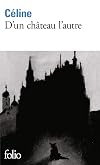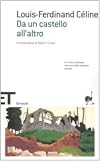
Castle to Castle
by Louis-Ferdinand Céline
On This Page
Description
With an undercurrent of sensual excitement, C'line paints an almost unbearably vivid picture of society and the human condition.Tags
Recommendations



















Member Reviews
Narrated by a French doctor in exile with the Vichy government in a German castle as WWII nears its end. He may be on the wrong side and considered a collaborator, but is still a doctor. “Have I got the healer’s instinct? I’m saturated with it!” He’s also a writer, a bit of a racist. He puts forth a litany of complaints about how he is treated by publishers, patients, relatives, almost everyone.
The style is stream of consciousness but the story is told in a linear manner, with some side digressions. He leavens the horrors of war with humor, and complaint. He hedges his bets, seeking favor with the Germans in case they win. The hardship of war is ever present as he demonstrates time after time with stories of injury, war crimes show more and hoarding amidst shortages of food and medicine. show less
The style is stream of consciousness but the story is told in a linear manner, with some side digressions. He leavens the horrors of war with humor, and complaint. He hedges his bets, seeking favor with the Germans in case they win. The hardship of war is ever present as he demonstrates time after time with stories of injury, war crimes show more and hoarding amidst shortages of food and medicine. show less
and I lose an enemy or two every day … cancer, apoplexy, gluttony … it's a pleasure the number that pass on! … I'm not hard to please … a name! … another!
Coincidence rules. I just penned a lengthy (for me, anyway) treatment of how and why Celine should be approached.
That was lost.
The how converged his hysterical realism and penchant for splatter of adjective and detail. The why detailed his good faith account of the vanquished, how he understood the stakes of his ideological bent. Unfortunately, Celine in his derangement perceived his public judgement and persecution to be of personal bent.
There is no painting over of crimes or incitement, instead the author captures with intensity the peril of RAF fighters strafing those show more fleeing from liberated France into Germany. Sanctuary is found in a train built for the Shah of Iran and crowded not only with collaborators but with screaming, shitting children.
Whether he was being glib or not, I credit Joshua Cohen for inviting me to return to Celine after so long. show less
Coincidence rules. I just penned a lengthy (for me, anyway) treatment of how and why Celine should be approached.
That was lost.
The how converged his hysterical realism and penchant for splatter of adjective and detail. The why detailed his good faith account of the vanquished, how he understood the stakes of his ideological bent. Unfortunately, Celine in his derangement perceived his public judgement and persecution to be of personal bent.
There is no painting over of crimes or incitement, instead the author captures with intensity the peril of RAF fighters strafing those show more fleeing from liberated France into Germany. Sanctuary is found in a train built for the Shah of Iran and crowded not only with collaborators but with screaming, shitting children.
Whether he was being glib or not, I credit Joshua Cohen for inviting me to return to Celine after so long. show less
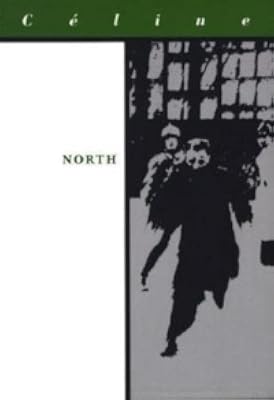
Castle to Castle is the first of Celine's very highly subjective trilogy of books concerning his World War II experiences and adventures. For those who might not be in the know Celine found himself somehow on the wrong side of the equation during the war mainly due to his anti-semetic, anti-communist ideology as not much else fit very easily into a nazi or fascist worldview. Castle to Castle published originally in French in 1957 first begins in present time with the somewhat embittered narrator recounting his fall from grace--the present day hardships of trying to scrape by as a certified doctor with no car, no maids, no patients to speak of, something of a pariah etc. on noodes and vegetables and bedeviled by crank callers on the show more phone and at his door and the odd malaria attack; occasionally taking us back to those heady times before he fled from Paris a target of the Communist resistance. Eventually comes the big malarial attack from which he hallucinates the arrival of the french film actor and former friend Le Vigan. Then we're finally off to the races to Baden Baden with his wife Lili and cst Bebert in tow in I believe 1943 with a host of refugees many from the hoi polloi on the run from the allies and not always in the good graces of the Nazi's or their Vichy allies and subject to mysterious and sinister disappearances. Those authorities taking a particularly dim view of Bebert the cat. For those who don't know Celine his writing style is unique--comparable to an electric current--steady and rhythmic--it tends to grab hold and doesn't let go. While this really cannot be considered historical fiction in any true sense of the word it does give some very penetrating and candid portrayals of many of the major personalities of the Vichy regime and a few nazi's besides. Celine has a nasty and sometimes violent sense of humor--though the violence is more controlled here. The second book and real masterpiece 'North' is still to come but this was a very interesting start. show less
En 1932, avec le Voyage au bout de la nuit, Louis-Ferdinand Céline s'imposait d'emblée comme un des grands novateurs de notre temps. Le Voyage était traduit dans le monde entier et de nombreux écrivains ont reconnu ce qu'ils devaient à Céline, de Henry Miller à Marcel Aymé, de Sartre à Jacques Perret, de Simenon à Félicien Marceau.
D'un château l'autre pourrait s'intituler 'le bout de la nuit'. Les châteaux dont parle Céline sont en effet douloureux, agités de spectres qui se nomment la Guerre, la Haine, la Misère. Céline s'y montre trois fois châtelain : à Sigmaringen en compagnie du maréchal Pétain et de ses ministres ; au Danemark où il demeure dix-huit mois dans un cachot, puis quelques années dans une ferme show more délabrée ; enfin à Meudon où sa clientèle de médecin se réduit à quelques pauvres, aussi miséreux que lui.
Il s'agit pourtant d'un roman autant que d'une confession, car Céline n'est pas fait pour l'objectivité.
Avec un comique somptueux, il décrit les Allemands affolés, l'Europe entière leur retombant sur la tête, les ministres de Vichy sans ministère, et le Maréchal à la veille de la Haute Cour.
D'un château l'autre doit être considéré au même titre que le Voyage au bout de la nuit et Mort à crédit comme un des grands livres de Céline auqel il donna du reste une suite avec Nord (1960) et Rigodon (1969).
Source: Amazon - March 21, 2018 show less
D'un château l'autre pourrait s'intituler 'le bout de la nuit'. Les châteaux dont parle Céline sont en effet douloureux, agités de spectres qui se nomment la Guerre, la Haine, la Misère. Céline s'y montre trois fois châtelain : à Sigmaringen en compagnie du maréchal Pétain et de ses ministres ; au Danemark où il demeure dix-huit mois dans un cachot, puis quelques années dans une ferme show more délabrée ; enfin à Meudon où sa clientèle de médecin se réduit à quelques pauvres, aussi miséreux que lui.
Il s'agit pourtant d'un roman autant que d'une confession, car Céline n'est pas fait pour l'objectivité.
Avec un comique somptueux, il décrit les Allemands affolés, l'Europe entière leur retombant sur la tête, les ministres de Vichy sans ministère, et le Maréchal à la veille de la Haute Cour.
D'un château l'autre doit être considéré au même titre que le Voyage au bout de la nuit et Mort à crédit comme un des grands livres de Céline auqel il donna du reste une suite avec Nord (1960) et Rigodon (1969).
Source: Amazon - March 21, 2018 show less
Trois etoiles, pour le style, et l'energie hallucinante de l'auteur a l'encontre du genre humain, mais pose beaucoup de question sur qui est victime?
One of the greatest writers of the 20th century--even Beckett (who was the polar opposite in terms of politics) admired his precise, brilliant prose.
Premier volet de la trilogie allemande finale de Céline (cf. ##Nord## et ##Rigodon##).
Members
- Recently Added By
Author Information

159+ Works 13,546 Members
Louis-Ferdinand Celine was born Louis-Ferdinand Destouches in Courbevoie, France on May 27, 1894. He received his medical degree in 1924 and traveled extensively on medical missions for the League of Nations. In 1928, he opened a practice in a suburb of Paris and wrote in his spare time. His first novel, Journey to the End of Night, was published show more in 1932. His other works include Death on the Installment Plan, Castle to Castle, North, and Rigadoon. A violent anti-Semite, he wrote three pamphlets on the subject: Trifles for a Massacre, School for Corpses, and The Fine Mess. During World War II, he was considered a collaborationist during the German occupation of France. Fearing that he would be charged with the crime, he fled during the Allied liberation of France to Denmark via Germany. In Denmark he was imprisoned for more than a year after French officials charged him with collaboration and demanded his extradition. He returned to France in 1951 after he was granted amnesty by a military tribunal in Paris. He resumed the practice of medicine and continued to write. He died on July 1, 1961. (Bowker Author Biography) show less
Some Editions
Awards and Honors
Awards
Distinctions
Series
Belongs to Publisher Series
Work Relationships
Has the adaptation
Common Knowledge
- Canonical title
- Castle to Castle
- Original title
- D'un château l'autre
- Original publication date
- 1957
- People/Characters*
- Louis Ferdinand Céline
- Important places
- France
- Important events
- World War II (1939 | 1945); World War II, German Occupation of France (1940 | 1944)
- First words*
- Jos nyt suoraan puhutaan, ihan meidän kesken, tämä päättyy minun osaltani vielä huonommin kuin alkoi... eikä se edes alkanut kovin hyvin...
- Original language*
- Frans
*Some information comes from Common Knowledge in other languages. Click "Edit" for more information.
Classifications
Statistics
- Members
- 781
- Popularity
- 35,612
- Reviews
- 12
- Rating
- (3.86)
- Languages
- 11 — Czech, Danish, Dutch, English, Finnish, French, German, Italian, Portuguese, Spanish, Swedish
- Media
- Paper, Audiobook, Ebook
- ISBNs
- 34
- ASINs
- 19