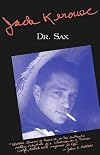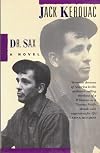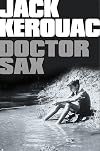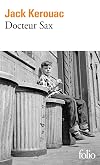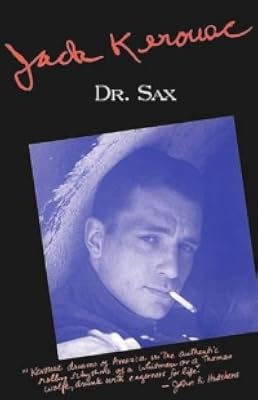
Dr. Sax
by Jack Kerouac 
On This Page
Description
In this haunting novel of intensely felt adolescence, Jack Kerouac tells the story of Jack Duluoz, a French-Canadian boy growing up, as Kerouac himself did, in the dingy factory town of Lowell, Massachusetts. Dr. Sax, with his flowing cape, slouch hat, and insinuating leer, is chief among the many ghosts and demons that populate Jack's fantasy world. Deftly mingling memory and dream, Kerouac captures the accents and texture of his boyhood in Lowell as he relates Jack's adventures with this show more cryptic, apocalyptic hipster phantom. show lessTags
Recommendations







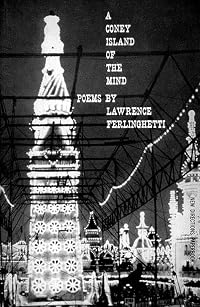



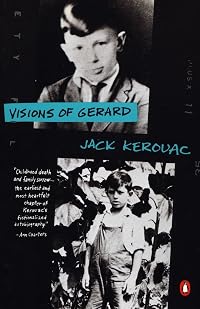
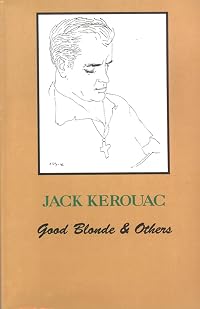
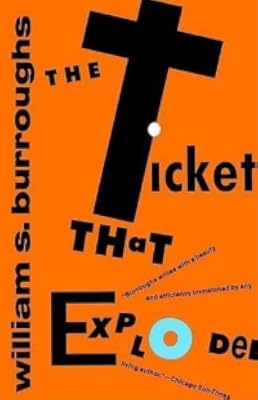
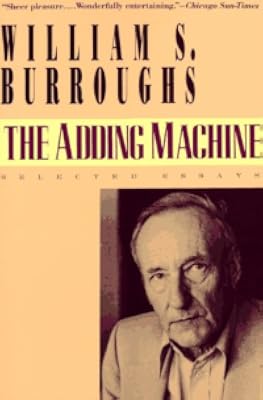

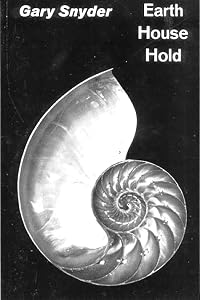




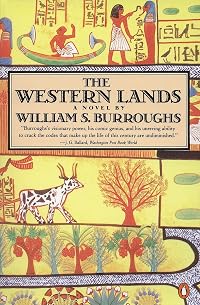
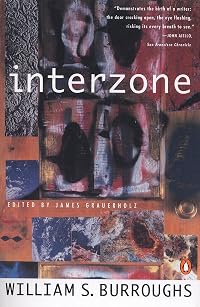







Member Recommendations
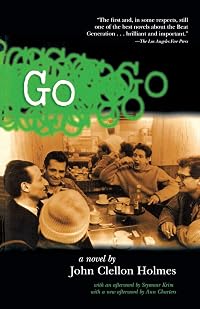
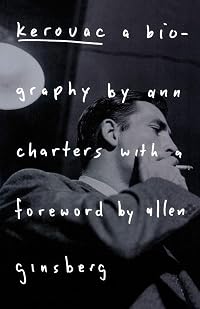
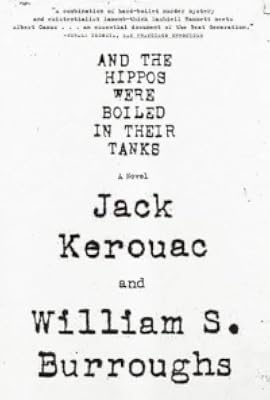
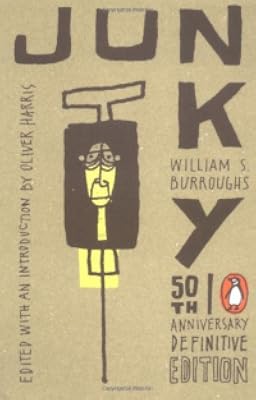
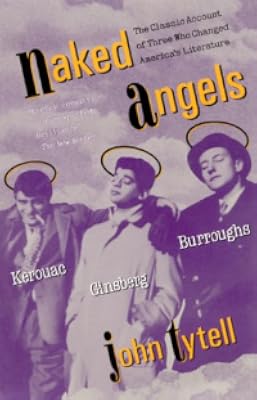
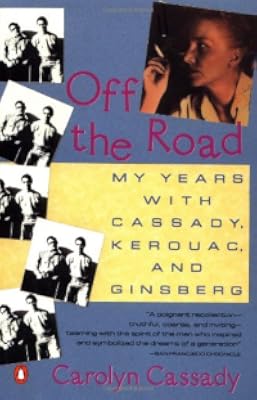
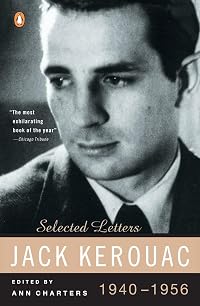
joemontibello Both novels that focus on Kerouac's early life in Lowell, MA.
Member Reviews
The Legend of Duluoz II (1959) - Many of Kerouac's prose poesy jazz solo riffs fall flat but sometimes he gets on a roll (Blow! Blow!) that is quite something. As a lifetime North-Eastener (Southern Ontario), his descriptions of the cool autumn playing fields, snowy winter nights, and muddy springs of Lowell, Massachusetts really resonated. Though very imaginative, the Dr. Sax/Great World Snake storyline didn't do much for me.
This was an internalized, intense character study set amidst demons, monsters, ghosts, and the infamous Doctor Sax in an assembly of short passages, each one tersely and eloquently written, in the midst of Kerouac's childhood. I've never quite read a novel like this- its flow, the images, the poetry, the dialogue, the atmosphere, the flow, it's all overflowing and mingling into each other to become something greater than the sum of its individual parts. An extremely entertaining, illuminating, intellectual, mystical, and revealing portrait of a man. This is among Kerouac's greatest works of fiction. All hats off, he did so well.
5 stars- LOVED it!
5 stars- LOVED it!
Jack Kerouac called Doctor Sax, the enigmatic figure who haunted his boyhood imagination, 'my ghost, personal angel, private shadow, secret lover'. In this extraordinary autobiographical account of growing up in Lowell, Massachussetts, told through his fictional alter ego Jack Duluoz, he mingles real people and events with fantastical figures to capture the accents, scents, sights and texture of his childhood: playing among the river weeds and railroad tracks, going to church, witnessing life and death on the street corners. Written when he was staying with William Burroughs in Mexico in 1952, Doctor Sax was Kerouac's favourite of all his books: a dark, vivid and magical evocation of a boy's vibrant inner life.
What a strange book! Not what I was prepared for after reading Visions of Gerard (which I liked better). Hallucinatory, full of memories and visions without much regard for a narrative--nothing wrong with that--but I admit to losing track sometimes and realizing I was just reading one word after another. The visionary stuff reminded me of reading The Revelation to John (or The Apocalypse) in the New Testament where some of the visions simply didn't make sense--even in a visionary sense. (D.H. Lawrence describes this well in his book on the Apocalypse of John). The images just didn't connect. And yet, it had those moments of sheer nostalgic brilliance that Kerouac could do so well: "We felt we'd grown up because these places and scenes show more were now more than child's play, they were now ablated in pure day by the white snow mist of tragedy." Rest well, Jack, and thanks for the words. show less
I've given this the same score as 'On the Road' but of the two i'd say this is better. Its 2/3's autobiography of Kerouac as a child and there's a lot of neat little stories and information in these parts.
However every so often it jumps to an abandoned house on a hill, where a host of B-Movie monsters are having a meeting. Its quite weird and there's significant references to 'Lair of the White Worm' and Lovecraft.
One other odd thing is that in 'On the Road' Dr. Sax is mentioned essentially as an analogue of satan. So its strange to have him as the hero, or at least anti-hero of this story and whats stranger is the protagonist effectively becoming his sidekick. I'm not sure what writing yourself into a story as satans sidekick says show more about someone show less
However every so often it jumps to an abandoned house on a hill, where a host of B-Movie monsters are having a meeting. Its quite weird and there's significant references to 'Lair of the White Worm' and Lovecraft.
One other odd thing is that in 'On the Road' Dr. Sax is mentioned essentially as an analogue of satan. So its strange to have him as the hero, or at least anti-hero of this story and whats stranger is the protagonist effectively becoming his sidekick. I'm not sure what writing yourself into a story as satans sidekick says show more about someone show less
I finished this book and thought to myself, "What the hell was that about?" I still don't know. It is poetic in the sense that it has a distinct rhythm, not as hectic as the rhythm of On the Road, but a rhythm nonetheless. I read this book over a few days, and my dreams were haunted by visions of my childhood. Not that my childhood compares with Kerouac's, in many ways he seemed to have an enjoyable childhood with many friends. But his childhood recollections of creativity and games and imagination allow one to recall a time long past. As I read the book, I wanted it to finish as soon as possible. I couldn't stop reading it, but I wanted it to end. When it ended with:
Written in Mexico City, Tenochtitlan,1952 Ancient Capital of show more AztecaI was convinced Kerouac was completely off his nut when he wrote this work. So I looked to The Guardian and The New York Times to see what it was all about. In The Guardian, Lettie Ransley suggests that Kerouac was using what he:
...came to refer to as his "spontaneous prose" method: incantatory and insistent in its rhythms...One can certainly feel the rhythm, much like an ebbing tide. But David Dempsey (1959) of the New York Times was closer to how I feel about the work:
"Dr. Sax" is not only bad Kerouac; it is a bad book. Much of it is in bad taste, and much more is meaningless. It runs the gamut from the incoherent to the incredible, a mishmash of avant-gardism (unreadable), autobiography (seemingly Kerouac's) and fantasy (largely psychopathic).While I am reluctant to say it was bad, I am none the wiser as to why one might read it, other than for historical study purposes. Dempsey tells me that Truman Capote said of Dr Sax:
...this isn't writing, it's just typing.Capote might be close to the truth, but I find it difficult to accept that the little I have read of Finnegan's Wake is somehow art while Doctor Sax is something else. So while I must appreciate it for its historical merit, and I while I have not lost anything from reading it (it has forced me to think and to recollect forgotten moments from childhood), I find it hard to say this is a good book, and I would hesitate to recommend it to anyone other than the student of literature. I enjoyed Maggie Cassidy and On the Road, but I have struggled to commit to Kerouac's Wake Up. All I can say is that after this book, I think Jack and I need a little time apart. show less
Maybe I'm too old or Kerouac was just phoning it in at this point, put this scatter, hallucinogenic series of quasi-autobiographical recollections with a mysterious Dr. Sax shoe-horned in is in no way on par wiht the classic On The Road
Members
- Recently Added By
Lists

Works Referenced in The League of Extraordinary Gentlemen
122 works; 6 members

recommended
8 works; 1 member
Author Information

216+ Works 68,463 Members
Jack Kerouac was born in Lowell, Massachusetts, in 1922. His first novel, The Town and the City, was published in 1950. He considered all of his "true story novels," including On the Road, to be chapters of "one vast book," his autobiographical Legend of Duluoz. He died in St. Petersburg, Florida, in 1969 at the age of forty-seven. (Publisher show more Provided) show less
Jack Kerouac has a Legacy Library. Legacy libraries are the personal libraries of famous readers, entered by LibraryThing members from the Legacy Libraries group.
Series
Belongs to Publisher Series
Gallimard, Folio (2607)
Common Knowledge
- Original title
- Doctor Sax: Faust Part Three
- Alternate titles
- Doctor Sax: Faust Part Three
- Original publication date
- 1959
- People/Characters
- Jack Duluoz
- Important places
- Lowell, Massachusetts, USA
- First words
- The other night I had a dream that I was sitting on the sidewalk on Moody Street, Pawtucketville, Lowell, Mass., with a pensil and paper in my hand saying to myself "Describe the wrinkly tar of this sidewalk, also the iron pi... (show all)ckets of Textile Institute, or the doorway where Lousy and you and G.J.'s always sittin and dont stop to think of words when you do stop, just stop to think of the picture better - and let your mind off yourself in this work."
- Last words
- (Click to show. Warning: May contain spoilers.)I found another rose, and put another rose in my hair, and went home.
/ By God.
Classifications
Statistics
- Members
- 948
- Popularity
- 28,056
- Reviews
- 15
- Rating
- (3.18)
- Languages
- 6 — Czech, English, French, German, Hungarian, Italian
- Media
- Paper, Audiobook, Ebook
- ISBNs
- 30
- ASINs
- 27