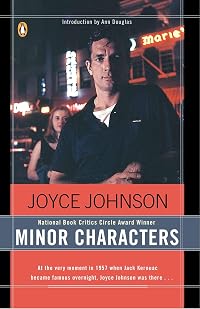
Minor Characters: A Beat Memoir
by Joyce Johnson
On This Page
Description
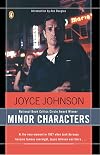
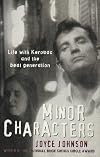
Named one of the 50 best memoirs of the past 50 years by The New York Times Winner of the National Book Critics Circle Award "Among the great American literary memoirs of the past century . . . a riveting portrait of an era . . . Johnson captures this period with deep clarity and moving insight." - Dwight Garner, The New York Times In 1954, Joyce Johnson's Barnard professor told his class that most women could never have the kinds of experiences that would be worth writing about. show more Attitudes like that were not at all unusual at a time when "good" women didn't leave home or have sex before they married; even those who broke the rules could merely expect to be minor characters in the dramas played by men. But secret rebels, like Joyce and her classmate Elise Cowen, refused to accept things as they were. As a teenager, Johnson stole down to Greenwich Village to sing folksongs in Washington Square. She was 21 and had started her first novel when Allen Ginsberg introduced her to Jack Kerouac; nine months later she was with Kerouac when the publication of On the Road made him famous overnight. Joyce had longed to go on the road with him; instead she got a front seat at a cultural revolution under attack from all sides; made new friends like Hettie and LeRoi Jones, and found herself fighting to keep the shy, charismatic, tormented Kerouac from destroying himself. It was a woman's adventure and a fast education in life. What Johnson and other Beat Generation women would discover were the risks, the heartache and the heady excitement of trying to live as freely as the rebels they loved. show lessTags
Recommendations












Member Reviews
How did I come to read this book?
In December 2022, I went to Mexico City. It was my first visit there, and I spent much of it simply walking around various neighborhoods. I was aware of some literary history, and remembered its connections to the Beats - in particular, the near-legendary episode where William Burroughs killed his wife with a gun in Mexico City when they were “playing William Tell”. It is one of the two killings that are part of the founding mythos of the Beats (the other being that by Lucian Carr).
I looked up some information about the Burroughs killing and discovered it occurred in a very pleasant, tree-lined neighborhood I had just been exploring the day before; I had walked within a block of the location. show more
Remembering also that some parts of On the Road took place in Mexico City, when I got home I pulled out my copy and reread that section. It’s the last major trip in the book, where Sal and Dean drive down to Mexico City from Denver, Dean’s home. Most of the scenes take place during a few stopovers in small Mexican towns, hardly any in CDMX (as Mexico City is often abbreviated) itself. Still, those Mexican scenes were very compelling - what a great book, and the text remains intense and vibrant all these years later.
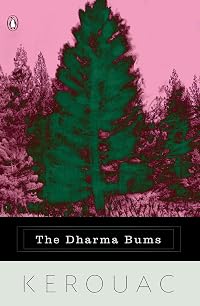
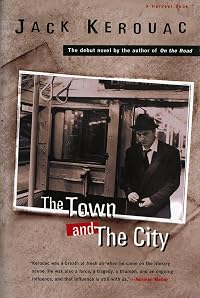
So I was thinking about Kerouac and the Beats again. I looked over my other Kerouac books, like Desolation Angels, Vanity of Duluoz, and Dharma Bums. What else could I read? Maybe his first book, The Town and the City? Then I remembered having read a column by Dwight Garner recommending a memoir by one of the women in the Beat circle. I found and reread the column - on Joyce Johnson’s Minor Characters - and ordered it (in paperback) immediately after.
I just finished it - what a moving and enjoyable book! (Thank you, Dwight Garner!)
Kerouac himself doesn’t enter until the second half of the book, but the early parts about young Joyce Glassman growing up in upper Manhattan, trying to explore the dangerous world of bohemians in Greenwich Village, and then going to Barnard, are very engaging. Johnson was a dozen or so years younger than Kerouac, and so she was in elementary school in Morningside Heights when Kerouac, Carr, and Ginsburg were Columbia undergrads just a few blocks away. She speculates that she might have crossed paths with them outside some of the neighborhood cafes and restaurants.
Kerouac finally enters the book in 1956, when twenty-one year old Joyce is set up with him by Allen Ginsburg on a blind date at a downtown diner. He’s just recently gotten into town and is broke; she enters the diner and recognizes him by his colorful lumberjack shirt. She buys him some food and brings him home.
The period that she was his on-and-off girlfriend, about a year or two, includes the long-awaited publication of On the Road, and the instant impact it made on 1957 America (more than 5 years after he wrote it). Joyce and Jack head down to the newsstand at midnight on publication day, buy the New York Times when it rolls off the truck, and tear it open to read the review they expect. And wow. It was an ode to the new king of the Beats, hailing a great new writer and a great new literary generation. He became a literary celebrity and the embodiment of the “Beat” generation overnight.
At first, I felt that Johnson’s description of Jack (as she calls him) was superfluous, that I didn’t need it, because I already knew him from reading his books. His prose is such a direct and transparent record of his consciousness that I, as his reader, was completely familiar with his personality, from the inside. Johnson describes him from the outside. But eventually I was won over, convinced that this view of Kerouac from the outside is a valuable complement to his writings.
Kerouac as he appears in Minor Characters is at once familiar and also subtly different from the narrator of his books. His devotion to lived experience, observation, and writing are all there, as are the genuineness of his bohemian outlook and rejection of society’s norms. The negatives are prominent too, especially his drinking problem, but also his restlessness, his inability to stay in one place or with one woman.
He heads out to California, from where he writes to Joyce to urge her to come out West. She duly makes the plans, but then he calls to say that San Francisco is dead, a big disappointment, and that he’s going to head to Mexico - the only place, he has decided, to find a true meaningful existence. And soon he writes from Mexico, again urging her to join him, saying they’ll live together writing books; she quits her job to join him, but before she can leave Jack decides he hates it there and is coming back to the States.
In his best books, Kerouac was able to turn that restlessness into a great asset, a constant searching, a need for movement towards an authentic core of human life. From the girlfriend’s everyday perspective, it caused tremendous difficulty in achieving stability or lasting happiness.
In the book, the only anchor in his life seems to be his mother. After enough time roaming or drinking with friends, he always heads back to Memere, as he calls her. During most of the period covered in this book, Memere is living in Orlando, but later, at Joyce’s suggestion, he buys a house for Memere (and himself) out on Long Island, from where he can easily head in to New York when the urge for a drink at a crowded bar takes hold.
The Jack of Minor Characters, although on the whole bearing witness to the truth of Kerouac’s books, is actually more charismatic, more rugged and handsome, and more attractive to women than Sal Paradise or the other narrators. When Joyce and Jack go out, there are always other women around trying to get his attention, sometimes quite aggressively. Whereas in On the Road, for example, Sal comes across more as the quiet observer, in the shadow of the kinetic and magnetic Dean Moriarty, who is constantly juggling wives and girlfriends.
Johnson portrays Kerouac as an artist and a true bohemian, not merely a talented writer adopting a persona. And a great artist at that, searching for “bedrock experience” and the means to convey it on the page. I turned the last page of the book more convinced than ever of Kerouac’s artistic stature, and eager to read the rest of his oeuvre that I’ve missed so far. Not every artist can withstand such a warts-and-all close-up portrait, but my respect was in the end enhanced, not diminished, by his portrayal here. I’m even thinking that On the Road may be the great book of 20th century America.
Joyce Johnson broke up with Kerouac in frustration, but walked away from the relationship believing in his greatness as an artist. Maybe it’s a blessing that she waited twenty-five years before writing this memoir, as it gives her text a mature perspective. She is thankful for her time with him, and for her time as part of the circle of artists now known as the Beat Movement. And so are we. show less
In December 2022, I went to Mexico City. It was my first visit there, and I spent much of it simply walking around various neighborhoods. I was aware of some literary history, and remembered its connections to the Beats - in particular, the near-legendary episode where William Burroughs killed his wife with a gun in Mexico City when they were “playing William Tell”. It is one of the two killings that are part of the founding mythos of the Beats (the other being that by Lucian Carr).
I looked up some information about the Burroughs killing and discovered it occurred in a very pleasant, tree-lined neighborhood I had just been exploring the day before; I had walked within a block of the location. show more
Remembering also that some parts of On the Road took place in Mexico City, when I got home I pulled out my copy and reread that section. It’s the last major trip in the book, where Sal and Dean drive down to Mexico City from Denver, Dean’s home. Most of the scenes take place during a few stopovers in small Mexican towns, hardly any in CDMX (as Mexico City is often abbreviated) itself. Still, those Mexican scenes were very compelling - what a great book, and the text remains intense and vibrant all these years later.
So I was thinking about Kerouac and the Beats again. I looked over my other Kerouac books, like Desolation Angels, Vanity of Duluoz, and Dharma Bums. What else could I read? Maybe his first book, The Town and the City? Then I remembered having read a column by Dwight Garner recommending a memoir by one of the women in the Beat circle. I found and reread the column - on Joyce Johnson’s Minor Characters - and ordered it (in paperback) immediately after.
I just finished it - what a moving and enjoyable book! (Thank you, Dwight Garner!)
Kerouac himself doesn’t enter until the second half of the book, but the early parts about young Joyce Glassman growing up in upper Manhattan, trying to explore the dangerous world of bohemians in Greenwich Village, and then going to Barnard, are very engaging. Johnson was a dozen or so years younger than Kerouac, and so she was in elementary school in Morningside Heights when Kerouac, Carr, and Ginsburg were Columbia undergrads just a few blocks away. She speculates that she might have crossed paths with them outside some of the neighborhood cafes and restaurants.
Kerouac finally enters the book in 1956, when twenty-one year old Joyce is set up with him by Allen Ginsburg on a blind date at a downtown diner. He’s just recently gotten into town and is broke; she enters the diner and recognizes him by his colorful lumberjack shirt. She buys him some food and brings him home.
The period that she was his on-and-off girlfriend, about a year or two, includes the long-awaited publication of On the Road, and the instant impact it made on 1957 America (more than 5 years after he wrote it). Joyce and Jack head down to the newsstand at midnight on publication day, buy the New York Times when it rolls off the truck, and tear it open to read the review they expect. And wow. It was an ode to the new king of the Beats, hailing a great new writer and a great new literary generation. He became a literary celebrity and the embodiment of the “Beat” generation overnight.
At first, I felt that Johnson’s description of Jack (as she calls him) was superfluous, that I didn’t need it, because I already knew him from reading his books. His prose is such a direct and transparent record of his consciousness that I, as his reader, was completely familiar with his personality, from the inside. Johnson describes him from the outside. But eventually I was won over, convinced that this view of Kerouac from the outside is a valuable complement to his writings.
Kerouac as he appears in Minor Characters is at once familiar and also subtly different from the narrator of his books. His devotion to lived experience, observation, and writing are all there, as are the genuineness of his bohemian outlook and rejection of society’s norms. The negatives are prominent too, especially his drinking problem, but also his restlessness, his inability to stay in one place or with one woman.
He heads out to California, from where he writes to Joyce to urge her to come out West. She duly makes the plans, but then he calls to say that San Francisco is dead, a big disappointment, and that he’s going to head to Mexico - the only place, he has decided, to find a true meaningful existence. And soon he writes from Mexico, again urging her to join him, saying they’ll live together writing books; she quits her job to join him, but before she can leave Jack decides he hates it there and is coming back to the States.
In his best books, Kerouac was able to turn that restlessness into a great asset, a constant searching, a need for movement towards an authentic core of human life. From the girlfriend’s everyday perspective, it caused tremendous difficulty in achieving stability or lasting happiness.
In the book, the only anchor in his life seems to be his mother. After enough time roaming or drinking with friends, he always heads back to Memere, as he calls her. During most of the period covered in this book, Memere is living in Orlando, but later, at Joyce’s suggestion, he buys a house for Memere (and himself) out on Long Island, from where he can easily head in to New York when the urge for a drink at a crowded bar takes hold.
The Jack of Minor Characters, although on the whole bearing witness to the truth of Kerouac’s books, is actually more charismatic, more rugged and handsome, and more attractive to women than Sal Paradise or the other narrators. When Joyce and Jack go out, there are always other women around trying to get his attention, sometimes quite aggressively. Whereas in On the Road, for example, Sal comes across more as the quiet observer, in the shadow of the kinetic and magnetic Dean Moriarty, who is constantly juggling wives and girlfriends.
Johnson portrays Kerouac as an artist and a true bohemian, not merely a talented writer adopting a persona. And a great artist at that, searching for “bedrock experience” and the means to convey it on the page. I turned the last page of the book more convinced than ever of Kerouac’s artistic stature, and eager to read the rest of his oeuvre that I’ve missed so far. Not every artist can withstand such a warts-and-all close-up portrait, but my respect was in the end enhanced, not diminished, by his portrayal here. I’m even thinking that On the Road may be the great book of 20th century America.
Joyce Johnson broke up with Kerouac in frustration, but walked away from the relationship believing in his greatness as an artist. Maybe it’s a blessing that she waited twenty-five years before writing this memoir, as it gives her text a mature perspective. She is thankful for her time with him, and for her time as part of the circle of artists now known as the Beat Movement. And so are we. show less
A riveting account of what it was like to be female in the fifties when women were considered secondary kinds of people who existed only to service and wait on the men. I remember trying to read On the Road forty-plus years ago and putting it aside because it seemed, at the time, nearly unreadable. Joyce's account of her own life uses small excerpts from Kerouac's books. If they are representative, then I'd probably still find him unreadable. I guess I don't get it. But Johnson's own writing style and her personal story are extremely readable - and interesting. I'm on her side. Her comment near the end of the book about what the beat poets and writers were all about seems to sum it up nicely: "I think it was about the right to remain show more children." This is an excellent book about the Beats, from a woman who was there and who tried to love Jack Kerouac, who was, as it turned out, incapable of returning love. Wise, sad, and eloquent. show less
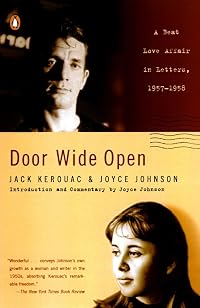
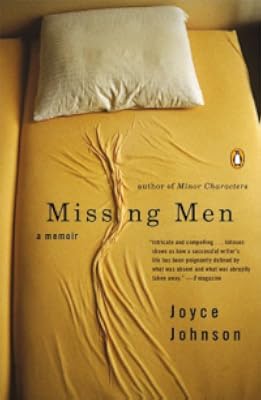
I bought this book not knowing what to expect. I knew very little of Joyce Johnson and I guess I thought this book would be a tale of she dated the most famous writer of the Beat Generation and it was claim to fame. Boy, was I wrong. Joyce Johnson talks about so much more than Jack Kerouac that if she had left him out of the book it would still have been a great memoir. There are not many books I read that I wish had another 200 or more pages to go through, but this is one time that I think the book should have been longer. Joyce Johnson is an absolutely wonderful, lyrical, gifted writer. She makes you care about each person in the book. I actually found myself upset when she tells of best friend Elise's suicide. It was easy to imagine show more as if she were my friend as well, she is described in detail by Joyce. Joyce's sequel to this book Door Wide Open: A Beat Love Affair in Letters is just as good, and so is her second memoir Missing Men. But I think this is her masterpiece. show less
A believable, very feminine biography. Jack Kerouac, the great rebel, portrayed as a little lost boy clinging to his mum. This is the story of Joyce Johnson through the years during which she was associated with Jack, as a friend, a lover and a survivor. There is no bitterness, a lot of love and a critical eye which saw through BS like a diamond tipped scalpel.
Kerouac was one of the beatnik generation, a man who achieved his goal only to find that, like his most famous work, the road was the best bit. A five star story which fades away, just when the big denouement is expected - how like life. Creditable walk on parts are taken by Allen Ginsberg, Neal Cassady, Howard Schulman and Elise.
Kerouac was one of the beatnik generation, a man who achieved his goal only to find that, like his most famous work, the road was the best bit. A five star story which fades away, just when the big denouement is expected - how like life. Creditable walk on parts are taken by Allen Ginsberg, Neal Cassady, Howard Schulman and Elise.
Memoir by the (much younger) woman Kerouac was dating when he became famous. It didn't end happily ever after.
Go man, go! but read it in your 20s - later on, they mostly come across as a mass of fools and jerks.
Go man, go! but read it in your 20s - later on, they mostly come across as a mass of fools and jerks.
This was one of my favorite books in high school. I am definitely due for a re-read as I've forgotten most of it. I also don't know how I would feel about it now. But, I can say, that what I do remember is feeling this woman's hopes and love and struggle so poignantly that, by the end, I was bawling.
Eh. It was okay.
Members
- Recently Added By
Published Reviews
ThingScore 100
“Minor Characters” is, in its quiet but deliberate way, among the great American literary memoirs of the past century.
added by theaelizabet
“In Johnson’s memoir, the self encounters itself as other, the dead are brought back to life by the delicate rigor of human understanding, yielding empathy and fascination rather than complete catharsis.”
added by theaelizabet
Author Information

9+ Works 1,253 Members
Joyce Johnson was born in 1935. At the age of eight her family moved to Manhattan, to an apartment that landed her in the middle of the Beat Movement at an early age. Her parents wanted her to be a librettist, but she only ever had half her mind on the music. At the age of 16, she was accepted to Barnard College. There she befriended Elise Cowan, show more Allen Ginsberg's supposed girlfriend. The two became close friends, and Cowan introduced her to the literary world of the Beat Movement. After a huge fight with her family over abandoning her music, Johnson left home. Ginsberg introduced Johnson to Jack Kerouac in January of 1957, an introduction that would change her life and her career forever. She published her first novel Come and Join the Dance at the age of 26, four years after her and Kerouac went their separate ways. Long after their separation, she published Minor Characters a book about her life in the Beat Movement and her romance with Jack Kerouac, which won the National Book Critics Circle Award for Autobiography in 1983. Her other works include Bad Connections, In the Night Café, Door Wide Open: A Beat Love Affair in Letters, 1957-1958, and Missing Men. In 1983, she became a faculty member of the graduate writing program at Columbia University. (Bowker Author Biography) show less
Awards and Honors
Notable Lists
Series
Belongs to Publisher Series
edition fünf (3)
Work Relationships
Common Knowledge
- Canonical title*
- Warten auf Kerouac. Ein Leben in der Beat-Generation
- Original title
- Minor Characters
- Original publication date
- 1983
- People/Characters
- Joyce Johnson; Jack Kerouac
- Important events
- Beat Generation
- Blurbers
- Angela Carter
*Some information comes from Common Knowledge in other languages. Click "Edit" for more information.
Classifications
Statistics
- Members
- 583
- Popularity
- 50,400
- Reviews
- 9
- Rating
- (3.91)
- Languages
- 7 — Danish, English, French, German, Italian, Spanish, Swedish
- Media
- Paper, Audiobook, Ebook
- ISBNs
- 24
- ASINs
- 4