On This Page
Description
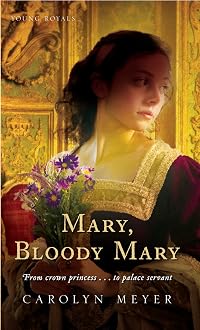
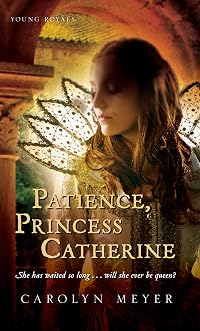
Mary Tudor, who would reign briefly as Queen of England during the mid sixteenth century, tells the story of her troubled childhood as daughter of King Henry VIII.Tags
Recommendations



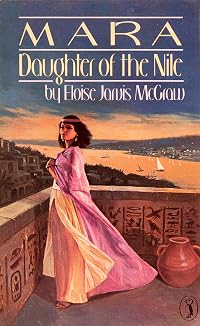
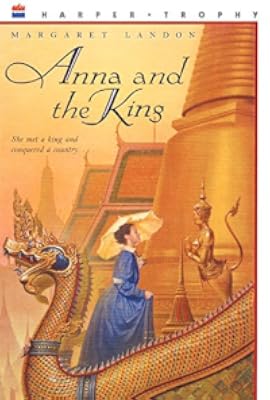
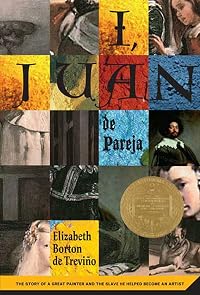
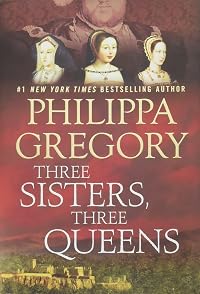


Member Recommendations
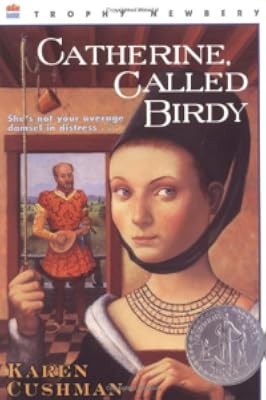
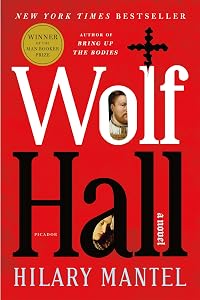
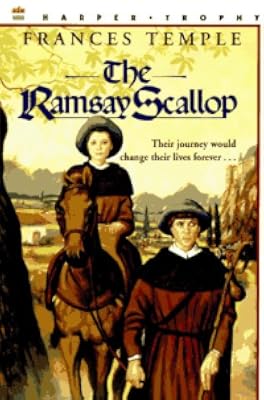
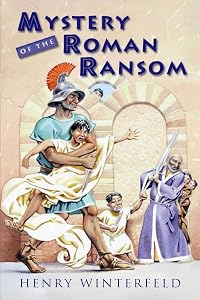
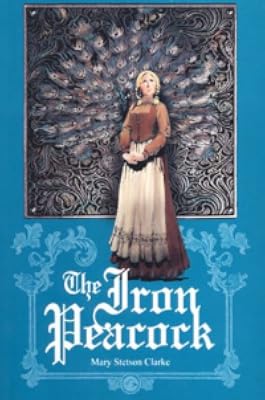
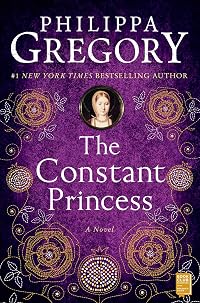
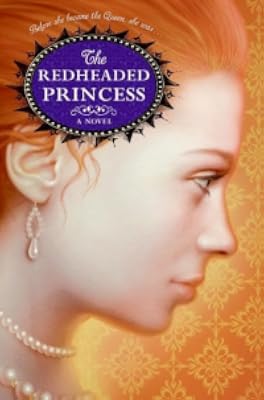
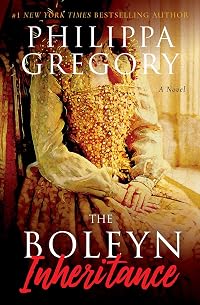
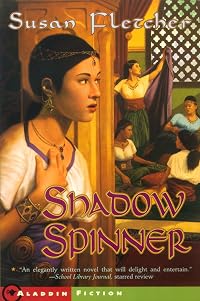
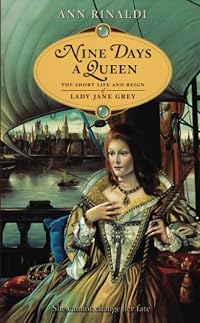
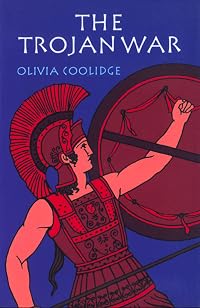
HollyMS Both are works that take a look at famous historical females whose legacies today are mostly negative.
Also recommended by rebecca191
Member Reviews
How would it feel if you were a princess beloved by your father one day and then a servant to your half sister another? In Meyer's Mary, Bloody Mary, the reader finds out. Meyer is excellent at transforming people from history into characters that are real and interesting. The reader's heart breaks as Mary struggles to understand what her place is in the kingdom when she is banished away from her place in the palace. Things seem to get worse and worse as the story continues, but Mary's spirit does not break. This is a wonderful book about courage, strength, and overcoming hardships. I recommend girls to read this type of novel so that they can find a role model that is worth looking up to. The narrative ends before Mary becomes queen, show more which probably is better because the reader doesn't lose the connection with the character, as Mary's character in the book is much different than what happens when she becomes queen. show less
When I picked this book, the next in line for my daughter's school reading, I groaned inwardly. "Not another renaissance book! I'm getting sick of the renaissance! The renaissance is overrated!" he said, swiping a line from Terry Jones. But dutiful homeschooling dad that I am, I read it anyway, bracing myself for another tedious account of betrayals and beheadings and other such royal shenanigans. I was pleasantly surprised. Ms. Meyer did an excellent job of drawing me into the story of young Mary Tudor, daughter of King Henry VIII and heir to the throne... until ol' Henry decided that he really needed a son and tried to divorce Mary's mother. By viewing the court intrigues through Mary's eyes--the viewpoint of one getting screwed over show more by all this royal b.s.--the historical story is given an emotional punch that made me want to finish the tale and root for the young princess. (It's only in the afterword when I was pulled back to reality and discovered that poor Mary had her own bloodthirsty streak.) Anyway, this is a somewhat strong tale for the young'uns, but one that makes the reader care about the people involved. Check it out.
--J. show less
--J. show less
Mary is the first born daughter of King Henry the 8th and we all know how THAT turned out! This is set at the time that Henry begins to be "bewitched " by Anne Boleyn until she eventually meets her fate at the executioner's block. Mary was known as Bloody Mary when she eventually became Queen as she sought to execute all those who were not of her faith. This book attempts to show that she became so ruthess due to the injustices she suffered at the hands of her father and Anne - forced to nor see her mother Catherine of Aragon in the 6 years before she died, loss of title, maids and wealth, the execution of her favorite tutor and maid, etc etc. It is all documented here through Mary's eyes. An interesting book in that the story flows show more quickly and the politics is very easy to understand. One for those who like My Story and the Royal Diaries series, as well as Catherine Jinks novels (though not humorous at all.) show less
Mary Tudors world falls apart when her father , Henry VIII, abandons her mother and marries his mistress Anne Boleyn. Banished to a cold lonely castle far from family and friends, Mary wears rags instead of silk and longs for her old privileged life at the court. Her humiliation is complete when Anne prders her to serve as a maid to her half sister and Elizabeth the new princess and heir. Yet even as she sees her future snatched away Mary is determined to reclaim her destiny.
My thoughts:
This is a lovely quick read about Mary Tudors early years when her father Henry VIII marries Anne Boleyn. The story is told from the point of view of youn Mary and focuses strongly on Anne and her hate for her. Although it’s Mary’s story Anne is the show more stronger character coming. With what happended to Mary it makes me think that it is no wonder that she actually turned out the way she did in later years.
I really enjoyed this book but as I love anything to do with the Tudors I knew I wouldn’t be disappointed. My only moan is that some of the historical facts are incorrect especially the ending of the book with the executions. Nether the less is is still a cracking little historical read. show less
My thoughts:
This is a lovely quick read about Mary Tudors early years when her father Henry VIII marries Anne Boleyn. The story is told from the point of view of youn Mary and focuses strongly on Anne and her hate for her. Although it’s Mary’s story Anne is the show more stronger character coming. With what happended to Mary it makes me think that it is no wonder that she actually turned out the way she did in later years.
I really enjoyed this book but as I love anything to do with the Tudors I knew I wouldn’t be disappointed. My only moan is that some of the historical facts are incorrect especially the ending of the book with the executions. Nether the less is is still a cracking little historical read. show less
I have always had an interest in history and a particular interest in Henry VIII, so when I spotted one of my students reading this book I was intrigued.
The premise
Written from the perspective of Princess Mary Tudor, this short novel for teens charts Henry’s separation from his wife Catherine, his fascination with ‘The Great Whore’ Anne Boleyn and the outcomes of his decision to marry his mistress. This is part of a series of novels for Young Adult readers in which Meyer writes about the life of a young royal from their perspective. I liked the idea even though the blurb made it sound quite ‘fairytale’ – a young girl is treated badly by a wicked stepmother and stripped of her rightful status. I have nothing against show more fairytales, it just gave the book quite a ‘young’ feel. In contrast, as the book centres around adultery and includes a passage where Mary is warned about the dangers of gang rape (which, of course, focuses on losing the public’s respect rather than possible damage to one’s sanity) the actual subject matter seems relatively adult. In that respect, I do think that the blurb is perhaps a little misleading in that it focuses on Mary’s physical discomfort, but in the novel she is in physical danger and, towards the end, several executions are described. I thought the premise an interesting one, although it is hardly unique, and I quite liked the idea of what promised to be an easy read (it has only 234 pages).
My thoughts
I found the basic set up immediately interesting. First, we are greeted by a family tree. Often, these make me groan as I assume that there will be complicated events later on that mean I need to refer back to the tree, squinting at it as I make minor connections that often prove to be dull or irrelevant. Not so in this case. The Tudor tree is clear and simple and I felt that it helped to focus my mind on the story to come.
Next, there is a prologue in which Mary passionately denounces Anne as a witch and states explicitly why she hates her. Again, I thought that this was engaging as Mary’s passion immediately made me feel at once shocked by her attitude but also intrigued. What had happened to cause such hatred? Had Anne really corrupted Henry? The prologue is kept short, which I thought was appropriate as otherwise there might be too much detail about the story. As it is, the prologue effectively set up the ground that the novel would cover, which is (approximately) 1526 – 1536, or the ‘Anne Boleyn years’. Also, the prologue made me wonder whether Anne really could be the witch that Mary believes as many of Mary’s grievances are clearly against her father, but she believes they are caused by Anne. This seems a perfectly logical position for such a young girl, especially one who would naturally revere her father (given the context of the time and situation). This meant that I was attentive and interested in the following story.
Meyer plunges the reader into Mary’s world in the first sentences of the first chapter. “I inherited King Henry’s fiery temper – no one would deny that! And so, on the day I learned that he had betrothed me to the king of France, I exploded.” I thought this was a very effective opening as it was an interesting situation and not something I’d often thought about when studying history at school, the way young princesses – and princes – were betrothed at young ages to much older people for political or financial expediency. Although it is such a strange situation for a contemporary reader, I thought Mary’s furious response would help to bridge any distance created by the unusual event. The ten year old Mary is understandably angry that she is to be married to a fat old man and this helped me to like her and to feel empathetic. This is important as she is usually remembered as per the title of the book, but this shows the notorious Bloody Mary in a sympathetic light. I liked the mixing of fact and fiction here as I thought it was quite a reasonable response to her plight!
As can be seen in the above quote, despite the fact that Mary lived nearly 500 years ago, she is given a contemporary style of speech. I thought that this was a good idea, especially as this is fiction for YA readers. It also suits Mary’s confident and curious nature. Instead of trying to create an ‘olde worlde’ atmosphere through the syntax and vocabulary, Meyer creates a sense of history through the events, historical characters and minor details. The font style helps too – I do not know the name of it, but it has a definite ‘old-fashioned’ feel. I liked this as it did help to create a sense of an earlier time.
Chapters have titles throughout, which I often find irritating as they can give away the plot developments or seem daftly elliptical and there purely to show off the author’s clever mind. The titles here are usually one or two word notes that simply suggest the chapter’s focus (e.g. ‘falconry’ or ‘lessons’) and as such I thought that they worked well enough, although I didn’t think that they were really necessary.
In terms of the plotting, I found the earlier chapters most interesting as they focused on Mary’s experiences in the castle and, as she spends a lot of time listening quietly, there is much gossip about Lady Anne and King Henry. Later on, when the pair eventually meet as stepmother and outcast daughter, Anne seemed overwritten as the evil stepmother and didn’t seem very ‘real’. As the blurb reveals, Mary is declared illegitimate and banished to make way for the new queen. I felt that as Mary’s exile developed the story became slightly repetitive and lacked excitement. Mary is threatened and punished, threatened and punished, threatened and punished… However, I think that my lack of engagement here is probably because I am slightly (!) older than the intended YA audience. (I know that my student thought the book so gripping that she was rereading it when I spotted it.) Certainly, Mary is presented here as a sympathetic yet sturdy character. She is not a wimp and she is very human. I think this would be appealing to young female readers who would like a strong female role model.
I found the ending a little disappointing. After Anne’s inevitable displacement, the book seems to limp to the end and there is a rather obvious foreshadowing of future events. Given that King Henry would have several more wives, and that Edward would take the throne before Mary, perhaps this was inevitable: although Meyer ends her story in a particular place, Mary’s is nowhere near ending. That said, it doesn’t help that Mary is still rather outside events; this means that events are reported, through dialogue or through letters, so the novel lacks immediacy and drama, even though the events themselves are significant. I thought that this was a shame as, overall, I had quite enjoyed the book.
Perhaps more problematically, the prologue suggests that we shouldn’t judge Mary – presumably by dismissing her with the moniker ‘Bloody Mary’ – until we hear her story. However, despite her poor treatment, there seems little to justify her cruel acts when in power. The novel itself simply doesn’t adequately explain this, especially as most of her hatred is towards Anne and the role of religion is minimised (there isn’t even reference to Henry’s split from Rome). Instead, Meyer attempts to redeem Mary through presenting her as a vulnerable and rejected child, and then stating in a postscript that her reign was ‘no more brutal than those of many European monarchs’. Indeed the postscript summarises in a few pages Mary’s history following 1536 and, although clearly intended to be useful, I found it raised more questions than it answered. It does, however, provide a sense of conclusion that I did nopt feel had been established by the ending of the story itself.
A note on the historical accuracy
An opening disclaimer makes it clear that this is a work of fiction, although it is obviously based on figures and events. Meyer also notes that ‘some details have been altered to enhance the story’. If you are interested in these, Wikipedia notes a few.
As it is fiction, I think it would be unfair to read it expecting total accuracy – indeed, how can you be accurate when you are representing the thoughts of a ten year old girl who is long deceased? However, I did enjoy the fact that it was based in fact and I like to think I have brushed up on my knowledge of this period through my reading!
I liked that the historical detail was incidental. There was no tedious introduction to any of the events or characters, which is good as it would not have suited the style or audience of the book.
Conclusions
I enjoyed this book sufficiently to consider reading one of the others in this series (‘Doomed Queen Anne’) and I did find it fairly interesting until Mary’s exile meant it all became too repetitive. I think it is a good book for Young Adults and I would recommend it in particular to those who are familiar with King Henry’s notorious wife changing and like the idea of a new perspective on events. For adult readers, I suspect the author Philippa Gregory may be a better option for a historical read, but suggest that this is readable if you are looking for something that won’t tax your brain. It certainly doesn’t explain Bloody Mary, but it is a sympathetic account of her childhood. show less
The premise
Written from the perspective of Princess Mary Tudor, this short novel for teens charts Henry’s separation from his wife Catherine, his fascination with ‘The Great Whore’ Anne Boleyn and the outcomes of his decision to marry his mistress. This is part of a series of novels for Young Adult readers in which Meyer writes about the life of a young royal from their perspective. I liked the idea even though the blurb made it sound quite ‘fairytale’ – a young girl is treated badly by a wicked stepmother and stripped of her rightful status. I have nothing against show more fairytales, it just gave the book quite a ‘young’ feel. In contrast, as the book centres around adultery and includes a passage where Mary is warned about the dangers of gang rape (which, of course, focuses on losing the public’s respect rather than possible damage to one’s sanity) the actual subject matter seems relatively adult. In that respect, I do think that the blurb is perhaps a little misleading in that it focuses on Mary’s physical discomfort, but in the novel she is in physical danger and, towards the end, several executions are described. I thought the premise an interesting one, although it is hardly unique, and I quite liked the idea of what promised to be an easy read (it has only 234 pages).
My thoughts
I found the basic set up immediately interesting. First, we are greeted by a family tree. Often, these make me groan as I assume that there will be complicated events later on that mean I need to refer back to the tree, squinting at it as I make minor connections that often prove to be dull or irrelevant. Not so in this case. The Tudor tree is clear and simple and I felt that it helped to focus my mind on the story to come.
Next, there is a prologue in which Mary passionately denounces Anne as a witch and states explicitly why she hates her. Again, I thought that this was engaging as Mary’s passion immediately made me feel at once shocked by her attitude but also intrigued. What had happened to cause such hatred? Had Anne really corrupted Henry? The prologue is kept short, which I thought was appropriate as otherwise there might be too much detail about the story. As it is, the prologue effectively set up the ground that the novel would cover, which is (approximately) 1526 – 1536, or the ‘Anne Boleyn years’. Also, the prologue made me wonder whether Anne really could be the witch that Mary believes as many of Mary’s grievances are clearly against her father, but she believes they are caused by Anne. This seems a perfectly logical position for such a young girl, especially one who would naturally revere her father (given the context of the time and situation). This meant that I was attentive and interested in the following story.
Meyer plunges the reader into Mary’s world in the first sentences of the first chapter. “I inherited King Henry’s fiery temper – no one would deny that! And so, on the day I learned that he had betrothed me to the king of France, I exploded.” I thought this was a very effective opening as it was an interesting situation and not something I’d often thought about when studying history at school, the way young princesses – and princes – were betrothed at young ages to much older people for political or financial expediency. Although it is such a strange situation for a contemporary reader, I thought Mary’s furious response would help to bridge any distance created by the unusual event. The ten year old Mary is understandably angry that she is to be married to a fat old man and this helped me to like her and to feel empathetic. This is important as she is usually remembered as per the title of the book, but this shows the notorious Bloody Mary in a sympathetic light. I liked the mixing of fact and fiction here as I thought it was quite a reasonable response to her plight!
As can be seen in the above quote, despite the fact that Mary lived nearly 500 years ago, she is given a contemporary style of speech. I thought that this was a good idea, especially as this is fiction for YA readers. It also suits Mary’s confident and curious nature. Instead of trying to create an ‘olde worlde’ atmosphere through the syntax and vocabulary, Meyer creates a sense of history through the events, historical characters and minor details. The font style helps too – I do not know the name of it, but it has a definite ‘old-fashioned’ feel. I liked this as it did help to create a sense of an earlier time.
Chapters have titles throughout, which I often find irritating as they can give away the plot developments or seem daftly elliptical and there purely to show off the author’s clever mind. The titles here are usually one or two word notes that simply suggest the chapter’s focus (e.g. ‘falconry’ or ‘lessons’) and as such I thought that they worked well enough, although I didn’t think that they were really necessary.
In terms of the plotting, I found the earlier chapters most interesting as they focused on Mary’s experiences in the castle and, as she spends a lot of time listening quietly, there is much gossip about Lady Anne and King Henry. Later on, when the pair eventually meet as stepmother and outcast daughter, Anne seemed overwritten as the evil stepmother and didn’t seem very ‘real’. As the blurb reveals, Mary is declared illegitimate and banished to make way for the new queen. I felt that as Mary’s exile developed the story became slightly repetitive and lacked excitement. Mary is threatened and punished, threatened and punished, threatened and punished… However, I think that my lack of engagement here is probably because I am slightly (!) older than the intended YA audience. (I know that my student thought the book so gripping that she was rereading it when I spotted it.) Certainly, Mary is presented here as a sympathetic yet sturdy character. She is not a wimp and she is very human. I think this would be appealing to young female readers who would like a strong female role model.
I found the ending a little disappointing. After Anne’s inevitable displacement, the book seems to limp to the end and there is a rather obvious foreshadowing of future events. Given that King Henry would have several more wives, and that Edward would take the throne before Mary, perhaps this was inevitable: although Meyer ends her story in a particular place, Mary’s is nowhere near ending. That said, it doesn’t help that Mary is still rather outside events; this means that events are reported, through dialogue or through letters, so the novel lacks immediacy and drama, even though the events themselves are significant. I thought that this was a shame as, overall, I had quite enjoyed the book.
Perhaps more problematically, the prologue suggests that we shouldn’t judge Mary – presumably by dismissing her with the moniker ‘Bloody Mary’ – until we hear her story. However, despite her poor treatment, there seems little to justify her cruel acts when in power. The novel itself simply doesn’t adequately explain this, especially as most of her hatred is towards Anne and the role of religion is minimised (there isn’t even reference to Henry’s split from Rome). Instead, Meyer attempts to redeem Mary through presenting her as a vulnerable and rejected child, and then stating in a postscript that her reign was ‘no more brutal than those of many European monarchs’. Indeed the postscript summarises in a few pages Mary’s history following 1536 and, although clearly intended to be useful, I found it raised more questions than it answered. It does, however, provide a sense of conclusion that I did nopt feel had been established by the ending of the story itself.
A note on the historical accuracy
An opening disclaimer makes it clear that this is a work of fiction, although it is obviously based on figures and events. Meyer also notes that ‘some details have been altered to enhance the story’. If you are interested in these, Wikipedia notes a few.
As it is fiction, I think it would be unfair to read it expecting total accuracy – indeed, how can you be accurate when you are representing the thoughts of a ten year old girl who is long deceased? However, I did enjoy the fact that it was based in fact and I like to think I have brushed up on my knowledge of this period through my reading!
I liked that the historical detail was incidental. There was no tedious introduction to any of the events or characters, which is good as it would not have suited the style or audience of the book.
Conclusions
I enjoyed this book sufficiently to consider reading one of the others in this series (‘Doomed Queen Anne’) and I did find it fairly interesting until Mary’s exile meant it all became too repetitive. I think it is a good book for Young Adults and I would recommend it in particular to those who are familiar with King Henry’s notorious wife changing and like the idea of a new perspective on events. For adult readers, I suspect the author Philippa Gregory may be a better option for a historical read, but suggest that this is readable if you are looking for something that won’t tax your brain. It certainly doesn’t explain Bloody Mary, but it is a sympathetic account of her childhood. show less
This book was an enjoyable read and as far as my knowledge goes, historically accurate. This presents the point of view of a younger Mary Tudor. This could be a good contrast to a book on Queen Elizabeth in a classroom.
Carolyn Meyer sympathetically weaves together vignettes from Mary Tudor's life in an attempt to explain how she grew into a harsh ruler. I've read stories and watched movies about Henry VIII but never thought about how much Mary's life changed with Anne Boleyn. I recommend this book for anyone who wants a quick read to gain insight into one of England's most misunderstood rulers.
Members
- Recently Added By
Lists

Sonlight Books
1,487 works; 25 members
Author Information

81+ Works 12,044 Members
Carolyn Meyer was born June 8, 1935, in Lewiston, Pennsylvania. She served as editor of her high school newspaper and yearbook, and spent summers writing radio advertisements. She graduated cum laude with a degree in English from Bucknell University in 1957. Meyer's first published book was Miss Patch's Learn-to-Sew Book, and she has written over show more fifty books since then. Her recent titles include: Diary of a Waitress: The Not-So-Glamorous life of a Harvey Girl, Anastasia and Her Sisters, Victoria Rebels, The Wild Queen: The Days and Nights of Mary, Queen of Scots and Duchessina: A novel of Catherine de' Medici. (Bowker Author Biography) show less
Awards and Honors
Awards
Distinctions
Series

Common Knowledge
- People/Characters
- Mary I, Queen of England; Henry VIII, King of England; Anne Boleyn; Elizabeth I, Queen of England; Catherine of Aragon
- Important places
- England, UK; Aragon, Spain
- Important events
- Tudor Era; Reign of Henry VIII
- First words
- Anne was a witch; I never doubted it.
Classifications
- Genres
- Fiction and Literature, Kids, Tween, Historical Fiction
- DDC/MDS
- 813.54 — Literature & rhetoric American literature in English American fiction in English 1900-1999 1945-1999
- LCC
- PZ7 .M5685 .M — Language and Literature Fiction and juvenile belles lettres Fiction and juvenile belles lettres Juvenile belles lettres
- BISAC
Statistics
- Members
- 1,751
- Popularity
- 12,649
- Reviews
- 23
- Rating
- (3.66)
- Languages
- Dutch, English, German
- Media
- Paper, Ebook
- ISBNs
- 15
- ASINs
- 5