
The House of God
by Samuel Shem
On This Page
Description
By turns heartbreaking, hilarious, and utterly human, The House of God is a mesmerizing and provocative journey that takes us into the lives of Roy Basch and five of his fellow interns at the most renowned teaching hospital in the country. Young Dr. Basch and his irreverant confident, known only as the Fat Man, will learn not only how to be fine doctors but, eventually, good human beings.Samuel Shem has done what few in American medicine have dared to do-create an unvarnished, unglorified, show more and amazingly forthright portrait revealing the depth of caring, pain, pathos, and tragedy felt by all who spend their lives treating patients and stand at the crossroads between science and humanity.With over two million copies sold worldwide, The House of God has been hailed as one of the most important medical novels of the twentieth century and compared to Sinclair Lewis's Arrowsmith for its poignant portrayal of the education of American doctors. show lessTags
Recommendations





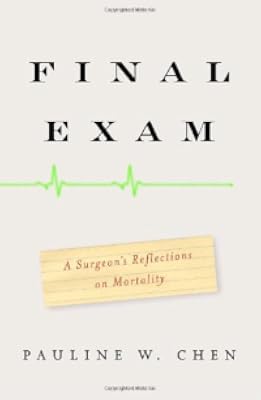

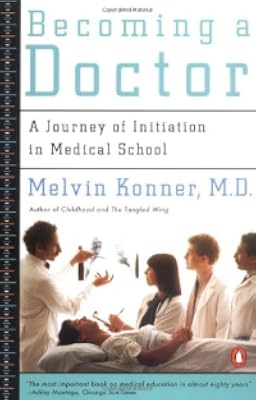
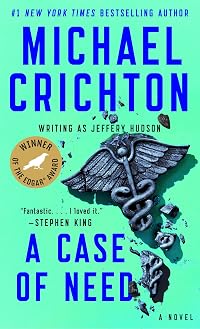

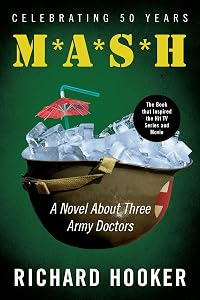







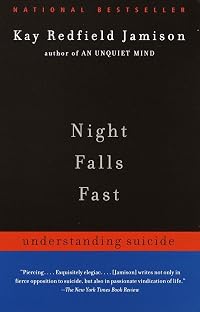

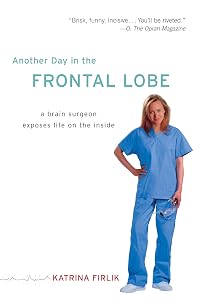




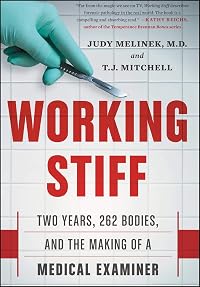
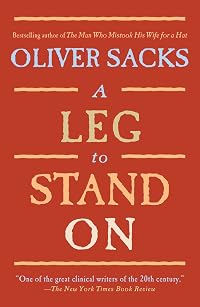




Member Recommendations
Member Reviews
Shem's fictionalized memoir, recounting his year as an intern in a major Boston hospital, is by turns dark and depressing and cynical and ribald and wildly funny. Set against the final days of Richard Nixon's presidency, the disintegration of a formerly powerful man is reflected in the increasingly fractured and disintegrating medical intern training system of the day.
Urged to "do everything possible for every patient, every time", Shem's Roy Basch and his fellow internal medicine interns are faced with aging patients whose lives can be extended, but not improved, by the medical procedures the system (and their superiors) insist they perform. And while the elderly and often demented patients are not permitted the final rest they seek show more (to the extent that they are capable of seeking anything), Basch's younger patients have a horrifying tendency to expire, either from the underlying conditions that brought them to the hospital or from botched treatments that harmed instead of helped. Battling an increasingly heavy burden of despair, Basch tries everything from long-distance running to wild bouts of casual sex to utter withdrawal from emotional involvement, with varying levels of success.
He's not alone on his journey, as the novel is also filled with sharp and involving characters, including two of the most unlikely cops ever to appear on the printed page.
How he survives the year and begins the healing that will ultimately save him, makes an often fascinating, often troublesome, always compelling read. show less
Urged to "do everything possible for every patient, every time", Shem's Roy Basch and his fellow internal medicine interns are faced with aging patients whose lives can be extended, but not improved, by the medical procedures the system (and their superiors) insist they perform. And while the elderly and often demented patients are not permitted the final rest they seek show more (to the extent that they are capable of seeking anything), Basch's younger patients have a horrifying tendency to expire, either from the underlying conditions that brought them to the hospital or from botched treatments that harmed instead of helped. Battling an increasingly heavy burden of despair, Basch tries everything from long-distance running to wild bouts of casual sex to utter withdrawal from emotional involvement, with varying levels of success.
He's not alone on his journey, as the novel is also filled with sharp and involving characters, including two of the most unlikely cops ever to appear on the printed page.
How he survives the year and begins the healing that will ultimately save him, makes an often fascinating, often troublesome, always compelling read. show less
This is an example of the benefits of stepping out of one's comfort zone. If one of my coworkers (who was a nurse in the 70s) had not lent me this book, I never ever would have picked it up. It is exactly as it proclaims to be on the cover - the "Catch 22" of medicine. It is a hilarious satire of life in a modern hospital, where the extremely elderly can be artificially kept alive forever, but athletic 30-year-old fathers still die of heart attacks. As you can imagine, it is very dark. The characters are phenomenal (if a little dated), from the genius black sidekick and the horny nurse to the policemen who speak like Harvard professors and the bitter workaholic female resident.
It wasn't perfect, but I enjoyed it and it's helped me show more understand my coworkers a little better. Highly recommended, at least if you don't usually read this sort of thing. show less
It wasn't perfect, but I enjoyed it and it's helped me show more understand my coworkers a little better. Highly recommended, at least if you don't usually read this sort of thing. show less
In a satiric novel of an intern’s descent and return, “The House of God�? reveals that modern medicine can keep some of us alive forever, but it cannot always cure the rest of us; and between the two activities, there is little time or energy left to care. The protagonist, Roy Basch, is caught in a cross-fire of indifference and sadism with only the Fat Man, an immoral trickster and Lord of Misrule, to teach him. Fortunately the Fat Man knows medicine and cares for patients – he also understands that the interns are afraid. He chides Roy for joking with his own girlfriend: “You can’t use our inside jokes with the ones outside all this… they don’t need to [see], and they don’t want to. Some things have to be kept show more private, Basch.�? Hunter, Kathryn Montgomery. “The Satiric Image: Healers in The House of God.�? Literature & Medicine 2.2 (1983):135-147. show less
On first picking up the book & reading the Introduction I thought I'd have a lot of trouble reading this, and that I wasn't going to enjoy it at all. However, I found it very easy to read once I got started, although initially I thought it quite disgusting, a bit too ribald and bitter. After a while I found I was beginning to feel compassion for the interns despite their cynical treatment of the gomers. Ultimately, the 'terns bitterness is unsurprising and I can see that suicide might be quite prevalent for those unable to cope.
Definitely well worth reading. I'd like to read it again some day as it's worth a second viewing, I think. I'd probably get a laugh out of it the 2nd time even though I'm not a part of that medical fraternity.
Definitely well worth reading. I'd like to read it again some day as it's worth a second viewing, I think. I'd probably get a laugh out of it the 2nd time even though I'm not a part of that medical fraternity.
I read this book when I was a medical student in the early 1980s (Should be a mandatory read for any medical student or resident). A very acerbic view of life as an intern in a large hospital but unfortunately it rings true. I got to meet the author in person last night as he gave a lecture at the UCF medical school.
Loved the humor, over the top and with a lot of personality. (Often crude.) Shem clearly had fun writing this. The story lacks momentum, so it was easy to put down. But overall, the unique setting and attitude made the novel worth reading.
>‘In New York once,’ said Fats, ‘we had a contest to see how long the medical service could go without an admission. Thirty-seven hours. You shoulda seen what we sent outta there. Roy, help them. Be a WALL.’
>‘In New York once,’ said Fats, ‘we had a contest to see how long the medical service could go without an admission. Thirty-seven hours. You shoulda seen what we sent outta there. Roy, help them. Be a WALL.’
And finally another reread, Samuel Shem’s House of God. As a brand new medical student, I was assigned, fresh-faced and wide-eyed, to an adult intensive care unit as a ‘taster’ to counter-balance the dry lectures and tutorials that characterise the first couple of years of medical training.
With no specialist knowledge at all, we were daunted by the onslaught of highly technical and intense terminology and concepts in the ICU, and the consultant knew it. He told us that he didn’t care if we didn’t turn up, he didn’t care if we learnt anything in particular from him during the four weeks we were scheduled to attend the unit intermittently. What he did ask each of us to do though was to read this book, and to take it all in. It show more is still one of the most useful pieces of teaching I have ever been given.
Shem’s House of God is the tale of a group of medical interns in the 70s, working in an affluent Jewish-founded hospital – the House of the title – in the US. His description of the realities of what it was like to be a junior doctor was considered shocking at the time – in the new introduction to the book, John Updike says it does for medicine what Catch-22 did for war, and that’s not far from the truth. Shem’s story is at least in part semi-autobiographical (the House of God is probably the Harvard-affiliated Beth Israel hospital in Boston), and that gives it the ring of truth, as the main character. Roy Basch, traces a parabola from eager young doctor all the way down to the depths of despair, beaten down by the system, and his ascent back out of the other side. Like all of these sorts of books – Jed Mercurio’s Cardiac Arrest TV series and his novel Bodies are the UK equivalent – the depths are deeper than most of us experience, but the flavour of it all rings absolutely true.
It is no exaggeration to say that amongst the many people in my life that have coloured the sort of doctor that I have become, the character of the Fat Man in this book is one of them. He charts a path between the necessary desensitisation to the often horrific realities of medical practice whilst still being tempered with genuine compassion and ability to see the human effects of what is done that served – and still does – as a role model. The consultant who insisted we read this book knew exactly what he was doing, and it is advice I have gladly repeated to medical students since I became responsible for helping to train them. For the non-medic it offers an insight into a particular time and place – around Basch, America is reeling from the Watergate scandal - but also a timeless description of the other side of medical care. Shem’s language has coloured all of those who came after – ‘bounce and turf’ are now standard medical terms, as are GOMERs and LOLs in NAD, and the Fat Man’s ‘Laws of the House of God’ are familiar to many who’ve never read the book.
Anyway, despite the fact that it's undoubtedly had some influence on me, it's been a long time since I've actually reread it. Doing so was prompted by the fact that I lent my copy to some bugger ages ago, who has not returned it, and I now can't remember who it was; and I saw it in a 3 for 2 offer in a bookshop. So I bought myself a new copy, which led me to reread it. It still stands up. Its vision is too dark - most of us find our own way through with far less trauma, but it nonetheless still resonates on every level. show less
With no specialist knowledge at all, we were daunted by the onslaught of highly technical and intense terminology and concepts in the ICU, and the consultant knew it. He told us that he didn’t care if we didn’t turn up, he didn’t care if we learnt anything in particular from him during the four weeks we were scheduled to attend the unit intermittently. What he did ask each of us to do though was to read this book, and to take it all in. It show more is still one of the most useful pieces of teaching I have ever been given.
Shem’s House of God is the tale of a group of medical interns in the 70s, working in an affluent Jewish-founded hospital – the House of the title – in the US. His description of the realities of what it was like to be a junior doctor was considered shocking at the time – in the new introduction to the book, John Updike says it does for medicine what Catch-22 did for war, and that’s not far from the truth. Shem’s story is at least in part semi-autobiographical (the House of God is probably the Harvard-affiliated Beth Israel hospital in Boston), and that gives it the ring of truth, as the main character. Roy Basch, traces a parabola from eager young doctor all the way down to the depths of despair, beaten down by the system, and his ascent back out of the other side. Like all of these sorts of books – Jed Mercurio’s Cardiac Arrest TV series and his novel Bodies are the UK equivalent – the depths are deeper than most of us experience, but the flavour of it all rings absolutely true.
It is no exaggeration to say that amongst the many people in my life that have coloured the sort of doctor that I have become, the character of the Fat Man in this book is one of them. He charts a path between the necessary desensitisation to the often horrific realities of medical practice whilst still being tempered with genuine compassion and ability to see the human effects of what is done that served – and still does – as a role model. The consultant who insisted we read this book knew exactly what he was doing, and it is advice I have gladly repeated to medical students since I became responsible for helping to train them. For the non-medic it offers an insight into a particular time and place – around Basch, America is reeling from the Watergate scandal - but also a timeless description of the other side of medical care. Shem’s language has coloured all of those who came after – ‘bounce and turf’ are now standard medical terms, as are GOMERs and LOLs in NAD, and the Fat Man’s ‘Laws of the House of God’ are familiar to many who’ve never read the book.
Anyway, despite the fact that it's undoubtedly had some influence on me, it's been a long time since I've actually reread it. Doing so was prompted by the fact that I lent my copy to some bugger ages ago, who has not returned it, and I now can't remember who it was; and I saw it in a 3 for 2 offer in a bookshop. So I bought myself a new copy, which led me to reread it. It still stands up. Its vision is too dark - most of us find our own way through with far less trauma, but it nonetheless still resonates on every level. show less
Members
- Recently Added By
Lists

Best medical fiction
26 works; 17 members

Jordan B. Peterson's Recommended Books
104 works; 5 members

tell me where it hurts
36 works; 7 members

Books Read in 2012
816 works; 34 members

NOVELAS Y RELATOS DE HUMOR
60 works; 1 member

Which house?
423 works; 16 members
Author Information

15 Works 2,247 Members
Some Editions
Common Knowledge
- Canonical title
- The House of God
- Original publication date
- 1978
- Important places
- New York, New York, USA
- Epigraph
- We shall forget by day, except
The moments when we choose to play
The imagined pine, the imagined jay.
~ Wallace Stevens The Man with the Blue Guitar - Dedication
- To J and Ben
- First words
- Except for her sunglasses, Berry is naked.
- Quotations
- Life's like a penis: when it's soft you can't beat it; when it's hard you get screwed.
- Last words
- (Click to show. Warning: May contain spoilers.)Humbly, I ask her to marry me.
- Disambiguation notice
- Samuel Shem, M.D. is the pen name of Stephen Bergman, M.D., Ph.D.
Classifications
Statistics
- Members
- 1,628
- Popularity
- 13,849
- Reviews
- 29
- Rating
- (3.91)
- Languages
- 13 — Czech, Danish, Dutch, English, Estonian, French, German, Italian, Korean, Lithuanian, Portuguese, Slovak, Spanish
- Media
- Paper, Audiobook, Ebook
- ISBNs
- 40
- ASINs
- 13