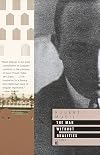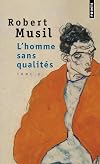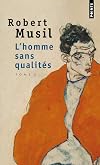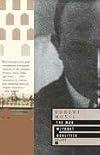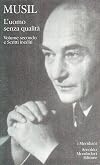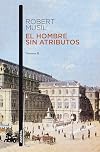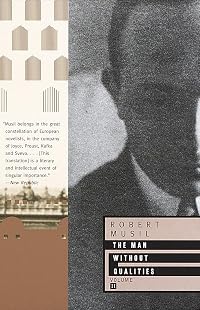
The Man Without Qualities: Into the Millennium; From the Posthumous Papers {Vol. 2 of 2}
by Robert Musil
The Man Without Qualities (2)
On This Page
Description
"Musil belongs in the company of Joyce, Proust, Kafka, and Svevo. . . . (This translation) is a literay and intellectual event of singular importance."--New Republic.Tags
Recommendations




Member Reviews
Well, I could no more ever really "finish" reading the material in this volume than the benighted Musil could finish writing his novel. It's an exercise in fascination and frustration unparalleled in my reading experience. The rich exploration of consciousness and how to live in a de-centered world continues but the story spins toward total entropy as the impossibility of what Musil was trying to imagine looms larger. Yet, as some insightful critics like Stephan Jonsson and Mark Freed have recognized, he was on to something that remains on the agenda if we are ever to evolve past the frenzied yet immobile "pseudoreality" in which his characters are trapped. We still live in Musil's world. That's the highest praise I can think to give show more the creator of any work of imagination. show less
This book was aptly described as one of the best three books of the last century.It took me almost a year to read, about a hour a day, the two volumes and posthumous papers, copious note-taking and ample reflecting. Of course a breezier approach is possible, but if one tries to read it as slowly as the author has wrote it, the paragraphs release a bouquet that's as a Mouton Rotschild 82. I would say energetically that this masterpiece builds character... Literature at its most educative and thought-provoking. Its ambitious scope spans from politics to economics, science to art, morality to justice. Musil was probably too much a philosopher to decide on writing and too much of a writer to decide on philosophy. The architecture of his show more project would probably have reached the dimensions of a modern operating system, like the 45 million lines of code in Windows XP if death wouldn't have stopped him in 1942. The posthumous papers are also highly interesting and would have made for more distilled quiet Kant-Clausewitz-Mill sagesse. There is no facil classification of the book, as his experience as scholar, his science background, military experience-first as decorated officer then as military advisor-all catalyze the whole and then there are the synergy benefits of the combined ensemble. There is no apology for complexity. The style is of a teutonic Socrates who approaches topics and sends his Mann ohne Eigenschaften, Ulrich, to relativize their moral basis, to criticize the diaphanously shallow bourgeoisie, the decadent empire, the sclerotic monarchy, the empirically stultified military, the epistemiologically cavalier scientists, the "precieuses" ladies of the Viennese salons. Ulrich is probably actually the man who is so acutely aware of the bias and corruption in the proclaimed morality that he is resigned to the stronghold of his own power, intellectual integrity. His author nominated for a Nobel, the book remains a monolithical foundation for any durable library and will give perenially its reader that sensation of elegant joy that time and age are powerless to take away. show less
Can one finish a book that itself is unfinished? I've stopped reading in the fourth book, feeling that I was going where the novel itself had not gone -- through a final editing to a finished or abandoned work. Here we're approaching the territory of the well-known idea that a novel is never finished, it's simply abandoned. Thus death prevented Robert Musil from getting The Man Without Qualities to the point of abandonment.
So I'll say a bit about the parts he abandoned to print during his lifetime, secure in the belief that more was to come. Perhaps it wasn't just my imagination that the attitude and writing seemed inconsistent with the earlier parts once one entered the fourth volume, the sensibilities seeming less finely honed, show more justifying Musil's dissatisfaction.
The imminence of WWI hangs over the work, the date letting the reader know that everything described is going to change radically and often horribly very soon. Does the novel record the way the world was before the cataclysmic war, or show us the origin of the folly and waste that brought it on?
There's no answer to this, but while inwardly quaking at the disaster to come, we can enjoy the social comedy Musil lays before us, the great national event to be commemorated in ways everyone can object to, planning done at posh gatherings in posh surroundings by high society with a sprinkling of the titled among them.
Against this, Walter and Clarisse and Ulrich and Agathe thrash out intellectual propositions that mean everything to them but are remote from the world and even their lives.
A wonderful book, unfinished or not: its reputation precedes it and sets the stage for disappointment, which never appears. I plan to re-experience it in the shorter version by different translators published earlier, material Musil saw through publication. It's been said that translation is more appropriate if less smooth, though this one, by Sophie Wilkins and Burton Pike, was expressive and elegant.
Despite the growing disorganization of the last volume, withdrawn from publication for reworking which his short life denied him, interest and even excitement lasted to the end...and may continue some day with the drafts and sketches that give this complex, polished work such a rag-tag ending. show less
So I'll say a bit about the parts he abandoned to print during his lifetime, secure in the belief that more was to come. Perhaps it wasn't just my imagination that the attitude and writing seemed inconsistent with the earlier parts once one entered the fourth volume, the sensibilities seeming less finely honed, show more justifying Musil's dissatisfaction.
The imminence of WWI hangs over the work, the date letting the reader know that everything described is going to change radically and often horribly very soon. Does the novel record the way the world was before the cataclysmic war, or show us the origin of the folly and waste that brought it on?
There's no answer to this, but while inwardly quaking at the disaster to come, we can enjoy the social comedy Musil lays before us, the great national event to be commemorated in ways everyone can object to, planning done at posh gatherings in posh surroundings by high society with a sprinkling of the titled among them.
Against this, Walter and Clarisse and Ulrich and Agathe thrash out intellectual propositions that mean everything to them but are remote from the world and even their lives.
A wonderful book, unfinished or not: its reputation precedes it and sets the stage for disappointment, which never appears. I plan to re-experience it in the shorter version by different translators published earlier, material Musil saw through publication. It's been said that translation is more appropriate if less smooth, though this one, by Sophie Wilkins and Burton Pike, was expressive and elegant.
Despite the growing disorganization of the last volume, withdrawn from publication for reworking which his short life denied him, interest and even excitement lasted to the end...and may continue some day with the drafts and sketches that give this complex, polished work such a rag-tag ending. show less
This unfinished tome of a book is an extremely strange one to experience. Written in a very Magic-Mountain-like way, we find ourselves party to the life of Ulrich, a minor official in the vast machine of empire that is the Austro-Hungarian empire in the early 20th century.
Ulrich finds himself involved in various projects of state that consume the lives and ambitions of those in government around him. There are relations with various women and other officials and there are long discussions of how things ought to be done and plans carried out.
No clear conclusions are ever reached and, as a result, nothing ever seems to get done however. In this, Musil has composed a dense satire not only of his day, but rather prophetically pretty much show more every major infrastructure project attempted by the British government of the early 21st century. Quite an achievement.
It is testimony to the quality of the immense work that Musil put into this in the 20 years leading up to his death that I find myself at a loss to describe what it’s actually about other than a satire on the pointlessness of ‘civilised society’. You can pick that up (and write it down) in 150 pages. You don’t need 1,500 at 300 pages a year.
This however, is not a novel without qualities. Its prose is readable and the characters are memorable characatures. Satire, however, is subtle humour at best, and German humour is subtler still. Once you’ve got the gist, the whole thing becomes very boring. You’ll need to be really keen to get to one of the many endings.
You’d have to have something of a death wish to read all of those many endings. The novel disintegrates like it was fed into a shredder and has been reassembled by zealous Iranian hostage takers. It’s a mess best left for specialists of 20th century German literature to pore over.
Most of the world can leave this work calmly gathering dust on the shelf as I did when I put it back in the library in Saudi Arabia pretty confident that I was the only one who had ever read it and the only who ever would read it. There are better satires of government out there. Just dial up some back episodes of Yes Minister on YouTube. They’re a lot easier to consume and you’ll come away with the same conviction that, however we vote, the government always gets in. show less
Ulrich finds himself involved in various projects of state that consume the lives and ambitions of those in government around him. There are relations with various women and other officials and there are long discussions of how things ought to be done and plans carried out.
No clear conclusions are ever reached and, as a result, nothing ever seems to get done however. In this, Musil has composed a dense satire not only of his day, but rather prophetically pretty much show more every major infrastructure project attempted by the British government of the early 21st century. Quite an achievement.
It is testimony to the quality of the immense work that Musil put into this in the 20 years leading up to his death that I find myself at a loss to describe what it’s actually about other than a satire on the pointlessness of ‘civilised society’. You can pick that up (and write it down) in 150 pages. You don’t need 1,500 at 300 pages a year.
This however, is not a novel without qualities. Its prose is readable and the characters are memorable characatures. Satire, however, is subtle humour at best, and German humour is subtler still. Once you’ve got the gist, the whole thing becomes very boring. You’ll need to be really keen to get to one of the many endings.
You’d have to have something of a death wish to read all of those many endings. The novel disintegrates like it was fed into a shredder and has been reassembled by zealous Iranian hostage takers. It’s a mess best left for specialists of 20th century German literature to pore over.
Most of the world can leave this work calmly gathering dust on the shelf as I did when I put it back in the library in Saudi Arabia pretty confident that I was the only one who had ever read it and the only who ever would read it. There are better satires of government out there. Just dial up some back episodes of Yes Minister on YouTube. They’re a lot easier to consume and you’ll come away with the same conviction that, however we vote, the government always gets in. show less
"Into the Millennium" continues the story of the ill-fated Collateral Campaign being prepared to celebrate the 70th year of Emperor Franz Joseph's K.-und-K. reign, the tiresome lovers behind this Viennese abomination, the debate over the fate of the convicted sex murderer Moosbrugger etc, while introducing a new story of the reunion of the hero Ulrich and his twin sister Agathe. The consummate Viennese siblings fall deeply in love with their other, better halves, a relationship which frees them from their contemporaries to live in an insular world of suspended action. With Volume II, the fate of the novel surpasses the fate of its contents. Included is Burton Pike's translation of alternative text, some of which Musil withdrew in show more galleys, and related drafts, comprising more than 700 pages. The Viennese bookseller who sold me the Volume thought it was clear why Musil could never finish his masterpiece: "He was completely lost." Rather, Musil's interest in tying up the plot lines falls victim to his experimental, philosophical method. The novel becomes more theoretical and probing as it progresses. One senses Musil is concentrating more on the underlying motives of his characters and using them to experiment on his own understanding of human nature, and less on contriving a story which can be communicated to his readers. The dénouement of the incest theme, so prominent a part of "Into the Millennium", remains out of reach. After having explored it from every conceivable angle, Musil doesn't pursue the darker outcomes. Ultimately, Musil's interests are not gothic or romantic, but spiritual, experimental and determinedly open-ended. Suspension provides a fitting conclusion to his magnum opus. show less
A long (over 2,000 pages in the version I read) and very interesting book. A difficult book - I'm not sure? But, maybe we'll leave the comment on that to the author who says:
"It is not an easy and not a difficult book, for that depends entirely on the reader"
Is it a pity that it's not finished? In some ways it would have been nice to be able to read the completed work Musil intended. However that would have meant losing some fascinating insights into how he went about constructing the book and some of his reasons for doing so. This is of particular interest given that the book is set in the years just before the beginning of the First World War but was written during the chiefly in the years between the wars but that work was still show more ongoing after the outbreak of World War II. The political situation in Austria during those years had a very obvious effect on parts of the novel.
A book well wort the effort. Not just a great modernist novel but also an insightful and intriguing examination of the decline of the Austro-Hungarian Empire.
The last word should be left to Musil:
"I think that after this I can say that anyone who wants to know what this book is wold do best to read it himself/ not rely on my judgment or that of others, but read it himself." show less
"It is not an easy and not a difficult book, for that depends entirely on the reader"
Is it a pity that it's not finished? In some ways it would have been nice to be able to read the completed work Musil intended. However that would have meant losing some fascinating insights into how he went about constructing the book and some of his reasons for doing so. This is of particular interest given that the book is set in the years just before the beginning of the First World War but was written during the chiefly in the years between the wars but that work was still show more ongoing after the outbreak of World War II. The political situation in Austria during those years had a very obvious effect on parts of the novel.
A book well wort the effort. Not just a great modernist novel but also an insightful and intriguing examination of the decline of the Austro-Hungarian Empire.
The last word should be left to Musil:
"I think that after this I can say that anyone who wants to know what this book is wold do best to read it himself/ not rely on my judgment or that of others, but read it himself." show less
On second read, this volume is much less interesting and enjoyable than the first. Musil's wonderful sarcasm and almost bitter humor are nearly absent and he grapples with "big questions" with much less grace.
Members
- Recently Added By
Lists

Philip Ward's Lifetime Reading Plan
592 works; 22 members

Recommend the 20 best books you've read in the last five years
2,168 works; 602 members
Author Information

347+ Works 11,513 Members
Robert Musil (November 6, 1880 - April 15, 1942) was an Austrian writer. Musil's Young Torless is a novel of troubled adolescence set in a military school, modeled on the one attended by both Musil and Rainer Maria Rilke. It was his first book and was immediately successful. He then abandoned his studies in engineering, logic, and experimental show more psychology and turned to writing. He was an officer in the Austrian army in World War I, lived in Berlin until the Nazis came to power, and finally settled in Geneva. He also wrote plays, essays, and short stories. The Man without Qualities, Musil's magnum opus, is a novel about the life and history of prewar Austria. It was unfinished when Musil died, though he had labored over the three-volume work for ten years. Encyclopedic in the manner of Proust and Dostoevsky, "it is a wonderful and prolonged fireworks display, a well-peopled comedy of ideas" (V. S. Pritchett)---and a critique of contemporary life. It made Musil's largely posthumous reputation. "Musil's whole scheme prophetically describes the bureaucratic condition of our world, and what can only be called the awful, deadly serious, and self-deceptive love affair of one committee for another" (Pritchett). (Bowker Author Biography) show less
Some Editions
Awards and Honors
Notable Lists
Series

Belongs to Publisher Series
Work Relationships
Common Knowledge
- Canonical title
- The Man Without Qualities: Into the Millennium; From the Posthumous Papers {Vol. 2 of 2}
- Original title
- Der Mann ohne Eigenschaften (2) (2)
- Original publication date
- 1933; 1956 (French: Jaccottet) (French: Jaccottet); 1987 (English: Wortsman) (English: Wortsman)
- Important places*
- Oostenrijk
- First words*
- La sera dello stesso giorno, Ulrich, arrivato a... e uscito dalla stazione, si vide davanti una vasta piazza riarsa che alle estremità si restringeva in due strade, e la sua memoria ne ebbe quell'impressione quasi dolorosa c... (show all)he è propria di un paesaggio visto e rivisto e poi dimenticato.
- Last words*
- (Click to show. Warning: May contain spoilers.)Ma sentiva una qualche nuova tensione, anche se il compito era triste. In quel momento non faceva abbastanza attenzione ad Agathe.
- Original language*
- Allemand
*Some information comes from Common Knowledge in other languages. Click "Edit" for more information.
Classifications
Statistics
- Members
- 819
- Popularity
- 33,769
- Reviews
- 14
- Rating
- (4.39)
- Languages
- 6 — Catalan, English, French, German, Italian, Spanish
- Media
- Paper, Ebook
- ISBNs
- 17
- ASINs
- 6