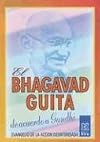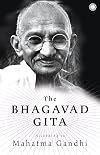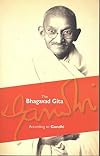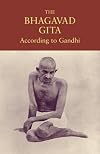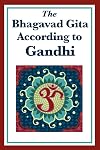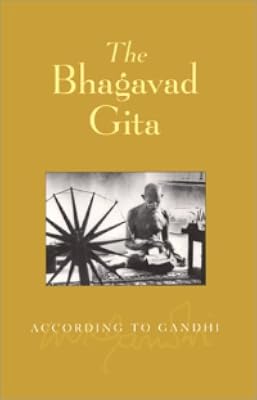
The Bhagavad Gita According to Gandhi
by Mahatma Gandhi
On This Page
Description
My first acquaintance with the Gita began in 1888-89 with the verse translation by Sir Edwin Arnold known as the Song Celestial. On reading it, I felt a keen desire to read a Gujarati translation. And I read as many translations as I could lay hold of. But all such reading can give me no passport for presenting my own translation. Then again my knowledge of Sanskrit is limited, my knowledge of Gujarati too is in no way scholarly. How could I then dare present the public with my translation? show more It has been my endeavor, as also that of some companions, to reduce to practice the teaching of the Gita as I have understood it. The Gita has become for us a spiritual reference book. I am aware that we ever fail to act in perfect accord with the teaching. The failure is not due to want of effort, but is in spite of it. Even through the failures we seem to see rays of hope. The accompanying rendering contains the meaning of the Gita message which this little band is trying to enforce in its daily conduct. show lessTags
Recommendations




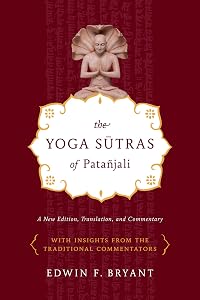
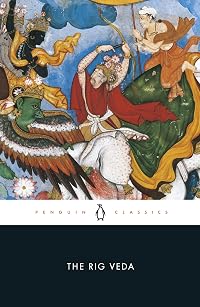
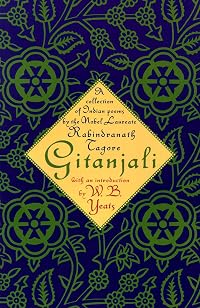
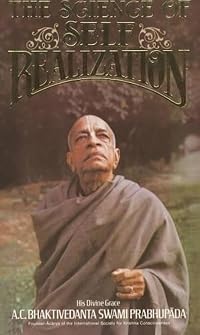



Member Reviews
Not being a religious person, and highly unlikely to become one, I found the Bhagavad Gita--as translated and interpreted by Gandhi--to have much in common with Buddhist and Daoist teaching in its renunciation of self and even with stoicism if you leave the god part out. This is a book that crosses religious boundaries and whose teachings can appeal to a wide audience--you don't have to be Hindu. One highlight is Chapter 16, which describes persons with devilish heritage, and reads like an almost perfect description of the character of Donald Trump. I have other translations, and it will probably be worth my time to compare those interpretations with Gandhi's. Acheiving perfection in these terms is no easy task, but perhaps Gandhi show more himself did come close. show less
excellent
> Babelio : https://www.babelio.com/livres/Gandhi-La-Bhagavad-Gita-traduite-et-commentee-par....
> Zuihô (Amazon) : https://www.amazon.fr/gp/customer-reviews/R3O5UKYSNO3LIO
> LA BHAGAVAD-GITA, traduite et commentée par GANDHI, Patrick Mandala (trad), (2018, Almora, 270 p.). — Un trésor de la spiritualité universelle commenté par un des plus grands sages du XXe siècle. Cet ouvrage présente une traduction et les propres commentaires du Mahatma Gandhi de l’un des plus grands textes de l’humanité : la Bhagavad-Gîtâ, ou « Chant du Bienheureux ». Entre 1924 et 1926 : Gandhi, qui souhaitait se désengager provisoirement de la vie politique et se consacrer davantage à la vie spirituelle, va vouer son temps à l’étude et à show more la présentation de la Bhagavad-Gîtâ. Il délivre ses lectures, ses commentaires et ses réflexions à son auditoire et aux disciples, chaque matin, après la prière collective dans son ashram. La Bhagavad-Gîtâ est le texte fondamental de l’Inde, écrit entre 200 av J.-C et 200 ap. J.-C. Il contient un message donné à Arjuna par le dieu Krishna sur un champ de bataille. Face à Arjuna qui hésite : Krishna va lui transmettre dans cet intervalle suspendu, les plus profonds enseignements de la sagesse et le secret du yoga. Gandhi, guide spirituel et homme politique, oeuvrera toute sa vie pour la liberté et la non-violence. Son message d’ahimsâ, de non-violence, est universel et intemporel. Et c’est dans la Bhagavad-Gîtâ que Gandhi puisera ses intuitions spirituelles et sa force d’action.
—3e millénaire, (131), Printemps 2019 show less
> Zuihô (Amazon) : https://www.amazon.fr/gp/customer-reviews/R3O5UKYSNO3LIO
> LA BHAGAVAD-GITA, traduite et commentée par GANDHI, Patrick Mandala (trad), (2018, Almora, 270 p.). — Un trésor de la spiritualité universelle commenté par un des plus grands sages du XXe siècle. Cet ouvrage présente une traduction et les propres commentaires du Mahatma Gandhi de l’un des plus grands textes de l’humanité : la Bhagavad-Gîtâ, ou « Chant du Bienheureux ». Entre 1924 et 1926 : Gandhi, qui souhaitait se désengager provisoirement de la vie politique et se consacrer davantage à la vie spirituelle, va vouer son temps à l’étude et à show more la présentation de la Bhagavad-Gîtâ. Il délivre ses lectures, ses commentaires et ses réflexions à son auditoire et aux disciples, chaque matin, après la prière collective dans son ashram. La Bhagavad-Gîtâ est le texte fondamental de l’Inde, écrit entre 200 av J.-C et 200 ap. J.-C. Il contient un message donné à Arjuna par le dieu Krishna sur un champ de bataille. Face à Arjuna qui hésite : Krishna va lui transmettre dans cet intervalle suspendu, les plus profonds enseignements de la sagesse et le secret du yoga. Gandhi, guide spirituel et homme politique, oeuvrera toute sa vie pour la liberté et la non-violence. Son message d’ahimsâ, de non-violence, est universel et intemporel. Et c’est dans la Bhagavad-Gîtâ que Gandhi puisera ses intuitions spirituelles et sa force d’action.
—3e millénaire, (131), Printemps 2019 show less
Apr 21, 2019 (Edited)French
Ratings
Members
- Recently Added By
Author Information

625+ Works 9,701 Members
Mohandas Gandhi is well known as a political activist and pacifist who played a key role in achieving India's independence from Great Britain. Although born in Porbandar, India, to parents of the Vaisya (merchant) caste, he was given a modern education and eventually studied law in London. After returning briefly to India, Gandhi went to South show more Africa in 1893, where he spent the next 20 years working to secure Indian rights. It was during this time that he experimented with and developed his basic philosophy of life. Philosophically, Gandhi is best known for his ideas of satyagraha (truth-force) and ahimsa (nonharming). Intrinsic to the idea of truth-force is the correlation between truth and being; truth is not merely a mental correspondence with reality but a mode of existence. Hence, the power of the truth is not what one argues for but what one is. He developed this idea in conjunction with the principle of nonviolence, showing in his nationalist activities that the force of truth, expressed nonviolently, can be an irresistible political weapon against intolerance, racism, and social violence. Although his basic terminology and conceptual context were Hindu, Gandhi was impressed by the universal religious emphasis on the self-transformative power of love, drawing his inspiration from Christianity, Western philosophy, and Islam as well. (Bowker Author Biography) show less
Work Relationships
Contains
Revue 3e millénaire N° 131 : Printemps 2019 - Libération et transmutation des émotions perturbatrices by Revue 3e millénaire
Être libre des émotions: 10 clés pour vivre l'émotion en pleine conscience by Lionel Cruzille (indirect)
L'Ayurvéda : Science ancestrale de la vie pour un nouvel art de vivre by Philippe Maugars (indirect)
Sept joyaux du tantra shivaïte : Rencontre avec sept maîtres du Cachemire médiéval by Colette Poggi (indirect)
Les secrets de la technique Nadeau : Méthode canadienne de régénération holistique by Jean-michel Pierre (indirect)
Classifications
- Genres
- Religion & Spirituality, Nonfiction, Philosophy
- DDC/MDS
- 294.5 — Religion Other religions Dharmic religions Hinduism
- LCC
- BL1138.66 .G36 — Philosophy, Psychology and Religion Religions. Mythology. Rationalism Religions. Mythology. Rationalism History and principles of religions Asian. Oriental By religion Hinduism
- BISAC
Statistics
- Members
- 244
- Popularity
- 133,961
- Reviews
- 3
- Rating
- (4.26)
- Languages
- English, French, Italian, Spanish
- Media
- Paper, Ebook
- ISBNs
- 22
- ASINs
- 5