
Sarvepalli Radhakrishnan (1888–1975)
Author of A Source Book in Indian Philosophy
About the Author
A philosopher and scholar, Sarvepalli Radhakrishnan was also a statesman, even to the extent of serving as India's president from 1962 to 1967. Brought up as a devout Hindu but also educated in Christian missionary schools, Radhakrishnan's philosophy often was comparative, finding lines of show more convergence and divergence between East and West. Based in Vedantic idealism, Radhakrishnan affirmed the necessity of an experience of the absolute as the basis of any truly profound grasp of reality. In this regard, he focused his scholarship on the great classical texts of the Indian tradition: the Upanishads, the Bhagavad Gita, the Brahma Sutra, and the various Vedantic commentaries. However, Radhakrishnan's fundamentally mystical, idealistic dimension did not lead him to renounce the material world. On the contrary, he affirmed action in the world as the expression of the transformative power of the absolute itself. Unlike many traditional Vedantists, Radhakrishnan did not view the material world with all its differentiation as unreal; rather, it is simply not absolute in itself. Spiritual and moral value ultimately derives from something deeper. In this way, he established a metaphysical ground for religious tolerance, an openness he brought to his own activities in the political sphere. (Bowker Author Biography) show less
Series
Works by Sarvepalli Radhakrishnan
The Principal Upanishads: Edited with Introduction, Text, Translation and Notes (English, Sanskrit and Sanskrit Edition) (1953) 195 copies, 2 reviews
The Philosophy of Sarvepalli Radhadkrishnan, Volume 8 (Library of Living Philosophers) (1992) 17 copies
Idealist View of Life 15 copies
The Cultural Heritage of India, Volumes 1, 2, 3 & 4 (Vol. I: The Early Phases (Prehistoric, Vedic and Upanisadic, Jaina, (2002) 13 copies
The Sacred Writings of the Sikhs (UNESCO Collection of Representative Works: European) (1986) 6 copies
Cultural Heritage of India 6 copies
The present crisis of faith 4 copies
Occasional speeches and writings 3 copies
Fellowship of the spirit 3 copies
The philosophy of the Upanisads 2 copies
Principal Upanishad The 2 copies
Religion, Science and Culture 2 copies
Hindu View Of Life by Radhakrishnan 2 copies
Religion and Soceity 1 copy
True Education 1 copy
Indian Religion and Culture 1 copy
Upanishadon Ka Sandesh 1 copy
Philosophy of the Upanishads 1 copy
Vannańkaị 1 copy
Theism of the Bhagavadgita 1 copy
Religion in Ost und West 1 copy
Indian Philosophy, V.2 1 copy
Indian Philosophy, V.1 1 copy
Die Bhagavadgītā 1 copy
The Principle Upanisads 1 copy
Phaedrus 1 copy
Towards a New World 1 copy
Dr. S. Radhakrishnan souvenir volume; collection of 76 articles by scholars of international fame 1 copy
Principal Upanisads 1 copy
Bharatiya Darshan, Khand-2 1 copy
Bharatiya Darshan, Khand-1 1 copy
Associated Works
Tagged
Common Knowledge
- Canonical name
- Radhakrishnan, Sarvepalli
- Legal name
- Radhakrishnan, Sarvepalli
- Birthdate
- 1888-09-05
- Date of death
- 1975-04-17
- Gender
- male
- Education
- Madras Christian College (M.A.|Philosophy|1906)
- Occupations
- Vice President of India (1952-1962)
President of India (1962-1967)
philosopher
professor
diplomat
politician (show all 7)
Indian Ambassador to the Soviet Union (1949-1952) - Awards and honors
- Templeton Prize (1975)
Bharat Ratna (1954)
Order of Merit (1973)
Peace Prize of the German Book Trade (1961) - Relationships
- Gopal, Sarvepalli (son)
- Nationality
- India
- Birthplace
- Thiruttani, Tamil Nadu, India (then British India)
- Place of death
- Madras, Tamil Nadu, India
- Associated Place (for map)
- Tamil Nadu, India
Members
Reviews
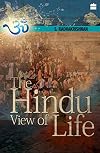
This is quite an outstanding book. Sarvepalli Radhakrishnan was an erudite person and the philosopher President of India.
This book consists of four lectures that he delivered on various aspects of Hinduism. His learning comes through easily, as well as his balanced view of life. As a proud Hindu, he does tend to praise Hindu philosophy, and there is much that we must admire in original Hindu thought.
However, as he also states, much of the original thought has been corrupted. This is a show more statement of fact, but he does not offer us a way forward. He can't.
Read the book slowly. Keep it aside and come back to it again. Refer to it from time to time. This is an excellent book. show less
This book consists of four lectures that he delivered on various aspects of Hinduism. His learning comes through easily, as well as his balanced view of life. As a proud Hindu, he does tend to praise Hindu philosophy, and there is much that we must admire in original Hindu thought.
However, as he also states, much of the original thought has been corrupted. This is a show more statement of fact, but he does not offer us a way forward. He can't.
Read the book slowly. Keep it aside and come back to it again. Refer to it from time to time. This is an excellent book. show less

In this book, Dr. Radhakrishnan, the greatest interpreter of Indian philosophy, examines Indian culture as a whole. He does this from various angles including the religious and the scientific, the mystic and the mundane.
With inimitable felicity and vigour of style he brings together scattered institutions and ideas, whether literary or political, social, religious or economic: and conclusively shows how these have made the sort of nation that India is today. Contemporary savants like show more Vivekananda, Gandhi and Nehru were guided by the same beacon-light of tradition. It is only Dr. Radhakrishnan who could have made this storehouse of knowledge and experience available to the common reader as to the close student. Between the covers of this book the author has given us a compact study of India's rich cultural heritage which is as profound as it is meaningful and thorough. show less
With inimitable felicity and vigour of style he brings together scattered institutions and ideas, whether literary or political, social, religious or economic: and conclusively shows how these have made the sort of nation that India is today. Contemporary savants like show more Vivekananda, Gandhi and Nehru were guided by the same beacon-light of tradition. It is only Dr. Radhakrishnan who could have made this storehouse of knowledge and experience available to the common reader as to the close student. Between the covers of this book the author has given us a compact study of India's rich cultural heritage which is as profound as it is meaningful and thorough. show less

This is a learned book and the author discusses a great variety of religious and philosophical ideas, indian and western, ancient and modern. But I'm not sure what he is really trying to say. He insinuates that indian ideas may have influenced the beginnings of western mysticism and at times he seems to be trying to validate the mystical awe of hinduism as a path toward peace and understanding. But all of it remains much too vague to be interesting.
The Principal Upanishads: Edited with Introduction, Translation and Notes. Pa. 2005 Reprint by S. Radhakrishnan
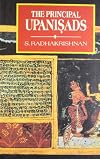
This is a very thick book with comprehensive commentary on each verse and a great introduction. I highly recommend reading the introduction before delving into the Upanishads. The sanskrit text is presented in Latin transliteration -- I found this very useful. Once I gathered from the reading what are the basic sanskrit terms for major concepts I could always look at the transliteration if I wanted to clarify the translated text. The translation tries to be as literal as possible without show more loosing the meaning. I find that good. Another good thing about this translation is that of the translated Upanishads no passages are skipped.
In many other translations the passages that are thought by the translator to be "irrelevant" to the Western reader are often skipped. I would rather have the version where I have the option of deciding what is relevant and what is not. show less
In many other translations the passages that are thought by the translator to be "irrelevant" to the Western reader are often skipped. I would rather have the version where I have the option of deciding what is relevant and what is not. show less
Lists
Awards

You May Also Like


Associated Authors
Statistics
- Works
- 105
- Also by
- 5
- Members
- 1,753
- Popularity
- #14,672
- Rating
- 4.0
- Reviews
- 18
- ISBNs
- 110
- Languages
- 5
- Favorited
- 3