
Ananda Coomaraswamy (1877–1947)
Author of Myths of the Hindus and Buddhists
About the Author
Ananda Kentish Coomaraswamy was Curator of Indian Art in the Boston Museum.
Image credit: Ananda K. Coomaraswamy in his study in later years
Works by Ananda Coomaraswamy
The Dance of Siva: Essays on Indian Art and Culture (Dover Fine Art, History of Art) (1918) 221 copies, 3 reviews
Figures of Speech or Figures of Thought?: The Traditional View of Art, Revised Edition with Previously Author's Unpublished Notes (Perennial Philosophy) (2007) 26 copies
Coomaraswamy: Selected Papers I (Traditional Art & Symbolism), Volume II (Metaphysics) with His Life and Work (1977) 6 copies
Prensa y documentacion de la clandestinidad libertaria (1945-1966): Reproduccion facsimil de periodicos y documentos (Spanish Edition) (1979) 4 copies
El Vedanta y la Tradicion Occidental/ The Vedanta and Western Tradition (Spanish Edition) (2001) 4 copies, 1 review
The Babylonian Talmud, Vol. 5 of 9: Tracts Aboth, Derech Eretz-Rabba, Derech Eretz-Zuta, and Baba Kama (First Gate) (Forgotten Books) (2008) 2 copies
COME INTERPRETARE UN OPERA D' ARTE 2 copies
Figures of Speech or Figures of Thought: Collected Essays on the Traditional or "Normal" View of Art. Second Series (1981) 2 copies
Collection of Articles 1 copy
"The Theory of Art in Asia" in The Transformation of Nature in Art. New York: Dover Publications, 1934: 1-57 (1934) 1 copy
Catalogue of the Indian Collections in the Museum of Fine Arts, Boston. Part VI: Mughal Painting 1 copy
Hindouisme Et Bouddhisme 1 copy
The Flood in Hindu Tradition 1 copy
catalogue of the indian collections in the museum of fine arts, boston part IV (jaina paintings) 1 copy
Mediaeval Sinhalese Art 1 copy
The Aims of Indian Art 1 copy
Mediæval Sinhalese art 1 copy
La Transformation de la Nature en Art - Les théories de l'art en Inde, en Chine, et dans l'Europe mé (French Edition) (2017) 1 copy
Catalogue of the Indian collections in the Museum of Fine Arts, Boston, Part VI Mughal Painting 1 copy
The Religious Basis of the Forms of Indian Society, Indian Culture and English Influence, and East and West 1 copy, 1 review
A new approach to the Vedas 1 copy
Burning and Melting Being the Suz-U-Gudaz of Muhammad Risa Nau'I of Khabushan Translated Into English By Mirza Y. Dawud of Pers — Translator — 1 copy
Museum of Fine Arts, Boston: Portfolio of Indian Art. Objects selected from the collections of the museum. (1923) 1 copy
La pensée du Bouddha 1 copy
Am I my brother's keeper? 1 copy
Rajput Paintings Vol I 1 copy
Hinduizm ve Budizm 1 copy
La Signification de la Mort : Meurs Avant Que Ne Meures : Etudes de Psychologie Traditionnelle (2001) 1 copy
Associated Works
Every Man an Artist: Readings in the Traditional Philosophy of Art (Library of Perennial Philosophy) (2005) — Contributor, some editions — 15 copies
The Unanimous tradition : essays on the essential unity of all religions (1991) — Contributor — 3 copies
Tagged
Common Knowledge
- Canonical name
- Coomaraswamy, Ananda
- Legal name
- Coomaraswamy, Ananda Kentish Muthu
- Birthdate
- 1877-08-22
- Date of death
- 1947-09-19
- Gender
- male
- Education
- University of London (D.Sc|1906)
University College London (BA|1900)
Wycliffe College, Gloucestershire, England, UK - Occupations
- curator
philosopher
Metaphysician
geologist
art historian - Organizations
- Boston Museum of Fine Arts
Smithsonian Institution
Perennialist School
Mineralogical Survey of Ceylon - Relationships
- Mairet, Ethel M. (wife|1902-1910|divorced)
Coomaraswamy, Rama P. (son)
Coomaraswamy, Muthu (father) - Nationality
- Ceylon
- Birthplace
- Colombo, British Ceylon
- Places of residence
- Colombo, Sri Lanka
Boston, Massachusetts, USA
Needham, Massachusetts, USA
Kandy, Ceylon - Place of death
- Needham, Massachusetts, USA
- Map Location
- Sri Lanka
Members
Reviews
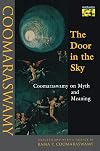
Ananda K. Coomaraswamy's The Door in the Sky is a treasure for a general reader interested in art and philosophy of traditional societies or a scholar whose field of specialty can range from Indian symbolism to medieval philosophy to Zen Buddhist art. Coomaraswamy was an extraordinary scholar and teacher and philosopher of art with complete mastery of 35 ancient and modern languages (a count his son relayed in an interview). including ancient Greek, Latin, Sanskrit and Pali, as well as show more expertise in the arts and philosophical literature produced by dozens of ancient and medieval cultures and civilizations.
The way Coomarasawmy's writing fluidly combines insights and quotes from such sources as the Rg Veda and the Upanishads, Buddhist and Jain scriptures, Plato and Aristotle, Eckhart and Ruysbroeck, to name several, is truly remarkable. For the purposes of this review, quotes are taken from one essay: The Nature of Buddhist Art.
Coomarasawmy has no patience with any view that sees traditional art as somehow inferior to more modern or contemporary art, as if the traditional art represents an earlier, less sophisticated phase in human evolution. Rather, he views our modern world, with our emphasis on `realism' and `expression' in art, in some important respects spiritually inferior to traditional societies. We read: "Above all, must we refrain from assuming that what was an inevitable step, and one already foreshadowed by the `historicity' of the life, must be interpreted in terms of spiritual progress. We must realize that the step, of which an unforeseen result was the provision for us of such aesthetic pleasures as everyone must derive from Buddhist art, may have been itself much rather a concession to intellectually lower levels of reference than any evidence of an increased profundity of vision. We must remember that an abstract art is adapted to contemplative uses and implies a gnosis; an anthropomorphic art evokes a religious emotion, and corresponds rather to prayer than to contemplation."
Coomarasawamy emphasizes the role of art for traditional societies - art as a support to spiritual contemplation and spiritual vision. In other words, if all people in a society were at a point where their consciousness and experience of life developed to the level of spiritually realized ancient rishis or enlightened Buddhas, then there would be no reason to go on creating works of art since the reason for art in the first place would have been accomplished.
With this in mind we read: "It is otherwise in a traditional art, where the object is merely a point of departure and a signpost inviting the spectator to the performance of an act directed toward that form for the sake of which the picture exists at all. . . . to see the Buddha in the image rather than an image of the Buddha." Stated in more general or universal terms, it is this transformation of vision, this seeing the enlightened spiritual essence in the image rather than seeing simply a static surface image that is the purpose of traditional art.
Here is a quote at the end of the essay capsulizing a major part of Coomaraswamy's philosophy of art: "We may have to admit that it is beyond the competence of the rationalist, as such, to understand Buddhist art. On the other hand, we are far from maintaining that in order to understand one must be a Buddhist in any specific sense; there are plenty of professing Buddhists and professing Christians who have not the least idea what Buddhist or Christian art is all about. What we mean is that in order to understand one must be not merely a sensitive man, but also a spiritual man; and not merely a spiritual man but also a sensitive man."
Coomaraswamy challenges us modern people to completely reevaluate our view of art and aesthetics - there is no mention of Picasso, Van Gogh, Monet or Renoir; there are no references to post-17th century enlightenment philosophers writing in the field of aesthetics such as Kant, Hegel, Schiller, Schopenhauer, Shaftesbury, Dewey or Santayana. Why? Because, according to Coomarasawmy, the very concept of aesthetics with its emphasis on taste, feelings and expression is an outgrowth of a way of looking at the world that has lost its spiritual, contemplative depth and is rather fixated on the outer sensual shell.
---------------------------
A personal note:
I attended a evening performance in a college auditorium of Tibetan Buddhist monks chanting. Prior to the monks entering the stage, the translator who accompanied the monks on their tour said a few words about the performance: how the monks' chanting is done in the same way as in their monastery; how their chanting is done for the benefit and enlightenment of all beings. ----- This is the traditional view Coomaraswamy alludes to in his essays: art is a tool or means, the end being spiritual growth.
Two weeks prior, I attending a performance in the same auditorium of a string quartet, music of Mozart and Schubert. The musicians simply came on stage, bowed and played. ---- This is our modern world. The music is performed and the value is in the music itself, including the creativity of the composer, the expert artistry of the musicians and the aesthetic experience of the audience. In a way, 'art for art sake'.
I myself very much appreciate both approaches. Hey, why not? This is the 21st century, we can be eclectic. show less

The slender Christian & Oriental Philosophy of Art (originally issued as Why Exhibit Works of Art?) consists of four lectures and five brief papers, representing what is probably the cream of the polemical writings of Ananda K. Coomaraswamy. The author was one of the original proponents of the Traditionalist school of comparative religion, and he spent the later decades of his career as curator of the Indian collection at the Boston Museum of Fine Arts. The writings collected here do not so show more much exercise the discipline of art history, which barely existed as such in the Anglophone world at that time, as much as they propound a theory of material culture, and advocate an idealist philosophy.
Coomaraswamy uses the word "aesthetic" as a pejorative, insisting on the intellectual value of artwork, and he champions the dignity of what museums call "decorative" arts, over and against the "fine" arts which try to segregate expression from utility. He is as likely, or more, to cite Augustine, Thomas Aquinas, and Bonaventure as he is to refer to the Upanishads or other Indian texts, but he claims that these equally reflect a "Unanimous Tradition." For Coomaraswamy, the name of the ideological enemy is the humanist, whom he characterizes as "a sentimentalist, materialist, or cynic." (63) His perspective on the history of European culture--in favor of antiquity and the middle ages, and contemptuous of the renaissance and modernity--is in keeping with that of Guénon and other Traditionalists, and the essay on "Folklore" (originally written for a Traditionalist journal) presumes the rectitude of the Indian Chatur Varna so beloved of European Traditionalists who discourse on political themes. (136-7)
Students of the work of Aleister Crowley may be familiar with Coomaraswamy as a figure cuckolded--willingly, to all appearances--by the Beast with Coomaraswamy's second wife Alice (a.k.a. Ratan Devi). In fact, Crowley's ostensible review of Coomaraswamy's book The Dance of Shiva in the 1919 Equinox journal consists of nothing but a rehearsal of their personal interactions, framed by an unfriendly biography of Coomaraswamy. Ironically, the later writings of Coomaraswamy collected in Christian & Oriental Philosophy of Art often emphasize certain elements that are sympathetic to Crowley's doctrines.
In particular, the first talk "Why Exhibit Works of Art?" includes a long argument for individual vocation that is an excellent fit with the Thelemic notion of True Will. "[W]hen each man makes one kind of thing, doing only that kind of work for which he is fitted by his own nature and for which he is therefore destined...a man at work is doing what he likes best, and the pleasure that he takes in his work perfects the operation." (15) And in the second lecture, which lends its title to the whole volume, there is a discussion of what Crowley calls the Holy Guardian Angel: "No man, considered as So-and-so, can be a genius: but all men have a genius, to be served or disobeyed at their own peril." (38)
In his paper on "Beauty and Truth," Coomaraswamy draws on medieval theory of rhetoric to support his more general ideas about art, and the author is indeed no mean rhetorician. "Industry without art is brutality." (92) These essays at the very least make provocative reading for anyone interested in the course of what he calls the "museum militant." (22) show less
Coomaraswamy uses the word "aesthetic" as a pejorative, insisting on the intellectual value of artwork, and he champions the dignity of what museums call "decorative" arts, over and against the "fine" arts which try to segregate expression from utility. He is as likely, or more, to cite Augustine, Thomas Aquinas, and Bonaventure as he is to refer to the Upanishads or other Indian texts, but he claims that these equally reflect a "Unanimous Tradition." For Coomaraswamy, the name of the ideological enemy is the humanist, whom he characterizes as "a sentimentalist, materialist, or cynic." (63) His perspective on the history of European culture--in favor of antiquity and the middle ages, and contemptuous of the renaissance and modernity--is in keeping with that of Guénon and other Traditionalists, and the essay on "Folklore" (originally written for a Traditionalist journal) presumes the rectitude of the Indian Chatur Varna so beloved of European Traditionalists who discourse on political themes. (136-7)
Students of the work of Aleister Crowley may be familiar with Coomaraswamy as a figure cuckolded--willingly, to all appearances--by the Beast with Coomaraswamy's second wife Alice (a.k.a. Ratan Devi). In fact, Crowley's ostensible review of Coomaraswamy's book The Dance of Shiva in the 1919 Equinox journal consists of nothing but a rehearsal of their personal interactions, framed by an unfriendly biography of Coomaraswamy. Ironically, the later writings of Coomaraswamy collected in Christian & Oriental Philosophy of Art often emphasize certain elements that are sympathetic to Crowley's doctrines.
In particular, the first talk "Why Exhibit Works of Art?" includes a long argument for individual vocation that is an excellent fit with the Thelemic notion of True Will. "[W]hen each man makes one kind of thing, doing only that kind of work for which he is fitted by his own nature and for which he is therefore destined...a man at work is doing what he likes best, and the pleasure that he takes in his work perfects the operation." (15) And in the second lecture, which lends its title to the whole volume, there is a discussion of what Crowley calls the Holy Guardian Angel: "No man, considered as So-and-so, can be a genius: but all men have a genius, to be served or disobeyed at their own peril." (38)
In his paper on "Beauty and Truth," Coomaraswamy draws on medieval theory of rhetoric to support his more general ideas about art, and the author is indeed no mean rhetorician. "Industry without art is brutality." (92) These essays at the very least make provocative reading for anyone interested in the course of what he calls the "museum militant." (22) show less
Ananda K. Coomaraswamy's The Door in the Sky is a treasure for a general reader interested in art and philosophy of traditional societies or a scholar whose field of specialty can range from Indian symbolism to medieval philosophy to Zen Buddhist art.
Coomaraswamy was an extraordinary scholar and teacher and philosopher of art with complete mastery of thirty-five ancient and modern languages (a count his son relayed in an interview). including ancient Greek, Latin, Sanskrit and Pali, as well show more as expertise in the arts and philosophical literature produced by dozens of ancient and medieval cultures and civilizations.
The way Coomarasawmy's writing fluidly combines insights and quotes from such sources as Rg Veda and Upanishads, Buddhist and Jain scriptures, Plato and Aristotle, Eckhart and Ruysbroeck, to name several, is truly remarkable. For the purposes of this review, quotes are taken from one essay: The Nature of Buddhist Art.
Coomarasawmy has no patience with any view that sees traditional art as somehow inferior to more modern or contemporary art, as if the traditional art represents an earlier, less sophisticated phase in human evolution. Rather, he views our modern world, with our emphasis on "realism" and "expression" in art, in some important respects spiritually inferior to traditional societies. We read: "Above all, must we refrain from assuming that what was an inevitable step, and one already foreshadowed by the `historicity' of the life, must be interpreted in terms of spiritual progress. We must realize that the step, of which an unforeseen result was the provision for us of such aesthetic pleasures as everyone must derive from Buddhist art, may have been itself much rather a concession to intellectually lower levels of reference than any evidence of an increased profundity of vision. We must remember that an abstract art is adapted to contemplative uses and implies a gnosis; an anthropomorphic art evokes a religious emotion, and corresponds rather to prayer than to contemplation."
Coomarasawamy emphasizes the role of art for traditional societies: art as a support to spiritual contemplation and spiritual vision. In other words, if all people in a society were at a point where their consciousness and experience of life developed to the level of spiritually realized ancient rishis or enlightened Buddhas, then there would be no reason to go on creating works of art since the reason for art in the first place would have been accomplished.
With this in mind we read: "It is otherwise in a traditional art, where the object is merely a point of departure and a signpost inviting the spectator to the performance of an act directed toward that form for the sake of which the picture exists at all. . . . to see the Buddha in the image rather than an image of the Buddha."
Stated in more general or universal terms, it is this transformation of vision, this seeing the enlightened spiritual essence in the image rather than seeing simply a static surface image that is the purpose of traditional art.
Here is a quote at the end of the essay capsulizing a major part of Coomaraswamy's philosophy of art: "We may have to admit that it is beyond the competence of the rationalist, as such, to understand Buddhist art. On the other hand, we are far from maintaining that in order to understand one must be a Buddhist in any specific sense; there are plenty of professing Buddhists and professing Christians who have not the least idea what Buddhist or Christian art is all about. What we mean is that in order to understand one must be not merely a sensitive man, but also a spiritual man; and not merely a spiritual man but also a sensitive man."
Coomaraswamy challenges us modern people to completely reevaluate our view of art and aesthetics - there is no mention of Picasso, Van Gogh, Monet or Renoir; there are no references to post-17th century enlightenment philosophers writing in the field of aesthetics such as Kant, Hegel, Schiller, Schopenhauer, Shaftesbury, Dewey or Santayana. Why? Because, according to Coomarasawmy, the very concept of aesthetics with its emphasis on taste, feelings and expression is an outgrowth of a way of looking at the world that has lost its spiritual, contemplative depth and is rather fixated on the outer sensual shell.
---------------------------
A personal note:
I attended a evening performance in a college auditorium of Tibetan Buddhist monks chanting. Prior to the monks entering the stage, the translator who accompanied the monks on their tour said a few words about the performance: how the monks' chanting is done in the same way as in their monastery; how their chanting is done for the benefit and enlightenment of all beings. ----- This is the traditional view Coomaraswamy alludes to in his essays: art is a tool or means, the end being spiritual growth.
Two weeks prior, I attending a performance in the same auditorium of a string quartet, music of Mozart and Schubert. The musicians simply came on stage, bowed and played. ---- This is our modern world. The music is performed and the value is in the music itself, including the creativity of the composer, the expert artistry of the musicians and the aesthetic experience of the audience. In a way, 'art for art sake'.
I myself very much appreciate both approaches. Hey, why not? This is the 21st century, we can be eclectic. show less

I felt deprived of a symphony of events and essential art while reading this book. I had a grim contempt for the present that acknowledges the losses of the past that will never revive. As opposed to the empty, gestureless, chewed up, digested, regurgitated and spat out vomit of infotainment, narrative-instituted mass control theatre MASS CULT for the mob that will flood the globe from all forms of media in the next Kali Yuga round.
Case in point:
If you go to a Western philharmonic hall to show more hear, say, a symphony concert, there are basically four types of audiences:
(a) opportunists (who want to go, once in a blue moon, rarely, why not)
b) Snobs (it's good to be there, to be seen, to pretend, for a show)
c) Cognoscendi (educated in music theory, history, art, reception, standards of mastery, etc.)
d) Aesthetes (they go there for catharsis, experience, conversation with the art, trained or untrained, the gnosiennes).
In the modern world, it is almost impossible to find a trained audience for any form of high art. It is equally impossible to find outstanding artists who create near divine art. This is the age of craft and artistry, celebrity status and individual praise, peer and status machinery and profiteers. This is the age of manipulating ever-decreasing demand and providing ever-decreasing content that clogs the minds of audiences in the sewers as they drown in ignorance and oblivion of all previous stages, scenes, and memories.
Great art, like great history, should be enduring, sustained, focused on a high ethos and standards, and protect itself from the thieves, the mob, and the trivial vulgar repeaters.
Any art that is merely a fad is mere bait - to attract the attention of the masses, to entertain them, to divert their attention, their focus from the true, valid, important things.
I wanted to read this book to prove to myself that people can achieve such a high level of competence and mastery, and so can their audience, that it is completely misunderstood by our modern, incompetent minds.
We simply would not understand the bulk of such a subtle show, we would not grasp in our vulgar, obscene minds what it is to convey, how to move through myths and legends, how to move the soul, mind and heart to such thresholds of understanding that it borders on great acts of magic.
Thank you show less
Case in point:
If you go to a Western philharmonic hall to show more hear, say, a symphony concert, there are basically four types of audiences:
(a) opportunists (who want to go, once in a blue moon, rarely, why not)
b) Snobs (it's good to be there, to be seen, to pretend, for a show)
c) Cognoscendi (educated in music theory, history, art, reception, standards of mastery, etc.)
d) Aesthetes (they go there for catharsis, experience, conversation with the art, trained or untrained, the gnosiennes).
In the modern world, it is almost impossible to find a trained audience for any form of high art. It is equally impossible to find outstanding artists who create near divine art. This is the age of craft and artistry, celebrity status and individual praise, peer and status machinery and profiteers. This is the age of manipulating ever-decreasing demand and providing ever-decreasing content that clogs the minds of audiences in the sewers as they drown in ignorance and oblivion of all previous stages, scenes, and memories.
Great art, like great history, should be enduring, sustained, focused on a high ethos and standards, and protect itself from the thieves, the mob, and the trivial vulgar repeaters.
Any art that is merely a fad is mere bait - to attract the attention of the masses, to entertain them, to divert their attention, their focus from the true, valid, important things.
I wanted to read this book to prove to myself that people can achieve such a high level of competence and mastery, and so can their audience, that it is completely misunderstood by our modern, incompetent minds.
We simply would not understand the bulk of such a subtle show, we would not grasp in our vulgar, obscene minds what it is to convey, how to move through myths and legends, how to move the soul, mind and heart to such thresholds of understanding that it borders on great acts of magic.
Thank you show less
Lists
You May Also Like


Associated Authors
Statistics
- Works
- 126
- Also by
- 4
- Members
- 2,108
- Popularity
- #12,209
- Rating
- 3.9
- Reviews
- 38
- ISBNs
- 236
- Languages
- 7
- Favorited
- 5

