The Man Without Qualities
by Robert Musil
On This Page
Description
Ulrich has no qualities in the sense that his self-awareness is completely divorced from his abilities. He is drawn into a project, the Parallel Campaign, to celebrate the 70th anniversary of Emperor Franz Joseph's coronation in 1918.Tags
Recommendations

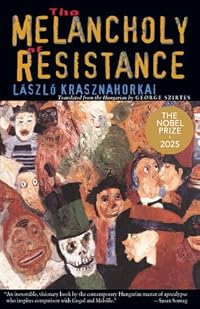
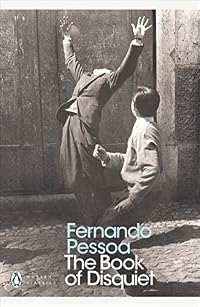
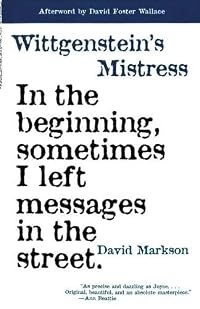
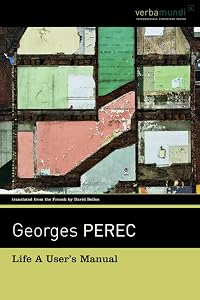
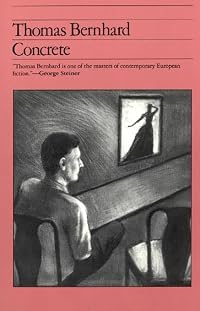
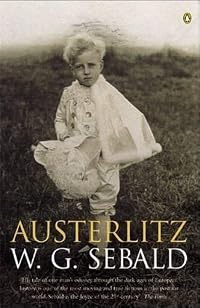
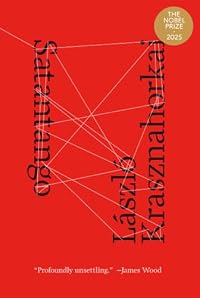
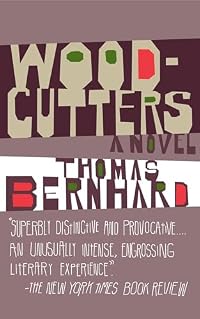





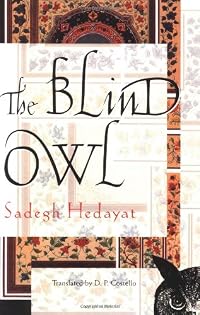
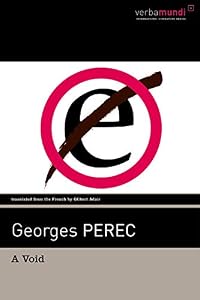
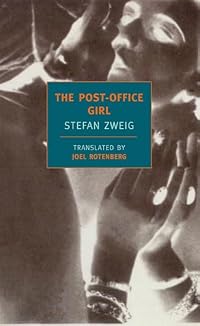
Member Recommendations
Member Reviews
I still stand by my initial thoughts 1700 pages ago—this is indeed, Notes From the Underground (Long Version), but I feel it’s much more than that as well. For those unaware, this is an open-ended, unfinished, high modernist novel that essentially has no plot and if that is unappealing to you, then I suggest you avoid this novel at all costs, because it is a work of literature about philosophical ideas and the overall mindset, leading up to the events of World War I. You can think of it as the calm before the storm because as we all know, WW1 shaped our modern life like no other war in human history, so it’s very interesting seeing the different perspectives and ideas leading up to this historic conflict that changed our life. It show more also operates as a satire on proto-war government bureaucracy and it’s hilarious from that standpoint alone, but it’s so nuanced and complex that gets meta with the text, too. I found the characters of this novel most fascinating and relatable, especially Ulrich, the main character, who is a mathematician like myself, even if we belong to different fields of the subject. I will legitimately miss all of the characters and they all feel like family at this point—I guess that’s the product of such a lengthy novel.
Despite its length, maximalist approach, and inconclusive nature, I’ll be returning to this one again, because it’s one of the greatest works of literature I’ve ever read and laid the foundations for maximalist and postmodernist authors like Thomas Pynchon, David Foster Wallace, William T. Vollman and others—and stands as one of the genres of literature that I live for, so this book naturally will fall into my favorites. show less
Despite its length, maximalist approach, and inconclusive nature, I’ll be returning to this one again, because it’s one of the greatest works of literature I’ve ever read and laid the foundations for maximalist and postmodernist authors like Thomas Pynchon, David Foster Wallace, William T. Vollman and others—and stands as one of the genres of literature that I live for, so this book naturally will fall into my favorites. show less
Reading The Man Without Qualities is a bit of an undertaking. It's not only enormous (1150 pages in this edition, which doesn't include the posthumously published notes and drafts of the final part), but is frequently baffling, filled with unsympathetic characters, and glacially slow. For all this, I'm glad I read it.
The eponymous hero is Ulrich, a mathematician by training who, it becomes clear, is searching for something beyond the materialism of fin-de-siècle science and culture. His love affairs and involvement in the "Parallel Campaign", an empire-wide, year long celebration of Austrian-ness and the spirit of the age, form the backdrop for his musings on morality, love and philosophy. These long, meandering monologues, which make show more up a surprisingly large portion of the book, I often found somewhat impenetrable. The conversations between characters I likewise often found mystifying. Nonetheless, it is possible to see Ulrich plot a course away from the modernist thinking of the time when Musil was writing towards an outlook which is decidedly postmodern.
The rather intellectual nature of Ulrich's changing views is complemented and lightened brilliantly by the humour which pervades the novel. Most of the Parallel campaigners are comic in one way or another. Arnheim is, in volume one, Ulrich's antagonist and clearly a Man With Qualities - to such an extent that he is utterly absurd. Count Leinsdorf is a character worthy of any political satire, all the more entertaining because he is so eminently plausible. Character-wise, I found the novel significantly more engaging once Agathe, Ulrich's sister, was introduced. Interestingly, it was this sibling relationship which was the original aim of the novel - the first 750 pages or so are ultimately just a very extended prologue.
A short side note on editions and translations: this is the newer Wilkins/Pike translation. I actually swapped for the final volume to the older, Kaiser/Wilkins translation, which I found much more readable. The older translation had flashes of pure linguistic brilliance which I hadn't detected in the newer one - perhaps this was Musil's writing evolving, or Kaiser & Wilkins 1 took some translational liberties. Either way, I would steer readers towards this earlier (but out-of-print) edition, with the proviso that if you make it as far as wanting to read the posthumous papers, you'll need to switch to the newer translation.
Strangely, despite this being such a confusingly challenging read that at one point it acquired the nickname of The Book Without Qualities, I am planning on searching out the above-mentioned posthumous papers. Ulrich's meanderings and the comic bustlings of the Kakanien bureaucracy are too much of a compelling mix for me not to. show less
The eponymous hero is Ulrich, a mathematician by training who, it becomes clear, is searching for something beyond the materialism of fin-de-siècle science and culture. His love affairs and involvement in the "Parallel Campaign", an empire-wide, year long celebration of Austrian-ness and the spirit of the age, form the backdrop for his musings on morality, love and philosophy. These long, meandering monologues, which make show more up a surprisingly large portion of the book, I often found somewhat impenetrable. The conversations between characters I likewise often found mystifying. Nonetheless, it is possible to see Ulrich plot a course away from the modernist thinking of the time when Musil was writing towards an outlook which is decidedly postmodern.
The rather intellectual nature of Ulrich's changing views is complemented and lightened brilliantly by the humour which pervades the novel. Most of the Parallel campaigners are comic in one way or another. Arnheim is, in volume one, Ulrich's antagonist and clearly a Man With Qualities - to such an extent that he is utterly absurd. Count Leinsdorf is a character worthy of any political satire, all the more entertaining because he is so eminently plausible. Character-wise, I found the novel significantly more engaging once Agathe, Ulrich's sister, was introduced. Interestingly, it was this sibling relationship which was the original aim of the novel - the first 750 pages or so are ultimately just a very extended prologue.
A short side note on editions and translations: this is the newer Wilkins/Pike translation. I actually swapped for the final volume to the older, Kaiser/Wilkins translation, which I found much more readable. The older translation had flashes of pure linguistic brilliance which I hadn't detected in the newer one - perhaps this was Musil's writing evolving, or Kaiser & Wilkins 1 took some translational liberties. Either way, I would steer readers towards this earlier (but out-of-print) edition, with the proviso that if you make it as far as wanting to read the posthumous papers, you'll need to switch to the newer translation.
Strangely, despite this being such a confusingly challenging read that at one point it acquired the nickname of The Book Without Qualities, I am planning on searching out the above-mentioned posthumous papers. Ulrich's meanderings and the comic bustlings of the Kakanien bureaucracy are too much of a compelling mix for me not to. show less
Would it be helpful if I said this was a Viennese modernist novelistic version of Hegel's Phenomenology of Spirit--if the PhS had been left unfinished, and Hegel never achieved absolute knowledge? Perhaps not. But I do think that's roughly what it is. All the problems of modern philosophy (excluding the analytic tradition, which, well, okay) are here. Are they embodied by well rounded characters? No. Are they revealed through the action and plot? No. They're just here. This novel has the rare distinction of being incredibly boring when things happen and people are described, and absolutely fascinating when the narrator puts all that guff away and just bats you over the head with ideas.
So whereas Joyce writes beautifully but isn't much show more of a thinker (to put it mildly), and Proust was a bit more of a thinker but seems rather bound to his moment, and Woolf was the best writer of all but relatively unconcerned with capital-P Philosophy, Musil is the brainiac of the bunch... and the writing suffers more than a little. Perhaps it's the translation, but I won't miss reading sentences that being "Ulrich surprised himself by thinking..." rather than, you know. Just giving us the thought in free indirect. Whereas Joyce writes as if nobody else's ideas mattered, Musil writes as if Flaubert never happened. Which is a real shame. Don't come here looking for literary flair.
Randomly chosen quote # 1, from page 568: "He must either give up thinking about his life altogether, which is what many people are quite content to do, or else he finds himself strangely torn between having to think and yet never quite seeming to arrive as a satisfactory resolution of his problems. This conflict has in the course of history taken on the form of total skepticism as often as it has that of a renewed subjection to faith, and its most prevalent form today is probably the conviction that without a spiritual dimension there can be no human life worthy of the name, but with too much of it there can be none either. It is on this conviction that our civilization as a whole is based. It takes great care to provide for education and research, but never too well, only enough money to keep education and research properly subordinated to the great sums expended on entertainment, cars and guns. It clears the way for talent but sees to it that it should be a talent for business." This thought belongs to The General, not one of the smarter characters in the book, but still one of the smarter characters in all of world literature. Because everyone in this book is that smart, at least in their own spheres. But often their spheres are quite limited.
Ulrich, the Man without Qualities himself, is trying to work out how to live; he is also part of an Austrian committee hoping to make some kind of great statement on behalf of the Emperor. But Ulrich can't even narrate his own life; he has no way to understand himself. "Most people relate to themselves as storytellers. They usually have no use for poems, and although the occasional 'because' or 'in order that' bets knotted into the thread of life, they generally detest any brooding that goes beyond that; they love the orderly sequence of facts... it now came to Ulrich that he had lost the elementary, narrative mode of thought to which private life still clings, even though everything in public life has already ceased to be narrative and no longer follows a thread, but instead spreads out as an infinitely interwoven surface." This book itself is just like public life, in that it doesn't really care for one-damn-thing-after-another narrative. It is also unlike 'most people' because it is very interested in the becauses and in order thats, the reasons for events, rather than the events themselves.
Random quote: "Man is indisputably endowed with reason; the problem is only how he uses his reason in the company of others." Note that although Musil isn't a great writer, he is an extraordinary aphorist. Reading MwQ reminds me a bit of reading Pope's poetry--there are very long, very boring sections, but the occasional couplet redeems all of that dullness. Same thing here.
Like Ulrich, most of the people in the book are concerned with working out how to live. Some of them are naturalist-fascists. Some are dedicated bourgeoisie. There are self-regarding artists and self-important professors. Some look only for romance; others look only for personal advancement.
The book is unfinished, but the final completed part rounds out quite nicely. Ulrich and his sister, along with many others, have become attached to the idea that some great criminal action, subversive, disordering, will bring about a great positive change in human life.
Ulrich ultimately realizes that "he believed in morality without believing in any specific moral system. Morality is generally understood to be a sort of police regulations for keeping life in order,and since life does not obey even these, they come to look as if they were really impossible to live up to and accordingly, in this sorry way, not really an ideal either. But morality must not be reduced to this level. Morality is imagination... Imagination is not arbitrary. Once the imagination is left to caprice, there is a price to pay." Joyce being the obvious example of a man who simply rejected the idea that people have to live together, and that something like morality is necessary for us to live together. Which brings us back to the other great modernists who fancied themselves as intellectuals: their ideas are all in this book, and they all come out looking incomplete or stunted. And Musil wasn't nearly finished with ideas when he died.
If only there were a way to read part III, which is far and away the best of them, without reading the earlier parts. But there is not. So just read it all. show less
So whereas Joyce writes beautifully but isn't much show more of a thinker (to put it mildly), and Proust was a bit more of a thinker but seems rather bound to his moment, and Woolf was the best writer of all but relatively unconcerned with capital-P Philosophy, Musil is the brainiac of the bunch... and the writing suffers more than a little. Perhaps it's the translation, but I won't miss reading sentences that being "Ulrich surprised himself by thinking..." rather than, you know. Just giving us the thought in free indirect. Whereas Joyce writes as if nobody else's ideas mattered, Musil writes as if Flaubert never happened. Which is a real shame. Don't come here looking for literary flair.
Randomly chosen quote # 1, from page 568: "He must either give up thinking about his life altogether, which is what many people are quite content to do, or else he finds himself strangely torn between having to think and yet never quite seeming to arrive as a satisfactory resolution of his problems. This conflict has in the course of history taken on the form of total skepticism as often as it has that of a renewed subjection to faith, and its most prevalent form today is probably the conviction that without a spiritual dimension there can be no human life worthy of the name, but with too much of it there can be none either. It is on this conviction that our civilization as a whole is based. It takes great care to provide for education and research, but never too well, only enough money to keep education and research properly subordinated to the great sums expended on entertainment, cars and guns. It clears the way for talent but sees to it that it should be a talent for business." This thought belongs to The General, not one of the smarter characters in the book, but still one of the smarter characters in all of world literature. Because everyone in this book is that smart, at least in their own spheres. But often their spheres are quite limited.
Ulrich, the Man without Qualities himself, is trying to work out how to live; he is also part of an Austrian committee hoping to make some kind of great statement on behalf of the Emperor. But Ulrich can't even narrate his own life; he has no way to understand himself. "Most people relate to themselves as storytellers. They usually have no use for poems, and although the occasional 'because' or 'in order that' bets knotted into the thread of life, they generally detest any brooding that goes beyond that; they love the orderly sequence of facts... it now came to Ulrich that he had lost the elementary, narrative mode of thought to which private life still clings, even though everything in public life has already ceased to be narrative and no longer follows a thread, but instead spreads out as an infinitely interwoven surface." This book itself is just like public life, in that it doesn't really care for one-damn-thing-after-another narrative. It is also unlike 'most people' because it is very interested in the becauses and in order thats, the reasons for events, rather than the events themselves.
Random quote: "Man is indisputably endowed with reason; the problem is only how he uses his reason in the company of others." Note that although Musil isn't a great writer, he is an extraordinary aphorist. Reading MwQ reminds me a bit of reading Pope's poetry--there are very long, very boring sections, but the occasional couplet redeems all of that dullness. Same thing here.
Like Ulrich, most of the people in the book are concerned with working out how to live. Some of them are naturalist-fascists. Some are dedicated bourgeoisie. There are self-regarding artists and self-important professors. Some look only for romance; others look only for personal advancement.
The book is unfinished, but the final completed part rounds out quite nicely. Ulrich and his sister, along with many others, have become attached to the idea that some great criminal action, subversive, disordering, will bring about a great positive change in human life.
Ulrich ultimately realizes that "he believed in morality without believing in any specific moral system. Morality is generally understood to be a sort of police regulations for keeping life in order,and since life does not obey even these, they come to look as if they were really impossible to live up to and accordingly, in this sorry way, not really an ideal either. But morality must not be reduced to this level. Morality is imagination... Imagination is not arbitrary. Once the imagination is left to caprice, there is a price to pay." Joyce being the obvious example of a man who simply rejected the idea that people have to live together, and that something like morality is necessary for us to live together. Which brings us back to the other great modernists who fancied themselves as intellectuals: their ideas are all in this book, and they all come out looking incomplete or stunted. And Musil wasn't nearly finished with ideas when he died.
If only there were a way to read part III, which is far and away the best of them, without reading the earlier parts. But there is not. So just read it all. show less
A blast for the first 500 pages then a new chapter gets harder. I read somewhere that nearly no one finishes it or the followup volume and that gave me comfort to bow out. But, Musil really has his finger on sociology and the history of ideas which come alive in his plausible characters. In Man W O Q, he is working out the sea change in Europe after the first massive war in the lives of oblivious Viennese high society. Often hilarious. Do many of us also walk around unaware of impending or already-happened deep change in our society? Do we operate on auto-pilot too?
I read this so long ago--it was really the first window for me in what could be done with language indirectly. A masterful, subtle book.
Milan Kundera talks about the power and significance of Robert Musil's The Man Without Qualities in several places, as have many others, yet the work itself exceeds expectations.
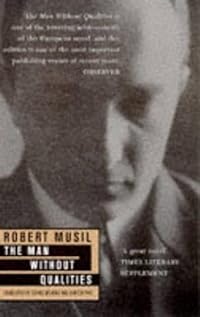
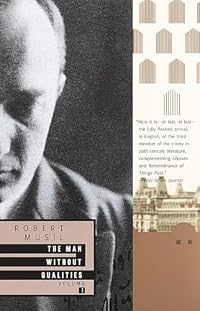
A review excerpt on the cover places it as one of the 20th-century trinity with Ulysses and In Search of Lost Time and after just the first volume, this seems utterly true.
Given all this, I wouldn't presume to review it, just to strongly recommend it as an outstanding intellectual adventure. And there's another volume! to be started immediately.
A review excerpt on the cover places it as one of the 20th-century trinity with Ulysses and In Search of Lost Time and after just the first volume, this seems utterly true.
Given all this, I wouldn't presume to review it, just to strongly recommend it as an outstanding intellectual adventure. And there's another volume! to be started immediately.
Ratings
Members
- Recently Added By
Lists

1001 Books You Must Read Before You Die
1,448 works; 1,131 members
Author Information

343+ Works 11,462 Members
Robert Musil (November 6, 1880 - April 15, 1942) was an Austrian writer. Musil's Young Torless is a novel of troubled adolescence set in a military school, modeled on the one attended by both Musil and Rainer Maria Rilke. It was his first book and was immediately successful. He then abandoned his studies in engineering, logic, and experimental show more psychology and turned to writing. He was an officer in the Austrian army in World War I, lived in Berlin until the Nazis came to power, and finally settled in Geneva. He also wrote plays, essays, and short stories. The Man without Qualities, Musil's magnum opus, is a novel about the life and history of prewar Austria. It was unfinished when Musil died, though he had labored over the three-volume work for ten years. Encyclopedic in the manner of Proust and Dostoevsky, "it is a wonderful and prolonged fireworks display, a well-peopled comedy of ideas" (V. S. Pritchett)---and a critique of contemporary life. It made Musil's largely posthumous reputation. "Musil's whole scheme prophetically describes the bureaucratic condition of our world, and what can only be called the awful, deadly serious, and self-deceptive love affair of one committee for another" (Pritchett). (Bowker Author Biography) show less
Work Relationships
Is contained in
Is an abridged version of
Has as a study
Common Knowledge
- Canonical title
- The Man Without Qualities
- People/Characters
- Ulrich; Diotima/Ermelinda Tuzzi/Hermine Tuzzi; Paul Arnheim; Agathe; Count Leinsdorf; General Stumm von Bordwehr (show all 10); Walter; Clarisse; Bonadea; Moosbrugger
- Important places
- Vienna, Austria; Austro-Hungarian Empire
- Important events
- Parallel Campaign
- Disambiguation notice
- This is a one-volume paperback edition of the complete Wilkins/Pike translation, omitting the posthumously published passages, and thus most of the 2nd volume in the complete set. Please do not combine with other abridgements... (show all), single volumes or the complete work.
Classifications
Statistics
- Members
- 789
- Popularity
- 35,132
- Reviews
- 6
- Rating
- (4.28)
- Languages
- English
- Media
- Paper, Ebook
- ISBNs
- 2