The Gentle Spirit
by Fyodor Dostoyevsky 
On This Page
Description
The mysterious narrator is the owner of a pawnshop, and one of his repeated customers was a young girl of sixteen who always pawns items to earn money to advertise as a governess in the newspaper. The narrator could see that she was in a dire financial situation, and he often gave her much more for her pawned items than they were reasonably worth. The narrator slowly develops an interest in the girl.Tags
Recommendations






Member Reviews
This bleak and puzzling story, originally published in 1876, is a tale of love gone wrong. Its narrator is a former army officer turned pawnbroker, who resigned from the army in disgrace to find that his brother-in-law had squandered the family's meagre fortune. Having clawed his way back to a semi-respectable style of living, he's embittered by the world and seeks to take his revenge on it. He decides to marry a quiet and put-upon orphaned teenager who comes to him trying to sell trinkets from a happier past; but he resolves to be stern with her. When she rushes to him, brimming over with affection, he puts her off; he encourages contemplation and silence; all the time thinking that he's creating a rational and deep connection between show more them - never realising that he is making her life so miserable that, one day, suicide may be the only option for her.
Dostoyevsky is not renowned for being a laugh a minute and, based on this story, it's a reputation that's well-deserved. At first I loathed the narrator, whose cold and clinical approach to love seems designed to torment his young wife - to make her, in microcosm, the butt of all the resentment he feels against the world at large. Then I began to feel for him: his tragic misunderstanding, his cowardice and his desperate attempts to revive a love that he has already crushed into ashes ('You don't know with what paradise I would have surrounded you. The paradise was in my soul; I would have planted it all around you!'). No, he isn't a straightforward villain. He's cruel without understanding the human heart, selfish, tyrannical and supercilious; but he's also a deeply wounded man whose claim to hate the world belies the fact that he cares deeply about rank and success. His determination to make money through business, and to retire to a life of comfortable wealth, has blinded him to the more delicate emotions and will, ultimately, deprive him of the chance of real happiness. No. It isn't exactly upbeat.
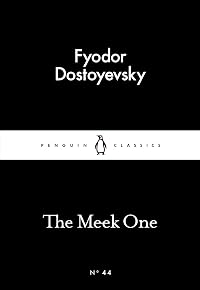
I should point out that this story is also often translated as A Gentle Creature. In fact, Penguin Classics published it by that title in their Penguin 60s Classics series, in a 1989 translation by David McDuff. This current version is translated by Ronald Meyer. show less
Dostoyevsky is not renowned for being a laugh a minute and, based on this story, it's a reputation that's well-deserved. At first I loathed the narrator, whose cold and clinical approach to love seems designed to torment his young wife - to make her, in microcosm, the butt of all the resentment he feels against the world at large. Then I began to feel for him: his tragic misunderstanding, his cowardice and his desperate attempts to revive a love that he has already crushed into ashes ('You don't know with what paradise I would have surrounded you. The paradise was in my soul; I would have planted it all around you!'). No, he isn't a straightforward villain. He's cruel without understanding the human heart, selfish, tyrannical and supercilious; but he's also a deeply wounded man whose claim to hate the world belies the fact that he cares deeply about rank and success. His determination to make money through business, and to retire to a life of comfortable wealth, has blinded him to the more delicate emotions and will, ultimately, deprive him of the chance of real happiness. No. It isn't exactly upbeat.
I should point out that this story is also often translated as A Gentle Creature. In fact, Penguin Classics published it by that title in their Penguin 60s Classics series, in a 1989 translation by David McDuff. This current version is translated by Ronald Meyer. show less
A great short story with a depth that belies its length. The decision of the 'meek one' – a timid woman with a narcissistic husband – to commit suicide can be interpreted in many ways, and Dostoevsky's storytelling cleverly allows for all of these to be potentially true without committing to any one of them.
Is the husband's view the right answer – that she had "made too many promises" (pg. 53) and she had to decide whether to try and love the hardships life presented (as represented conceptually by the figure of her husband)? Was this meek, hunted, poverty-stricken girl not able to cope with the prospect of a richer life ahead of her, when life becomes not just bovine endurance but something you have to work out? Or is it that show more her husband's change of heart doomed her – she had come to terms with his aloofness, only for his narcissism to reassert itself again? After singing and becoming free, was it that she did not want to go back to belonging to him again?
Either way, it is a great little story that is readable enough not to exhaust you but deep enough to make it worth the reading. Dostoevsky knew about life and he wrote perceptively about it, and I can't help but wonder if, for him, it was not so much her death that was a tragedy, but her life of meekness: "she held her tongue, didn't throw down the money, took it – that's what poverty is" (pg. 3). Whether you choose life or death, it is when you take the reins for yourself that you transcend the poverty of your existence. show less
Is the husband's view the right answer – that she had "made too many promises" (pg. 53) and she had to decide whether to try and love the hardships life presented (as represented conceptually by the figure of her husband)? Was this meek, hunted, poverty-stricken girl not able to cope with the prospect of a richer life ahead of her, when life becomes not just bovine endurance but something you have to work out? Or is it that show more her husband's change of heart doomed her – she had come to terms with his aloofness, only for his narcissism to reassert itself again? After singing and becoming free, was it that she did not want to go back to belonging to him again?
Either way, it is a great little story that is readable enough not to exhaust you but deep enough to make it worth the reading. Dostoevsky knew about life and he wrote perceptively about it, and I can't help but wonder if, for him, it was not so much her death that was a tragedy, but her life of meekness: "she held her tongue, didn't throw down the money, took it – that's what poverty is" (pg. 3). Whether you choose life or death, it is when you take the reins for yourself that you transcend the poverty of your existence. show less
Una historia corta escrita como monólogo. No estoy seguro si el título es apropiado, ya que el personaje al que hace referencia no es sumisa como si no que es destruida sistemáticamente por el narrador hasta el punto que su final es una conclusión lógica. En cualquier caso, es un texto brillante que por momentos es capaz de helar la sangre.
Dostoevsky is one of my favourite writers. I discovered him in my teenage years, read as many of his books as I could get my hands on, and to be honest haven't read anything else by him in a long time. I still count him as one of my favourite writers, though, more on memory than anything else. His writing is so urgent and immediate, and began to open up a world for me beyond 1990s South London.
The Gentle Spirit is very short - longer than a short story, but barely long enough to be called a novella. Because of this, it doesn't have the grand scale of Dostoevsky's longer works. But it does succeed in its aim - to get inside the head of a pawnbroker as he watches his dead wife laid out on the table in front of him, the wife that he has show more recently driven to suicide.
The language reflects the disordered state of the character's mind as he tries to understand what has happened. He asks questions, changes his mind, berates himself for going too fast or too slow or missing the point, and is always alternating between self-justification and self-flagellation. It's a convincing portrait.
The wife's character is not so clear, but in a way that's the point. The pawnbroker did not understand her - still doesn't, really. Because we see the world entirely through his eyes, our view is very limited and distorted. His wife is the "gentle spirit" of the book's title, much younger than he is and perhaps a little naive in her expectations of him, but beyond that we discover little about her.
Even the pawnbroker's own motives are not very clear - he decided from the start of the marriage to be "stern" with her and to withhold love and affection, but the only reason given for this is that it's what he was used to from his job - a pawnbroker has to be stern with his customers, and not allow himself to be emotionally involved in their plight. Perhaps Dostoevsky is saying that after cutting himself off from people in this way for so many years, he was unable to achieve intimacy with another human being. By the time he does realise his mistake and declare his love for her, it is too late and too extreme - after months of not speaking to her at all, he suddenly throws himself at her feet and tells her everything. Whereas at the beginning she would have welcomed this display of love, after everything she's been through it just frightens her and drives her away from him.
This was a quick and enjoyable read, and was probably the right length - because of the limitations of the pawnbroker's perspective, it might be tough to read a whole novel based inside his head. In this short book, though, the style worked very well, and although I didn't really understand either character very well, they felt real to me. Now I feel inspired to go back and re-read some of those novels I loved all those years ago. show less
The Gentle Spirit is very short - longer than a short story, but barely long enough to be called a novella. Because of this, it doesn't have the grand scale of Dostoevsky's longer works. But it does succeed in its aim - to get inside the head of a pawnbroker as he watches his dead wife laid out on the table in front of him, the wife that he has show more recently driven to suicide.
The language reflects the disordered state of the character's mind as he tries to understand what has happened. He asks questions, changes his mind, berates himself for going too fast or too slow or missing the point, and is always alternating between self-justification and self-flagellation. It's a convincing portrait.
The wife's character is not so clear, but in a way that's the point. The pawnbroker did not understand her - still doesn't, really. Because we see the world entirely through his eyes, our view is very limited and distorted. His wife is the "gentle spirit" of the book's title, much younger than he is and perhaps a little naive in her expectations of him, but beyond that we discover little about her.
Even the pawnbroker's own motives are not very clear - he decided from the start of the marriage to be "stern" with her and to withhold love and affection, but the only reason given for this is that it's what he was used to from his job - a pawnbroker has to be stern with his customers, and not allow himself to be emotionally involved in their plight. Perhaps Dostoevsky is saying that after cutting himself off from people in this way for so many years, he was unable to achieve intimacy with another human being. By the time he does realise his mistake and declare his love for her, it is too late and too extreme - after months of not speaking to her at all, he suddenly throws himself at her feet and tells her everything. Whereas at the beginning she would have welcomed this display of love, after everything she's been through it just frightens her and drives her away from him.
This was a quick and enjoyable read, and was probably the right length - because of the limitations of the pawnbroker's perspective, it might be tough to read a whole novel based inside his head. In this short book, though, the style worked very well, and although I didn't really understand either character very well, they felt real to me. Now I feel inspired to go back and re-read some of those novels I loved all those years ago. show less
Just phenomenal. This author is just phenomenal: when I start reading him, I just can't put it down. So dark, and yet so transparent and honest - his writing offers interior glimpses that are all too rare into character types that are all too common. Fantastic.
Another gem by [a:Dostoyevsky|3137322|Fyodor Dostoyevsky|https://images.gr-assets.com/authors/1506003555p2/3137322.jpg] that displays his insight into the psychology of men, and perhaps, even more, his unique skill in uncovering the depths of our psyche through compelling narrative.
Quick, short read and perhaps a great introduction to Dostoyevsky, if you are not yet familiar with his canon.
Quick, short read and perhaps a great introduction to Dostoyevsky, if you are not yet familiar with his canon.
Watched this as a theater piece for two actors about twenty years ago. Still remember it vividly. The performance of both actors was phenomenal. I kept wondering how an almost silent role played by the actress could be so remarkably memorable.
Suzirya (Constellation) theater in Kiev in the 90s was a unique experience for anyone who attended.
Suzirya (Constellation) theater in Kiev in the 90s was a unique experience for anyone who attended.
Members
- Recently Added By
Lists

Russian Literature
184 works; 35 members

Las mejores obras literarias releídas en 2022 (R. D.)
19 works; 1 member
Author Information

1,481+ Works 180,438 Members
One of the most powerful and significant authors in all modern fiction, Fyodor Dostoevsky was the son of a harsh and domineering army surgeon who was murdered by his own serfs (slaves), an event that was extremely important in shaping Dostoevsky's view of social and economic issues. He studied to be an engineer and began work as a draftsman. show more However, his first novel, Poor Folk (1846), was so well received that he abandoned engineering for writing. In 1849, Dostoevsky was arrested for being a part of a revolutionary group that owned an illegal printing press. He was sentenced to be executed, but the sentence was changed at the last minute, and he was sent to a prison camp in Siberia instead. By the time he was released in 1854, he had become a devout believer in both Christianity and Russia - although not in its ruler, the Czar. During the 1860's, Dostoevsky's personal life was in constant turmoil as the result of financial problems, a gambling addiction, and the deaths of his wife and brother. His second marriage in 1887 provided him with a stable home life and personal contentment, and during the years that followed he produced his great novels: Crime and Punishment (1886), the story of Rodya Raskolnikov, who kills two old women in the belief that he is beyond the bounds of good and evil; The Idiots (1868), the story of an epileptic who tragically affects the lives of those around him; The Possessed (1872), the story of the effect of revolutionary thought on the members of one Russian community; A Raw Youth (1875), which focuses on the disintegration and decay of family relationships and life; and The Brothers Karamazov (1880), which centers on the murder of Fyodor Karamazov and the effect the murder has on each of his four sons. These works have placed Dostoevsky in the front rank of the world's great novelists. Dostoevsky was an innovator, bringing new depth and meaning to the psychological novel and combining realism and philosophical speculation in his complex studies of the human condition. (Bowker Author Biography) show less
Fyodor Dostoyevsky has a Legacy Library. Legacy libraries are the personal libraries of famous readers, entered by LibraryThing members from the Legacy Libraries group.
Some Editions
Awards and Honors
Series
Belongs to Publisher Series
Work Relationships
Is contained in
A Gentle Creature and Other Stories: White Nights; A Gentle Creature; The Dream of a Ridiculous Man (Oxford World's Classics) by Fyodor Dostoyevsky
Acht vrouwen klassieke Russische verhalen van Poesjkin, Toergenjev, Leskov, Dostojevski en Tsjechov by Aleida G. Schot
Common Knowledge
- Canonical title
- The Gentle Spirit
- Original title
- Кроткая; Скверный анекдот
- Alternate titles
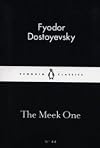
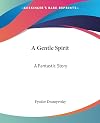
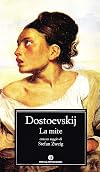
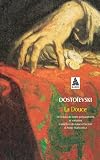
- A Gentle Spirit; The Meek Girl; The Gentle Maiden; A Meek Young Girl; A Gentle Creature; The Meek One (show all 7); Een lieve meid
- Original publication date
- 1876
- First words
- ...You see, as long as she's still here, everything's still all right: every moment or so I go over and take a look at her; but they'll take her away tomorrow and - how will I be on my own?
- Last words
- (Click to show. Warning: May contain spoilers.)No, seriously though: when they come to take her away tomorrow, what will I do?
Classifications
- Genres
- General Fiction, Fiction and Literature
- DDC/MDS
- 891.733 — Literature & rhetoric Literatures of other languages East Indo-European and Celtic literatures Russian and East Slavic languages Russian fiction 1800–1917
- LCC
- PG3325 .K7 — Language and Literature Slavic languages and literatures. Baltic languages. Albanian language Slavic. Baltic. Albanian Russian literature Individual authors and works 1800-1870 Dostoyevsky
- BISAC
Statistics
- Members
- 852
- Popularity
- 32,141
- Reviews
- 17
- Rating
- (3.74)
- Languages
- 18 — Czech, Danish, Dutch, English, Finnish, French, German, Greek, Hebrew, Hungarian, Italian, Polish, Portuguese (Brazil), Romanian, Russian, Spanish, Swedish, Turkish
- Media
- Paper, Audiobook, Ebook
- ISBNs
- 68
- ASINs
- 17