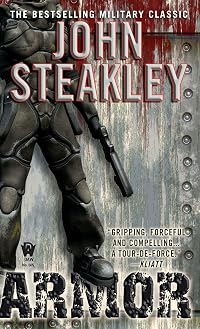
Armor
by John Steakley
On This Page
Description
The planet is called Banshee. The air is unbreathable, the water poisonous. It is the home of the most implacable enemies that humanity, in all its interstellar expansion, has ever encountered. Felix is a scout in A-team Two. Highly competent, he is the sole survivor of mission after mission. Yet he is a man consumed by fear and hatred. And he is protected not only by his custom-fitted body armor, the culmination of ten thousand years of the armorers'craft, but also by an odd being which show more seems to live with him, a cold killing machine he calls "the Engine.". show lessTags
Recommendations
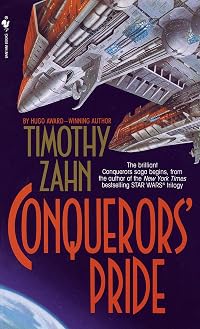
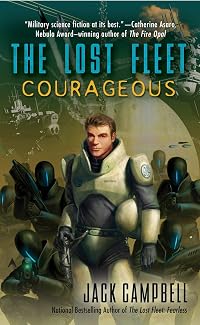
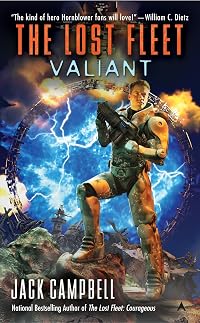
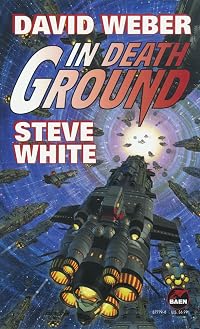
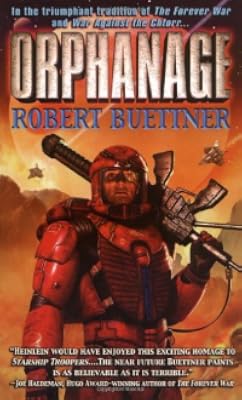

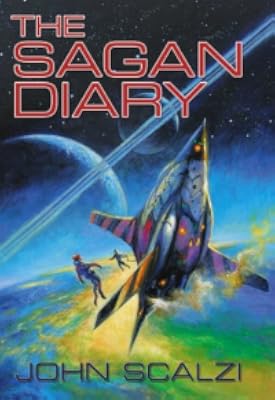
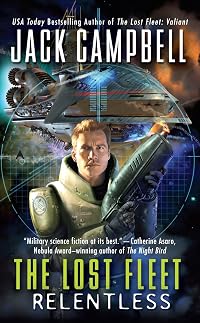

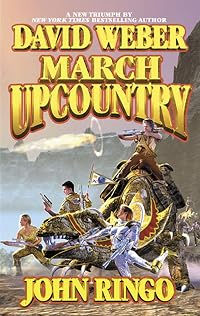
Member Recommendations
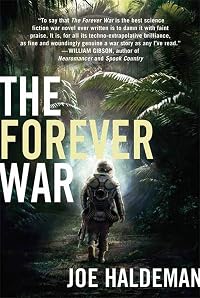
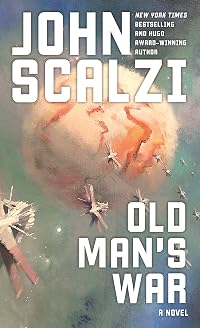
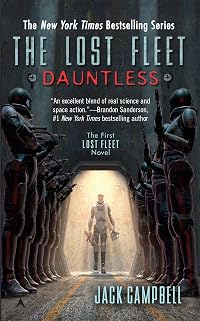
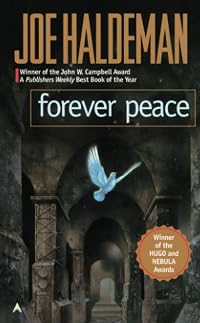
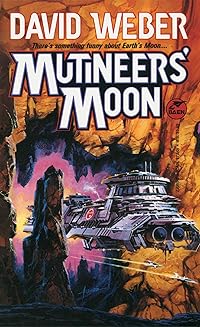
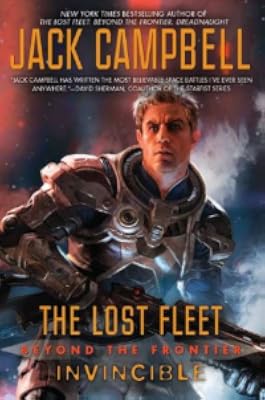
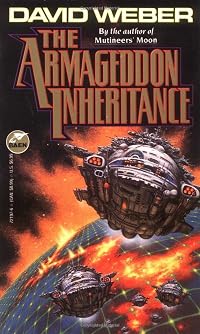
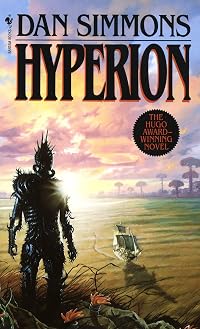
RASinfo Perfect read for the story and ideas of the same theme.
crazybatcow Both are military sci-fi with mature themes and a protagonist you might not like but who kicks butt anyway.
Member Reviews
The story starts out with what you'd expect after reading the book blurb (Goodreads or paperback): a non-stop brutal assault. Felix is but one soldier of thousands dumped on Banshee, the alien homeworld, to fight the enemy on their turf. While not stated outright, they're treated as disposable heroes. Lessons are never learned. Tactics never change. Mistakes are repeated, sending the casualty count higher and higher. Published in 1984, I wonder if the hangover from Vietnam factored into Steakley's writing.
Felix's battles are epic, but there's no glory here. The "ants"--giant, mass-produced, mindless biological killing machines--relentlessly attack Felix and his fellow soldiers. Swarm after swarm come at them, and eventually, everyone show more dies. Except Felix. Steakley writes up Felix's battles in gory detail, which wears on the reader, but that's his point. He wants you to connect with Felix, who is physically and psychologically drained from all the killing, watching his comrades die, and being ordered to repeat the process over and over and over. It's madness, and it threatens to take Felix down with it. He's too afraid to live, but too angry to die.
But in the second part of the book, we shift from Felix to Jack Crow, interstellar celebrity rogue. He violently escapes from prison to a starship on a landing pad, only to be caught up with a group of mutineers. He's coerced into working with them in a scam to secure more fuel from a Fleet Scientific Colony. Jack is to use his celebrity status to his advantage to get the mutineers past the planet's defenses. Jack uses his reputation and charisma to gain audience and then presents a Trojan Horse of sorts to the project's chief scientist, Hollis Ware. Not only does it snare Hollis's curiosity, but Jack's too.
This second story takes over for quite a large chunk of the book, but Felix isn't forgotten. Steakley eventually weaves the two storylines together, and we learn more about what happened to Felix as well as his past before enlisting. Along the way, Steakley works on evolving Jack from selfish to selfless in a way that remained true to the character.
There are a few women characters of note in the book, and each is treated differently. Forest is a soldier just like Felix. She's fantastic: smart, brave, and skilled. Colonel Canada seemed like someone fresh out of college: book smart and eager, but not all that experienced. When she appears, it's like an episode of Spring Break: Banshee. Lya is a psychologist and Hollis's handler, not to mention very much in love with him. Karen is the Project Administrator and...wow. Let's just say that when we learn her backstory, it strikes a chord with the #metoo movement. All four impact either Felix or Jack in some way that shapes their worldview.
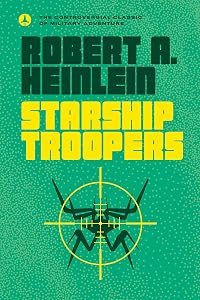
There's been a lot of comparison of this novel to Starship Troopers and Forever War. Yes, there are big mean bugs that attacked Earth (ST), and there's a bleak outlook on the futility of war and those calling the shots (FW), but there are major differences. ST was more about patriotism and duty as Heinlein saw a moral decline in 1950s America. Armor rejects patriotism as an excuse for stupidity. FW was a mirror of Haldeman's experiences fighting in Vietnam and the difficulty returning to civilian life. Armor acknowledges it, but forges a different path, concerning itself with the toll taken on the human psyche.
There are some parts, including the ending, that beg for further story exploration. Sadly, Steakley died in 2010 from liver disease, having never completed a sequel.
Overall, a fantastic book (please ignore the typos) that worked for me on numerous levels. show less
Felix's battles are epic, but there's no glory here. The "ants"--giant, mass-produced, mindless biological killing machines--relentlessly attack Felix and his fellow soldiers. Swarm after swarm come at them, and eventually, everyone show more dies. Except Felix. Steakley writes up Felix's battles in gory detail, which wears on the reader, but that's his point. He wants you to connect with Felix, who is physically and psychologically drained from all the killing, watching his comrades die, and being ordered to repeat the process over and over and over. It's madness, and it threatens to take Felix down with it. He's too afraid to live, but too angry to die.
But in the second part of the book, we shift from Felix to Jack Crow, interstellar celebrity rogue. He violently escapes from prison to a starship on a landing pad, only to be caught up with a group of mutineers. He's coerced into working with them in a scam to secure more fuel from a Fleet Scientific Colony. Jack is to use his celebrity status to his advantage to get the mutineers past the planet's defenses. Jack uses his reputation and charisma to gain audience and then presents a Trojan Horse of sorts to the project's chief scientist, Hollis Ware. Not only does it snare Hollis's curiosity, but Jack's too.
This second story takes over for quite a large chunk of the book, but Felix isn't forgotten. Steakley eventually weaves the two storylines together, and we learn more about what happened to Felix as well as his past before enlisting. Along the way, Steakley works on evolving Jack from selfish to selfless in a way that remained true to the character.
There are a few women characters of note in the book, and each is treated differently. Forest is a soldier just like Felix. She's fantastic: smart, brave, and skilled. Colonel Canada seemed like someone fresh out of college: book smart and eager, but not all that experienced. When she appears, it's like an episode of Spring Break: Banshee. Lya is a psychologist and Hollis's handler, not to mention very much in love with him. Karen is the Project Administrator and...wow. Let's just say that when we learn her backstory, it strikes a chord with the #metoo movement. All four impact either Felix or Jack in some way that shapes their worldview.
There's been a lot of comparison of this novel to Starship Troopers and Forever War. Yes, there are big mean bugs that attacked Earth (ST), and there's a bleak outlook on the futility of war and those calling the shots (FW), but there are major differences. ST was more about patriotism and duty as Heinlein saw a moral decline in 1950s America. Armor rejects patriotism as an excuse for stupidity. FW was a mirror of Haldeman's experiences fighting in Vietnam and the difficulty returning to civilian life. Armor acknowledges it, but forges a different path, concerning itself with the toll taken on the human psyche.
There are some parts, including the ending, that beg for further story exploration. Sadly, Steakley died in 2010 from liver disease, having never completed a sequel.
Overall, a fantastic book (please ignore the typos) that worked for me on numerous levels. show less
It is difficult to think of a science fiction author who built up more of a following from fewer books than John Steakley. Though he published only two novels in his lifetime, both of them proved successful, with one of them – the novel Vampire$ – subsequently adapted into a 1997 movie directed by John Carpenter.
Yet it is Steakley’s first novel which enjoys the more devoted audience. It consists of two intertwined stories, both of which center around men thrust into circumstances beyond their control. In the first of them, a man named Felix is part of an army of battlesuit-wearing soldiers participating in an invasion of an alien world nicknamed Banshee. Despite their technologically-enhanced strength and speed, the human forces show more quickly find themselves overwhelmed by the sheer number of “ants” – insect-like enemies of implacable ferocity that sacrifice themselves by the thousands in their battles against the enemy. The second story takes place four years later and is centered around Jack Crow, a legendary pirate who agrees to help a ruthless brigand attack a military research base in order to obtain their energy source. As Crow insinuates himself among the researchers, he grapples with his conscience and a situation that proves far more complicated than he expected.
Given these elements, it’s easy to see why Steakley’s novel is often compared to Robert Heinlein’s classic work Starship Troopers. Yet this is an unfair comparison, especially as Steakley’s novel is a far superior book to Heinlein’s in so many respects. Unlike Heinlein, who used his story as a vehicle for his views on politics, Steakley focuses instead upon the psychological impact of war upon people. Much of this can be seen as both a product of, and a commentary on, America’s experience with the Vietnam War, which was barely a decade in the past when Steakley’s novel was originally published in 1984. This is most evident in his depiction of the Antwar, in which technologically superior human forces fighting an enormous distance from their home in an inhospitable environment are consistently defeated by determined foes willing to absorb enormous casualties in order to defeat the invaders.
While Felix’s experiences in the Antwar form the core of the novel, however, it is Jack Crow who most clearly embodies the author’s perspective. Though Gary Stu-ish in terms of his abilities and experiences (women practically throw themselves at him throughout the story), Crow is very much not a veteran of the Antwar but rather is one of the vast majority of humans for whom it’s an event in the background of his life. In this respect Crow likely embodies the author’s own experiences with war, for while Steakley was of the generation of Americans who served in Vietnam, there is no evidence that he did so. Instead Crow comes to experience the war vicariously, in a way (without spoiling the plot) that shifts his perspective and profoundly changes his life.
And this is at the heart of what I found so appealing about Steakley’s novel. For while I enjoyed Steakley’s visceral descriptions of war, it was his exploration of reputations and their burdens on people’s lives that proved even more interesting. One of the recurring themes in Steakley’s description of both Felix’s and Crow’s achievements is the expectations born from them. In Felix’s case, his reputation is one we see him earning through enduring graphically horrific battles, as Felix’s survival is contrasted with the gruesome fates suffered by nearly everyone around him. For Felix, there is nothing heroic about what he has done, yet he has to endure the awe of others for what is more suffering than it is achievement.
Jack Crow’s reputation is introduced differently, and in many ways as a counterpoint to Felix’s. When we first encounter him in the novel, he is already an interstellar celebrity for vaguely-defined exploits in his distant past. Whereas Felix tries to hold onto his anonymity and is reluctant to share even the most basic details of his experiences, however, Crow exploits his fame cynically. Though he doesn’t regard himself as the personage everybody treats him as, he proves perfectly willing to play the role in order to get what he needs. This gulf between Crow’s persona and the undercurrent of guilt he feels at not living up to it even as he employs it to his advantage is a recurring conflict in his character that builds to a climax in the novel, one that serves as a satisfying conclusion to the book as a whole.
By the time I reached that conclusion, I understood why Steakley’s novel enjoys the acclaim it has received. It transcends many of its counterparts in the “military SF” genre to offer the sorts of insights into the human character that good fictional works provide. If anything, it deserves an even wider audience than it currently enjoys, and will hopefully be read long after similar books of its type are deservedly forgotten. show less
Yet it is Steakley’s first novel which enjoys the more devoted audience. It consists of two intertwined stories, both of which center around men thrust into circumstances beyond their control. In the first of them, a man named Felix is part of an army of battlesuit-wearing soldiers participating in an invasion of an alien world nicknamed Banshee. Despite their technologically-enhanced strength and speed, the human forces show more quickly find themselves overwhelmed by the sheer number of “ants” – insect-like enemies of implacable ferocity that sacrifice themselves by the thousands in their battles against the enemy. The second story takes place four years later and is centered around Jack Crow, a legendary pirate who agrees to help a ruthless brigand attack a military research base in order to obtain their energy source. As Crow insinuates himself among the researchers, he grapples with his conscience and a situation that proves far more complicated than he expected.
Given these elements, it’s easy to see why Steakley’s novel is often compared to Robert Heinlein’s classic work Starship Troopers. Yet this is an unfair comparison, especially as Steakley’s novel is a far superior book to Heinlein’s in so many respects. Unlike Heinlein, who used his story as a vehicle for his views on politics, Steakley focuses instead upon the psychological impact of war upon people. Much of this can be seen as both a product of, and a commentary on, America’s experience with the Vietnam War, which was barely a decade in the past when Steakley’s novel was originally published in 1984. This is most evident in his depiction of the Antwar, in which technologically superior human forces fighting an enormous distance from their home in an inhospitable environment are consistently defeated by determined foes willing to absorb enormous casualties in order to defeat the invaders.
While Felix’s experiences in the Antwar form the core of the novel, however, it is Jack Crow who most clearly embodies the author’s perspective. Though Gary Stu-ish in terms of his abilities and experiences (women practically throw themselves at him throughout the story), Crow is very much not a veteran of the Antwar but rather is one of the vast majority of humans for whom it’s an event in the background of his life. In this respect Crow likely embodies the author’s own experiences with war, for while Steakley was of the generation of Americans who served in Vietnam, there is no evidence that he did so. Instead Crow comes to experience the war vicariously, in a way (without spoiling the plot) that shifts his perspective and profoundly changes his life.
And this is at the heart of what I found so appealing about Steakley’s novel. For while I enjoyed Steakley’s visceral descriptions of war, it was his exploration of reputations and their burdens on people’s lives that proved even more interesting. One of the recurring themes in Steakley’s description of both Felix’s and Crow’s achievements is the expectations born from them. In Felix’s case, his reputation is one we see him earning through enduring graphically horrific battles, as Felix’s survival is contrasted with the gruesome fates suffered by nearly everyone around him. For Felix, there is nothing heroic about what he has done, yet he has to endure the awe of others for what is more suffering than it is achievement.
Jack Crow’s reputation is introduced differently, and in many ways as a counterpoint to Felix’s. When we first encounter him in the novel, he is already an interstellar celebrity for vaguely-defined exploits in his distant past. Whereas Felix tries to hold onto his anonymity and is reluctant to share even the most basic details of his experiences, however, Crow exploits his fame cynically. Though he doesn’t regard himself as the personage everybody treats him as, he proves perfectly willing to play the role in order to get what he needs. This gulf between Crow’s persona and the undercurrent of guilt he feels at not living up to it even as he employs it to his advantage is a recurring conflict in his character that builds to a climax in the novel, one that serves as a satisfying conclusion to the book as a whole.
By the time I reached that conclusion, I understood why Steakley’s novel enjoys the acclaim it has received. It transcends many of its counterparts in the “military SF” genre to offer the sorts of insights into the human character that good fictional works provide. If anything, it deserves an even wider audience than it currently enjoys, and will hopefully be read long after similar books of its type are deservedly forgotten. show less
The two best books about powered armor are Starship Troopers and The Forever War. Armor makes a solid third in the trinity. Of course, it's not a perfect book, and I'm not sure that the unusual structure helps it.
The first bit is conventional enough. Felix is a scout, The Scout, a lethal instrument alienated from his fellow man, part of a beachhead on the planet Banshee, a frozen and wind-scoured wasteland inhabited by 8 feet tall "Ants". The mission is simple reconnaissance in force, but there are so many Ants. A fragmented consciousness, the Engine, lets Felix kill and survive. He's one of the sole survivors of the mission. And then he's back at it. Another drop, more Ants, more killing.
The unusual structure is that after meeting show more Felix, we switch the first-person perspective of Jack Crow, interstellar rogue and brawler. Crow gets embroiled in a pirate's plan to conquer an isolated scientific outpost. He takes along a strange relic, a suit of black power armor, and enraptures the outpost's staff with his notoriety. He and the outpost director, Holly Ware, read the combat-recorded memories off of the armor, experiencing Felix's war. And at the end, it all comes to a head.
This book has chaotic descriptions of battle, of powerful armor against hordes of alien bugs. It's killing without tactics or purpose, World War I like in its nihilism and the detachment of senior officers from the cannon-fodder. Felix's story is great. And Crow's story is just... there. Steakley must think Crow is a much more interesting character than he is, and there's a lot of telling about "the great Jack Crow" for relatively little showing. Still a good book, and one of my favorites, but definitely one with some warts. show less
The first bit is conventional enough. Felix is a scout, The Scout, a lethal instrument alienated from his fellow man, part of a beachhead on the planet Banshee, a frozen and wind-scoured wasteland inhabited by 8 feet tall "Ants". The mission is simple reconnaissance in force, but there are so many Ants. A fragmented consciousness, the Engine, lets Felix kill and survive. He's one of the sole survivors of the mission. And then he's back at it. Another drop, more Ants, more killing.
The unusual structure is that after meeting show more Felix, we switch the first-person perspective of Jack Crow, interstellar rogue and brawler. Crow gets embroiled in a pirate's plan to conquer an isolated scientific outpost. He takes along a strange relic, a suit of black power armor, and enraptures the outpost's staff with his notoriety. He and the outpost director, Holly Ware, read the combat-recorded memories off of the armor, experiencing Felix's war. And at the end, it all comes to a head.
This book has chaotic descriptions of battle, of powerful armor against hordes of alien bugs. It's killing without tactics or purpose, World War I like in its nihilism and the detachment of senior officers from the cannon-fodder. Felix's story is great. And Crow's story is just... there. Steakley must think Crow is a much more interesting character than he is, and there's a lot of telling about "the great Jack Crow" for relatively little showing. Still a good book, and one of my favorites, but definitely one with some warts. show less
This book has its detractors, but I found it an interesting and in some ways challenging book. It tells two parallel stories with dramatically different narrative styles: a fast-paced, thrilling “humans vs. aliens” military campaign reminiscent of something out of Starship Troopers, and a much slower to develop psychological and moral story about a miscreant who is ultimately chooses to intervene against the bad guys who are trying to take over a planetary settlement. This disjointed narrative style seems to have left some readers frustrated.
The battle scenes, set on the Planet Banshee are stunning. The opening section, following Felix the super soldier through his initial on planet deployment, is one of the most breathtakingly show more intense action sequences you will ever read. Don’t start this book unless you are ready to read the entire first section in a single reading. The later scenes on Banshee continue to be powerful. Yet the book certainly doesn’t glorify warfare. In many ways Armor is a powerful anti-war statement, with particular contempt for both the clueless generals who are far removed from the horrors of the battlefield, and the clueless press who are covering the war like a sporting or entertainment event.
The Jack Crow plot line is slower to evolve and it takes a long time to see how the two stories fit together. But, ultimately, they do, and the story moves to a satisfying conclusion. show less
The battle scenes, set on the Planet Banshee are stunning. The opening section, following Felix the super soldier through his initial on planet deployment, is one of the most breathtakingly show more intense action sequences you will ever read. Don’t start this book unless you are ready to read the entire first section in a single reading. The later scenes on Banshee continue to be powerful. Yet the book certainly doesn’t glorify warfare. In many ways Armor is a powerful anti-war statement, with particular contempt for both the clueless generals who are far removed from the horrors of the battlefield, and the clueless press who are covering the war like a sporting or entertainment event.
The Jack Crow plot line is slower to evolve and it takes a long time to see how the two stories fit together. But, ultimately, they do, and the story moves to a satisfying conclusion. show less
The novel is actually composed of 2 very different storylines, extremely loosely connected:
1. A combat military sci-fi about a scout named Felix. This is extremely good and I enjoyed it immensely for its rhythm, grit and realism regarding the stupidity of the brass. The intense battles are reminiscent of the ww1 carnage (unlike Starship Troopers' obvious ww2 inspiration). 5/5 is barely enough for this part.
2. Another storyline about some wiseguy Han Solo type crook and... space pirates. Yes, in a book not from the 1930s,but at the same ridiculous level. This part is terribly boring, ridiculous, unoriginal and riddled with badly written characters. If I could go less than 1/5 I would.
So the average is 3, and if the editor kept just half show more the book (the mil scifi) it would have been a much better decision. show less
1. A combat military sci-fi about a scout named Felix. This is extremely good and I enjoyed it immensely for its rhythm, grit and realism regarding the stupidity of the brass. The intense battles are reminiscent of the ww1 carnage (unlike Starship Troopers' obvious ww2 inspiration). 5/5 is barely enough for this part.
2. Another storyline about some wiseguy Han Solo type crook and... space pirates. Yes, in a book not from the 1930s,but at the same ridiculous level. This part is terribly boring, ridiculous, unoriginal and riddled with badly written characters. If I could go less than 1/5 I would.
So the average is 3, and if the editor kept just half show more the book (the mil scifi) it would have been a much better decision. show less
4.5 stars, audio version
ORIGINALLY POSTED AT Fantasy Literature.
"...everything you were hiding from was in there with you. That's the trouble with armor. It won't protect you from what you are."
Felix is a loner, a broken man with a mysterious past. When he's dropped with thousands of fellow soldiers on a toxic planet nicknamed "Banshee," he's the only survivor of the battle with the 8-foot tall "Ants" that live there. That's partly because of the special armor he wears -- his black nuclear-powered scout suit -- and partly because of the emotional armor he wears -- what he calls "The Engine" -- his lack of fear and compassion in dangerous situations. Because he doesn't really care if he dies, he is able to make quick detached decisions, show more and it's this armor, ironically, that keeps him alive.
After the battle, the computer assumes Felix is dead, and this glitch means that he's never assigned to R&R. Instead, he keeps getting dropped into the hordes of Ants on Banshee, and he continues to survive while everyone else dies. Prone to be solitary anyway, the fact that nobody around him lasts long means that Felix becomes more experienced than his leaders (though few people realize this), that he doesn't form any human bonds, and that his situation progressively gets more lonely, desperate, and tragic.
Felix is so emotionless and inaccessible, his environment is so bleak, and his situation is so grim, that I nearly quit reading Armor. It was just painful and hopeless. Then suddenly we leave Felix, jump several years into the future, and join up with Jack Crow, a notorious criminal who has escaped from prison and partnered with a space pirate. The two of them plan to infiltrate a research lab on a frontier planet. Jack is fascinated by a black scout suit he finds and he carries it to the research lab as a gift to Hollis, the scientist who runs the lab. Also intrigued, Hollis manages to hook into it so that they can relive Felix's experiences in the Antwar.
And they are horrified -- devastated by Felix's physical pain and mental suffering. But most of all, they're awed at his strength and his ability to go on in the face of such complete devastation and hopelessness, especially when they find out how Felix got his "armor" -- how he became this emotionless killing machine. Felix refuses to die and it affects them profoundly.
It affected me profoundly, too. After nearly quitting Armor because of its lack of emotion, I was surprised to eventually find myself stressed out and sobbing. You won't believe it at the beginning, but Armor becomes intensely emotional, especially for what's considered a "military SF" novel. This is not merely "military SF" -- it's a novel about suffering, compassion, love, and the human survival instinct. It just takes a while to get there, which makes it even more gratifying when it finally shows itself.
I listened to Blackstone Audio's version of Armor, narrated by Tom Weiner. His deep voice was perfect for a story with a bunch of rough men in it, but he did a great job with the female characters, too. I unhesitatingly recommend the audio version.
Armor isn't the perfect novel -- it's hard to believe in the Antwar because we never understand why humans want to be on this toxic planet, it's hard to believe in a computer glitch that can't be fixed, and there's some psychobabble that doesn't hold up to 21st century psychology (Armor was published in 1984), yet this is a powerful, character-focused, deeply emotional novel about human suffering and the will to survive.
The ending of Armor is both devastatingly glorious and agonizingly inconclusive. John Steakley was writing a sequel when he died in November 2010. An excerpt of the sequel, which I believe was not finished, can be found at this fan website. But I don't need a sequel -- I like the way Armor ended.
"Are you there Felix? Are you there?" show less
ORIGINALLY POSTED AT Fantasy Literature.
"...everything you were hiding from was in there with you. That's the trouble with armor. It won't protect you from what you are."
Felix is a loner, a broken man with a mysterious past. When he's dropped with thousands of fellow soldiers on a toxic planet nicknamed "Banshee," he's the only survivor of the battle with the 8-foot tall "Ants" that live there. That's partly because of the special armor he wears -- his black nuclear-powered scout suit -- and partly because of the emotional armor he wears -- what he calls "The Engine" -- his lack of fear and compassion in dangerous situations. Because he doesn't really care if he dies, he is able to make quick detached decisions, show more and it's this armor, ironically, that keeps him alive.
After the battle, the computer assumes Felix is dead, and this glitch means that he's never assigned to R&R. Instead, he keeps getting dropped into the hordes of Ants on Banshee, and he continues to survive while everyone else dies. Prone to be solitary anyway, the fact that nobody around him lasts long means that Felix becomes more experienced than his leaders (though few people realize this), that he doesn't form any human bonds, and that his situation progressively gets more lonely, desperate, and tragic.
Felix is so emotionless and inaccessible, his environment is so bleak, and his situation is so grim, that I nearly quit reading Armor. It was just painful and hopeless. Then suddenly we leave Felix, jump several years into the future, and join up with Jack Crow, a notorious criminal who has escaped from prison and partnered with a space pirate. The two of them plan to infiltrate a research lab on a frontier planet. Jack is fascinated by a black scout suit he finds and he carries it to the research lab as a gift to Hollis, the scientist who runs the lab. Also intrigued, Hollis manages to hook into it so that they can relive Felix's experiences in the Antwar.
And they are horrified -- devastated by Felix's physical pain and mental suffering. But most of all, they're awed at his strength and his ability to go on in the face of such complete devastation and hopelessness, especially when they find out how Felix got his "armor" -- how he became this emotionless killing machine. Felix refuses to die and it affects them profoundly.
It affected me profoundly, too. After nearly quitting Armor because of its lack of emotion, I was surprised to eventually find myself stressed out and sobbing. You won't believe it at the beginning, but Armor becomes intensely emotional, especially for what's considered a "military SF" novel. This is not merely "military SF" -- it's a novel about suffering, compassion, love, and the human survival instinct. It just takes a while to get there, which makes it even more gratifying when it finally shows itself.
I listened to Blackstone Audio's version of Armor, narrated by Tom Weiner. His deep voice was perfect for a story with a bunch of rough men in it, but he did a great job with the female characters, too. I unhesitatingly recommend the audio version.
Armor isn't the perfect novel -- it's hard to believe in the Antwar because we never understand why humans want to be on this toxic planet, it's hard to believe in a computer glitch that can't be fixed, and there's some psychobabble that doesn't hold up to 21st century psychology (Armor was published in 1984), yet this is a powerful, character-focused, deeply emotional novel about human suffering and the will to survive.
The ending of Armor is both devastatingly glorious and agonizingly inconclusive. John Steakley was writing a sequel when he died in November 2010. An excerpt of the sequel, which I believe was not finished, can be found at this fan website. But I don't need a sequel -- I like the way Armor ended.
"Are you there Felix? Are you there?" show less
Originality
Military sci-fi w/powered armor suits and mindless giant ants. Been there; done that. The science was never explained to my satisfaction--in fact, the science of Transit was never explained.
Writing
I liked the writing: descriptive, fast, action sequences and complex tactics--which is what military sci-fi is all about--and crisp dialogue. (There were a few typos.)
Characterization
The main characters, a warrior and a pirate, didn't have deep feelings--nor were they terribly unique. The secondary characters, for the most part, fell into neat tropes.
Story
Pacing was lackadaisical in the beginning, but really hit its stride in the battles. Switching to the pirate's point of view was both jarring and disappointing. Now that we'd show more gotten to know the hero and what he's up against, instead of showing how he surmounts the odds, we have to start all over again with a handsome, clever, and strong but self-serving piratewhose mission is to betray the nice geeky mad scientist . Even though the character of the asshole develops into a hero, we spend too much time with the asshole to really care that he's not an asshole anymore. Of course, we had to get back to the hero and I had high hopes for the ending, but I could see it coming like a train wreck: deux ex machina.
Conclusion
Although the action was great, tactics were cool, and dialogue was smart, the lack of originality, hard science, and engaging characters couldn't pull it out of mediocrity. Finally deux ex machina put the nail in the coffin. The Forever War is much more engaging and thought-provoking.
Personal Notes
Military sci-fi and space opera are my weaknesses. In 6th grade, I used to write these stories in which there were 20,000 lasers blasting the enemy ships out of orbit. In high school, I used to play the Starship Troopers wargame (the old cardboard hex map and punch-out counters). So, when I say I love these two genres, I truly mean it. show less
Military sci-fi w/powered armor suits and mindless giant ants. Been there; done that. The science was never explained to my satisfaction--in fact, the science of Transit was never explained.
Writing
I liked the writing: descriptive, fast, action sequences and complex tactics--which is what military sci-fi is all about--and crisp dialogue. (There were a few typos.)
Characterization
The main characters, a warrior and a pirate, didn't have deep feelings--nor were they terribly unique. The secondary characters, for the most part, fell into neat tropes.
Story
Pacing was lackadaisical in the beginning, but really hit its stride in the battles. Switching to the pirate's point of view was both jarring and disappointing. Now that we'd show more gotten to know the hero and what he's up against, instead of showing how he surmounts the odds, we have to start all over again with a handsome, clever, and strong but self-serving pirate
Conclusion
Although the action was great, tactics were cool, and dialogue was smart, the lack of originality, hard science, and engaging characters couldn't pull it out of mediocrity. Finally deux ex machina put the nail in the coffin. The Forever War is much more engaging and thought-provoking.
Personal Notes
Military sci-fi and space opera are my weaknesses. In 6th grade, I used to write these stories in which there were 20,000 lasers blasting the enemy ships out of orbit. In high school, I used to play the Starship Troopers wargame (the old cardboard hex map and punch-out counters). So, when I say I love these two genres, I truly mean it. show less
Members
- Recently Added By
Lists

Best Science Fiction Novels
816 works; 430 members

Best Military Science Fiction
57 works; 25 members

Books Read in 2013
1,630 works; 51 members

Blue Pyramid 1,276 Best Books of All Time
1,248 works; 32 members

Books featured on I Don't Even Own a Television
167 works; 3 members
Author Information

2 Works 2,675 Members
Some Editions
Series
Belongs to Publisher Series
DAW Book Collectors (605)
Common Knowledge
- Canonical title
- Armor
- Original publication date
- 1984-12-04
- People/Characters
- Felix
- Important places
- Banshee (fictitious planet)
- Epigraph
- You are
What you do
When it counts.
—The Masao - Dedication
- To my beloved father,
first (and foremost) John William Steakley—
and to Eagle,
first (and foremost) pal,
this book is gratefully dedicated.
Every single day I love them both. - First words
- He drank alone.
- Last words
- (Click to show. Warning: May contain spoilers.)Are you there?
Classifications
Statistics
- Members
- 1,923
- Popularity
- 11,073
- Reviews
- 54
- Rating
- (3.83)
- Languages
- English, French, Korean
- Media
- Paper, Audiobook, Ebook
- ISBNs
- 14
- ASINs
- 10