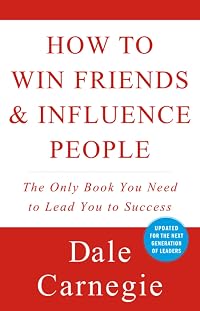
How to Win Friends & Influence People
by Dale Carnegie
On This Page
Description
Updated for today's readers, Dale Carnegie's timeless bestseller How to Win Friends and Influence People is a classic that has improved and transformed the professional and personal and lives of millions.One of the best-known motivational guides in history, Dale Carnegie's groundbreaking book has sold tens of millions of copies, been translated into almost every known language, and has helped countless people succeed.
Originally published during the depths of the Great Depression—and show more equally valuable during booming economies or hard times—Carnegie's rock-solid, time-tested advice has carried countless people up the ladder of success in their professional and personal lives.
How to Win Friends and Influence People teaches you:
-How to communicate effectively
-How to make people like you
-How to increase your ability to get things done
-How to get others to see your side
-How to become a more effective leader
-How to successfully navigate almost any social situation
-And so much more!
Achieve your maximum potential with this updated version of a classic—a must-read for the 21st century. show less
Tags
Recommendations

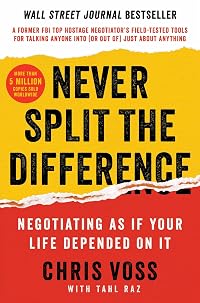
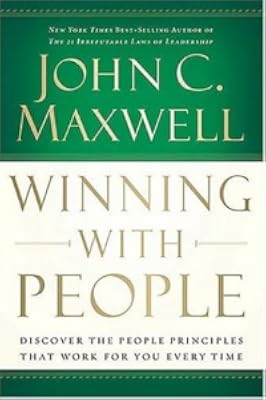
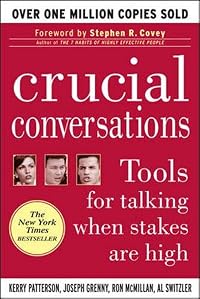
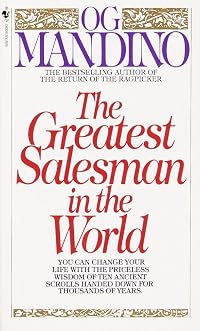

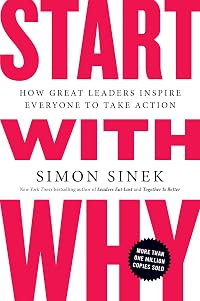
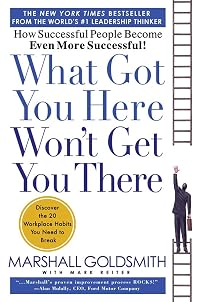

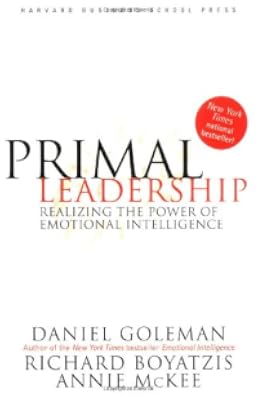
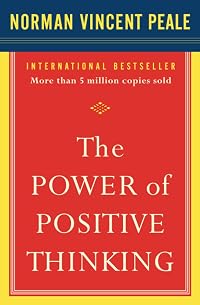




Member Recommendations
Member Reviews
As the most famous and influential self-help book of the 20th century, this would be of interest to me even if I despised the self-help genre. Fortunately for the book (and for me), it was excellent. I really hate the phrase "common sense", because it's invariably applied to notions that are either uncommon or nonsensical, but Carnegie's tips for becoming a friendlier, more likable, and more admirable person are basically the distillation of every folk wisdom proverb you've ever heard, arranged in a logical order with plenty of great if sometimes idiosyncratic examples. It's difficult to review self-help books, since the doing is as important as the reading, but I think if you consciously observed successful people around you, you would show more see them using these tips or something very like them. This book hasn't been wildly popular for 80 years for no reason, and if everyone else used his principles on me, I think my life would be a lot more pleasant.
Of course, if Carnegie's method is so obviously successful, then why isn't everyone using it? Why do other self-help books even exist? Well, therein lies an entirely different book itself, but one metaphor I find helpful when thinking about self-help books is that of the distinction between a recipe and a cookbook. Lots of self-help books claim that they need to be followed like a recipe - use these ingredients, in these amounts, combined in this order - or else they don't work. That's how authors get rich, by selling overly exact instructions to people who just want a simple formula, and if it's not working then just purchase the next installment for a low, low price. Better books take the bigger picture and are philosophically more like cookbooks - you almost certainly won't ever make the vast majority of these dishes, but if you happen to have a few major ingredients and can adapt yourself, here are some options that fit what you have - and as a consequence are better able to capture the complexity of life. Cookbooks are composed of recipes but not limited to them, and being able to capture the essentials without demanding overly rigid implementation is the difference between real insight and a collection of clichés. Anyone can write "be a nicer person" - the trick is showing what that means as a general principle.
So what's so special about Carnegie's book? He's brief and to the point, his recommendations are sensible (be someone people like to be around, avoid confrontation and negativity, find ways to turn trouble spots into opportunities), and his examples are usually well-chosen without being confining. Most of all, he's fanatical about practicing, which I think is under-appreciated. Self-help is an active genre where results are expected - if someone got to the end of a seduction manual, laid it back on the shelf, gave it 5 stars, and then never actually used it, you would probably question either the person, the book, or the rating. It's to be expected that you need to practice these things, because they're hard. Carnegie doesn't get into the sociological questions of why some people are "natural" leaders, or why exactly these methods seem to work, or what perfect mastery would look like, but I think most readers are more interested in practical technique than theoretical underpinnings. As always, it's a cruel irony that tense situations are both the time that these recommendations would be most helpful, and the time that they're the most difficult to calmly apply, but that's why you practice.
Even when he goes awry, the sheer absurdity is often enough to make me forgive him. For example, in the very last section of Part Four ("Principle 9: Make the other person happy about doing the thing you suggest") he recommends the fox-guarding-the-henhouse principle of deputizing the worst offender to prevent others from doing something that's bothering you:
"This technique of giving titles and authority worked for Napoleon and it will work for you. For example, a friend of mine, Mrs. Ernest Gent of Scarsdale, New York, was troubled by boys running across and destroying her lawn. She tried criticism. She tried coaxing. Neither worked. Then she tried giving the worst sinner in the gang a title and a feeling of authority. She made him her 'detective' and put him in charge of keeping all trespassers off her lawn. That solved her problem. Her 'detective' built a bonfire in the backyard, heated an iron red hot, and threatened to brand any boy who stepped on the lawn."
Well... okay.
So should you read this instead of one of the countless competing books? I still remember a moment in grad school where we read about a competing model to Maslow's hierarchy of needs. The elements were rearranged and reordered just enough to be different from Maslow while saying essentially the same thing, and I've never stopped being interested in how people can come up with multiple competing semi-quantitative models for explain qualitative phenomena like human interaction and even pretend to be doing rigorous science. Jessica Lamb-Shapiro did an interesting interview for NPR's Fresh Air in January 2014 about self-help, making the case that for most people, choosing between very similar self-help books ultimately boiled down to finding language that works for you. Carnegie's earnest and corny Midwesternisms probably won't work for every single person, but the person who can't find anything useful whatsoever in this quick and focused little volume is truly exceptional, and probably not in a good way. It doesn't cover everything, but then no book does. When reading it I was almost overwhelmed by recollections of times of decisions where I could have made better choices, and that seems to be the case for many people as well. It's hard to argue with his own appraisal of his book:
"If, as a result of reading this book, you get only one thing - an increased tendency to think always in terms of the other person's point of view, and see things from that person's angle as well as your own - if you get only that one thing from this book, it may easily prove to be one of the stepping-stones of your career."
Here are his principles, make up your own mind on if these look useful:
Part One: Fundamental Techniques in Handling People:
- PRINCIPLE 1: Don't criticize, condemn, or complain.
- PRINCIPLE 2: Give honest and sincere appreciation.
- PRINCIPLE 3: Arouse in the other person an eager want.
Part Two: Six Ways to Make People Like You:
- PRINCIPLE 1: Become genuinely interested in other people.
- PRINCIPLE 2: Smile.
- PRINCIPLE 3: Remember that a person's name is to that person the sweetest and most important sound in any language.
- PRINCIPLE 4: Be a good listener. Encourage others to talk about themselves.
- PRINCIPLE 5: Talk in terms of the other person's interests.
- PRINCIPLE 6: Make the other person feel important - and do it sincerely.
Part Three: How to Win People to Your Way of Thinking:
- PRINCIPLE 1: The only way to get the best of an argument is to avoid it. (Bonus tips: Welcome the disagreement, distrust your first instinctive impression, control your temper, listen first, look for areas of agreement, be honest, promise to think over your opponents' ideas and study them carefully, thank your opponents sincerely for their interest, and postpone action to give both sides time to think through the problem).
- PRINCIPLE 2: Show respect for the other person's opinions. Never say, "You're wrong."
- PRINCIPLE 3: If you are wrong, admit it quickly and emphatically.
- PRINCIPLE 4: Begin in a friendly way.
- PRINCIPLE 5: Get the other person saying "yes, yes" immediately.
- PRINCIPLE 6: Let the other person do a great deal of the talking.
- PRINCIPLE 7: Let the other person feel that the idea is his or hers.
- PRINCIPLE 8: Try honestly to see things from the other person's point of view.
- PRINCIPLE 9: Be sympathetic with the other person's ideas and desires.
- PRINCIPLE 10: Appeal to the nobler motives.
- PRINCIPLE 11: Dramatize your ideas.
- PRINCIPLE 12: Throw down a challenge.
Part Four: Be a Leader: How to Change People Without Giving Offense or Arousing Resentment:
- PRINCIPLE 1: Begin with praise and honest appreciation.
- PRINCIPLE 2: Call attention to people’s mistakes indirectly.
- PRINCIPLE 3: Talk about your own mistakes before criticizing the other person.
- PRINCIPLE 4: Ask questions instead of giving direct orders.
- PRINCIPLE 5: Let the other person save face.
- PRINCIPLE 6: Praise the slightest improvement and praise every improvement. Be "hearty in your approbation and lavish in your praise."
- PRINCIPLE 7: Give the other person a fine reputation to live up to.
- PRINCIPLE 8: Use encouragement. Make the fault seem easy to correct.
- PRINCIPLE 9: Make the other person happy about doing the thing you suggest. show less
Of course, if Carnegie's method is so obviously successful, then why isn't everyone using it? Why do other self-help books even exist? Well, therein lies an entirely different book itself, but one metaphor I find helpful when thinking about self-help books is that of the distinction between a recipe and a cookbook. Lots of self-help books claim that they need to be followed like a recipe - use these ingredients, in these amounts, combined in this order - or else they don't work. That's how authors get rich, by selling overly exact instructions to people who just want a simple formula, and if it's not working then just purchase the next installment for a low, low price. Better books take the bigger picture and are philosophically more like cookbooks - you almost certainly won't ever make the vast majority of these dishes, but if you happen to have a few major ingredients and can adapt yourself, here are some options that fit what you have - and as a consequence are better able to capture the complexity of life. Cookbooks are composed of recipes but not limited to them, and being able to capture the essentials without demanding overly rigid implementation is the difference between real insight and a collection of clichés. Anyone can write "be a nicer person" - the trick is showing what that means as a general principle.
So what's so special about Carnegie's book? He's brief and to the point, his recommendations are sensible (be someone people like to be around, avoid confrontation and negativity, find ways to turn trouble spots into opportunities), and his examples are usually well-chosen without being confining. Most of all, he's fanatical about practicing, which I think is under-appreciated. Self-help is an active genre where results are expected - if someone got to the end of a seduction manual, laid it back on the shelf, gave it 5 stars, and then never actually used it, you would probably question either the person, the book, or the rating. It's to be expected that you need to practice these things, because they're hard. Carnegie doesn't get into the sociological questions of why some people are "natural" leaders, or why exactly these methods seem to work, or what perfect mastery would look like, but I think most readers are more interested in practical technique than theoretical underpinnings. As always, it's a cruel irony that tense situations are both the time that these recommendations would be most helpful, and the time that they're the most difficult to calmly apply, but that's why you practice.
Even when he goes awry, the sheer absurdity is often enough to make me forgive him. For example, in the very last section of Part Four ("Principle 9: Make the other person happy about doing the thing you suggest") he recommends the fox-guarding-the-henhouse principle of deputizing the worst offender to prevent others from doing something that's bothering you:
"This technique of giving titles and authority worked for Napoleon and it will work for you. For example, a friend of mine, Mrs. Ernest Gent of Scarsdale, New York, was troubled by boys running across and destroying her lawn. She tried criticism. She tried coaxing. Neither worked. Then she tried giving the worst sinner in the gang a title and a feeling of authority. She made him her 'detective' and put him in charge of keeping all trespassers off her lawn. That solved her problem. Her 'detective' built a bonfire in the backyard, heated an iron red hot, and threatened to brand any boy who stepped on the lawn."
Well... okay.
So should you read this instead of one of the countless competing books? I still remember a moment in grad school where we read about a competing model to Maslow's hierarchy of needs. The elements were rearranged and reordered just enough to be different from Maslow while saying essentially the same thing, and I've never stopped being interested in how people can come up with multiple competing semi-quantitative models for explain qualitative phenomena like human interaction and even pretend to be doing rigorous science. Jessica Lamb-Shapiro did an interesting interview for NPR's Fresh Air in January 2014 about self-help, making the case that for most people, choosing between very similar self-help books ultimately boiled down to finding language that works for you. Carnegie's earnest and corny Midwesternisms probably won't work for every single person, but the person who can't find anything useful whatsoever in this quick and focused little volume is truly exceptional, and probably not in a good way. It doesn't cover everything, but then no book does. When reading it I was almost overwhelmed by recollections of times of decisions where I could have made better choices, and that seems to be the case for many people as well. It's hard to argue with his own appraisal of his book:
"If, as a result of reading this book, you get only one thing - an increased tendency to think always in terms of the other person's point of view, and see things from that person's angle as well as your own - if you get only that one thing from this book, it may easily prove to be one of the stepping-stones of your career."
Here are his principles, make up your own mind on if these look useful:
Part One: Fundamental Techniques in Handling People:
- PRINCIPLE 1: Don't criticize, condemn, or complain.
- PRINCIPLE 2: Give honest and sincere appreciation.
- PRINCIPLE 3: Arouse in the other person an eager want.
Part Two: Six Ways to Make People Like You:
- PRINCIPLE 1: Become genuinely interested in other people.
- PRINCIPLE 2: Smile.
- PRINCIPLE 3: Remember that a person's name is to that person the sweetest and most important sound in any language.
- PRINCIPLE 4: Be a good listener. Encourage others to talk about themselves.
- PRINCIPLE 5: Talk in terms of the other person's interests.
- PRINCIPLE 6: Make the other person feel important - and do it sincerely.
Part Three: How to Win People to Your Way of Thinking:
- PRINCIPLE 1: The only way to get the best of an argument is to avoid it. (Bonus tips: Welcome the disagreement, distrust your first instinctive impression, control your temper, listen first, look for areas of agreement, be honest, promise to think over your opponents' ideas and study them carefully, thank your opponents sincerely for their interest, and postpone action to give both sides time to think through the problem).
- PRINCIPLE 2: Show respect for the other person's opinions. Never say, "You're wrong."
- PRINCIPLE 3: If you are wrong, admit it quickly and emphatically.
- PRINCIPLE 4: Begin in a friendly way.
- PRINCIPLE 5: Get the other person saying "yes, yes" immediately.
- PRINCIPLE 6: Let the other person do a great deal of the talking.
- PRINCIPLE 7: Let the other person feel that the idea is his or hers.
- PRINCIPLE 8: Try honestly to see things from the other person's point of view.
- PRINCIPLE 9: Be sympathetic with the other person's ideas and desires.
- PRINCIPLE 10: Appeal to the nobler motives.
- PRINCIPLE 11: Dramatize your ideas.
- PRINCIPLE 12: Throw down a challenge.
Part Four: Be a Leader: How to Change People Without Giving Offense or Arousing Resentment:
- PRINCIPLE 1: Begin with praise and honest appreciation.
- PRINCIPLE 2: Call attention to people’s mistakes indirectly.
- PRINCIPLE 3: Talk about your own mistakes before criticizing the other person.
- PRINCIPLE 4: Ask questions instead of giving direct orders.
- PRINCIPLE 5: Let the other person save face.
- PRINCIPLE 6: Praise the slightest improvement and praise every improvement. Be "hearty in your approbation and lavish in your praise."
- PRINCIPLE 7: Give the other person a fine reputation to live up to.
- PRINCIPLE 8: Use encouragement. Make the fault seem easy to correct.
- PRINCIPLE 9: Make the other person happy about doing the thing you suggest. show less
How to Win Friends and Influence People is one of the of the classics of the self-help genre, and still holds up today, with lots of examples. Carnegie's principles are simple: stop being such a sourpuss, appreciate other people, avoid fights, and they'll come around to your point of view soon enough. Leadership consists more of praise than of scolding. Become the means by which other people fulfill their desires.
As always the, devils in the details: How does one genuinely appreciate and become interested in other human beings, flawed and mundane as many of them are? How do you balance your own bad habits of braggadocio and point scoring with apply these methods in the moment.
Well, we'll see.
As always the, devils in the details: How does one genuinely appreciate and become interested in other human beings, flawed and mundane as many of them are? How do you balance your own bad habits of braggadocio and point scoring with apply these methods in the moment.
Well, we'll see.
https://www.timothyrice.org/howtowinfriends/
Rating: 5/5 – The only self-help book you’ll ever need.
Read if you: Want to improve every relationship you have.
How to Win Friends and Influence People is one of the best selling self-help books of all time, and with good reason. Its advice is timeless, practical, and applicable to everyone.
I am setting a goal of re-reading this book at the start of every year, as a reminder to myself about how any ambitions I have for the new year will be made so much easier by improved people skills.
The books is dense with advice, far too much to distill into a single review or take in and process in a single reading. I’m choosing instead to focus on a few key points that stood out to me. On this show more re-read, that was:
* Everyone wants to be important.
* Good conversationalists are the ones who spend the most time listening, not the most time talking.
In my own life, these are the truths that have lately been the most apparent to me. My house is full of small children right now, and their desire to be important is shouted through their every action. They love being given responsibility and authority, and I’m working to every day find a new way for them to realize their importance.
Similarly, I have always struggled with interrupting others and using discussions as a pulpit. When talking with someone, I often find myself impatiently waiting my turn to butt in and preach about the topic at hand. Surely everyone will be awed by my insights and opinions! However, as Dale Carnegie points out, the people usually seen as the best conversationalists are usually the people who do the most listening, not the most talking.
This counter-intuitive point is born out in an examination of the most memorable conversations I’ve been a part of. What stands out in every single instance is the intent and focused attention the other person had for me. They weren’t waiting for their turn, they were completely engaged with what I was saying to them. Most of the time I can’t remember anything they actually said, just their gift of their attention and recognition.
This is not to say that one should never speak. My memories is full of equally striking examples of great storytellers and orators who riveted me with boisterous tales. The key is knowing when to talk and when to listen. Near as I can tell, the correct play is almost always to let the other person speak first, only taking command of the conversation as a last resort.
I’ll be working these two principles into my daily life as I can. I’ve never been steered wrong by any of Dale Carnegie’s advice, and I always come away from How to Win Friends inspired to seize a more animated and enjoyable life. show less
Rating: 5/5 – The only self-help book you’ll ever need.
Read if you: Want to improve every relationship you have.
How to Win Friends and Influence People is one of the best selling self-help books of all time, and with good reason. Its advice is timeless, practical, and applicable to everyone.
I am setting a goal of re-reading this book at the start of every year, as a reminder to myself about how any ambitions I have for the new year will be made so much easier by improved people skills.
The books is dense with advice, far too much to distill into a single review or take in and process in a single reading. I’m choosing instead to focus on a few key points that stood out to me. On this show more re-read, that was:
* Everyone wants to be important.
* Good conversationalists are the ones who spend the most time listening, not the most time talking.
In my own life, these are the truths that have lately been the most apparent to me. My house is full of small children right now, and their desire to be important is shouted through their every action. They love being given responsibility and authority, and I’m working to every day find a new way for them to realize their importance.
Similarly, I have always struggled with interrupting others and using discussions as a pulpit. When talking with someone, I often find myself impatiently waiting my turn to butt in and preach about the topic at hand. Surely everyone will be awed by my insights and opinions! However, as Dale Carnegie points out, the people usually seen as the best conversationalists are usually the people who do the most listening, not the most talking.
This counter-intuitive point is born out in an examination of the most memorable conversations I’ve been a part of. What stands out in every single instance is the intent and focused attention the other person had for me. They weren’t waiting for their turn, they were completely engaged with what I was saying to them. Most of the time I can’t remember anything they actually said, just their gift of their attention and recognition.
This is not to say that one should never speak. My memories is full of equally striking examples of great storytellers and orators who riveted me with boisterous tales. The key is knowing when to talk and when to listen. Near as I can tell, the correct play is almost always to let the other person speak first, only taking command of the conversation as a last resort.
I’ll be working these two principles into my daily life as I can. I’ve never been steered wrong by any of Dale Carnegie’s advice, and I always come away from How to Win Friends inspired to seize a more animated and enjoyable life. show less
Read at the end of my first year of high school, this book taught me some important principles. Yes, it is the grandfather of self-help, yes it is self-aggrandizing and problematic...it's the origin of the pop-psych self-help airport book and personality-based movements and so on. But many of the core points are relevant and useful. To be interesting, take an interest in others. The "If Books Could Kill" podcast does a great job of skewering this book's problems while acknowledging they come from a flawed human.
The message here was great; I loved the examples and overall "rules" Carnegie teaches.
With that, a true confession: Carnegie's writing style sometimes drove me batty. :D Someone told me once, many moons ago, that I write like I talk; I feel like I finally now know what they meant--and it wasn't necessarily entirely positive, lol.
Still, if that'ls the only less-positive thing I have to say ... I'll take it!
A timely and challenging read, one I've already started implementing at work. May I be as quick to praise others as I want to be myself.
With that, a true confession: Carnegie's writing style sometimes drove me batty. :D Someone told me once, many moons ago, that I write like I talk; I feel like I finally now know what they meant--and it wasn't necessarily entirely positive, lol.
Still, if that'ls the only less-positive thing I have to say ... I'll take it!
A timely and challenging read, one I've already started implementing at work. May I be as quick to praise others as I want to be myself.
I'd always assumed that this was a cynical book about manipulating people to serve one's own ends. Having read it, I still think that's true on some level: Carnegie's outlook does seem to be founded on the assumption that people are weak, self-deluded creatures who have to be coddled rather than dealt with in an open and straightforward way. But, at the same time, Carnegie's overall outlook does seem to be positive and genuinely caring. On balance, How to Win Friends and Influence People seems to be full of sound, practical advice; perhaps what one makes of it depends on one's own character. [2007-3-1]
Throughout the book I felt a sense of enragement and conflict. While Carnegie sets out to deliver the ultimate "how-to" guide in relationship building, he, in essence, draws a crippling image of humanity denouncing us all for being shallow, self-absorbed and judgmental. It's sad that we need to be taught to be human, and that genuine curiosity and compassion is twisted into manipulation.
Members
- Recently Added By
Published Reviews
ThingScore 100
What truly resonates with me about this book is its practicality. Carnegie's principles, though simple in concept, offer profound insights into the art of building genuine relationships and influencing others positively.........
added by Almatar
Lists

New York Public Library's Books of the Century
120 works; 20 members

Books That Changed Me
158 works; 47 members

Self Help
3 works; 1 member

Best Self Help Books
87 works; 18 members

BitLife
212 works; 4 members

Check Library
176 works; 1 member

If Books Could Kill Podcast
52 works; 1 member

Men's healing resources
747 works; 1 member

2024-2025 Ezra Klein Guest Recommendations
213 works; 6 members

Career
86 works; 1 member

Books in English
14 works; 1 member

Books I've Read More Than Once
602 works; 49 members

Publisher's Weekly NON-Fiction list - 1912 - 1975
486 works; 4 members

My List
302 works; 1 member

Daria Morgendorffer's Bookshelf
70 works; 5 members

Plan to Read Books
75 works; 1 member

r/GetMotivated's Recommended Books
27 works; 1 member

The Art of Manliness' 100+ Books Every Man Should Read
108 works; 2 members

Mind Expanding Books by hackerkid
581 works; 8 members

100 books that changed the world
31 works; 2 members

1930s
262 works; 5 members

Overdue Podcast
806 works; 9 members
Writers In Public Domain 2026
90 works; 1 member
Author Information

308+ Works 26,611 Members
Dale Breckenridge Carnegie (spelled Carnagey until 1922) was born on November 24, 1888 in Maryville, Missouri. He was the son of a poor farmer but he managed to get an education at the State Teacher's College in Warrensburg. After school he became a successful salesman and then began pursuing his dream of becoming a lecturer. At one point, he show more lived, penniless, at the YMCA on 125th street in New York City. There he persuaded the "Y" manager to allow him to give courses on public speaking. His technique included making students speak about something that made them angry -- this technique made them unafraid to address an audience. From this beginning, the Dale Carnegie Course developed. (Dale also changed the spelling of his last name from Carnagey to Carnegie due to the widely recognized name of Andrew Carnegie.) Carnegie wrote Public Speaking: a Practical Course for Business Men (1926), but his greatest written achievement was How to Win Friends and Influence People (1936). The book has still made it on to the bestsellers' list in 2014. Carnegie died at his home in Forest Hills, New York on November 1, 1955. He was buried in the Belton, Cass County, Missouri, cemetery. The official biography from Dale Carnegie & Associates, Inc. states that he died of Hodgkin's disease. (Bowker Author Biography) show less
Some Editions
Awards and Honors
Distinctions
Notable Lists
Series
Belongs to Publisher Series
Cedar Book (6)
Pocket Books (68)
Work Relationships
Is contained in
Is abridged in
Is replied to in
Has as a reference guide/companion
Common Knowledge
- Canonical title*
- Zo maakt u vrienden en goede relaties
- Original title
- How to Win Friends and Influence People
- Alternate titles*
- Hoe maak ik vrienden en leef ik gelukkig
- Original publication date
- 1936
- Dedication
- This book is dedicated to a man who doesn't need to read it - My cherished friend Homer Croy
- First words
- Introduction by Lowell Thomas - a short-cut to distinction. On a cold, winter night last January two thousand five hundred men and women thronged into the grand ballroom of the Hotel Pennsylvania in New York. Every available ... (show all)seat was filled by half past seven.
Introduction by Dale Carnegie - How this book was written - and why. ... Why, then, have I had the temerity to write another book? And, after I have written it, why should you bother to read it? - Last words
- (Click to show. Warning: May contain spoilers.)Dale Carnegie, by helping business men and women to develop their latent possibilities, created one of the most significant movements in adult education.
- Original language
- English
- Disambiguation notice
- Relocated from 'first words' Common Knowledge entry -"How to Win Friends and Influence People was first published in 1937 in an edition of only five thousand copies." Which appears to be from the preface written by Dorothy Ca... (show all)rnegie (Mrs. Dale Carnegie) to the 'revised' addition.
Following copied from Simon & Schuster (original publishers) web page on 10 May 2015 "Since its release in 1936, How to Win Friends and Influence People has sold more than 15 million copies."
*Some information comes from Common Knowledge in other languages. Click "Edit" for more information.
Classifications
Statistics
- Members
- 16,484
- Popularity
- 408
- Reviews
- 200
- Rating
- (3.95)
- Languages
- 37 — Bengali, Chinese, Czech, Danish, Dutch, English, Estonian, Finnish, French, German, Greek, Gujarati, Hindi, Hungarian, Indonesian, Italian, Japanese, Korean, Lithuanian, Malayalam, Marathi, Malay, Norwegian (Bokmål), Norwegian, Panjabi, Farsi/Persian, Polish, Romanian, Russian, Croatian, Slovak, Spanish, Swedish, Tamil, Telugu, Vietnamese, Portuguese (Brazil)
- Media
- Paper, Audiobook, Ebook
- ISBNs
- 343
- UPCs
- 3
- ASINs
- 173