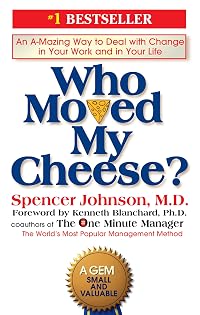
Who Moved My Cheese?
by Spencer Johnson
On This Page
Description
THE #1 INTERNATIONAL BESTSELLER WITH OVER 28 MILLION COPIES IN PRINT!A timeless business classic, Who Moved My Cheese? uses a simple parable to reveal profound truths about dealing with change so that you can enjoy less stress and more success in your work and in your life.
It would be all so easy if you had a map to the Maze.
If the same old routines worked.
If they'd just stop moving "The Cheese."
But things keep changing...
Most people are fearful of change, both personal and show more professional, because they don't have any control over how or when it happens to them. Since change happens either to the individual or by the individual, Dr. Spencer Johnson, the coauthor of the multimillion bestseller The One Minute Manager, uses a deceptively simple story to show that when it comes to living in a rapidly changing world, what matters most is your attitude.
Exploring a simple way to take the fear and anxiety out of managing the future, Who Moved My Cheese? can help you discover how to anticipate, acknowledge, and accept change in order to have a positive impact on your job, your relationships, and every aspect of your life. show less
Tags
Recommendations


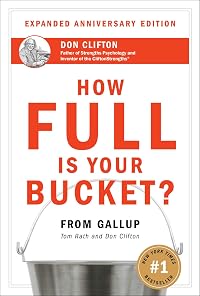
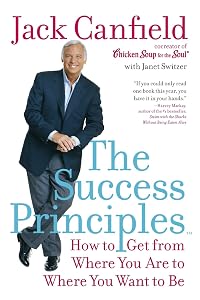
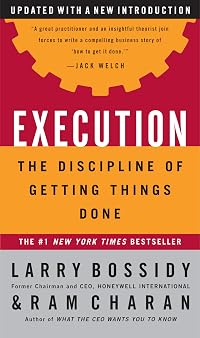
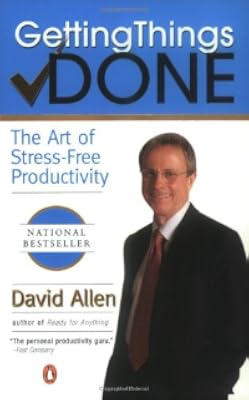


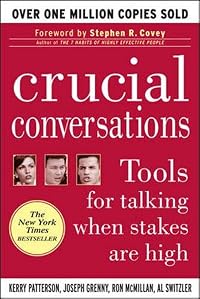
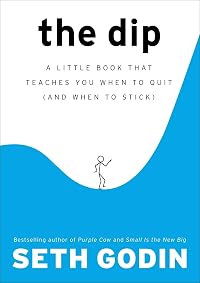
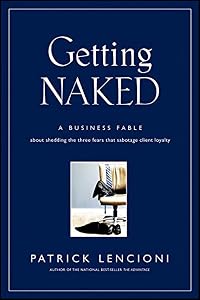
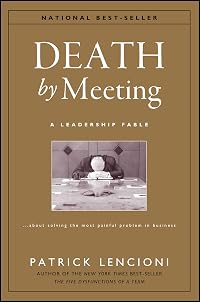

Member Recommendations
Member Reviews
I, like a number of other readers, do not understand how this book came to be one of the best-selling management books of all time. Having read dozens of books on management, leadership, etc., I find myself compelled to disqualify positive reviews of this book as possibly being submitted by people who are either not well-read or who do not have much experience in the management/leadership arena (or quite possibly a myopia-inducing combination of both deficiencies).
The book is overly simplistic, condescending, painfully obvious, predictable and unimaginative. You would have to be a manager terribly lacking in self-reflection, self-awareness who is wholly lacking in any capacity for introspective praxis to have your eyes opened by this show more book. (However, I suppose that if you are a person lacking in such capacities, then please, by all means, do read it!) If you are an employee and your boss gives you this book, s/he is basically trying to tell you that you are a dead-weight who's going nowhere in your company unless you get with the corporate program. Similarly, if you are the boss and a subordinate recommends that you read this book, s/he is trying to tell you that you are a bonehead and that you don't deserve the position that you currently hold.
The book is very short so I guess the most I can say for it is that at least when you waste your time reading it, you won't be wasting too much of it. I finished the book and thought to myself, "Now there's an hour of my life I'll never get back!" Do yourself a favor and put your hard-earned money towards reading something of substance on leadership like Collins' Good to Great, Rima's Leading from the Inside Out or any of Greenleaf's various works on servant leadership. I'd go as far as to assert that the average 9-to-5er would probably find more insight into adaptation practices by reading a handful of Dilbert cartoon strips (and would certainly enjoy him/herself more!)
(By the way, as of Oct 2009 there were 2200 'used' copies available from independent booksellers on Amazon.com starting as low as $.01. What that means is that sellers are willing to give away their copies hoping you're at least willing to pay the shipping. That's how bad they want these off their bookshelves! Prospective buyers beware -- there's a reason that there are so many of these available at such a low price!)
Update -- Unbelievable! I have just discovered that the author has come out with a children's and a teens' version of this book! Three troubling observations occur to me: First, I thought the original book was for children so this version is redundant. Second, these conspirators (author, publisher, distributor, etc.) have obviously found a way to expand their pool of unsuspecting victims by now going after our children's hard-earned book money. And third, they appear to be interested (read: self-interested) in perpetuating the creation of mind-numbed corporate robots by brainwashing their would-be victims with this drivel at an ever-earlier age. I never thought that I'd find myself a proponent of book-banning censorship but we can't take this outrage lying down--demand that this book be banned from the local elementary school and public libraries and school or community book fairs! show less
The book is overly simplistic, condescending, painfully obvious, predictable and unimaginative. You would have to be a manager terribly lacking in self-reflection, self-awareness who is wholly lacking in any capacity for introspective praxis to have your eyes opened by this show more book. (However, I suppose that if you are a person lacking in such capacities, then please, by all means, do read it!) If you are an employee and your boss gives you this book, s/he is basically trying to tell you that you are a dead-weight who's going nowhere in your company unless you get with the corporate program. Similarly, if you are the boss and a subordinate recommends that you read this book, s/he is trying to tell you that you are a bonehead and that you don't deserve the position that you currently hold.
The book is very short so I guess the most I can say for it is that at least when you waste your time reading it, you won't be wasting too much of it. I finished the book and thought to myself, "Now there's an hour of my life I'll never get back!" Do yourself a favor and put your hard-earned money towards reading something of substance on leadership like Collins' Good to Great, Rima's Leading from the Inside Out or any of Greenleaf's various works on servant leadership. I'd go as far as to assert that the average 9-to-5er would probably find more insight into adaptation practices by reading a handful of Dilbert cartoon strips (and would certainly enjoy him/herself more!)
(By the way, as of Oct 2009 there were 2200 'used' copies available from independent booksellers on Amazon.com starting as low as $.01. What that means is that sellers are willing to give away their copies hoping you're at least willing to pay the shipping. That's how bad they want these off their bookshelves! Prospective buyers beware -- there's a reason that there are so many of these available at such a low price!)
Update -- Unbelievable! I have just discovered that the author has come out with a children's and a teens' version of this book! Three troubling observations occur to me: First, I thought the original book was for children so this version is redundant. Second, these conspirators (author, publisher, distributor, etc.) have obviously found a way to expand their pool of unsuspecting victims by now going after our children's hard-earned book money. And third, they appear to be interested (read: self-interested) in perpetuating the creation of mind-numbed corporate robots by brainwashing their would-be victims with this drivel at an ever-earlier age. I never thought that I'd find myself a proponent of book-banning censorship but we can't take this outrage lying down--demand that this book be banned from the local elementary school and public libraries and school or community book fairs! show less
Book 32 - Dr Spencer Johnson - Who moved my cheese ?
Fascinating wee story about change...
- How we accept change ?
- How we manage change ?
- How we fight against change ?
- How different people are motivated to change
- And why some people will never ever ever change....
The story of two little mice and two little humans and how they need to find cheese in a maze to live....the real eye opening was the difference between the characters when they can’t find their cheese. I know it sounds silly and it is but it is also a great story with many different layers.
A deep story ? Or an obvious one ? Easy to understand ? Or what was that about ?
I enjoyed it and think I will read it again in a few weeks...the story is sandwiched between how the show more story influenced a business and then concludes with a small group of friends contemplating it. Would be brilliant for a chat with friends and colleagues.
‘He was beginning to realize the difference between activity and productivity.’
‘He decided that if he ever got the chance again, he would get out of his comfort zone and adapt to change sooner. It would make things easier.’
What does change mean to you ? Something to fear or welcomed like an old friend ? show less
Fascinating wee story about change...
- How we accept change ?
- How we manage change ?
- How we fight against change ?
- How different people are motivated to change
- And why some people will never ever ever change....
The story of two little mice and two little humans and how they need to find cheese in a maze to live....the real eye opening was the difference between the characters when they can’t find their cheese. I know it sounds silly and it is but it is also a great story with many different layers.
A deep story ? Or an obvious one ? Easy to understand ? Or what was that about ?
I enjoyed it and think I will read it again in a few weeks...the story is sandwiched between how the show more story influenced a business and then concludes with a small group of friends contemplating it. Would be brilliant for a chat with friends and colleagues.
‘He was beginning to realize the difference between activity and productivity.’
‘He decided that if he ever got the chance again, he would get out of his comfort zone and adapt to change sooner. It would make things easier.’
What does change mean to you ? Something to fear or welcomed like an old friend ? show less
Este librillo, casi folleto (tiene 100 páginas escritas en Arial 18) ha dado la vuelta al mundo, condensando entre sus tapas diversas perlas de sabiduría personal y empresarial que transformarán la vida de todo aquél que lo lea. Eso dicen todas las críticas oficiales que he podido encontrar. Para ser finos, sólo puedo decir que el libro es una bosta. He visto libros para niños de 3 años que tienen una mayor complejidad de ideas y conceptos.
La historia se puede resumir básicamente en una frase (les acabo de ahorrar 8 euros y media hora de lectura, de nada):
Y si ya quieren un resumen más extenso, en una sola página nos lo resume el autor:
En serio, no malgasten su tiempo show more en este libro. Hay gente a la que le ha servido para algo, según manifiestan en sus declaraciones, pero eso ocurre también con los ataques al corazón. Que a alguien le haya servido para algo no significa que todo el mundo tenga que sufrirlo.
Mi nota: Insustancial show less
La historia se puede resumir básicamente en una frase (les acabo de ahorrar 8 euros y media hora de lectura, de nada):
Si las cosas cambian y no estás preparado te irá mal
Y si ya quieren un resumen más extenso, en una sola página nos lo resume el autor:
En serio, no malgasten su tiempo show more en este libro. Hay gente a la que le ha servido para algo, según manifiestan en sus declaraciones, pero eso ocurre también con los ataques al corazón. Que a alguien le haya servido para algo no significa que todo el mundo tenga que sufrirlo.
Mi nota: Insustancial show less
I can't believe this book was so highly-touted. But at the time it came out, corporate trainers, executives, the media, bookstores and many people with the power to sway the masses were hyping it up.
It says nothing new in an unimaginative way. People today are being forced to change, whether or not they want to. And they are changing without knowing what is happening. If you've read The Seven Habits and The Fifth Discipline, and get the concepts, you don't need this book.
I guess the book was written for un-reflective people that really don't like to read and need fluff in order to understand concepts like personal change. We're in trouble if there are enough people like that to make this a best-seller!
It says nothing new in an unimaginative way. People today are being forced to change, whether or not they want to. And they are changing without knowing what is happening. If you've read The Seven Habits and The Fifth Discipline, and get the concepts, you don't need this book.
I guess the book was written for un-reflective people that really don't like to read and need fluff in order to understand concepts like personal change. We're in trouble if there are enough people like that to make this a best-seller!
Coincidentally, the 3 consultants from my firm working in the same room on an out-of-town engagement had all read this book. My father-in-law, who is an experienced and perceptive leader, sent me my copy--otherwise, I would never have bothered to read a thin little self-help book like this.
It turned out to be a profound and extraordinarily helpful book. It is completely consistent with my observations of life--especially life at work. Being in high-tech, and dealing with constant unanticipated organizational changes, I've learned that some people thrive on them and others just become miserable.
Which would you rather be, the one who thrives, or the one who is miserable? I know way too many of the miserable ones, and usually, they just show more don't want to stop being miserable. (hem, hem)
I guess it isn't surprising that the reviews of this book are so polarized. Either you get it, or you don't, and if you don't get it, this book would seem pretty trivial. If you think it's trivial, I suggest you try again. Any model is meant as a simplification--a two-dimensional representation of an impossibly complex world. This little book isn't meant to explain all of life, and it isn't an exploration of why change happens. It is merely a recognition that many changes are seemingly arbitrary and our choice is to either respond positively or negatively.
If this book has a fatal flaw, perhaps it is that the story isn't convincing enough. For anyone who has learned to accept change with humor and detachment and chosen to view unanticipated events as a challenge, this book may just increase your personal belief that you are well-adjusted. That seems harmless enough. On the other hand, it is easy for me to envision many of the people whom I see stubbornly refusing to accept change also being totally unmoved by this book. In other words, if you can see it, you don't need to read about it, and if you can't see it, reading about it will be aggravating.
My advice is to try. Accept this cheese metaphor as just one way to view certain aspects of life--as a very healthy way to approach events that may otherwise be interpreted as negatives. Change is inevitable. Sometimes you do have control over change, and that means you have protected your cheese. Sometimes, that cheese just goes away and it is not within your power to prevent it. But you always have control of your own attitude, and that is the real lesson of this book." show less
It turned out to be a profound and extraordinarily helpful book. It is completely consistent with my observations of life--especially life at work. Being in high-tech, and dealing with constant unanticipated organizational changes, I've learned that some people thrive on them and others just become miserable.
Which would you rather be, the one who thrives, or the one who is miserable? I know way too many of the miserable ones, and usually, they just show more don't want to stop being miserable. (hem, hem)
I guess it isn't surprising that the reviews of this book are so polarized. Either you get it, or you don't, and if you don't get it, this book would seem pretty trivial. If you think it's trivial, I suggest you try again. Any model is meant as a simplification--a two-dimensional representation of an impossibly complex world. This little book isn't meant to explain all of life, and it isn't an exploration of why change happens. It is merely a recognition that many changes are seemingly arbitrary and our choice is to either respond positively or negatively.
If this book has a fatal flaw, perhaps it is that the story isn't convincing enough. For anyone who has learned to accept change with humor and detachment and chosen to view unanticipated events as a challenge, this book may just increase your personal belief that you are well-adjusted. That seems harmless enough. On the other hand, it is easy for me to envision many of the people whom I see stubbornly refusing to accept change also being totally unmoved by this book. In other words, if you can see it, you don't need to read about it, and if you can't see it, reading about it will be aggravating.
My advice is to try. Accept this cheese metaphor as just one way to view certain aspects of life--as a very healthy way to approach events that may otherwise be interpreted as negatives. Change is inevitable. Sometimes you do have control over change, and that means you have protected your cheese. Sometimes, that cheese just goes away and it is not within your power to prevent it. But you always have control of your own attitude, and that is the real lesson of this book." show less
Quick-read parable that was not as... cheesey... as I feared it would be. It's simplistic, but I think that's also by design: it's meant to make you think rather than trying to belabor the point. However, the problem with simplistic parables is that they are simple, and life often isn't. It's easy to say, hmm, haha, they moved my cheese, so time for me to enjoy finding new cheese! But sometimes new cheese is changing your behavior, sometimes it's moving on altogether...
And I gotta say, the anecdote from the preface about the sports journalist who got shunted from Track & Field to swimming (or whatever it was)... On the one hand, sure, it isn't going to help you to bemoan an unfair situation, even if it very much is. But sometimes show more change is stupid, is out of touch, isunjust or unreasonable... Of course, I suppose the answer then is to find greener pastures-- er, new cheese. In any event, these types of messages always strike me a little as "go with the corporate flow and quitcherbitchin." I guess that is a thing I struggle with: I have a hard time letting go of an unfairness even when it's counterproductive to keep examining it, because even if your cheese moved because a CEO wants a second yacht, unless there's some major legal malfeasance... move on and find new cheese. So much easier said than done.
My cheese take-aways:
Keep yourself (and your skills) up-to-date. Know your options. Don't rest on your laurels. Keep an open mind and try to gain something even from dumb-seeming simplistic parable books. Sometimes you have to move out to move up (which is one I already had packed into my brain, but it seems relevant here).
And now I want a cheese tray. show less
And I gotta say, the anecdote from the preface about the sports journalist who got shunted from Track & Field to swimming (or whatever it was)... On the one hand, sure, it isn't going to help you to bemoan an unfair situation, even if it very much is. But sometimes show more change is stupid, is out of touch, isunjust or unreasonable... Of course, I suppose the answer then is to find greener pastures-- er, new cheese. In any event, these types of messages always strike me a little as "go with the corporate flow and quitcherbitchin." I guess that is a thing I struggle with: I have a hard time letting go of an unfairness even when it's counterproductive to keep examining it, because even if your cheese moved because a CEO wants a second yacht, unless there's some major legal malfeasance... move on and find new cheese. So much easier said than done.
My cheese take-aways:
Keep yourself (and your skills) up-to-date. Know your options. Don't rest on your laurels. Keep an open mind and try to gain something even from dumb-seeming simplistic parable books. Sometimes you have to move out to move up (which is one I already had packed into my brain, but it seems relevant here).
And now I want a cheese tray. show less
Because DDA read it, and I want to find out what's up with the mixed reviews.
.......
Well. Mostly just as obvious and unnecessary as the detractors say. At least to me, because I *love* change. But this might indeed help those who struggle with change and ordinary life challenges.
And guess what... there are even gems for me. Because when I redefine the author's word of 'change' as 'unexpected serious challenge' (motorcycle wreck that still interferes with my ability to climb stairs or hike, bad guy who rear-ended my son so badly that our favorite car got totaled & a year of fighting the insurance company to get partial compensation, adult son moving back home and refusing to get a job, etc.), I can remind myself of these four show more characters' names and have the closest thing to a 'quick fix' for a healthier attitude.
My favorite fix is for when *I'm* the one who caused the problem. I underinsured that car, without doing the research, not realising how much actual value it had. I've learned from that mistake, and I also appreciate Johnson's advice that "fastest way to change is to laugh at your own folly--then you can let go and quickly move on."
The other bit I bookmarked: "I like the idea of letting go of old behavior instead of letting go of the relationship. Repeating the same behavior will just get you the same results."
So, yeah, obvious stuff. Until one needs it. And at that point, when one is under stress and not thinking clearly, having an easily understood and processable reminder is a good thing. show less
.......
Well. Mostly just as obvious and unnecessary as the detractors say. At least to me, because I *love* change. But this might indeed help those who struggle with change and ordinary life challenges.
And guess what... there are even gems for me. Because when I redefine the author's word of 'change' as 'unexpected serious challenge' (motorcycle wreck that still interferes with my ability to climb stairs or hike, bad guy who rear-ended my son so badly that our favorite car got totaled & a year of fighting the insurance company to get partial compensation, adult son moving back home and refusing to get a job, etc.), I can remind myself of these four show more characters' names and have the closest thing to a 'quick fix' for a healthier attitude.
My favorite fix is for when *I'm* the one who caused the problem. I underinsured that car, without doing the research, not realising how much actual value it had. I've learned from that mistake, and I also appreciate Johnson's advice that "fastest way to change is to laugh at your own folly--then you can let go and quickly move on."
The other bit I bookmarked: "I like the idea of letting go of old behavior instead of letting go of the relationship. Repeating the same behavior will just get you the same results."
So, yeah, obvious stuff. Until one needs it. And at that point, when one is under stress and not thinking clearly, having an easily understood and processable reminder is a good thing. show less
Members
- Recently Added By
Published Reviews
ThingScore 75
There are many popular books that talk about change – how it is inevitable and how to accept it. Perhaps none explain it in a format you will always remember.
added by nfreviews
Lists

Best Self Help Books
87 works; 18 members

ORCID Book list
27 works; 1 member

Phi Beta Kappa reading list
260 works; 8 members

Dishonourable Mentions of 2013
189 works; 62 members

Blue Pyramid 1,276 Best Books of All Time
1,248 works; 32 members

Most Frequently Tagged "Read in 2015"
70 works; 1 member

Books Featured on Gilmore Girls
307 works; 21 members

Books featured on I Don't Even Own a Television
167 works; 3 members

Rory Gilmore Book Club
193 works; 5 members

Books With the Most Memorable Titles
478 works; 158 members

Books Read in 2023
5,638 works; 147 members

My List
302 works; 1 member

If Books Could Kill Podcast
52 works; 1 member

Non-Fiction
68 works; 1 member

The Complete Rory Gilmore Reading List
506 works; 5 members

Books whose title names an object usually found in the kitchen
171 works; 14 members
Author Information

74+ Works 22,969 Members
Patrick Spencer Johnson was born in Watertown, South Dakota on November 24, 1938. He received a bachelor's degree in psychology at the University of Southern California and then graduated from the Royal College of Surgeons in Ireland. While working in a hospital, he grew frustrated at seeing the same patients return with the same ailments, as if show more they were not trying to get better. He left the hospital to work as director of communications for Medtronic, a medical device manufacturer. He wrote short books to help customers understand complicated technical information. He went on to write short books about life and business including The One Minute Manager written with Ken Blanchard, The Precious Present, and Who Moved My Cheese? He died from complications of pancreatic cancer on July 3, 2017 at the age of 78. (Bowker Author Biography) show less
Some Editions
Awards and Honors
Awards
Distinctions
Notable Lists
Work Relationships
Has the adaptation
Is replied to in
Common Knowledge
- Canonical title
- Who Moved My Cheese?
- Original title
- ¿Quién se ha llevado mi queso?
- Original publication date
- 1998
- First words
- Once, long ago in a land far away, there lived four little creatures who ran through a maze looking for cheese to nourish them and make them happy.
One sunny Sunday in Chicago, several former classmates, who were good friends in school, gathered for lunch, having attended their high school reunion the night before. - Quotations
- 'Cheese' is metaphor for what you want to have in life—whether it is a good job, a loving relationship, money, a possession, health, or spiritual peace of mind.
The best laid schemes o' mice and men often go astray. Robert Burns 1759-1796
Life is no straight and easy corridor along which we travel free and unhampered, but a maze of passages, through which we must seek our way, lost and confused, now and again checked in a blind alley. But always, if we have fa... (show all)ith, a door will open for us, not perhaps one that we ourselves would ever have thought of, but one that will ultimately prove good for us. A. J. Cronin - Last words
- (Click to show. Warning: May contain spoilers.)He said, "I'm very glad you found the story so useful and I hope that you will have the opportunity to share it with others soon."
- Disambiguation notice
- ISBN 1101496991 is for Prime Crime Holiday Bundle by Emily Brightwell
Classifications
Statistics
- Members
- 10,553
- Popularity
- 914
- Reviews
- 175
- Rating
- (3.26)
- Languages
- 28 — Catalan, Chinese, Czech, Danish, Dutch, English, Estonian, Finnish, French, German, Greek, Gujarati, Hindi, Indonesian, Italian, Japanese, Korean, Lithuanian, Marathi, Malay, Norwegian (Bokmål), Polish, Russian, Serbian, Spanish, Swedish, Tamil, Portuguese (Portugal)
- Media
- Paper, Audiobook, Ebook
- ISBNs
- 107
- UPCs
- 1
- ASINs
- 61