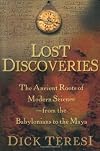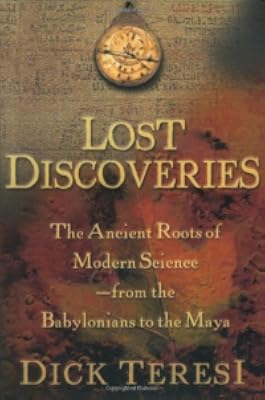
Lost Discoveries: The Ancient Roots of Modern Science--From the Babylonians to the Maya
by Dick Teresi
On This Page
Description
This book, an innovative history of science, explores the scientific breakthroughs from peoples of the ancient world--Babylonians, Egyptians, Indians, Africans, New World and Oceanic tribes, among others--and the non-European medieval world. They left an enormous heritage in the fields of mathematics, astronomy, cosmology, physics, geology, chemistry, and technology. The first comprehensive, authoritative, popularly written, multicultural history of science, Lost discoveries fills a crucial show more gap in the history of science. show lessTags
Recommendations
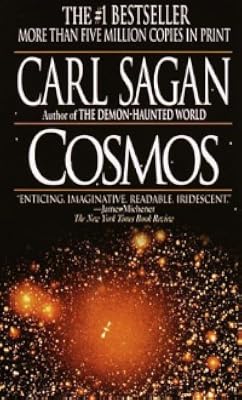

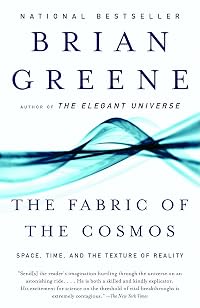
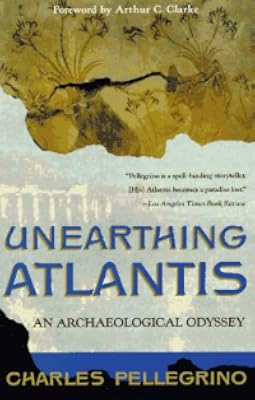

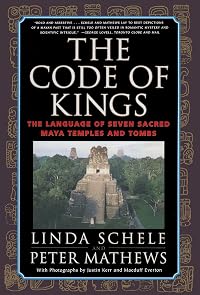















Member Recommendations
Member Reviews
This is a nice overview comparing western achievements in science and technology with non-Western accomplishments. it is organized by category (mathematics, physics, cosmology, medicine, technology and so on) and. within that cultures around the world. I felt the connections drawn between quantum mechanics and religious philosophies was a stretch given too much attention. the ending of Chinese technology especially around gunpowder, metallurgy and navigation was very good and central to the theme.
So this book is about the misconception that science was invented by the Ancient Greeks then reinvented during the Renaissance while all other culture invented the fire and then called it quits, waiting for Europeans to invent everything.
It's an interesting read, especielly since I feel that during the more than ten years that has passed since it being published, I don't think much has changed: I feel that the version were Europeans invented science is still prevalent, and that lots of people will never see it another way. Which is a shame.
That said, I enjoyed the first chapter on math, the best. If the entire book had been like that, the rating would have been higher, but even so it was an enjoyable read and I recommend it.
It's an interesting read, especielly since I feel that during the more than ten years that has passed since it being published, I don't think much has changed: I feel that the version were Europeans invented science is still prevalent, and that lots of people will never see it another way. Which is a shame.
That said, I enjoyed the first chapter on math, the best. If the entire book had been like that, the rating would have been higher, but even so it was an enjoyable read and I recommend it.
An interesting look at ancient and medieval science and technology in non-Western settings. Science by science and continent by continent, we see that roots of modern science extend far into Asia, Africa, and the Americas. While he warns the reader that some claims by ardent multiculturists are a bit dubious, Teresi often gives the impression that scholars in Western Europe were borrowers and followers, basically a Johnny-come-lately in the business of figuring out how the universe works.
The text is followed by extensive notes and bibliographies for each section of the book.
The text is followed by extensive notes and bibliographies for each section of the book.
I thought this book had potential to be very interesting and some parts were. But the author frequently waxes a little too academic and the writing becomes dry. Also, there were many typos and they did not use double spacing between sentences and that made quick reading difficult. I wanted something approachable along the lines of a Bill Bryson read and it fell far short of that mark.
I thought this book had potential to be very interesting and some parts were. But the author frequently waxes a little too academic and the writing becomes dry. Also, there were many typos and they did not use double spacing between sentences and that made quick reading difficult. I wanted something approachable along the lines of a Bill Bryson read and it fell far short of that mark.
Teresi begins with promise and offers many interesting facts about ancient accomplishments, but ultimately he fails to distinguish between science and technology (for a clear explanation of the distinction, see "The Unnatural Nature of Science" by Lewis Wolpert). The final chapters follow Thomas Kuhn off the deep end in arguing that modern science is fundamentally no different from, say, ancient creation myths, and that "many ancient cultures had inklings of quantum theory."
This book discusses the modern science and how non-western cultures have contributed to science. This book looks at all the different fields of science. For each different field of science, the author discusses western culture point of view, as well as what contributions of non-western culture has made. The author discusses the history of science, mathematics, astronomy, cosmology, physics, geology, chemistry and technology. This book is good for teachers who want to better understand the contributions of non-western science.
Members
- Recently Added By
Author Information
44+ Works 862 Members
Dick Teresi is the author or coauthor of several books about science and technology, He is cofounder of Omni magazine and has written for Discover, The New York Times Magazine, and The Atlantic Monthly, and is a frequent reviewer and essayist for The New York Times Book Review. He lives in Amherst, Massachusetts.
Awards and Honors
Common Knowledge
- Canonical title
- Lost Discoveries: The Ancient Roots of Modern Science--From the Babylonians to the Maya
- Blurbers
- Sobel, Dava; Lederman, Leon
- Original language
- English
Classifications
Statistics
- Members
- 444
- Popularity
- 68,605
- Reviews
- 10
- Rating
- (3.39)
- Languages
- Czech, English, Polish, Portuguese
- Media
- Paper, Audiobook, Ebook
- ISBNs
- 7
- ASINs
- 5