Swastika Night
by Katharine Burdekin
On This Page
Description
Published in 1937, twelve years before Orwell's 1984, this novel projects a totally male-controlled fascist world that has eliminated women as we know them. They are breeders, kept as cattle, while men in this post-Hitlerian world are embittered automatons, fearful of all feelings, having abolished all history, education, creativity, books, and art. Not even the memory of culture remains. The plot centers on a ""misfit"" who asks, as readers must, ""How could this have happenned?"" Ann J. show more Lane calls the novel a ""brilliant, chilling dystopia."" ""This is a powerful, haunt show lessTags
Recommendations




































Member Reviews
Burdekin tells of a chilling world hundred of years after the triumph of Nazism -where Europe is plunged into a new dark age, ruled by a brutal elite and, above all, where men are celebrated for their tough violence and women reduced to breeders. Indeed, here lies in fact its main interest: no matter how striking and clever such an alternate history is (the tabula rasa, the violence, Hitlerism having turned into a cult and, the whole society having collapsed to the level of that new feudal-like and chaotic system Hitler would have relished) it is mostly a powerful and haunting look at the relationships between genders. It's even unsettling because, it goes beyond masculinity and feminity as defined by fascistic ideologies to question show more our more often than not own views about such identities. If the warning against the triumph Fascism turned useless (the Third Reich was defeated after all), 'Swastika Night' remains indeed a terrifying illustration of where certain views regarding manhood and womanhood, taken to their extreme, can lead to. That it was written by a woman (an unknown fact until decades after its publication) makes some of its insight even more striking:
'what is a man? A being of pride, courage, violence, brutality, ruthlessness, you say. But all those are characteristics of a male animal in heat. A man must be something more, surely?'
Or, more bluntly:
'women are nothing, except an incarnate desire to please men.'
You get it, although the story is very simple, and the cruel world being built is by itself a very good piece of alternate history, it's the haunting questions about genders being thrown at our faces that makes 'Swastika Night' such a powerful dystopia. It would be terribly unfair to reduce it, as is often the case, to 'feminist science-fiction' (whatever that is, by the way) as, how to define manhood and womanhood finally address us all -beyond both ultra-conservatives ideologies and feminism. I therefore recommend it highly. show less
'what is a man? A being of pride, courage, violence, brutality, ruthlessness, you say. But all those are characteristics of a male animal in heat. A man must be something more, surely?'
Or, more bluntly:
'women are nothing, except an incarnate desire to please men.'
You get it, although the story is very simple, and the cruel world being built is by itself a very good piece of alternate history, it's the haunting questions about genders being thrown at our faces that makes 'Swastika Night' such a powerful dystopia. It would be terribly unfair to reduce it, as is often the case, to 'feminist science-fiction' (whatever that is, by the way) as, how to define manhood and womanhood finally address us all -beyond both ultra-conservatives ideologies and feminism. I therefore recommend it highly. show less
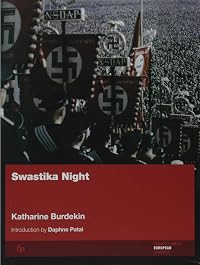
The title page says “by Katharine Burdekin writing as Murray Constantine” though the revelation of the author as Burdekin was not made till many years after the book’s first publication in 1937. The pseudonymous publication may have been because of the threat of repercussions due to her anti-fascist views or for the usual reasons a female might adopt a male name when writing.
Swastika Night is an extrapolation from the time of writing of what Nazism might have led to. Considering the little that was known of fascism’s excesses at the time it was written it is remarkably insightful and prophetic of what unchecked fascism could very well have developed into.
As a result of their victory in the Twenty Year War, seven hundred years show more in the future, Germany and Japan still rule the world between them. In Germany and its European, Middle Eastern and African dominions Hitler is a God. A seven foot tall blond God, who never had anything to do with women. Women in this future Germany have no purpose except for breeding - and no inclination for anything else as it has been bred out of them.
The book is told mainly through the eyes of an ordinary German, Hermann, and the English friend, Alfred, he made when posted to England five years before. Alfred is on a pilgrimage to the Holy Land (Germany) and attracts the interest of the local ruler the Knight Friedrich von Hess who is the keeper of a secret about the real historical Hitler. Through von Hess, the author lays out how a relatively nondescript man was transformed into godhood and historical truth obliterated to ensure the domination of the party line. In its depiction of the manipulation of history this prefigures some of the works of Philip K Dick.
Burdekin’s appreciation of the most important struggle Nazism was to face is shown by the line, “But Russia after the most tremendous struggle in history, was finally beaten.” We also have, “von Hess says the Germans have always been inclined to hysteria” and “unshakable, impregnable empire has always been the dream of virile nations.” This of course can be read as an indictment of virility.
There is not much by way of action and a large part of the book is given over to philosophising but it never fails to maintain the reader’s interest.
As an illustration of the dangers of totalitarianism, of the vigilance needed to maintain standards of truth, Swastika Night is as potent as 1984 and, in 2017, sadly as relevant a critique in the here and now as it was when first published. show less
Swastika Night is an extrapolation from the time of writing of what Nazism might have led to. Considering the little that was known of fascism’s excesses at the time it was written it is remarkably insightful and prophetic of what unchecked fascism could very well have developed into.
As a result of their victory in the Twenty Year War, seven hundred years show more in the future, Germany and Japan still rule the world between them. In Germany and its European, Middle Eastern and African dominions Hitler is a God. A seven foot tall blond God, who never had anything to do with women. Women in this future Germany have no purpose except for breeding - and no inclination for anything else as it has been bred out of them.
The book is told mainly through the eyes of an ordinary German, Hermann, and the English friend, Alfred, he made when posted to England five years before. Alfred is on a pilgrimage to the Holy Land (Germany) and attracts the interest of the local ruler the Knight Friedrich von Hess who is the keeper of a secret about the real historical Hitler. Through von Hess, the author lays out how a relatively nondescript man was transformed into godhood and historical truth obliterated to ensure the domination of the party line. In its depiction of the manipulation of history this prefigures some of the works of Philip K Dick.
Burdekin’s appreciation of the most important struggle Nazism was to face is shown by the line, “But Russia after the most tremendous struggle in history, was finally beaten.” We also have, “von Hess says the Germans have always been inclined to hysteria” and “unshakable, impregnable empire has always been the dream of virile nations.” This of course can be read as an indictment of virility.
There is not much by way of action and a large part of the book is given over to philosophising but it never fails to maintain the reader’s interest.
As an illustration of the dangers of totalitarianism, of the vigilance needed to maintain standards of truth, Swastika Night is as potent as 1984 and, in 2017, sadly as relevant a critique in the here and now as it was when first published. show less
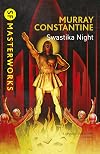
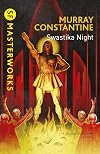
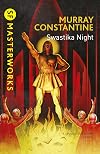
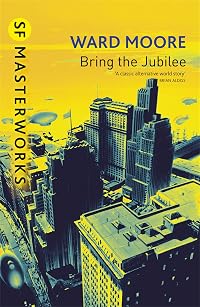
It says Murray Constantine on the cover but it’s sort of an open secret that Constantine was a pseudonym of Katherine Burdekin, so I have to wonder why Gollancz chose to use the pseudonym on the SF Masterwork edition. I mean, no one remembers either name these days, so it makes no fucking difference. Use her real name, make it obvious the writer was female. Anyway, the story is set 700 years after the Axis won WWII, and and Europe is all Greater Germany. People – well, men… as women are considered subhuman and treated like animals – are divided into Nazis, Germans and everyone else. A clever Englishman visits Germany on pilgrimage and hooks up with a German friend who had worked in the UK. Through him, he meets the local Nazi show more lord, who reveals a secret history. Hitler was not tall and blond and godlike, and women were once considered equal to men… There are perhaps a few people in the US, or members of UKIP, who may be surprised by these revelations, but to the human race it’s the sort of reveal which has almost no dramatic impact. It’s not helped by the fact the narrative consists mostly of characters lecturing each other. The misogyny is baked into the world but, despite suggesting homosexual relationships are both common and unremarkable, there’s a still a whiff of homophobia. Swastika Night is not a great book. Had its profile remained prominent in the decades since it was first published, it might have been considered an important book. Sadly, it was all but forgotten. It’s good that the SF Masterworks series has chosen to publish it – although it would have been better thad they used the author’s real name – and it is scarily more relevant now than it has been since the 1940s… It’s an historical document, it reads like an historical document… but it’s a sad reflection on our times that its premise is no longer historical… show less
The novel Swastika Night by Katharine Burdekin is one of the most imaginative alternate histories ever written. It takes place in a far future -- 500 AH (meaning After Hitler) -- with a medieval Europe run by gay Nazi knights who worship Hitler as a god. If this novel were written today, it might have a nice Kathy Acker vibe going for it. It wasn't written today, it was written in 1937 by Burdekin, a pioneer in feminist science fiction. Reissued by the Feminist Press in 1985, this novel easily stands among the great dystopian novels like 1984 by George Orwell and Brave New World by Aldous Huxley.
But let's return to the premise and those gay Nazi knights. The novel's plot centers on an Englishman named Alfred and his pilgrimage to "The show more Sacred Airplane" that Hitler flew to Moscow to win the "Twenty Years War." In this medieval Europe, history has been altered beyond recognition. Hitler is worshiped as a muscular blond god and Nazi knights serving as administrators. In Daphne Patai's introduction, she tells how "All books, records, and even monuments from the past hav[ing] been destroyed to make the official Nazi 'reality' the only possible one." The plot hinges on Alfred discovering a photograph of Hitler with a girl.
Making the enforcers of this civilization gay knights bring up several fascinating historical parallels. While using the term "gay Nazi" seems needlessly sensational, there was a gay subculture within the Nazi apparatus. The SA -- the Sturmabteilung (Storm Detachment) -- were the official bodyguard unit and political street fighters of the Nazi Party. Ernst Roehm, a gay man, ran the organization until his murder during the Night of the Long Knives in 1934. During its heyday, the SA attracted many gay men. While Nazism persecution of gays is no secret, the SA's link to Germany's older gay military heritage is probably less well known. Prior to German unification in 1870, the Duchy -- and later Kingdom -- of Prussia espoused a gay military subculture. (We can look back even further to Sparta -- Zak Snyder's 300 notwithstanding -- to see another culture with a long history of a gay military subculture.)
In yet another strange twist, despite its official homophobic policies, Nazi art was really, really homoerotic. Google Arno Breker and Josef Thorak. These two Nazi sculptors carved monuments to the heterosexual Aryan that came across as Tom of Finland in stone. For those interested in the stranger crevices of Nazi aesthetics, check out Art of the Third Reich by Peter Adam. While I believe that there is such a thing as Nazi art, I'd summarize it as equal parts neoclassical gigantism and sexually confusion.
While today the gay knights might seem a tad homophobic on Burdekin's part, it plays into her assertion that the cult of masculinity is warlike and destructive. On the flip side, in her utopian novel The End of This Day's Business, written in 1935, has the world run by peace-loving women and men, stripped of any political power, engage in war games as a kind of harmless sporting event. Set against the historical record, Burdekin's vision is not far from the truth. The knights despise women because of their ungainly appearance. Used for nothing more than breeding purposes, women have no status beyond that of satisfying animal needs. This reflects the SS's plan to incentivize women to have lots of racially pure babies. Unfortunately, for Hitler, the traditionalist German populace found this rather unseemly and distasteful. But the novel shows how adoration of the mother -- and the Third Reich was all about worshiping the German mother -- can easily warp into a dehumanized program of breeding and rape.
So what does it mean to be human? In the case of Swastika Night, we realize that one's humanity is based on political power. Women are excluded and Christians are persecuted. Following the extermination of the Jews, the Nazi knights moved on to the Christians, since they practice a religion contrary to the state-sponsored worship of Hitler as the one true god. Since state and religion are one, Christian practice is treasonous. What does it mean to be human? By having the power and the means to determine who is not-human. Unlike Iain Banks Culture novels, yet eerily similar to the tie-in novels of Warhammer 40K, humanity is an exclusive club. All who belong get great perks, all who are not human face extermination.
http://www.cclapcenter.com/2012/07/on_being_human_swastika_night_.html
or:
http://driftlessareareview.com/2012/07/27/cclap-fridays-on-being-human-swastika-... show less
But let's return to the premise and those gay Nazi knights. The novel's plot centers on an Englishman named Alfred and his pilgrimage to "The show more Sacred Airplane" that Hitler flew to Moscow to win the "Twenty Years War." In this medieval Europe, history has been altered beyond recognition. Hitler is worshiped as a muscular blond god and Nazi knights serving as administrators. In Daphne Patai's introduction, she tells how "All books, records, and even monuments from the past hav[ing] been destroyed to make the official Nazi 'reality' the only possible one." The plot hinges on Alfred discovering a photograph of Hitler with a girl.
Making the enforcers of this civilization gay knights bring up several fascinating historical parallels. While using the term "gay Nazi" seems needlessly sensational, there was a gay subculture within the Nazi apparatus. The SA -- the Sturmabteilung (Storm Detachment) -- were the official bodyguard unit and political street fighters of the Nazi Party. Ernst Roehm, a gay man, ran the organization until his murder during the Night of the Long Knives in 1934. During its heyday, the SA attracted many gay men. While Nazism persecution of gays is no secret, the SA's link to Germany's older gay military heritage is probably less well known. Prior to German unification in 1870, the Duchy -- and later Kingdom -- of Prussia espoused a gay military subculture. (We can look back even further to Sparta -- Zak Snyder's 300 notwithstanding -- to see another culture with a long history of a gay military subculture.)
In yet another strange twist, despite its official homophobic policies, Nazi art was really, really homoerotic. Google Arno Breker and Josef Thorak. These two Nazi sculptors carved monuments to the heterosexual Aryan that came across as Tom of Finland in stone. For those interested in the stranger crevices of Nazi aesthetics, check out Art of the Third Reich by Peter Adam. While I believe that there is such a thing as Nazi art, I'd summarize it as equal parts neoclassical gigantism and sexually confusion.
While today the gay knights might seem a tad homophobic on Burdekin's part, it plays into her assertion that the cult of masculinity is warlike and destructive. On the flip side, in her utopian novel The End of This Day's Business, written in 1935, has the world run by peace-loving women and men, stripped of any political power, engage in war games as a kind of harmless sporting event. Set against the historical record, Burdekin's vision is not far from the truth. The knights despise women because of their ungainly appearance. Used for nothing more than breeding purposes, women have no status beyond that of satisfying animal needs. This reflects the SS's plan to incentivize women to have lots of racially pure babies. Unfortunately, for Hitler, the traditionalist German populace found this rather unseemly and distasteful. But the novel shows how adoration of the mother -- and the Third Reich was all about worshiping the German mother -- can easily warp into a dehumanized program of breeding and rape.
So what does it mean to be human? In the case of Swastika Night, we realize that one's humanity is based on political power. Women are excluded and Christians are persecuted. Following the extermination of the Jews, the Nazi knights moved on to the Christians, since they practice a religion contrary to the state-sponsored worship of Hitler as the one true god. Since state and religion are one, Christian practice is treasonous. What does it mean to be human? By having the power and the means to determine who is not-human. Unlike Iain Banks Culture novels, yet eerily similar to the tie-in novels of Warhammer 40K, humanity is an exclusive club. All who belong get great perks, all who are not human face extermination.
http://www.cclapcenter.com/2012/07/on_being_human_swastika_night_.html
or:
http://driftlessareareview.com/2012/07/27/cclap-fridays-on-being-human-swastika-... show less
This dystopian novel was written in 1937, 12 years before George Orwell published 1984. Over the years, Burdekin’s novel has been linked to other dystopian novels with a similar feminist perspective such as The Handmaid’s Tale and Herland. The story is set in a feudal vision of Europe several centuries after Hitler’s National Socialists have won the Twenty Year War. Inferior races have been wiped out, rape is no longer a crime, and the sole function of women is breeding.
Harrowing precursor to 1984. Set in the distant future. Incredible how this was written in 1935 and published in 1937.
Tiptree shortlist retrospective.
Members
- Recently Added By
Lists

Best Dystopias
280 works; 271 members

Best Feminist Literature
188 works; 26 members

S.F. Masterworks (Complete)
229 works; 15 members

Recommended Speculative Fiction by Women and People of Color
298 works; 45 members

Female Author
1,235 works; 67 members

Books Read in 2013
1,630 works; 51 members

SF Masterworks
193 works; 8 members
Author Information

8+ Works 535 Members
Awards and Honors
Awards
Series
Belongs to Publisher Series
Left Book Club (1940.07)
SF Masterworks (New design)
Common Knowledge
- Original publication date
- 1937
- Blurbers
- Lane, Ann J.; Cook, Blanche Wiesen
- Disambiguation notice
- Originally published under pseudonym Murray Constantine.
Classifications
Statistics
- Members
- 446
- Popularity
- 68,371
- Reviews
- 9
- Rating
- (3.52)
- Languages
- 5 — English, French, German, Italian, Portuguese
- Media
- Paper, Ebook
- ISBNs
- 13
- ASINs
- 10