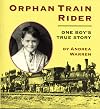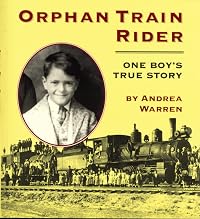
Orphan Train Rider: One Boy's True Story
by Andrea Warren
On This Page
Description
Between 1854 and 1930, more than 200,000 orphaned or abandoned children were sent west on orphan trains to find new homes. Some were adopted by loving families; others were not as fortunate. In recent years, some of the riders have begun to share their stories. Andrea Warren alternates chapters about the history of the orphan trains with the story of Lee Nailling, who in 1926 rode an orphan train to Texas.Tags
Recommendations
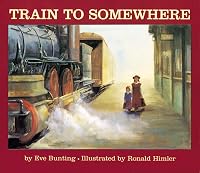
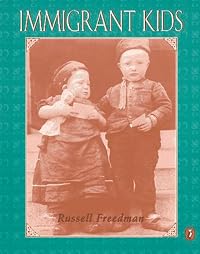
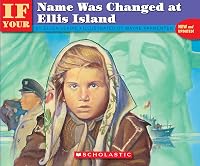







Member Recommendations
by meggyweg
Member Reviews
Have you ever heard of orphan trains? Well, don't feel bad if you haven't. I didn't know they existed until two years ago. My father-in-law was talking about this kid in Morgan City who came on the orphan train. My husband and I asked, "What is an orphan train?" He told us that kids would be put on the train and shipped west and south. Families would show up and pick out the kid they wanted. Fascinated, we had to know more. How is it that we never heard of this? When I saw these books in class, I had to read them.
Andrea Warren's Orphan Train Rider: One Boy's True Story follows Lee Nailing's journey from New York City orphan to Texas country boy. Warren lets Lee tells his personal story while she provides historical context for what is show more the largest children's migration in history. She sets the stage for why there were so many orphans at the time: disease, mass immigration combined with unemployment, etc. Warren does not mention the lack of contraception and family planning, but I suppose this is for a younger audience and she doesn't want to go there.
Her bibliography is not extensive, but they texts are credible. The inclusion of newspaper ads and flyers about picking up orphans from the train were shocking and illuminating. Warren relies a lot on testimonials from orphan train riders. I found these to be moving, and the photographs of children drove the message home that these children were vulnerable and needed good homes.
Warren also includes some startling figures and horrifying testimonies. In 1850, NYC's population was 500,000, and there were 30,000 homeless children on the streets (17). Lee describes how his father dropped he and his brother off at the orphanage and later put their younger brother on the orphan train with them. When children arrived at various stops, siblings were split up. Adults inspected children's muscles and teeth like cattle, checking to see if they were strong and could work (43).
While some children suffered and were not placed in good homes, this was not the case for Lee. He found a loving family and could visit his brothers often. There are some excellent photographs of Lee as a young boy in Texas and as an adult, meeting his other brothers after so many years apart. Lee's struggles at the beginning make his happy ending even happier for the reader.
Clearly, the book ends on a positive note, but I wondered about all of the children who chose not to tell their stories or who were no longer around. Warren quotes a 1910 Children's Aid Society report: "87 percent of orphan train riders had 'done well'" (61). She qualifies this in the next sentence, "We cannot know exactly what the society meant by that, but 87 percent is a high success rate..." (60). Of course the society in charge of the orphan trains reported a high success rate. It's not a disinterested third party, why would she not question this number? She includes a number of success stories but not any statistics. Also, didn't the notion that the people who are alive and want to discuss their journey had a positive experience in the end?
Overall, I enjoyed the book, but I am left wanting more, which I suppose is a good thing because I'm about to read her next book We Rode the Orphan Trains. show less
Andrea Warren's Orphan Train Rider: One Boy's True Story follows Lee Nailing's journey from New York City orphan to Texas country boy. Warren lets Lee tells his personal story while she provides historical context for what is show more the largest children's migration in history. She sets the stage for why there were so many orphans at the time: disease, mass immigration combined with unemployment, etc. Warren does not mention the lack of contraception and family planning, but I suppose this is for a younger audience and she doesn't want to go there.
Her bibliography is not extensive, but they texts are credible. The inclusion of newspaper ads and flyers about picking up orphans from the train were shocking and illuminating. Warren relies a lot on testimonials from orphan train riders. I found these to be moving, and the photographs of children drove the message home that these children were vulnerable and needed good homes.
Warren also includes some startling figures and horrifying testimonies. In 1850, NYC's population was 500,000, and there were 30,000 homeless children on the streets (17). Lee describes how his father dropped he and his brother off at the orphanage and later put their younger brother on the orphan train with them. When children arrived at various stops, siblings were split up. Adults inspected children's muscles and teeth like cattle, checking to see if they were strong and could work (43).
While some children suffered and were not placed in good homes, this was not the case for Lee. He found a loving family and could visit his brothers often. There are some excellent photographs of Lee as a young boy in Texas and as an adult, meeting his other brothers after so many years apart. Lee's struggles at the beginning make his happy ending even happier for the reader.
Clearly, the book ends on a positive note, but I wondered about all of the children who chose not to tell their stories or who were no longer around. Warren quotes a 1910 Children's Aid Society report: "87 percent of orphan train riders had 'done well'" (61). She qualifies this in the next sentence, "We cannot know exactly what the society meant by that, but 87 percent is a high success rate..." (60). Of course the society in charge of the orphan trains reported a high success rate. It's not a disinterested third party, why would she not question this number? She includes a number of success stories but not any statistics. Also, didn't the notion that the people who are alive and want to discuss their journey had a positive experience in the end?
Overall, I enjoyed the book, but I am left wanting more, which I suppose is a good thing because I'm about to read her next book We Rode the Orphan Trains. show less
This book focuses on the life of 9 year old Lee whose father, unable to cope with his seven children after their mother's death, gave some of his children to the Children's Aid Society in NY while sending the older ones out into the world. Lee finds himself in an orphanage where he feels alone and angry at being separated from his siblings and father. Eventually Lee is picked to ride the orphan train, and after a few false starts, finds himself being placed in the care of benevolent and caring Ben and Ollie Nailling, with whom he finds a true home. And eventually reunites with his family who are still living. It portrays the lives of unwanted, abandoned, and homeless children who were supposed to get a second chance at life through the show more orphan trains. Many did find good homes but others were not as fortunate, finding themselves physically and sexually abused instead.
I though Orphan Train Rider was a great read about a little known period in history. The book switched back and forth with each chapter from Lee's story in a narrative style to the history of the Orphan Trains. The pictures were a great addition to the story. I would definitely use this book in a middle school classroom as part of American History. Also, I could use this to talk about adoption since the Orphan Train was the beginning of adoption in the United States. show less
I though Orphan Train Rider was a great read about a little known period in history. The book switched back and forth with each chapter from Lee's story in a narrative style to the history of the Orphan Trains. The pictures were a great addition to the story. I would definitely use this book in a middle school classroom as part of American History. Also, I could use this to talk about adoption since the Orphan Train was the beginning of adoption in the United States. show less
'Orphan Train Rider: One Boy's True Story' is an excellent biography penned by a woman who taught both history and English. Andrea Warren organized this book in an interesting fashion. Much like the 'Grapes of Wrath', she alternated chapters between the specific story of Lee Nailling and what was happing on the Orphan Trains around the rest of the country. The author went a step further than simply telling the story of the Orphan Trains, she asked the important questions of why were they necessary in the first place and why is the retelling of this story is important?
Like many biographies worth their salt, the book's sources include a healthy combination of scholarly presses, primary sources, and original photographs. The author also show more includes a hefty reference index.
Prior to reading this biography, I was not familiar with the Orphan Trains. I was astonished that such an undertaking was imagined by one person. I found myself equally saddened by the many hardships suffered by these children and delighted by the successful pairings of children and adoptive parents. After reading this book, I am a firm believer that the majority had more fulfilling lives than they would have had they remained in New York.
As with many painful events in our history, more often than not, people do not like to dwell on them nor wish to discuss them. I am thankful to men like Lee Nailling who are brave enough to share their story. show less
Like many biographies worth their salt, the book's sources include a healthy combination of scholarly presses, primary sources, and original photographs. The author also show more includes a hefty reference index.
Prior to reading this biography, I was not familiar with the Orphan Trains. I was astonished that such an undertaking was imagined by one person. I found myself equally saddened by the many hardships suffered by these children and delighted by the successful pairings of children and adoptive parents. After reading this book, I am a firm believer that the majority had more fulfilling lives than they would have had they remained in New York.
As with many painful events in our history, more often than not, people do not like to dwell on them nor wish to discuss them. I am thankful to men like Lee Nailling who are brave enough to share their story. show less
"Between 1859 and 1929, over 200,000 children were sent west on "orphan trains" to new homes." (Inside front cover) This repressed piece of history is incredible and I am grateful to Andrea Warren for telling one boy's story before it was too late. At the time this book was published in 1996, it was believed there was approximately 500 survivors remaining, all elderly. Twenty years later today, I would imagine there are no survivors left. It is important to continue sharing the stories of the children and of this successful program started by a young minister, Charles Loring Brace. Warren tells this story alternating chapters between Lee's personal account, with the history following the same timeline. There are photos are abundant, show more showing the hopeful faces of the abandoned children. Most photos do not have exact names or dates, assuming this information might not have been available. Warren does a wonderful job captivating the audience with Lee's story, giving the reader a direct look into the lives of the orphans. "A 1910 Children's Aid Society report said that 87 percent of the orphan train riders had "done well." (p. 60) This is an amazing success rate for a much needed experiment. One of the goals when teaching and reading nonfiction, is to make connections to today. Homeless children still exist, and are still in need of a loving home. This would be an excellent addition to any classroom, both ELA and history. The book includes a short bibliography as well as suggested reading. There are acknowledgements and photo credits, and an extensive index for both the text and photographs. Orphan Train is a well written book, and has motivated me to track down more of Warren's books. show less
This award-winning middle grade book alternates the history of the orphan trains in the 19th and early 20th centuries with the story of Lee Nailling, one among the last generation of orphan train adoptees. At the time the book was written, it was estimated that the orphan train riders had at least two million descendants. Many families will have similar stories in their history. Lee’s story of decades of separation from his siblings and their reunion late in life may spark an interest in family history in young readers.
Andrea Warren has found a great way to explain the Orphan Trains to readers. She follows the story of one boy as he goes on his journey. As she points out in the books, many riders do not like to discuss this time period, so we are lucky to be reading this account. Following one person through this time period definitely makes the story more engaging and easy to follow. My only issue is that I felt like the story ended so suddenly. Lee was lucky to find a loving home and have his story wrapped up so well, but I wish readers could have been exposed to at least one depth story of a rider who did not find that happy ending. We get some brief asides about this, but nothing too thorough.
The index and bibliography are useful, but brief. show more Warren is nice enough to point out which resources that she used are for younger readers. show less
The index and bibliography are useful, but brief. show more Warren is nice enough to point out which resources that she used are for younger readers. show less
This book is about the life of a young boy whose mother dies and his father is too grief stricken to take care of the children. After being put in an orphanage he is sent on an orphan train with his two younger brothers to find a new family out west. Unfortunately, the boys are separated which makes the boy, Lee very unhappy. I thought this book was written quite well by switching chapters to refer to the history of the time and then back to Lee's specific story. I never even knew this was something that had happened until reading this book. It was a very sad story with a happy ending. The history in the story really makes you reflect on your own family.
Classroom extension: I would the have the students do a research project to find show more other orphan train riders and write a short essay about the person they found.
I would also have them do a writing exercise where they would write a short story describing something significant in their life. show less
Classroom extension: I would the have the students do a research project to find show more other orphan train riders and write a short essay about the person they found.
I would also have them do a writing exercise where they would write a short story describing something significant in their life. show less
Members
- Recently Added By
Lists

Childhood: Books for or about children in different cultures around the wor
345 works; 18 members
Author Information

13 Works 2,462 Members
Andrea Warren has written many award-winning books for children including Orphan Train Rider: One Boy's True Story, which received the Boston Globe-Horn Book Award for Nonfiction, and Surviving Hitler: A Boy in the Nazi Death Camps, a Robert F. Sibert Honor Book. She lives in Kansas City. Visit her at AndreaWarren.com.
Some Editions
Awards and Honors
Awards
Distinctions
Common Knowledge
- Canonical title
- Orphan Train Rider: One Boy's True Story
- Alternate titles
- Orphan Train Rider, One Boy's True Story
- Original publication date
- 1996
- People/Characters
- Lee Nailling
- Important places
- New York, USA; Texas, USA
- Important events
- Orphan Train
- Dedication
- For Jay, because you believe,
and for Ben, always - First words
- Lee Nailling was seven years old when his mother died. (Chapter One, “Lee Loses His Mother”)
- Last words
- (Click to show. Warning: May contain spoilers.)“The good Lord saw to it that I ended up with the Naillings. That was where I belonged.”
Classifications
- Genre
- Nonfiction
- DDC/MDS
- 362.7 — Society, government, & culture Social problems and social services Social Welfare Child welfare
- LCC
- HV985 .W37 — Social sciences Social pathology. Social and public welfare. Criminology Social pathology. Social and public welfare. Protection, assistance and relief Special classes Children Orphanages. Orphans
- BISAC
Statistics
- Members
- 632
- Popularity
- 45,843
- Reviews
- 19
- Rating
- (4.03)
- Languages
- English
- Media
- Paper, Audiobook, Ebook
- ISBNs
- 14
- UPCs
- 2
- ASINs
- 4