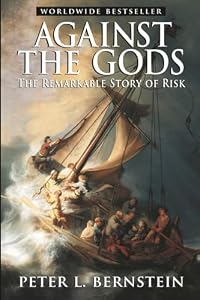
Against the Gods: The Remarkable Story of Risk
by Peter L. Bernstein
On This Page
Description
A Business Week, New York Times Business, and USA Today Bestseller"Ambitious and readable . . . an engaging introduction to the oddsmakers, whom Bernstein regards as true humanists helping to release mankind from the choke holds of superstition and fatalism."
—The New York Times
"An extraordinarily entertaining and informative book."
—The Wall Street Journal
"A lively panoramic book . . . Against the Gods sets up an ambitious premise and then delivers on it."
—Business Week
"Deserves show more to be, and surely will be, widely read."
—The Economist
"[A] challenging book, one that may change forever the way people think about the world."
—Worth
"No one else could have written a book of such central importance with so much charm and excitement."
—Robert Heilbroner author, The Worldly Philosophers
"With his wonderful knowledge of the history and current manifestations of risk, Peter Bernstein brings us Against the Gods. Nothing like it will come out of the financial world this year or ever. I speak carefully: no one should miss it."
—John Kenneth Galbraith Professor of Economics Emeritus, Harvard University
In this unique exploration of the role of risk in our society, Peter Bernstein argues that the notion of bringing risk under control is one of the central ideas that distinguishes modern times from the distant past. Against the Gods chronicles the remarkable intellectual adventure that liberated humanity from oracles and soothsayers by means of the powerful tools of risk management that are available to us today.
"An extremely readable history of risk."
—Barron's
"Fascinating . . . this challenging volume will help you understand the uncertainties that every investor must face."
—Money
"A singular achievement."
—Times Literary Supplement
"There's a growing market for savants who can render the recondite intelligibly-witness Stephen Jay Gould (natural history), Oliver Sacks (disease), Richard Dawkins (heredity), James Gleick (physics), Paul Krugman (economics)-and Bernstein would mingle well in their company."
—The Australian. show less
Tags
Recommendations
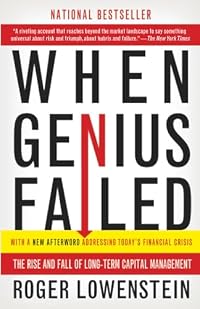
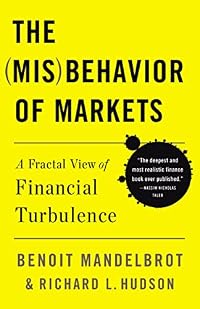
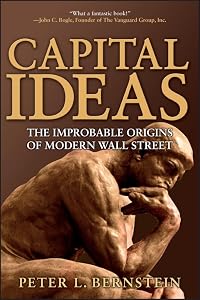
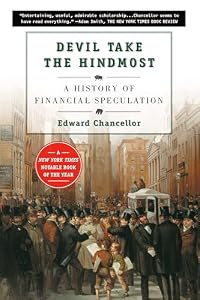
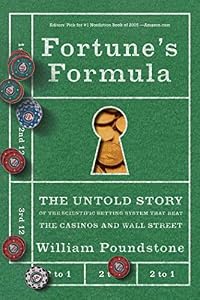
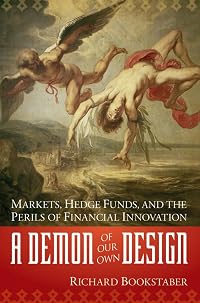
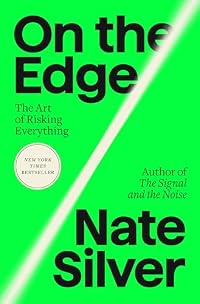


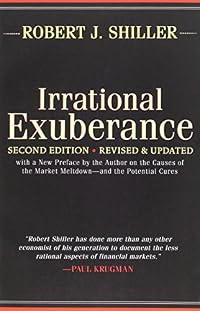


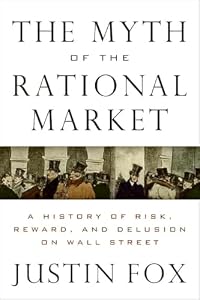
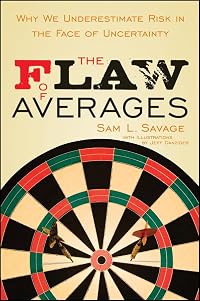
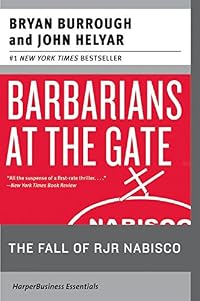
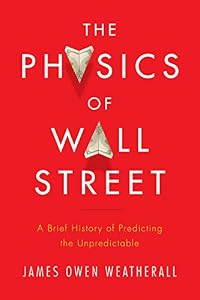

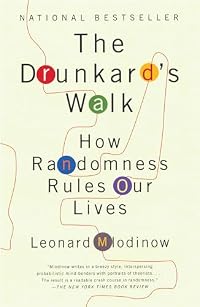
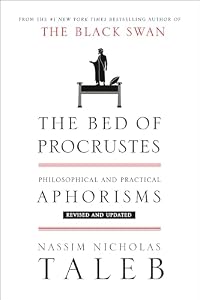
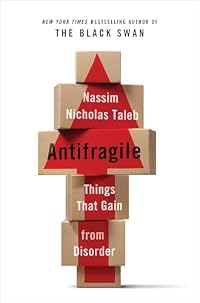




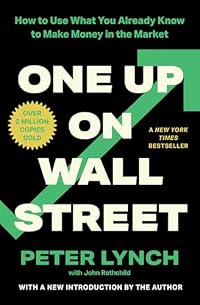
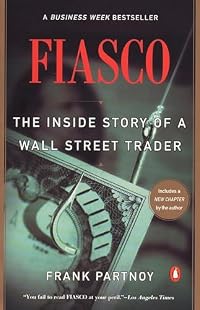
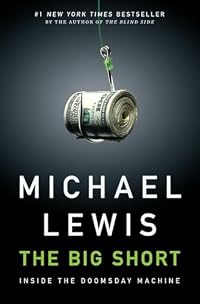
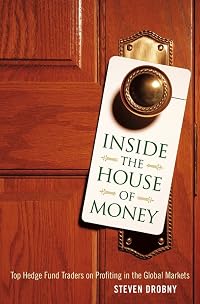
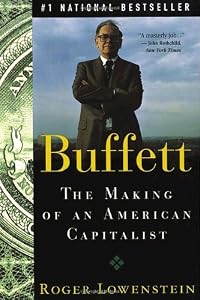
Member Recommendations
Member Reviews
http://elenburg.blogspot.com/2010/01/book-review-against-gods.html
Against the Gods: The Remarkable Story of Risk by Peter L. Bernstein is the third book I've read in the book swaps I do with my fee only financial advisor. I never would have picked this up to read myself, but I'm much better informed on the topic of risk having read it. Berstein's book is primarily historical, somewhat biographical, and minimally technical in his comprehensive treatment of risk.
The sections and chapters progress historically from the earliest notion of numbers and risk quantification in ancient times to the present day--or at least 1996 when the book came out. The earlier chapters deal with historical developments in the mathematics of probability and show more statistical theories. The later chapters focus more on risk in modern financial markets. In the concluding chapter titled "Awaiting the Wildness" Bernstein writes:
"As we look ahead toward the new millennium, what are the prospects that we can ... hope to bring more risks under control and make progress at the same time? ... despite the many ingenious tools ... created to attack the puzzle, much remains unsolved. Discontinuities, irregularities, and volatilities seem to be proliferating rather than diminishing." (p.329)
Yes, it is a wild and risky world out there! I wonder what the author would say today as we're digging out of the recent implosion in our global financial system? Overall, I enjoyed the book, particularly the biographical sketches of the many intellectual luminaries who contributed to the body of knowledge on risk and probability. I particularly enjoyed the chapter on Prospect Theory which was a core part of Predictably Irrational, another book Brent loaned me. Recognizing the classical view of rationality was wrong and that human "logic" is not so logical leads to some fascinating conclusions about the human condition.
"Prospect Theory discovered behavior patterns that had never been recognized by proponents of rational decision-making. Kahneman and Tversky ascribe these patterns to two human shortcomings. First, emotion often destroys the self-control that is essential to rational decision-making. Second, people are often unable to understand fully what they are dealing with. They experience what psychologists call cognitive difficulties." (p. 271)
Prospect Theory discovered asymmetry in human decisions involving gains vs. decisions involving losses. People are more risk averse about winning than losing, i.e. we take more risks to avoid loss than to achieve gains. Adding this discovery to the observation that loss remaining unresolved, such as the loss of a loved one, can provoke intense, irrational, and abiding risk-aversion is a profound insight that explains a lot of human behavior. It also got me thinking more deeply about why I make some of the decisions I do. In addition to the insights on human behavior, this book also confirmed and solidified my thoughts on money management and investing. show less
Against the Gods: The Remarkable Story of Risk by Peter L. Bernstein is the third book I've read in the book swaps I do with my fee only financial advisor. I never would have picked this up to read myself, but I'm much better informed on the topic of risk having read it. Berstein's book is primarily historical, somewhat biographical, and minimally technical in his comprehensive treatment of risk.
The sections and chapters progress historically from the earliest notion of numbers and risk quantification in ancient times to the present day--or at least 1996 when the book came out. The earlier chapters deal with historical developments in the mathematics of probability and show more statistical theories. The later chapters focus more on risk in modern financial markets. In the concluding chapter titled "Awaiting the Wildness" Bernstein writes:
"As we look ahead toward the new millennium, what are the prospects that we can ... hope to bring more risks under control and make progress at the same time? ... despite the many ingenious tools ... created to attack the puzzle, much remains unsolved. Discontinuities, irregularities, and volatilities seem to be proliferating rather than diminishing." (p.329)
Yes, it is a wild and risky world out there! I wonder what the author would say today as we're digging out of the recent implosion in our global financial system? Overall, I enjoyed the book, particularly the biographical sketches of the many intellectual luminaries who contributed to the body of knowledge on risk and probability. I particularly enjoyed the chapter on Prospect Theory which was a core part of Predictably Irrational, another book Brent loaned me. Recognizing the classical view of rationality was wrong and that human "logic" is not so logical leads to some fascinating conclusions about the human condition.
"Prospect Theory discovered behavior patterns that had never been recognized by proponents of rational decision-making. Kahneman and Tversky ascribe these patterns to two human shortcomings. First, emotion often destroys the self-control that is essential to rational decision-making. Second, people are often unable to understand fully what they are dealing with. They experience what psychologists call cognitive difficulties." (p. 271)
Prospect Theory discovered asymmetry in human decisions involving gains vs. decisions involving losses. People are more risk averse about winning than losing, i.e. we take more risks to avoid loss than to achieve gains. Adding this discovery to the observation that loss remaining unresolved, such as the loss of a loved one, can provoke intense, irrational, and abiding risk-aversion is a profound insight that explains a lot of human behavior. It also got me thinking more deeply about why I make some of the decisions I do. In addition to the insights on human behavior, this book also confirmed and solidified my thoughts on money management and investing. show less
A fine treatment of the evolution of our understanding of risk -- the discovery of probability, the addition of rigor through mathematics, the application to economics, the theory of games, the psychology of "prospect theory," sunk costs, compartmental mental accounting, and the modern status. Bernstein covers the theories of rational expectations, chaos, neural networks, and ties them all together with interesting examples and historical incidents. He even gave me a new respect for Keynes in the process. Predominant themes: we vary in our rational decision-making ability, especially with regard to risk; the forecast of any market can be wrong because of the development of accurate models by others; regression to the mean, et al. The show more one gap in coverage here is that the Bayesian approach was barely broached. show less
Excellent narrative of the history of human attempts to find some order in life and how this became applicable to financial markets. There are no revelations here but rather it shows that we are still nowhere near a solution for predicting any kind of future, financial or otherwise - if that is possible at all. It was very interesting to read in last chapters about derivative instruments, considering recent crisis and the fact the book was written in 1996. It's quite eerily how author describes potential misuse of derivatives, which is what has caused 2008 financial crisis.
I disagree with so much of this book. Not because I think Bernstein's statements are wrong, but because their connection to risk, risk assessment, and risk management is so tenuous. Further, there is never any discussion of consequence. It is not enough to assess the likelihood of an event - the potential consequence is more important.
The book leaves a bit to be desired.
It's a general mathematical history of risk management, but most of the material is rudimentary. The material itself is probably just a basic statistics and finance course stripped of actual formulas. For people really into mathematical history and etymology this book might be more interesting than it was for me. The book starts with the adoption of arabic numerals goes through the basic history of probability and statistics before concluding with finance and economics (topics include game theory, behavioral finance, portfolio theory, derivatives and Knight/Keynes). It might be a good introduction for someone who's interested in the subject but has not had exposure to any of the topics. The only show more really surprising part of the book is behavioral finance was already starting to gain prominence in the 90s. The tone of the book reminds me of Worldly Philosophers, which was a book that I did not care too much for either. The book was published in 1998, so some of the data is probably stale as well. Recommend for someone without too much time but wants an introductory exposure to risk and finance. Would not recommend for anyone who has had formal education in finance or risk management.
For a similar but better book, I would recommend Drunkard's Walk instead. It's written in a more approachable style and the material is less dry. show less
It's a general mathematical history of risk management, but most of the material is rudimentary. The material itself is probably just a basic statistics and finance course stripped of actual formulas. For people really into mathematical history and etymology this book might be more interesting than it was for me. The book starts with the adoption of arabic numerals goes through the basic history of probability and statistics before concluding with finance and economics (topics include game theory, behavioral finance, portfolio theory, derivatives and Knight/Keynes). It might be a good introduction for someone who's interested in the subject but has not had exposure to any of the topics. The only show more really surprising part of the book is behavioral finance was already starting to gain prominence in the 90s. The tone of the book reminds me of Worldly Philosophers, which was a book that I did not care too much for either. The book was published in 1998, so some of the data is probably stale as well. Recommend for someone without too much time but wants an introductory exposure to risk and finance. Would not recommend for anyone who has had formal education in finance or risk management.
For a similar but better book, I would recommend Drunkard's Walk instead. It's written in a more approachable style and the material is less dry. show less
Against the Gods: The Remarkable Story of Risk discusses the history of Risk Management. The book goes through the early years of Probability and comes full circle to the present day. It talks about the development of Statistical Sampling and other various techniques used to quantify events.
The book is really interesting in how it discusses its subject. Peter L Bernstein has done a great deal of work in researching the history of Probability and the history of Statistics. It also goes into how people understood annuities and other methods of insurance.
Bernstein has done a great deal of thought on how the Ancient Greeks didn’t develop this sort of idea as well. They knew of many things but never made that leap to think of Risk show more Assessment or Probabilities. With the Ancient Greeks, the main problem was not only their number system, but it was also their belief in a capricious pantheon of deities. The author argues that if you don’t believe yourself to be a free agent with some control over your own fate, you wouldn’t go and try to change your own position in society. Finally, the Ancient Greeks didn’t really have a mindset of making practical applications for things. They were more purists than anything with that. The theoretical was more important than the practical for them.
So this paradigm continued throughout the so-called Dark Ages. As I said, a great deal of the shift in thinking occurred due to the spread of Hindu-Arabic Numerals and other Arabic ideas. It covers the development of the Double-Entry Bookkeeping System, and how people didn’t trust the Hindu-Arabic Numerals at first. Basically, the argument was that it was too easy to commit fraud. Once Movable Type became more available the numerals were accepted easily. This was also prompted by the rise of Banking and other businesses that made dozens of transactions per day.
By following the development of Probability Theory, we look at the lives of many mathematical luminaries of the Seventeenth Century and beyond. We certainly know the lives of some of these men and women, but most of them started popping up in the Seventeenth Century as I mentioned. All of them were known to Marin Mersenne, the French Priest that made some advancements in Acoustics and ran correspondence with people all over Europe. The other thing of note was the rise of Lloyd’s, the famed Insurance Company that I never really knew much about. With Merchant Shipping came the rise of Underwriters and other different services.
Once we get into the Eighteenth Century we meet up with some of the Bernoulli Family and the Prince of Mathematicians Carl Friedrich Gauss. The book states that Daniel Bernoulli was the first to ascribe a value to something that could not be counted. Bernoulli argued that motivations count toward the end result as well. To illustrate this, Bernoulli presents the Petersburg Paradox. The Paradox goes like this; Peter and Paul play a coin flip game. If tails come up the winnings you get are doubled, but if heads come up, you get the amount that you won. What would you pay to enter such a game? Bernoulli tells us that although the game can enable you to earn an infinite amount of money, a reasonable person would only pay about 20 Ducats. We can’t have risk without uncertainty, and in that vein, we meet Thomas Bayes and the Bayes Theorem. It discusses the ideas behind that and how it benefited the field. Then we meet with Gauss. He developed a lot of different things, among them is the Normal Distribution or Bell Curve.
Finally, once we reach the modern era it talks about the theories and ideas of Keynes, von Neumann, Knight, and Morgenstern. It talks about when the United States Government auctioned off its Wireless Zone rights and how different companies had to use Game Theory to figure out what to do, and the best way to outbid the other companies.
All in all, this book was pretty good. It was very interesting and enjoyable. I did not realize that it was over twenty years old as of this review on May 23, 2019. That isn’t really all that important though. show less
The book is really interesting in how it discusses its subject. Peter L Bernstein has done a great deal of work in researching the history of Probability and the history of Statistics. It also goes into how people understood annuities and other methods of insurance.
Bernstein has done a great deal of thought on how the Ancient Greeks didn’t develop this sort of idea as well. They knew of many things but never made that leap to think of Risk show more Assessment or Probabilities. With the Ancient Greeks, the main problem was not only their number system, but it was also their belief in a capricious pantheon of deities. The author argues that if you don’t believe yourself to be a free agent with some control over your own fate, you wouldn’t go and try to change your own position in society. Finally, the Ancient Greeks didn’t really have a mindset of making practical applications for things. They were more purists than anything with that. The theoretical was more important than the practical for them.
So this paradigm continued throughout the so-called Dark Ages. As I said, a great deal of the shift in thinking occurred due to the spread of Hindu-Arabic Numerals and other Arabic ideas. It covers the development of the Double-Entry Bookkeeping System, and how people didn’t trust the Hindu-Arabic Numerals at first. Basically, the argument was that it was too easy to commit fraud. Once Movable Type became more available the numerals were accepted easily. This was also prompted by the rise of Banking and other businesses that made dozens of transactions per day.
By following the development of Probability Theory, we look at the lives of many mathematical luminaries of the Seventeenth Century and beyond. We certainly know the lives of some of these men and women, but most of them started popping up in the Seventeenth Century as I mentioned. All of them were known to Marin Mersenne, the French Priest that made some advancements in Acoustics and ran correspondence with people all over Europe. The other thing of note was the rise of Lloyd’s, the famed Insurance Company that I never really knew much about. With Merchant Shipping came the rise of Underwriters and other different services.
Once we get into the Eighteenth Century we meet up with some of the Bernoulli Family and the Prince of Mathematicians Carl Friedrich Gauss. The book states that Daniel Bernoulli was the first to ascribe a value to something that could not be counted. Bernoulli argued that motivations count toward the end result as well. To illustrate this, Bernoulli presents the Petersburg Paradox. The Paradox goes like this; Peter and Paul play a coin flip game. If tails come up the winnings you get are doubled, but if heads come up, you get the amount that you won. What would you pay to enter such a game? Bernoulli tells us that although the game can enable you to earn an infinite amount of money, a reasonable person would only pay about 20 Ducats. We can’t have risk without uncertainty, and in that vein, we meet Thomas Bayes and the Bayes Theorem. It discusses the ideas behind that and how it benefited the field. Then we meet with Gauss. He developed a lot of different things, among them is the Normal Distribution or Bell Curve.
Finally, once we reach the modern era it talks about the theories and ideas of Keynes, von Neumann, Knight, and Morgenstern. It talks about when the United States Government auctioned off its Wireless Zone rights and how different companies had to use Game Theory to figure out what to do, and the best way to outbid the other companies.
All in all, this book was pretty good. It was very interesting and enjoyable. I did not realize that it was over twenty years old as of this review on May 23, 2019. That isn’t really all that important though. show less
Excellent overview of probability and the development of financial markets. I take issue with a few points- prospect theory does not obviate the benefits of statistical analysis, for example- but overall a fantastic read.
Members
- Recently Added By
Published Reviews
ThingScore 100
Against the Gods sets up an ambitious premise and then delivers on it. This is a lively, panoramic book that includes tales of everyone from Omar Khayyam to Florence Nightingale to Daniel Ellsberg. Khayyam, the poet, was also a mathematician. Nightingale, the nurse, once offered to fund a chair in applied statistics at Oxford University. And Ellsberg, the Defense Dept. analyst who leaked the show more Pentagon Papers, specialized in the behavioral psychology of risk-taking. show less
added by mikeg2
Author Information

19+ Works 4,531 Members
Peter L. Bernstein graduated magna cum laude from Harvard College with a degree in economics. After serving as a member of the research staff at the Federal Reserve Bank of New York and at the Office of Strategic Services in Washington, Bernstein joined the the Air Force, attaining the rank of captain serving in World War II, and assigned to the show more Office of Strategic Services. After the war, Bernstein taught economics for many years as an adjunct professor on the Graduate Faculty of the New School for Social Research in New York. In 1951, after teaching economics at Williams College and spending five years in commercial banking, Bernstein became Chief Executive of a nationally known investment counsel firm He retired in 1973 to launch Peter L. Bernstein, Inc. Bernstein was the first Editor of The Journal of Portfolio Management in 1974,and is now Consulting Editor of the Journal. He served on the Visiting Committee to the Economics Department at Harvard University, as a Trustee and member of the Finance Committee of the College Retirement Equities Fund, and as a Trustee of the Investment Management Workshop sponsored by the Association for Investment Management & Research. Bernstein is the author of nine books in economics and finance and he has also written articles in professional journals such as The Harvard Business Review and the Financial Analysts Journal, and in the press, including The New York Times, The Wall Street Journal, Worth Magazine, and Bloomberg publications. He has contributed to collections of articles published by Perseus and FT Mastering. He is also a lecturer on risk management, asset allocation, portfolio strategy, and market history. Bernstein has received three major awards from the Association for Investment Management & Research, which include; The Award for Professional Excellence, The Graham & Dodd Award, given annually for the outstanding article in the Financial Analysts Journal for the previous year, and The James R. Vertin Award, recognizing individuals who have produced a body of research notable for its relevance and enduring value to investment professionals. (Bowker Author Biography) show less
Awards and Honors
Notable Lists
Series
Belongs to Publisher Series
Work Relationships
Common Knowledge
- Original title
- Against the gods
- Original publication date
- 1996
- People/Characters
- John Maynard Keynes; Pascal, Blaise, 1623-1662; Kenneth Arrow; Daniel Bernoulli; Jacob Bernoulli; Thomas Bayes
- Dedication
- For Peter Brodsky
- First words
- What is it that distinguishes the thousands of years of history from what we think of as modern times?
Classifications
- Genres
- Business, Economics, General Nonfiction, History, Nonfiction, Science & Nature
- DDC/MDS
- 368 — Society, Government, and Culture Social problems and social services Insurance
- LCC
- HD61 .B466 — Social sciences Industries. Land use. Labor Industries. Land use. Labor Risk in industry. Risk management
- BISAC
Statistics
- Members
- 2,672
- Popularity
- 6,919
- Reviews
- 23
- Rating
- (3.76)
- Languages
- 11 — Chinese, Danish, Dutch, English, French, German, Hungarian, Italian, Portuguese, Spanish, Turkish
- Media
- Paper, Audiobook, Ebook
- ISBNs
- 23
- UPCs
- 2
- ASINs
- 13