On This Page
Description
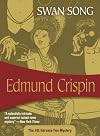
This playful whodunit featuring an Oxford don and a permanently silenced opera singer is "a splendidly intricate and superior locked-room mystery" (The New York Times). When an opera company gathers in Oxford for the first postwar production of Wagner's Die Meistersinger, its happiness is soon soured by the discovery that the unpleasant Edwin Shorthouse will be singing a leading role. Nearly everyone involved has reason to loathe Shorthouse, but who amongst them has the fiendish ingenuity to show more kill him in his own locked dressing room? In the course of this entertaining adventure, eccentric Oxford professor and amateur sleuth Gervase Fen has to unravel two murders, cope with the unpredictability of the artistic temperament, and attempt to encourage the course of true love. "One of the last exponents of the classical English detective story . . . elegant, literate, and funny." -The Times of London "{Crispin's} books are fast, fun and smart, their hero charming, frivolous, brilliant and badly behaved." -New Review. show lessTags
Recommendations















Member Reviews
Plenty of the cast and hangers-on of the first post-war production of Wagner's Die Meistersinger had good motives for murdering the lead bass-baritone - and his brother wasn't too fond of him either. But how could any of them possibly have managed to kill him in own dressing room? Gervase Fen investigates.
An excellent locked-room mystery with strong characters, a robust plot and a very ingenious solution. The immediate post-war context is obvious, and the German and Jewish characters add to the story, although the latter is occasionally a bit of an unfortunate caricature. There's a very entertaining scene with some Young Intellectuals discussing Wagner's influence on Hitler, and it gets quite serious on a couple of occasions.
One of the show more things I like about the Gervase Fen books is that, while they are exceedingly frivolous, they don't trivialise the crimes that take place within them. Crispin goes from silliness to gravity in the blink of an eye and to great effect
There are a lot of literary references - and not only to serious literature: I laughed out loud when the crime writer asking Fen for an interview about his amateur sleuthing comments that she also proposes to interview Mrs Bradley and Albert Campion. show less
An excellent locked-room mystery with strong characters, a robust plot and a very ingenious solution. The immediate post-war context is obvious, and the German and Jewish characters add to the story, although the latter is occasionally a bit of an unfortunate caricature. There's a very entertaining scene with some Young Intellectuals discussing Wagner's influence on Hitler, and it gets quite serious on a couple of occasions.
One of the show more things I like about the Gervase Fen books is that, while they are exceedingly frivolous, they don't trivialise the crimes that take place within them. Crispin goes from silliness to gravity in the blink of an eye and to great effect
There are a lot of literary references - and not only to serious literature: I laughed out loud when the crime writer asking Fen for an interview about his amateur sleuthing comments that she also proposes to interview Mrs Bradley and Albert Campion. show less
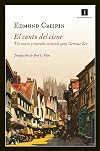
Después del placer que supuso leer ‘La juguetería errante’, vuelvo con otra novela del británico Edmund Crispin, protagonizada por el excéntrico profesor de Oxford y detective aficionado Gervase Fen. Las novelas de Crispin están llenas de ironía y humor, y en ellas asistimos a las deducciones de tan peculiar personaje.
‘El canto del cisne’ nos propone otro crimen a puerta cerrada, improbable desde cualquier punto de vista, y con múltiples sospechosos. Nos encontramos en Oxford, en los ensayos de la ópera Los maestros cantores de Núremberg, de Wagner, con lo que esto conlleva: manías de los actores, rencillas, egos subidos de tono y envidias varias. Una noche, aparece muerto uno de los cantantes, que estaba enfrentado show more con medio reparto, un tipo odioso y engreído. Todo apunta a un suicidio, pero pronto aparecerán indicios de todo lo contrario. Es aquí donde entrará en escena Gervase Fen y sus perspicaces teorías.
Entretenida novela de intriga, con un estilo ligero y al mismo tiempo intelectual, con citas diversas y diálogos chispeantes. show less
‘El canto del cisne’ nos propone otro crimen a puerta cerrada, improbable desde cualquier punto de vista, y con múltiples sospechosos. Nos encontramos en Oxford, en los ensayos de la ópera Los maestros cantores de Núremberg, de Wagner, con lo que esto conlleva: manías de los actores, rencillas, egos subidos de tono y envidias varias. Una noche, aparece muerto uno de los cantantes, que estaba enfrentado show more con medio reparto, un tipo odioso y engreído. Todo apunta a un suicidio, pero pronto aparecerán indicios de todo lo contrario. Es aquí donde entrará en escena Gervase Fen y sus perspicaces teorías.
Entretenida novela de intriga, con un estilo ligero y al mismo tiempo intelectual, con citas diversas y diálogos chispeantes. show less
A thoroughly unpleasant opera singer is found hanged in his dressing room. He also seemed to have ingested a lethal dose of sleeping pills found in a bottle of gin. Although nobody is particularly sorry about the singer's death, Professor Gervase Fen is not convinced it was suicide.
A very funny mystery, which would probably be even more so if I knew anything at all about Wagner's Meistersingers.
A very funny mystery, which would probably be even more so if I knew anything at all about Wagner's Meistersingers.
It's the first post-war performance of Die Meistersinger, at Oxford, but the lead singer is found hanged in his dressing room. It looks like suicide but he was detested by everyone in the company, and Gervase Fen investigates. The usual cliche characters and unlikely whirlwind romances, but Fen is witty and fun as always. I'm sure if I knew anything about the opera I would have picked up on more of the subtleties.
I was fairly excited to read this book, having just really enjoyed another Edmund Crispin novel. Unfortunately, I rapidly discovered I was actually just rereading the same book.
I knew that the setting would be the same, and that the theme would be theater people, but I was unprepared for just how similar the two books were.
- The first few chapters focus on how much everyone hates one particular character.
- The hated character dies suspiciously.
- Everyone has a motive; no one has an alibi. Several people announce that they had considered killing the dead person themselves.
- The police think it is suicide; Gervese Fen thinks it is murder. Everyone tells Fen he should leave well enough alone because the world is better off without the dead show more person.
- Fen spends quite a while with a moral dilemma; meanwhile, two couples fall in love and become engaged.
- One member of the newly engaged couples is also murdered. Everyone is surprised and alarmed.
- By the end, the murderer(s) is dead, saving Fen from his dilemma.
I liked the first one enough to give Crispin another shot, so I've got one more book to read. If this one has the same plot, I give up. show less
I knew that the setting would be the same, and that the theme would be theater people, but I was unprepared for just how similar the two books were.
- The first few chapters focus on how much everyone hates one particular character.
- The hated character dies suspiciously.
- Everyone has a motive; no one has an alibi. Several people announce that they had considered killing the dead person themselves.
- The police think it is suicide; Gervese Fen thinks it is murder. Everyone tells Fen he should leave well enough alone because the world is better off without the dead show more person.
- Fen spends quite a while with a moral dilemma; meanwhile, two couples fall in love and become engaged.
- One member of the newly engaged couples is also murdered. Everyone is surprised and alarmed.
- By the end, the murderer(s) is dead, saving Fen from his dilemma.
I liked the first one enough to give Crispin another shot, so I've got one more book to read. If this one has the same plot, I give up. show less
An old fashioned locked room mystery--not however of the fair play variety since Fen does a bit of thinking and experimenting that is not shared with the reader. We have a curmudgeonly but remarkable subservient police inspector, although the amateur detective being friends with the Chief Constable may explain the subservience. We have a cast of eccentrics, besotted couples, a thoroughly unlikable victim and a second murder and two attempted murders. A classic of the silver era although those uninterested in opera may find the amount of commentary on the rehearsals too much.
This is the last Crispin book I intend to read. He comes off as too arch by half for my enjoyment. A writer who wants to show off how clever he is, but the story is not all that clever. The method of murder was obvious and therefore the murderer obvious as well, in spite of the distractions the author tried to provide. I gagged my way to the end, but no more.
Members
- Recently Added By
Lists

Must Read Detective Stories (Nick Fuller)
278 works; 2 members
Author Information

54+ Works 7,557 Members
Some Editions
Series

Belongs to Publisher Series
Work Relationships
Common Knowledge
- Canonical title
- Swan Song
- Original title
- Swan Song
- Alternate titles
- Dead and Dumb
- Original publication date
- 1947
- People/Characters
- Gervase Fen; Edwin Shorthouse; Adam Langley; Elizabeth Harding Langley; Joan Davis; George Peacock (show all 12); Judith Harkness; Boris Stapleton; Inspector Mudge; Karl Wolzogen; Charles Shorthouse; Sir Richard Freeman
- Important places
- Oxford, Oxfordshire, England, UK
- Dedication
- To Godfrey Sampson
My dear Godfrey,
You're not, I fancy, an habitual reader of such murderous tales as this, and in the ordinary way I should be decidedly shy of dedicating one of them to you. But a book w... (show all)ith a background of Die Meistersinger--well, what else could I do? It was you who first introduced me to that noble work (in the days when the sum of my musical activity consisted in trying to evade piano lessons), and our mutual admiration of it is not the least of the many bonds of friendship between us. Accept the story, then, for the sake of its setting, and as a foretaste of the day when Wagner's masterpiece returns to Covent Garden--without, let us hope, any of the dismal impediments which beset it in the following pages.
Yours as ever,
E.C.
Devon, 1946 - First words
- There are few creatures more stupid than the average singer.
- Quotations
- "There goes C. S. Lewis", said Fen. "It must be Tuesday."
The representatives of the press .. began savagely shaking their fountain-pens to make the ink flow. - Last words
- (Click to show. Warning: May contain spoilers.)He said, "The era of my greatest successes . . . ."
- Disambiguation notice
- UK title Swan Song; US title Dead and Dumb; both in 1947.
Classifications
Statistics
- Members
- 509
- Popularity
- 58,962
- Reviews
- 17
- Rating
- (3.76)
- Languages
- 8 — Czech, English, Finnish, German, Italian, Japanese, Spanish, Swedish
- Media
- Paper, Audiobook, Ebook
- ISBNs
- 23
- ASINs
- 25