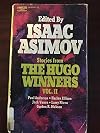
The Hugo Winners: Volume Two, Book 2 (1968-1970)
by Isaac Asimov (Editor), Robert Silverberg (Editor)
The Hugo Winners (Collections and Selections — 2.2), Los premios Hugo (3)
On This Page
Tags
Recommendations








Member Reviews
Following up on The Hugo Winners, Asimov agreed to edit and write interstitial pieces for More Stories from the Hugo Winners, an anthology featuring those pieces of short fiction that had won the Hugo Award since the first volume's publication. As with the first volume, this collection of stories is quite strong, which one would expect from a group of stories that had all been handed one of the two highest honors in science fiction literature.
The first story in the volume is the history-making Weyr Search by Anne McCaffrey, a story that marked the first time a woman had won a Hugo Award. The story introduces Pern, the fictional world that would dominate much of McCaffrey's career, and tells a tale of revenge and discovery with a little show more twist of the unexpected thrown in. The story features a vile usurper, a displaced princess, and dragon-riding hero, and a destiny that one of the characters didn't know they had. The story is a good story, but I'm not sure if it is a truly great story. As an installment in the Pern series, it is quite satisfying, but given that this was the first Pern story published, there is something of an unfinished feel to it. The later Pern stories put this one into context, but standing on its own the story seems unfinished with too many elements unresolved. McCaffrey's story shared its Hugo win with Riders of the Purple Wage by Philip José Farmer, an at times surreal tale of a future in which everyone lives off of government hand-outs, but in exchange gives up most control over their own lives, including where they live. The main character is Rex Luscus, an artist who is sheltering his grandfather, the last known tax evader, who is also the voice of rebellion and dissent in the world. The story meanders, with federal agents pursuing their quarry while hampered by a populace that mostly wants to be left alone to watch the future equivalent of television, but is also very touchy about those who trample on their myriad of rights. The story winds its way to an art show in which a disagreement between art critics leads to a riot, and then back to the apprehension and death of Luscus' grandfather, and then to a final joke played upon authority. The story is odd, with the characters displaying an equal mixture of feeding off the government and rebellion against the government.
Probably the most straightforward story in the volume is Gonna Roll the Bones by Fritz Lieber, a tale in which Joe Slattermill, a man with an amazing ability to roll dice, decides to head to a new casino to shoot craps. In a turn that will surprise no one, he ends up shooting against Death, which leads to a critical showdown. Slattermill realizes that no mere man can hope to succeed against the darkness of death, which results in an interesting denouement. The story is interesting, but as it is yet one more of the long line of stories in which a human matches up against Death and has to find their way out of their predicament using their wits, and as a result isn't particularly unique. Were it not for the final few lines of the story in which Slattermill makes a choice about what to do with his second chance at life, it is quite possible that the story would have faded into obscurity.
In contrast with Lieber's somewhat conventional story about an encounter with evil, we have Harlan Ellison's two Hugo winning stories I Have No Mouth, and I Must Scream and The Beast That Shouted Love at the Heart of the World, both nightmarish visions of terror that avoid being cliched. Ellison has a somewhat well-deserved reputation as the enfant terrible of genre fiction, and I am convinced that this is at least partially because the inside of his mind if a terrifying and scary place. I Have No Mouth and I Must Scream follows the last four humans on Earth as they deal with the nightmarish reality that the "AM" computer forces them to endure. Having systemically killed off everyone else on the planet, the world-spanning AM tortures these four out of hate and spite, keeping them alive just to torment them. The story details the many horrors the AM inflicts upon the characters: starving them for months and then providing them food that is disgusting, or inaccessible, causing creatures to shred them to pieces, or freezing them, or boiling them, or any number of other atrocities, but each time the AM saves and heals them so that it may inflict further punishment upon them. Eventually, the lead character figures out how to kill the others, but before he can kill himself the AM stops him and transforms him into a gelatinous creature with no mouth, capable of feeling pain, but incapable of harming himself. This story is possibly the most terrifying vision that has been realized in print.
Also mediating on the subject of evil is Ellison's follow-up story The Beast That Shouted Love at the Heart of the World, although in this story Ellison treats evil as insanity, and posits that insanity is a palpable force that can be isolated and excised. But after the insanity of cruelty and hatred has been removed from a being, it has to go somewhere, and the frightening thing about this story is the decision that is made concerning that question. And even though there are characters in this story that poison hundreds of people and blow up airplanes and engage in cannibalism, the real evil doers are shown to be those who, having purged themselves and their society of insanity, consign others to endure its ravages in order to be able to ship the poison elsewhere. In Ellison's vision, the true evil is appears to be in actions that are banal and dispassionate, and not those taken out of insanity and rage.
The strange, almost fairy-tale quality of Nightwings by Robert Silverberg seems to have influenced his own Majipoor Chronicles, as well as Gene Wolfe's Book of the New Sun, imagining a future Earth in which humanity living on a wrecked planet has slipped back into a feudal way of life and the working lives of all adults are dominated by the guilds they belong to. The viewpoint character is a "watcher", a guild dedicated to watching the stars for evidence of the expected invasion of Earth by alien forces. He travels with a "flyer" and a mutant who is a member of no guild as they all head for the ancient city of Roum. Once there, they find the corruption that has crept its way into every facet of society, and even when the human cause is betrayed, it doesn't seem like anything of importance has been lost in the destruction of the world that humans had built. The story deals with the nature of history, the nature of expectation, and the nature of power, and all of these themes weave together to yield a slightly unsettling tale.
Another unsettling tale is Poul Anderson's story about how cultural assumptions can blind one to the reality that they are studying. In The Sharing of Flesh a team of anthropologists studying the primitive inhabitants of Lokon are stunned when one of their number is murdered out of the blue by a native the researcher trusted. While investigating the murder, the deceased's widow uncovers the truth behind her spouse's murder, and the biological imperatives that drive the seemingly barbaric practices of the world. The story is a classic tale of miscommunication between disparate cultures and how even the most careful observers can be blinded by their own prejudices and assumptions. Even though the story itself is fairly simple, the excellent characterization and the stark unflinching manner in which the tale is told raise it up to superior status.
The final story in the volume is Time Considered as a Helix of Semi-Precious Stones by Samuel R. Delany, and as usual, Delany's story is strange and beautiful. The story itself, covering the rise of an upwardly mobile criminal with an ever changing name, is fairly straightforward. The protagonist recounts how he escaped from a life of dairy farming, tries to unload some stolen property, runs afoul of the law, flees to Neptune, and opens an ice cream shop. But the brilliance of the story is in the elements that surround the plot - the "singers" who tell the stories of the world around them, the use of gemstones as code words by a diffuse criminal network, the "holographic analysis" that allows the police to determine when a criminal is about to move up in the world, and the idea that the only thing the police are concerned about is the upwardly mobile criminal. The protagonist is shaking up the underworld by climbing the criminal social ladder, and comes into conflict with other, but realizes that after he has made the climb, the dust will settle and those he is fighting will be his allies again. The story is a brilliant essay on social stability and the conflict caused by those who would seek to change their own place in the world.
It is very difficult to go wrong with an anthology when you start with Hugo winners as your material, and More Stories from the Hugo Winners ably demonstrates why this is so. Every story in the collection is at least good, and many of them are great, especially Ellison's two contributions as well as Delany and Anderson's stories. As usual, Asimov's short essays about each author are fun and enjoyable, adding a nice personal touch that helps draw you into each story. Overall, this is an excellent collection of stories, and a must read for any science fiction fan.
This review has also been posted to my blog Dreaming About other Worlds. show less
The first story in the volume is the history-making Weyr Search by Anne McCaffrey, a story that marked the first time a woman had won a Hugo Award. The story introduces Pern, the fictional world that would dominate much of McCaffrey's career, and tells a tale of revenge and discovery with a little show more twist of the unexpected thrown in. The story features a vile usurper, a displaced princess, and dragon-riding hero, and a destiny that one of the characters didn't know they had. The story is a good story, but I'm not sure if it is a truly great story. As an installment in the Pern series, it is quite satisfying, but given that this was the first Pern story published, there is something of an unfinished feel to it. The later Pern stories put this one into context, but standing on its own the story seems unfinished with too many elements unresolved. McCaffrey's story shared its Hugo win with Riders of the Purple Wage by Philip José Farmer, an at times surreal tale of a future in which everyone lives off of government hand-outs, but in exchange gives up most control over their own lives, including where they live. The main character is Rex Luscus, an artist who is sheltering his grandfather, the last known tax evader, who is also the voice of rebellion and dissent in the world. The story meanders, with federal agents pursuing their quarry while hampered by a populace that mostly wants to be left alone to watch the future equivalent of television, but is also very touchy about those who trample on their myriad of rights. The story winds its way to an art show in which a disagreement between art critics leads to a riot, and then back to the apprehension and death of Luscus' grandfather, and then to a final joke played upon authority. The story is odd, with the characters displaying an equal mixture of feeding off the government and rebellion against the government.
Probably the most straightforward story in the volume is Gonna Roll the Bones by Fritz Lieber, a tale in which Joe Slattermill, a man with an amazing ability to roll dice, decides to head to a new casino to shoot craps. In a turn that will surprise no one, he ends up shooting against Death, which leads to a critical showdown. Slattermill realizes that no mere man can hope to succeed against the darkness of death, which results in an interesting denouement. The story is interesting, but as it is yet one more of the long line of stories in which a human matches up against Death and has to find their way out of their predicament using their wits, and as a result isn't particularly unique. Were it not for the final few lines of the story in which Slattermill makes a choice about what to do with his second chance at life, it is quite possible that the story would have faded into obscurity.
In contrast with Lieber's somewhat conventional story about an encounter with evil, we have Harlan Ellison's two Hugo winning stories I Have No Mouth, and I Must Scream and The Beast That Shouted Love at the Heart of the World, both nightmarish visions of terror that avoid being cliched. Ellison has a somewhat well-deserved reputation as the enfant terrible of genre fiction, and I am convinced that this is at least partially because the inside of his mind if a terrifying and scary place. I Have No Mouth and I Must Scream follows the last four humans on Earth as they deal with the nightmarish reality that the "AM" computer forces them to endure. Having systemically killed off everyone else on the planet, the world-spanning AM tortures these four out of hate and spite, keeping them alive just to torment them. The story details the many horrors the AM inflicts upon the characters: starving them for months and then providing them food that is disgusting, or inaccessible, causing creatures to shred them to pieces, or freezing them, or boiling them, or any number of other atrocities, but each time the AM saves and heals them so that it may inflict further punishment upon them. Eventually, the lead character figures out how to kill the others, but before he can kill himself the AM stops him and transforms him into a gelatinous creature with no mouth, capable of feeling pain, but incapable of harming himself. This story is possibly the most terrifying vision that has been realized in print.
Also mediating on the subject of evil is Ellison's follow-up story The Beast That Shouted Love at the Heart of the World, although in this story Ellison treats evil as insanity, and posits that insanity is a palpable force that can be isolated and excised. But after the insanity of cruelty and hatred has been removed from a being, it has to go somewhere, and the frightening thing about this story is the decision that is made concerning that question. And even though there are characters in this story that poison hundreds of people and blow up airplanes and engage in cannibalism, the real evil doers are shown to be those who, having purged themselves and their society of insanity, consign others to endure its ravages in order to be able to ship the poison elsewhere. In Ellison's vision, the true evil is appears to be in actions that are banal and dispassionate, and not those taken out of insanity and rage.
The strange, almost fairy-tale quality of Nightwings by Robert Silverberg seems to have influenced his own Majipoor Chronicles, as well as Gene Wolfe's Book of the New Sun, imagining a future Earth in which humanity living on a wrecked planet has slipped back into a feudal way of life and the working lives of all adults are dominated by the guilds they belong to. The viewpoint character is a "watcher", a guild dedicated to watching the stars for evidence of the expected invasion of Earth by alien forces. He travels with a "flyer" and a mutant who is a member of no guild as they all head for the ancient city of Roum. Once there, they find the corruption that has crept its way into every facet of society, and even when the human cause is betrayed, it doesn't seem like anything of importance has been lost in the destruction of the world that humans had built. The story deals with the nature of history, the nature of expectation, and the nature of power, and all of these themes weave together to yield a slightly unsettling tale.
Another unsettling tale is Poul Anderson's story about how cultural assumptions can blind one to the reality that they are studying. In The Sharing of Flesh a team of anthropologists studying the primitive inhabitants of Lokon are stunned when one of their number is murdered out of the blue by a native the researcher trusted. While investigating the murder, the deceased's widow uncovers the truth behind her spouse's murder, and the biological imperatives that drive the seemingly barbaric practices of the world. The story is a classic tale of miscommunication between disparate cultures and how even the most careful observers can be blinded by their own prejudices and assumptions. Even though the story itself is fairly simple, the excellent characterization and the stark unflinching manner in which the tale is told raise it up to superior status.
The final story in the volume is Time Considered as a Helix of Semi-Precious Stones by Samuel R. Delany, and as usual, Delany's story is strange and beautiful. The story itself, covering the rise of an upwardly mobile criminal with an ever changing name, is fairly straightforward. The protagonist recounts how he escaped from a life of dairy farming, tries to unload some stolen property, runs afoul of the law, flees to Neptune, and opens an ice cream shop. But the brilliance of the story is in the elements that surround the plot - the "singers" who tell the stories of the world around them, the use of gemstones as code words by a diffuse criminal network, the "holographic analysis" that allows the police to determine when a criminal is about to move up in the world, and the idea that the only thing the police are concerned about is the upwardly mobile criminal. The protagonist is shaking up the underworld by climbing the criminal social ladder, and comes into conflict with other, but realizes that after he has made the climb, the dust will settle and those he is fighting will be his allies again. The story is a brilliant essay on social stability and the conflict caused by those who would seek to change their own place in the world.
It is very difficult to go wrong with an anthology when you start with Hugo winners as your material, and More Stories from the Hugo Winners ably demonstrates why this is so. Every story in the collection is at least good, and many of them are great, especially Ellison's two contributions as well as Delany and Anderson's stories. As usual, Asimov's short essays about each author are fun and enjoyable, adding a nice personal touch that helps draw you into each story. Overall, this is an excellent collection of stories, and a must read for any science fiction fan.
This review has also been posted to my blog Dreaming About other Worlds. show less
i'm not a huge science fiction fan, but was looking forward to reading this because i've wanted to try a handful of these authors. it's not the book's fault but i didn't realize that about half of them are novellas, not short stories like i would have preferred. still, i don't think that affected my rating of it. it's hard for me to rate because i actually feel like there's a great mix in this book, and most of them are pretty good.
i was really looking forward to anne macaffrey's story and ended up liking in, but it took a while to get into it, and for a novella i thought it was too long. also, it seemed like a prequel (or middle of the saga) to her pern series and i would have really preferred to read something that was standalone. i show more *hated* philip jose farmer's novella; it's really this story that brings down the star rating for the entire book for me, in a major way. the ones i liked best were harlan ellison's two and robert silverberg's story, and i really liked all 3 of them. asimov's introductions of each author were...i tried to remember the time they were written in as he focused so much on if the men could get girls and if the one woman was sexy or not. he was funny, though, and (i assume) facetiously haughty in a way that i tried to take as endearing. i was a little surprised at how sexual a few of these stories were, but maybe that's also more reflective of when they were all written (1968-70).
in spite of my rating i'd actually read all of these authors (including asimov) again (mccaffrey was the first woman to win a hugo, with this story, so that was cool) with the possible exception of farmer, but i'd be willing to try to try at least one more time. and i'm glad to have gotten a taste of a few of the authors i've been wanting to try; and it makes me want to actively search out ellison, silverberg, and probably samuel r delany and poul anderson as well.
from samuel r delany's story entitled Time Considered As A Helix of Semi-Precious Stones: "'if everything, everything were known, statistical estimates would be unnecessary. The science of probability gives mathematical expression to our ignorance, not to our wisdom.'" show less
i was really looking forward to anne macaffrey's story and ended up liking in, but it took a while to get into it, and for a novella i thought it was too long. also, it seemed like a prequel (or middle of the saga) to her pern series and i would have really preferred to read something that was standalone. i show more *hated* philip jose farmer's novella; it's really this story that brings down the star rating for the entire book for me, in a major way. the ones i liked best were harlan ellison's two and robert silverberg's story, and i really liked all 3 of them. asimov's introductions of each author were...i tried to remember the time they were written in as he focused so much on if the men could get girls and if the one woman was sexy or not. he was funny, though, and (i assume) facetiously haughty in a way that i tried to take as endearing. i was a little surprised at how sexual a few of these stories were, but maybe that's also more reflective of when they were all written (1968-70).
in spite of my rating i'd actually read all of these authors (including asimov) again (mccaffrey was the first woman to win a hugo, with this story, so that was cool) with the possible exception of farmer, but i'd be willing to try to try at least one more time. and i'm glad to have gotten a taste of a few of the authors i've been wanting to try; and it makes me want to actively search out ellison, silverberg, and probably samuel r delany and poul anderson as well.
from samuel r delany's story entitled Time Considered As A Helix of Semi-Precious Stones: "'if everything, everything were known, statistical estimates would be unnecessary. The science of probability gives mathematical expression to our ignorance, not to our wisdom.'" show less
A re-read after many years of this collection of most of the Hugo winning short fiction from the years 1968-70 (according to the list at the back, there should also have been the winning novella for 1970 by Fritz Leiber).
The contents are:
1968
Novella - tied between 'Weyr Search' by Anne McCaffrey and 'Riders of the Purple Wage' by Philip Jose Farmer
Novelette - 'Gonna Roll the Bones' by Fritz Leiber
Short story - 'I Have No Mouth, and I Must Scream' by Harlan Ellison
1969
Novella - 'Nightwings' by Robert Silverberg
Novelette - 'The Sharing of Flesh' by Poul Anderson
Short story - 'The Beast That Shouted Love at the Heart of the World' by Harlan Ellison
1970
Short story - 'Time Considered as a Helix of Semi-Precious Stones' by Samuel R show more Delaney
Some of these have a lasting fame/impact on the field of science fiction/fantasy - both 'Weyr Search' and 'Nightwings' went on to become the first part of novels, Dragonflight and Nightwings respectively. McCaffrey's in particular is seminal, in that it spawned a massive series of follow-up novels set on the planet Pern. I'm afraid I was a little disappointed. When I first read this novella years ago, I enjoyed it so much I immediately bought Dragonflight. This time around, certain things jumped out, such as the patronising attitude of F'lar, the apparent hero, towards Lessa. He eventually realises she has spent ten years undercover in her own home, having to live as a slave, beaten and malnourished, and yet has absolutely no sympathy let alone empathy for her subsequent feelings or behaviour. The story doesn't allow any real exploration of the trauma she has undergone, and how she might realistically have a meltdown after achieving what has been the goal of her lifegetting revenge on Fax, the man who massacred her family and stole her property , but instead rushes off into her attempt to impress the new queen dragon. So it came across as a mite superficial, and the villain's name was unfortunate, especially as in those days everyone would have known what a fax machine was.
The title 'Riders of the Purple Wage', the novella which tied with McCaffrey's for that year's award, is a skit on the influential Zane Grey Western, 'Riders of the Purple Sage' but otherwise has nothing in common with it. It concerns the situation in a densely populated Earth, where people are organised into small communities to avoid alientation, but live in a totally artificial environment, where everyone receives a basic dole from the state, referred to as the purple wage. They spend a lot of time staring at a live video feed which is called fido or sitting around gambling with each other, and most of them are clinically obese as a result. The alternative for anyone who doesn't want to live like this is to become a pseudo Native American on a wildlife reserve. An artist called Chib lives with his mother, with whom he has a troubled relationship, and his great-grandfather who earlier faked his own death because the internal revenue service was pursuing him. Chib's continuing success depends upon the televised opinions of art critics, and if he doesn't win a grant, he will be forced to emigrate to a similar community elsewhere. Unfortunately, the chief art critic wants sexual favours as the price of a favourable opinion. There are various alusion in the story to Finnegan's Wake by James Joyce. No doubt at the time of publication, the liberal use of four letter words was shocking, and the style especially at the start of the story very experimental, but I'm afraid it comes across as pretentious twaddle.
By contrast, I still enjoyed 'Nightwings' and found in it a prefiguring of Gene Wolfe's The Book of the New Sun series, which came over ten years later. Set in the far future on an Earth which is old, having seen many cycles of civilisation, it is told in the first person viewpoint of an old man who is one of the Watcher guild, his duty being to 'watch the skies' with an instrumentation cart, to look for a long forecast alien invasion. After centuries without an invasion, his guild is looked on as a joke, and even he is starting to wonder if he has wasted his whole life. He travels with a Flyer, a modified human female with gossamer wings which can only support her weight after sundown, and an apparent Changeling, an odd-looking character who is guideless, to Roum, which is clearly Rome. Similarly, other famous cities have changed name after aeons, and we eventually learn that he originates from what is left of the Americas, which have been mainly covered by the sea and are now a series of islands. An atmospheric and interesting story.
To turn to the novelettes, 'Gonna Roll the Bones' is a lyrical tale of what happens when a miner who is an inveterate gambler goes up against a bigwheel from out of town, where the stakes are raised to the ultimate. 'The Sharing of Flesh' is a rather gruesome story, though well-written, concerning the murder of a botanist on an ex-colony planet, and the revenge which his wife sets out to take, uncovering in the process the hideous truth of the degenerate colonists' puberty rituals.
The short stories appear to have been holding their own unofficial contest for the longest title. Ellison's are the most well-known, although the first which I'll shorten to IHNMAIMS, is the most accessible of the two. It concerns the appalling and unending experience of a handful of humans who have been preserved by the all-controlling artificial intelligence which has taken over Earth and exterminated all other life. The second story, TBTSLatHotW, defies classification. I don't remember what I made of it first time around, but this time I found it pretty opaque as to what was really going on. Events in a central 'crosswhen' affect history through an essence of madness being sent outside that area to affect other parts of space/time, but why the madness drained from the 'dragon' (and others before it/him previously, I presume) had to be sent off rather than contained safely is not apparent. And if that was the normal process, then why was a character sentenced to death for doing the same thing? So I'm afraid I found it confusing and the last scene seems a non sequitur.
For me, Delaney's short story was a lot more successful. It concerns a character who operates on the shady side of things, but has connections with more respectable citizens such as the Singers who in every city provide a reality check, extemporising songs about immediate events. This man who constantly changes name and appearance while retaining his original three initials, HCE, gradually makes his way towards becoming wealthier and semi-legitimate, in effect a crime boss, and consequently less of interest to the Special Services police force. One of the characters is an early portrayal of someone who commits self harm, and also induces others to harm him, HCE having once been one of them though he feels guilty about it. The title is explained early in the story: at set intervals, the 'password' of the criminal fraternity changes, but it is always a semi-precious stone.
On the whole, I rate this at 3 stars because of the slight disappointment of the McCaffrey and the issues with Farmer's contribution and one of Ellison's. But the other stories were enjoyable. show less
The contents are:
1968
Novella - tied between 'Weyr Search' by Anne McCaffrey and 'Riders of the Purple Wage' by Philip Jose Farmer
Novelette - 'Gonna Roll the Bones' by Fritz Leiber
Short story - 'I Have No Mouth, and I Must Scream' by Harlan Ellison
1969
Novella - 'Nightwings' by Robert Silverberg
Novelette - 'The Sharing of Flesh' by Poul Anderson
Short story - 'The Beast That Shouted Love at the Heart of the World' by Harlan Ellison
1970
Short story - 'Time Considered as a Helix of Semi-Precious Stones' by Samuel R show more Delaney
Some of these have a lasting fame/impact on the field of science fiction/fantasy - both 'Weyr Search' and 'Nightwings' went on to become the first part of novels, Dragonflight and Nightwings respectively. McCaffrey's in particular is seminal, in that it spawned a massive series of follow-up novels set on the planet Pern. I'm afraid I was a little disappointed. When I first read this novella years ago, I enjoyed it so much I immediately bought Dragonflight. This time around, certain things jumped out, such as the patronising attitude of F'lar, the apparent hero, towards Lessa. He eventually realises she has spent ten years undercover in her own home, having to live as a slave, beaten and malnourished, and yet has absolutely no sympathy let alone empathy for her subsequent feelings or behaviour. The story doesn't allow any real exploration of the trauma she has undergone, and how she might realistically have a meltdown after achieving what has been the goal of her life
The title 'Riders of the Purple Wage', the novella which tied with McCaffrey's for that year's award, is a skit on the influential Zane Grey Western, 'Riders of the Purple Sage' but otherwise has nothing in common with it. It concerns the situation in a densely populated Earth, where people are organised into small communities to avoid alientation, but live in a totally artificial environment, where everyone receives a basic dole from the state, referred to as the purple wage. They spend a lot of time staring at a live video feed which is called fido or sitting around gambling with each other, and most of them are clinically obese as a result. The alternative for anyone who doesn't want to live like this is to become a pseudo Native American on a wildlife reserve. An artist called Chib lives with his mother, with whom he has a troubled relationship, and his great-grandfather who earlier faked his own death because the internal revenue service was pursuing him. Chib's continuing success depends upon the televised opinions of art critics, and if he doesn't win a grant, he will be forced to emigrate to a similar community elsewhere. Unfortunately, the chief art critic wants sexual favours as the price of a favourable opinion. There are various alusion in the story to Finnegan's Wake by James Joyce. No doubt at the time of publication, the liberal use of four letter words was shocking, and the style especially at the start of the story very experimental, but I'm afraid it comes across as pretentious twaddle.
By contrast, I still enjoyed 'Nightwings' and found in it a prefiguring of Gene Wolfe's The Book of the New Sun series, which came over ten years later. Set in the far future on an Earth which is old, having seen many cycles of civilisation, it is told in the first person viewpoint of an old man who is one of the Watcher guild, his duty being to 'watch the skies' with an instrumentation cart, to look for a long forecast alien invasion. After centuries without an invasion, his guild is looked on as a joke, and even he is starting to wonder if he has wasted his whole life. He travels with a Flyer, a modified human female with gossamer wings which can only support her weight after sundown, and an apparent Changeling, an odd-looking character who is guideless, to Roum, which is clearly Rome. Similarly, other famous cities have changed name after aeons, and we eventually learn that he originates from what is left of the Americas, which have been mainly covered by the sea and are now a series of islands. An atmospheric and interesting story.
To turn to the novelettes, 'Gonna Roll the Bones' is a lyrical tale of what happens when a miner who is an inveterate gambler goes up against a bigwheel from out of town, where the stakes are raised to the ultimate. 'The Sharing of Flesh' is a rather gruesome story, though well-written, concerning the murder of a botanist on an ex-colony planet, and the revenge which his wife sets out to take, uncovering in the process the hideous truth of the degenerate colonists' puberty rituals.
The short stories appear to have been holding their own unofficial contest for the longest title. Ellison's are the most well-known, although the first which I'll shorten to IHNMAIMS, is the most accessible of the two. It concerns the appalling and unending experience of a handful of humans who have been preserved by the all-controlling artificial intelligence which has taken over Earth and exterminated all other life. The second story, TBTSLatHotW, defies classification. I don't remember what I made of it first time around, but this time I found it pretty opaque as to what was really going on. Events in a central 'crosswhen' affect history through an essence of madness being sent outside that area to affect other parts of space/time, but why the madness drained from the 'dragon' (and others before it/him previously, I presume) had to be sent off rather than contained safely is not apparent. And if that was the normal process, then why was a character sentenced to death for doing the same thing? So I'm afraid I found it confusing and the last scene seems a non sequitur.
For me, Delaney's short story was a lot more successful. It concerns a character who operates on the shady side of things, but has connections with more respectable citizens such as the Singers who in every city provide a reality check, extemporising songs about immediate events. This man who constantly changes name and appearance while retaining his original three initials, HCE, gradually makes his way towards becoming wealthier and semi-legitimate, in effect a crime boss, and consequently less of interest to the Special Services police force. One of the characters is an early portrayal of someone who commits self harm, and also induces others to harm him, HCE having once been one of them though he feels guilty about it. The title is explained early in the story: at set intervals, the 'password' of the criminal fraternity changes, but it is always a semi-precious stone.
On the whole, I rate this at 3 stars because of the slight disappointment of the McCaffrey and the issues with Farmer's contribution and one of Ellison's. But the other stories were enjoyable. show less
Apart from the story by Philip Jose Farmer, which I have tried several times and never got into, these Hugo winners are riveting and varied reads that will challenge your imagination
Link to a review on my personal website (might be in Swedish).
Members
- Recently Added By
Author Information

Isaac Asimov was born in Petrovichi, Russia, on January 2, 1920. His family emigrated to the United States in 1923 and settled in Brooklyn, New York, where they owned and operated a candy store. Asimov became a naturalized U.S. citizen at the age of eight. As a youngster he discovered his talent for writing, producing his first original fiction at show more the age of eleven. He went on to become one of the world's most prolific writers, publishing nearly 500 books in his lifetime. Asimov was not only a writer; he also was a biochemist and an educator. He studied chemistry at Columbia University, earning a B.S., M.A. and Ph.D. In 1951, Asimov accepted a position as an instructor of biochemistry at Boston University's School of Medicine even though he had no practical experience in the field. His exceptional intelligence enabled him to master new systems rapidly, and he soon became a successful and distinguished professor at Columbia and even co-authored a biochemistry textbook within a few years. Asimov won numerous awards and honors for his books and stories, and he is considered to be a leading writer of the Golden Age of science fiction. While he did not invent science fiction, he helped to legitimize it by adding the narrative structure that had been missing from the traditional science fiction books of the period. He also introduced several innovative concepts, including the thematic concern for technological progress and its impact on humanity. Asimov is probably best known for his Foundation series, which includes Foundation, Foundation and Empire, and Second Foundation. In 1966, this trilogy won the Hugo award for best all-time science fiction series. In 1983, Asimov wrote an additional Foundation novel, Foundation's Edge, which won the Hugo for best novel of that year. Asimov also wrote a series of robot books that included I, Robot, and eventually he tied the two series together. He won three additional Hugos, including one awarded posthumously for the best non-fiction book of 1995, I. Asimov. "Nightfall" was chosen the best science fiction story of all time by the Science Fiction Writers of America. In 1979, Asimov wrote his autobiography, In Memory Yet Green. He continued writing until just a few years before his death from heart and kidney failure on April 6, 1992. (Bowker Author Biography) show less

All Editions
Series


Work Relationships
Is contained in
Contains
Common Knowledge
- Canonical title
- The Hugo Winners: Volume Two, Book 2 (1968-1970) (1968-1970)
- Original publication date
- 1971; 1973 (UK) (UK)
- Dedication
- To the memory of Hugo Gernsback,
grandfather of us all - First words
- We poor, overworked authors are constantly finding ourselves facing a variety of technical problems involved in the mechanics of publishing, and the result is, invariably, that we (not the mechanics) must correct all difficul... (show all)ties by dashing to the typewriter and reeling off a few, or a few thousand, golden words.
- Disambiguation notice
- There are several books named "The Hugo Winners Volume Two". This work is only for books that cover the Hugos from 1968 to 1970. If a book covers 1962 or 1963 to 1967, it should be grouped with Volume Two, Book 1. If a boo... (show all)k covers 1962 to 1970, it should be grouped with the complete Volume Two.
Classifications
Statistics
- Members
- 217
- Popularity
- 150,822
- Reviews
- 7
- Rating
- (3.82)
- Languages
- English
- Media
- Paper
- ISBNs
- 4
- ASINs
- 14