On This Page
Description
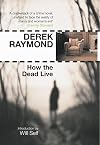
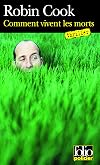
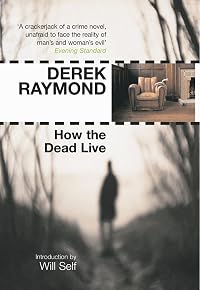
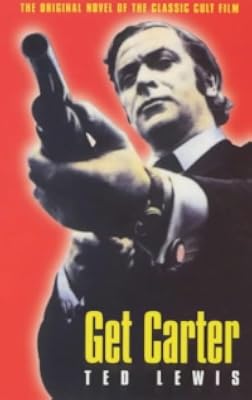
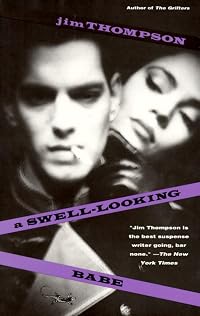
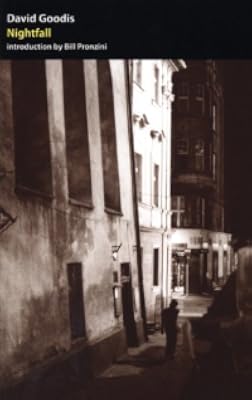
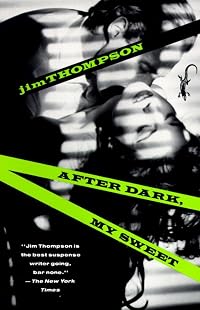
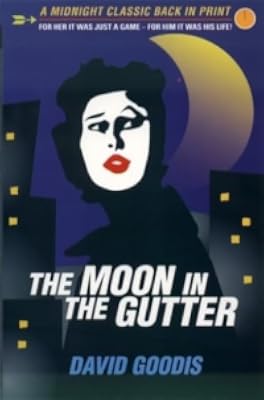
"A sulphurous mixture of ferocious violence and high-fl own philosophy."-"Prospect" The third novel in the acclaimed Factory crime series sees Derek Raymond's nameless detective leave London for a remote village, where he's meant to be investigating the disappearance of a local doctor's wife. A fitting successor to classic noir writers such as Jim Thompson and David Goodis, with an introduction by Will Self. High-profile fans include Ian Rankin and James Sallis. Robin Cook was born in 1931. show more He reinvented himself as Derek Raymond and died in London in 1994. show lessTags
Recommendations

















Member Reviews
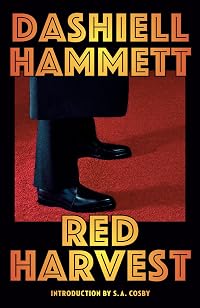
Remarkable. One of the darkest, saddest, and yet funniest books I have ever read. In the third book of the Factory series, Raymond's Nameless Detective is more relentless than ever in his no-compromises pursuit of justice as he travels to a town outside London to investigate the disappearance of a woman after the local police have failed to do so. There is a compelling mystery at the heart of the book, and it has all the noir trappings a reader could ask for, but that isn't the point. The most important parts of the book take place in the Nameless Detective's head as he spins soliloquies about life, death, loss, and redemption and in the long quotations from the husband of the missing woman. The Detective's basic methodology for show more resolving the case is to hilariously insult everybody he meets--with a few notable exceptions--and to reject the help of anyone, except for his trusted reporter friend who shows up halfway through the book. He is like Hammett's Continental Op in his ability to stir a whole town up for his own purposes.
But this book doesn't take place in the real world at all. It is just as fantastic an atmosphere as Poe's Fall of the House of Usher, which it closely resembles in many ways. The descriptions of the decaying mansion at the center of the book, and, just as fantastically, the way the Detective stares down death at the hands of a rifle toting mother or a hired killer, are something out of a fever dream. On top of the noir and the Poe, there is also the poetry--poems, songs, and prose--that runs throughout the book, often as part of dreams the Detective, as first-person narrator, recounts. So the equation here might best be described as Dashiell Hammett + Edgar Allan Poe + Thomas Wolfe = Derek Raymond. But even that can't do justice to what Raymond has achieved here. For all of its influences, it emerges as a unique, visionary argument that, in the midst of corruption and chaos, one man's unalterable quest for justice can still mean something.
If you try to read this as a regular mystery or piece of detective fiction, you are doomed to miss the point. And if you fall into sync with Raymond's and the Nameless Detective's way of thinking? Then maybe you are just plain doomed. But we don't have to go down without breaking a jaw or two. show less
But this book doesn't take place in the real world at all. It is just as fantastic an atmosphere as Poe's Fall of the House of Usher, which it closely resembles in many ways. The descriptions of the decaying mansion at the center of the book, and, just as fantastically, the way the Detective stares down death at the hands of a rifle toting mother or a hired killer, are something out of a fever dream. On top of the noir and the Poe, there is also the poetry--poems, songs, and prose--that runs throughout the book, often as part of dreams the Detective, as first-person narrator, recounts. So the equation here might best be described as Dashiell Hammett + Edgar Allan Poe + Thomas Wolfe = Derek Raymond. But even that can't do justice to what Raymond has achieved here. For all of its influences, it emerges as a unique, visionary argument that, in the midst of corruption and chaos, one man's unalterable quest for justice can still mean something.
If you try to read this as a regular mystery or piece of detective fiction, you are doomed to miss the point. And if you fall into sync with Raymond's and the Nameless Detective's way of thinking? Then maybe you are just plain doomed. But we don't have to go down without breaking a jaw or two. show less
How the Dead Live (Factory 3) Having read I Was Dora Suarez, I wanted to read a bit more featuring the unnamed detective. This had the same gritty, gory fabric of that book with a different story over the top.Interesting to read a modern novel with no mobile phones and when the word computer is used you can almost taste the newness of it. A good look at life in England circa 1986.The detective is once again nameless but more of his past is revealed and a deep dark story it is. In fact at times his own past and the current story kinda merge in terms of flow, though not in detail. It is like reading one book with another running underneath.
Fascinating.I've read other reviews of this series (there are 5) which describe his writing and show more variable. Given that he was creating a new genre I think I can understand that. I also think his writing was lead by the detective whose life was indeed variable.These were real books, not Kindle books. I bought them from The Book Depository for mere pennies with free delivery. The thing was though, the books looked and felt new but smelled like they had been kept in a cupboard in a village hall since 1986. show less
Fascinating.I've read other reviews of this series (there are 5) which describe his writing and show more variable. Given that he was creating a new genre I think I can understand that. I also think his writing was lead by the detective whose life was indeed variable.These were real books, not Kindle books. I bought them from The Book Depository for mere pennies with free delivery. The thing was though, the books looked and felt new but smelled like they had been kept in a cupboard in a village hall since 1986. show less
A change of scene in this book, as our nameless detective sergeant heads to the countryside to investigate the disappearance of a doctor's wife. Less violent than the previous two in the series, and more poignant. There are times when the prose is slightly too florid, and times when the story needs to move on but becomes mired in Raymond's extemporising and theosophising, but over all it's a good yarn with a tragic ending.
A Scotland Yard mystery with a nameless detective sent to the hinterlands to investigate a case of a missing woman. How she disappeared and why no one is talking about is it what has the moody, misanthropic nameless narrator puzzled. Derek Raymond has clearly studied the style of Raymond Chandler, and while the book is very good, even thought provoking, it's not Chandler. But then, what is?
I give this book four stars for writing style and bleak outlook but two stars for plot (so crucial in a mystery), so it averages to three stars. I would recommend it to fans of Ian Rankin.
My favorite sentence:
Yet no murder is worse to find than a body dead of cold against a door.
(In the words of another fine writer, "I could live without your touch, I'll die within your reach.")
My favorite sentence:
Yet no murder is worse to find than a body dead of cold against a door.
(In the words of another fine writer, "I could live without your touch, I'll die within your reach.")
This is a book I found while looking for another book of the same name by Will Self (from a 100 book read thread recommendation). It looked interesting so I thought I would give it a try.
This book is a mystery, very British. It is a hardboiled noirish type of book. Its the 3rd in the Factory Series . Some of the dialog is also very specialized, criminals and cops, trying to approximate Chandler's patter of 1940s LA (the UK version of course).
The POV is a nameless detective, who is normally London-based, but this book sends him to a remote village. He is a walking insult/argument. The book is one long argument, when he isn't pensively musing about life, love, death, and his life experience. I am reminded of the Monty Python sketch (Silly show more Walks ?) which mentions the Bureau of Arguments, only not funny.
The story is about the six months' disappearance of a prominent local man's wife - which no one had reported and the local police had not investigated. Their country house, where the locals attended the wife's singing concerts six months before, has become a dying, ruined, derelict. Not exactly believable in such a short time.
The book started out well, but got lost along the way. The writing was a bit awkward, and I didn't really care about the characters. The story was mildly interesting, but the investigation was just an excuse for more insults and arguments. At least it was short, but probably won't read more by this author. show less
This book is a mystery, very British. It is a hardboiled noirish type of book. Its the 3rd in the Factory Series . Some of the dialog is also very specialized, criminals and cops, trying to approximate Chandler's patter of 1940s LA (the UK version of course).
The POV is a nameless detective, who is normally London-based, but this book sends him to a remote village. He is a walking insult/argument. The book is one long argument, when he isn't pensively musing about life, love, death, and his life experience. I am reminded of the Monty Python sketch (Silly show more Walks ?) which mentions the Bureau of Arguments, only not funny.
The story is about the six months' disappearance of a prominent local man's wife - which no one had reported and the local police had not investigated. Their country house, where the locals attended the wife's singing concerts six months before, has become a dying, ruined, derelict. Not exactly believable in such a short time.
The book started out well, but got lost along the way. The writing was a bit awkward, and I didn't really care about the characters. The story was mildly interesting, but the investigation was just an excuse for more insults and arguments. At least it was short, but probably won't read more by this author. show less
Ratings
Members
- Recently Added By
Author Information

18+ Works 1,800 Members
Some Editions
Series

Belongs to Publisher Series
Common Knowledge
- Canonical title
- How the Dead Live
- Original publication date
- 1986
- People/Characters*
- Héros : pas de nom; Marianne Mardy : disparue; William Mardy : son mari; Bowman : flic, pas apprécié du héros
- Important events*
- Disparition de Marianne Mardy
- First words*
- La caractéristique la plus extraordinaire des psychopathes, disait le conférencier du ministère de l'intérieur, ce sont les efforts laborieux qu'ils font pour copier les gens normaux.
*Some information comes from Common Knowledge in other languages. Click "Edit" for more information.
Classifications
Statistics
- Members
- 223
- Popularity
- 147,086
- Reviews
- 6
- Rating
- (3.55)
- Languages
- English, French, German, Italian
- Media
- Paper, Ebook
- ISBNs
- 18
- ASINs
- 4