On This Page
Description
In this original introduction to Paul's life and thought Sanders pays equal attention to Paul's fundamental convictions and the sometimes convoluted ways in which they were worked out.Tags
Recommendations







Member Reviews
I got far more from this than I was expecting, which is both good (inasmuch as I actually think I know something about Paul and interpretations of him) and bad (inasmuch as I wanted a quick weekend read and instead got a crash course in how-to-argue-with-ancient-Christians-who-say-all-Christians-must-be-circumsized). I knew just enough about Paul and the way people understand him to feel that I knew what was going on, but be warned, this is much more academic/rigorous than most VSIs. Sanders is engaged in argument with other people just as much as he's engaged in writing to naifs like you and me. The book is, though, very well written. I wish the Further Reading had gone a bit further. But if you want to know about Paul in a few hours, show more highly recommended. show less
A short overview of Sanders' understanding of Paul and his theology.
The author does well at contextualizing Paul within first century Judaism, attempting to analyze his theology as an attempt to maintain things which he knows to be true regarding God and Israel while making sense of what has changed on account of Jesus. Primarily discussing only those works of Paul accepted by liberal scholarship he discusses Paul's life and developing theology especially through Romans and Galatians. He seeks to advance the argument that Paul was a theologian but not a systematic one and held dearly to mutually inconsistent ideas regarding Israel, the Law, election, and the new covenant.
The author's analysis of the language difficulties surrounding show more justification/to be justified, and the more appropriate "to be righteoused," is quite useful.
It is hard to make a good judgment of the analysis since it is probably more fully presented in larger volumes. One would like to see some justification for many of the "throwaway" concepts left unsubstantiated in this book. The book also maintains speculation regarding Paul's expectation regarding Jesus' immanent return as well as a rather uncharitable view of Paul's ability to set forth the principles of Christianity in a clear, coherent way. Yes, it is true that the matter has been further muddled by the Reformation disputations, and there are matters regarding which we would like more clarity. But such does not mean that Paul's theology remains a complete mess. show less
The author does well at contextualizing Paul within first century Judaism, attempting to analyze his theology as an attempt to maintain things which he knows to be true regarding God and Israel while making sense of what has changed on account of Jesus. Primarily discussing only those works of Paul accepted by liberal scholarship he discusses Paul's life and developing theology especially through Romans and Galatians. He seeks to advance the argument that Paul was a theologian but not a systematic one and held dearly to mutually inconsistent ideas regarding Israel, the Law, election, and the new covenant.
The author's analysis of the language difficulties surrounding show more justification/to be justified, and the more appropriate "to be righteoused," is quite useful.
It is hard to make a good judgment of the analysis since it is probably more fully presented in larger volumes. One would like to see some justification for many of the "throwaway" concepts left unsubstantiated in this book. The book also maintains speculation regarding Paul's expectation regarding Jesus' immanent return as well as a rather uncharitable view of Paul's ability to set forth the principles of Christianity in a clear, coherent way. Yes, it is true that the matter has been further muddled by the Reformation disputations, and there are matters regarding which we would like more clarity. But such does not mean that Paul's theology remains a complete mess. show less
A good introduction. It covers the basics, but doesn't shy away from the difficulties.
Excellent: concise, readable, and believable. Brings Paul to the Light. Unmasks the interpolations and psuedographiga that clouds understanding of what Paul actually thought. The series is one I would like to further explore.
Obviously this is just a piecemeal sampling of his major works on Paul so we do not get the full thrust of his major arguments in his analysis of Paul but I am grateful to have head this primer to read first to warm me up. I have obviously heard much of his ideas in some of wrights books but it was nice to begin to get some of it from him. If anything this got me excited to eventually read Paul and Palestinian Judaism.
"Paul is the most powerful human personality in the history of the Church. A missionary, theologian, and religious genius, in his epistles he laid the foundations on which later Christian theology was built.
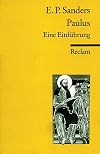
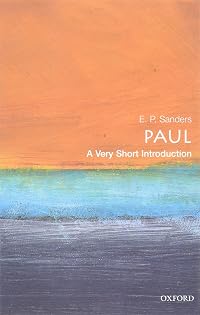
"In this highly original introduction to Paul's life and thought, E.P. Sanders, whose research on Paul has substantially influenced recent scholarship, pays equal attention to Paul's fundamental convictions and the sometimes convoluted ways in which they were worked out." from book cover
"In this highly original introduction to Paul's life and thought, E.P. Sanders, whose research on Paul has substantially influenced recent scholarship, pays equal attention to Paul's fundamental convictions and the sometimes convoluted ways in which they were worked out." from book cover
Ratings
Members
- Recently Added By
Lists

r/AskHistorians' Recommended Books
1,068 works; 18 members
Talk Discussions
Past Discussions
A Suggestion in Christianity (July 2012)
Author Information

Some Editions
Series

Belongs to Publisher Series
Common Knowledge
- Canonical title
- Paul: A Very Short Introduction
- People/Characters
- Saint Paul
- First words
- Early in the sixth decade of the Common Era, Paul, an itinerant missionary of the Christian movement, was in Corinth, mapping out his own contribution to what he saw as the last stage of God's plan for humanity.
- Last words
- (Click to show. Warning: May contain spoilers.)Is it not good to have passionate hopes and commitments which cannot all be reduced to a scheme in which they are arranged in a hierarchical relationship?
Classifications
- Genres
- Religion & Spirituality, Nonfiction, Biography & Memoir, General Nonfiction, History
- DDC/MDS
- 225.92 — Religion The Bible New Testament Biblical geography and history Biography
- LCC
- BS2651 .S23 — Philosophy, Psychology and Religion The Bible The Bible New Testament Special parts of the New Testament Epistles of Paul
- BISAC
Statistics
- Members
- 661
- Popularity
- 43,050
- Reviews
- 6
- Rating
- (3.65)
- Languages
- Dutch, English, German, Italian
- Media
- Paper, Audiobook, Ebook
- ISBNs
- 13
- ASINs
- 7