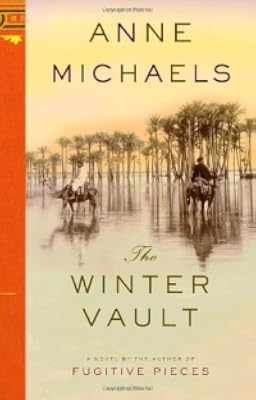
The Winter Vault
by Anne Michaels
On This Page
Description
In 1964, a newly married Canadian couple settle into a houseboat on the Nile just below Abu Simbel. Avery is one of the engineers responsible for the dismantling and reconstruction of the temple, a "machine-worshipper" who is nonetheless sensitive to their destructive power. Jean is a botanist by vocation, passionately interested in everything that grows. They met on the banks of the St. Lawrence River, witnessing the construction of the Seaway as it swallowed towns, homes, and lives. Now, show more at the edge of another world about to be inundated, they create their own world, exchanging "the innocent memories we don't know we hold until given the gift of the eagerness of another."But when tragedy strikes, they return to separate lives in Toronto: Avery to school to study architecture; and Jean into the orbit of Lucjan, a Polish emigre artist whose haunting tales of occupied Warsaw pull her further from Avery but offer her the chance to assume her most essential life.Stunning in its explorations of both the physical and emotional worlds of its characters, intensely moving and lyrical, The Winter Vault is a radiant work of fiction. show lessTags
Recommendations




















Member Recommendations

_eskarina Similar in key topics discussed and also in author's style of writing.
Member Reviews
'For the mind, every thing is in the future, for the heart, everything is in the past." - Andrei Pantonov (as quoted in the book)
Languidly told, this mesmerizing and melancholy love story moves back and forth between the building of the St. Lawrence seaway in the 1950s to the building of the Aswan high dam in Egypt in the 1960s to Poland and England during World War II. Avery Escher is an engineer, his wife Jean is passionate about plants. At the opening of the book, the two are living on a houseboat on the Nile. Avery is helping to dismantle the Great Temple at Abu Simbel ahead of the flooding that the Aswan dam will create.
The story is built on memory, on reminiscences full of great detail of all kinds, architectural, engineering, show more botanical, the characters' inner lives intimately connected with the exterior world around them the processes of building, growing, restoring, and destroying.
The book is Michaels' first in a decade, and displays great craftmanship in itself, as if it is an organic part of the story. The prose is dense in its lyricism, and there are large passages are what can only be described as prose poetry. There are no quotation marks used which only adds to the sense of watching this story through a window of reminiscence. I want to recommend this book to everyone, yet not everyone will have the patience for it. At moments I did not. Caught up in the book's dreamy, slow-moving river, I feared drowning, but my head never went below the water. show less
Languidly told, this mesmerizing and melancholy love story moves back and forth between the building of the St. Lawrence seaway in the 1950s to the building of the Aswan high dam in Egypt in the 1960s to Poland and England during World War II. Avery Escher is an engineer, his wife Jean is passionate about plants. At the opening of the book, the two are living on a houseboat on the Nile. Avery is helping to dismantle the Great Temple at Abu Simbel ahead of the flooding that the Aswan dam will create.
The story is built on memory, on reminiscences full of great detail of all kinds, architectural, engineering, show more botanical, the characters' inner lives intimately connected with the exterior world around them the processes of building, growing, restoring, and destroying.
The book is Michaels' first in a decade, and displays great craftmanship in itself, as if it is an organic part of the story. The prose is dense in its lyricism, and there are large passages are what can only be described as prose poetry. There are no quotation marks used which only adds to the sense of watching this story through a window of reminiscence. I want to recommend this book to everyone, yet not everyone will have the patience for it. At moments I did not. Caught up in the book's dreamy, slow-moving river, I feared drowning, but my head never went below the water. show less
There's something empty about The Winter Vault. Yes, it's gorgeously written. Yes, the themes of love and loss and memory are prominent. Yes, there is a lot about being human. But the book itself is not human at all.
To me, being human is all about chaos. It is the hesitance when you speak, the actions you want to take back, the frustration of speaking and acting and saying and doing it wrong. But in The Winter Vault, characters move with an alien precision, and their movements are always correct, always aimed at your heart. The way they speak, musing, philosophical, perfect, is lacking the entropy of how one would say, "I'm sorry, I just - " and "It's none of my business, but - ". And this precision confuses and irks me because I can't show more distinguish one character from the other because they all possess and are consumed by this exactness. You can't be human and be able to hit the heart all the time. show less
To me, being human is all about chaos. It is the hesitance when you speak, the actions you want to take back, the frustration of speaking and acting and saying and doing it wrong. But in The Winter Vault, characters move with an alien precision, and their movements are always correct, always aimed at your heart. The way they speak, musing, philosophical, perfect, is lacking the entropy of how one would say, "I'm sorry, I just - " and "It's none of my business, but - ". And this precision confuses and irks me because I can't show more distinguish one character from the other because they all possess and are consumed by this exactness. You can't be human and be able to hit the heart all the time. show less
Like most people who enjoyed Anne Michaels’ debut novel, I have been holding my breath waiting for her second. For me it does not disappoint. The language is languid and finely turned, much as you would expect from a poet writing prose. Some sentences are a story complete. If I had had to stop to note in my common place book every phrase or nugget of recognition or wisdom that stopped me in my tracks, I would have almost half a novel copied over. It is steeped in thought and idea and sensation. A novel primarily about memory (and a little nostalgia), about grief and life. It is about transformation and transplantation, authenticity and fate. It asks uncomfortable questions, and does not necessarily seek to answer them, but offers them show more up for consideration.
“Grief bakes in us, it bakes until one day the blade pushes in and comes out clean.”
Anyone who has lost a loved-one will recognise this metaphor.
This is not a novel to be read once, and I almost wanted to turn the first page again having turned the last, but I will abstain, and let the ideas sink down beneath the surface, deep into the earth beneath. Let the sensations and susurrations percolate.
The lack of speech marks can lead occasionally to loosing the thread of who is speaking, and in the early parts of the novel the shifts from past to present can accentuate occasional confusion, but a minor criticism of what will certainly become a cherished volume. show less
“Grief bakes in us, it bakes until one day the blade pushes in and comes out clean.”
Anyone who has lost a loved-one will recognise this metaphor.
This is not a novel to be read once, and I almost wanted to turn the first page again having turned the last, but I will abstain, and let the ideas sink down beneath the surface, deep into the earth beneath. Let the sensations and susurrations percolate.
The lack of speech marks can lead occasionally to loosing the thread of who is speaking, and in the early parts of the novel the shifts from past to present can accentuate occasional confusion, but a minor criticism of what will certainly become a cherished volume. show less
This is one of my favourite books. I am a fan of Michaels poetry and that is one of the reasons I first read this book. I recently revisited it in audio book and it is wonderful. I love the imagery and the exploration of human memory, experience and meaning. This is not a linear plot novel so don't look here for that. Time and space interweave through the book. She juxtaposes the engineered flooding of the St Lawrence and of the valley in Egypt. And weaves her characters stories - bitter, sweet, broken, unfinished, satisfying, heartbreaking... It reminds me in places of the way looking at a painting of a familiar landscape can allow you see the familiar in a new way.
Take a minute to really look at the cover of this book. It was designed by one of the great book designers, CS Richardson. At first glance, you may only see the two partial faces but as you look closer, you'll see a stone wall and between the two heads, an opening in that wall. As I read this book, I kept being drawn back to looking at this cover. Really, everything important in this book is shown on the cover. That's genius; too bad the book fell short of the promise of the cover.
Avery and Jean met in Canada along the St. Lawrence River when Avery was working on the St. Lawrence Seaway. Jean was saving plants that were soon going to be engulfed by flood waters. Avery was from England. Jean and Avery had both recently lost their fathers show more but Jean's mother had also died years before. Avery's mother was living on a marshland not far from the St. Lawrence where she had moved when Avery's father was planning on engineering the Seaway. When the father died before construction began, she decided to stay on this property which Avery (and then Jean) could visit easily. When Avery got a job in Egypt helping to disassemble the temple at Abu Simbel and reassemble it on higher ground, Jean went with him. They spend their leisure time doing a lot of talking and Avery draws. Jean becomes pregnant which must seem like a little construction project of their own. When the baby is stillborn, Jean is incosolable and hangs onto the baby for more than a day. When she finally falls asleep, Avery takes the baby from her arms. Jean can't forgive him for this. Back home in Canada, the two separate. They are both living in Toronto and they talk by telephone so it's not clear if the separation is temporary or permanent. Then Jean meets a Polish artist who grew up in Warsaw, actually in the Jewish ghetto, during World War II. Lucjan is fascinating to Jean and she is drawn more and more into his world and, conversely, farther from Avery. Lucjan tells Jean the story of his life in Warsaw and how Warsaw was rebuilding after the devastation of the war. Towards the end Jean sees that Lucjan will never relinquish his ties to Warsaw and Poland whereas Avery, who is studing architecture, will be putting down roots.
You can tell from the language she uses that Anne Michaels is a poet. She crafts marvelous sentences. But, sometimes it seems as if the craft gets in the way of developing the characters and the story. At the end, I was unsatisfied with how the book developed. show less
Avery and Jean met in Canada along the St. Lawrence River when Avery was working on the St. Lawrence Seaway. Jean was saving plants that were soon going to be engulfed by flood waters. Avery was from England. Jean and Avery had both recently lost their fathers show more but Jean's mother had also died years before. Avery's mother was living on a marshland not far from the St. Lawrence where she had moved when Avery's father was planning on engineering the Seaway. When the father died before construction began, she decided to stay on this property which Avery (and then Jean) could visit easily. When Avery got a job in Egypt helping to disassemble the temple at Abu Simbel and reassemble it on higher ground, Jean went with him. They spend their leisure time doing a lot of talking and Avery draws. Jean becomes pregnant which must seem like a little construction project of their own. When the baby is stillborn, Jean is incosolable and hangs onto the baby for more than a day. When she finally falls asleep, Avery takes the baby from her arms. Jean can't forgive him for this. Back home in Canada, the two separate. They are both living in Toronto and they talk by telephone so it's not clear if the separation is temporary or permanent. Then Jean meets a Polish artist who grew up in Warsaw, actually in the Jewish ghetto, during World War II. Lucjan is fascinating to Jean and she is drawn more and more into his world and, conversely, farther from Avery. Lucjan tells Jean the story of his life in Warsaw and how Warsaw was rebuilding after the devastation of the war. Towards the end Jean sees that Lucjan will never relinquish his ties to Warsaw and Poland whereas Avery, who is studing architecture, will be putting down roots.
You can tell from the language she uses that Anne Michaels is a poet. She crafts marvelous sentences. But, sometimes it seems as if the craft gets in the way of developing the characters and the story. At the end, I was unsatisfied with how the book developed. show less
Doce años llevaba esperando la nueva novela de Anne Michaels tras el impacto que me produjo su primer libro, 'Piezas en fuga', el libro más bello que he leído nunca. Las expectativas por lo tanto eran tremendas, pero, como suele suceder en estos casos, la decepción era más que posible. Desafortunadamente, ha sido así.
Avery, ingeniero, y Jean, un joven matrimonio, viajan en 1964 desde Canadá hasta Egipto, donde Avery debe hacerse cargo de trasladar por piezas el enorme templo de Abu Simbel debido a la construcción de la gran presa de Asuán. La novela está construída como un puzzle en el que las piezas son tanto lo que están viviendo en Egipto como, sobre todo, los recuerdos de ambos protagonistas. Cómo era la vida de Jean show more con su padre, en la que la ausencia de la madre es abrumadora. Los recuerdos que Avery tiene de su niñez en Inglaterra durante la Segunda Guerra Mundial. Cómo fue la vida de sus propios padres, o cómo se conocieron ellos mismos.
Todo ésto está muy bien narrado y hacía presagiar un gran libro. Pero una tragedia y, sobre todo, la aparición de un nuevo personaje, Lucjan, han provocado que la segunda parte del libro se ha hay hecho bastante cuesta arriba.
Me quedo únicamente con la primera parte de la novela, que contiene frases como estas:
"Nos convertimos en nosostros mismos cuando algo nos es concedido o cuando algo nos es arrebatado."
"La propia ignorancia sigue creciendo precisamente al mismo ritmo que la propia experiencia."
"Todo lo que hay en este mundo es lo que ha quedado atrás." show less
Avery, ingeniero, y Jean, un joven matrimonio, viajan en 1964 desde Canadá hasta Egipto, donde Avery debe hacerse cargo de trasladar por piezas el enorme templo de Abu Simbel debido a la construcción de la gran presa de Asuán. La novela está construída como un puzzle en el que las piezas son tanto lo que están viviendo en Egipto como, sobre todo, los recuerdos de ambos protagonistas. Cómo era la vida de Jean show more con su padre, en la que la ausencia de la madre es abrumadora. Los recuerdos que Avery tiene de su niñez en Inglaterra durante la Segunda Guerra Mundial. Cómo fue la vida de sus propios padres, o cómo se conocieron ellos mismos.
Todo ésto está muy bien narrado y hacía presagiar un gran libro. Pero una tragedia y, sobre todo, la aparición de un nuevo personaje, Lucjan, han provocado que la segunda parte del libro se ha hay hecho bastante cuesta arriba.
Me quedo únicamente con la primera parte de la novela, que contiene frases como estas:
"Nos convertimos en nosostros mismos cuando algo nos es concedido o cuando algo nos es arrebatado."
"La propia ignorancia sigue creciendo precisamente al mismo ritmo que la propia experiencia."
"Todo lo que hay en este mundo es lo que ha quedado atrás." show less
@Caroline McElwee mentions her commonplace book when reviewing this novel: I have to say that The Winter Vault read like a commonplace book to me: beautifully turned phrases (and some that are gramatically opaque: why does Michaels have such a problem using parts of the verb 'to be') are beautiful to the exclusion of all else. Often, I felt that the narrative had been shaped to hinge around these insights rather than their emerging from the characters.
I have nothing against aphoristic fiction, but I feel that this patina of linguistic elegance detracts from the moral seriousness that the novel wishes to convey in its catalogue of displacements: in fact, these aphorisms are one more displacement, in this case for action, relation, show more engagement, life. The characters are languid indeed: almost doll-like in their perverse unreeling of memories, spoken in highly stylised paragraphs.
Sorry: amendment. The male characters. Michaels appears to have taken as fact John Berger's bizarre and essentialist belief that women function ONLY to salve men's wounds by being receptive (or receptacles). Women are the wound, for Berger, and this openness makes them the healing ear/cunt that men need. Which is absolute bullshit -- and as the narrative principle in The Winter Vault, it's not only false but squeamishly so. I started to wonder if Jean's mother had died to get away from the endless drone of her husband's voice -- which pursues her even in her grave. By the end I was so sick of the sound of the Avery's and Lucjan's voices I wished they would disappear instead of all the people whose disappearances they mourn (yet do nothing about).
Ah yes: the disappeared. Michaels writes with statistical precision about the displacement of Nubians from the area that is now covered by Lake Nasser, and the similar removal of villages along the St. Lawrence Seaway. She writes with more emotive drama about the emptying of Warsaw, which echoes material in Fugitive Pieces. Perhaps it's that she's on less confident ground with the material in the first section, but it is frequently distributed in paragraphs with no narrative anchor - no voice or point-of-view implied or stated - and so feels like chunks of regurgitated textbook. Like the aphorisms, it lacks roots in the characters.
I wonder if this is because the author is, in some way, aware that her chosen displacements are themselves narrative displacements, choices that (struggle to) conceal two other historical mass movements and destructions beneath them: in the case of the Nubians, I constantly felt the (unaddressed) echo of the Nakba at the other end of the Nile; in the case of the St. Lawrence Seaway, the much more massive and total displacement of the areas' First Nations, whom Michaels mentions in a glancing aside.
She asserts that they were themselves interlopers of recent vintage, having walked across the landbridge twenty thousand years ago (disproved by far older fossil records discovered recently) -- as if that makes the colonial displacement and genocide more acceptable, making way for a) the sentimental apprehension of the villages that are washed away, few of which could be more than 100 years old and b) the all-too-familiar gesture by which the white settlers become "indigenous" (doubled by the parallel of the Nubians and the white Canadians) and holders of native knowledge, perpetrated through Jean's collection of her mother's seeds.
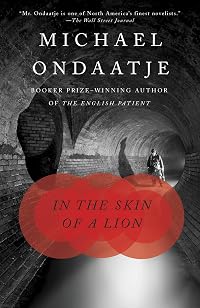
I did give this novel three stars originally, partially out of loyalty to Michaels' earlier work -- I have read Fugitive Pieces and The Weight of Oranges many, many times -- and partially out of a respect and hunger for serious, eloquent, involved and attentive writing. But the torch has passed: while Michaels was almost alone as an Ondaatje female impersonator in 1997, we now have writers of the calibre of Kamila Shamsie, whose recent Burnt Shadows makes as explicit use of The English Patient as Michaels made of In the Skin of a Lion in Fugitive Pieces. Moreover, Shamsie critiques the ethical violence of Ondaatje's poetic style when she extends the story beyond the suspended ending of The English Patient to imagine that which Ondaatje leaves out (marriage, childbirth, postcolonial life, dailiness, the present, women as actual characters) in his fastidious ellipses and allusive phrasemaking.
Loyalty, as Jean discovers, is not enough: you listen and listen and the speaker kicks you out when he's used you up. It's too extreme to say that I feel dispossessed by The Winter Vault, because I doubted it could reach the heights - the exactness, the incendiary images, the perceptive characters - of Fugitive Pieces. Without those qualities, this is collection of beautiful words: a vault of dried seeds with no ground to stand on. show less
I have nothing against aphoristic fiction, but I feel that this patina of linguistic elegance detracts from the moral seriousness that the novel wishes to convey in its catalogue of displacements: in fact, these aphorisms are one more displacement, in this case for action, relation, show more engagement, life. The characters are languid indeed: almost doll-like in their perverse unreeling of memories, spoken in highly stylised paragraphs.
Sorry: amendment. The male characters. Michaels appears to have taken as fact John Berger's bizarre and essentialist belief that women function ONLY to salve men's wounds by being receptive (or receptacles). Women are the wound, for Berger, and this openness makes them the healing ear/cunt that men need. Which is absolute bullshit -- and as the narrative principle in The Winter Vault, it's not only false but squeamishly so. I started to wonder if Jean's mother had died to get away from the endless drone of her husband's voice -- which pursues her even in her grave. By the end I was so sick of the sound of the Avery's and Lucjan's voices I wished they would disappear instead of all the people whose disappearances they mourn (yet do nothing about).
Ah yes: the disappeared. Michaels writes with statistical precision about the displacement of Nubians from the area that is now covered by Lake Nasser, and the similar removal of villages along the St. Lawrence Seaway. She writes with more emotive drama about the emptying of Warsaw, which echoes material in Fugitive Pieces. Perhaps it's that she's on less confident ground with the material in the first section, but it is frequently distributed in paragraphs with no narrative anchor - no voice or point-of-view implied or stated - and so feels like chunks of regurgitated textbook. Like the aphorisms, it lacks roots in the characters.
I wonder if this is because the author is, in some way, aware that her chosen displacements are themselves narrative displacements, choices that (struggle to) conceal two other historical mass movements and destructions beneath them: in the case of the Nubians, I constantly felt the (unaddressed) echo of the Nakba at the other end of the Nile; in the case of the St. Lawrence Seaway, the much more massive and total displacement of the areas' First Nations, whom Michaels mentions in a glancing aside.
She asserts that they were themselves interlopers of recent vintage, having walked across the landbridge twenty thousand years ago (disproved by far older fossil records discovered recently) -- as if that makes the colonial displacement and genocide more acceptable, making way for a) the sentimental apprehension of the villages that are washed away, few of which could be more than 100 years old and b) the all-too-familiar gesture by which the white settlers become "indigenous" (doubled by the parallel of the Nubians and the white Canadians) and holders of native knowledge, perpetrated through Jean's collection of her mother's seeds.
I did give this novel three stars originally, partially out of loyalty to Michaels' earlier work -- I have read Fugitive Pieces and The Weight of Oranges many, many times -- and partially out of a respect and hunger for serious, eloquent, involved and attentive writing. But the torch has passed: while Michaels was almost alone as an Ondaatje female impersonator in 1997, we now have writers of the calibre of Kamila Shamsie, whose recent Burnt Shadows makes as explicit use of The English Patient as Michaels made of In the Skin of a Lion in Fugitive Pieces. Moreover, Shamsie critiques the ethical violence of Ondaatje's poetic style when she extends the story beyond the suspended ending of The English Patient to imagine that which Ondaatje leaves out (marriage, childbirth, postcolonial life, dailiness, the present, women as actual characters) in his fastidious ellipses and allusive phrasemaking.
Loyalty, as Jean discovers, is not enough: you listen and listen and the speaker kicks you out when he's used you up. It's too extreme to say that I feel dispossessed by The Winter Vault, because I doubted it could reach the heights - the exactness, the incendiary images, the perceptive characters - of Fugitive Pieces. Without those qualities, this is collection of beautiful words: a vault of dried seeds with no ground to stand on. show less
Members
- Recently Added By
Published Reviews
ThingScore 71
In Canada, much of our most venerated fiction has the feel of high-minded scrapbooks. Don’t get me wrong: themes don’t come more classic than memory and loss, and readers seem to treasure books that overflow with backward-looking mournfulness. But too much woe is, well, too much.
added by kathrynnd
added by _eskarina
added by _eskarina
Lists

Books Read in 2017
4,249 works; 130 members

Books To Get From The Library
115 works; 5 members

Rising water
19 works; 6 members
Author Information

15 Works 5,200 Members
Anne Michaels was born in 1958 in Toronto, Canada. Her poetry and fiction has earned her several awards. "The Weight of Oranges," a collection of poetry, won the Commonwealth Prize for the Americas. Another collection of poetry, "Miner's Pond," won the Canadian Authors Association Award and was she shortlisted for the Governor General's Award and show more the Trillium Award. "Fugitive Pieces," her first work of fiction won her the Canadian Booksellers Association Author of the Year Award, the Trillium Prize, the Chapters/Books in Canada First Novel Award, The Beatrice and Martin Fischer Award and the Orange Prize. She was also shortlisted for the Giller Prize. She is also a recipient of the National Magazine Award, for poetry, gold medal. (Bowker Author Biography) show less
Some Editions
Awards and Honors
Awards
Distinctions
Series
Belongs to Publisher Series
Common Knowledge
- Canonical title*
- Wintergewölbe
- Original title
- The winter vault
- Original publication date
- 2009
- People/Characters
- Jean Shaw; Avery Escher; Marina Escher; Lucjan
- Important places
- Abu Simbel, Egypt; Toronto, Ontario, Canada; Montréal, Québec, Canada; Aswan Dam, Egypt
- Dedication
- for R and E
- First words
- Perhaps we painted on our own skin, with ochre and charcoal, long before we painted on stone.
- Quotations
- How can place enter our skin this way, down into the very verb of us? (page 115)
- Last words*
- (Click to show. Warning: May contain spoilers.)Um etwas nicht wegzukratzen, sondern wegzuwaschen.
- Original language*
- Amerikanisch
*Some information comes from Common Knowledge in other languages. Click "Edit" for more information.
Classifications
- Genres
- General Fiction, Fiction and Literature, Historical Fiction
- DDC/MDS
- 813.54 — Literature & rhetoric American literature in English American fiction in English 1900-1999 1945-1999
- LCC
- PR9199.3 .M453 .W56 — Language and Literature English English Literature English literature: Provincial, local, etc.
- BISAC
Statistics
- Members
- 740
- Popularity
- 38,025
- Reviews
- 42
- Rating
- (3.39)
- Languages
- 8 — Czech, Dutch, English, Finnish, French, German, Norwegian (Bokmål), Spanish
- Media
- Paper, Audiobook, Ebook
- ISBNs
- 30
- ASINs
- 7