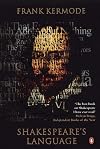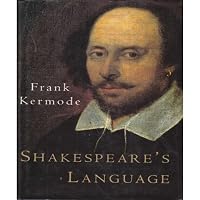
Shakespeare's Language
by Frank Kermode
On This Page
Description
"This book argues that something extraordinary happened to Shakespeare's language in midcareer, somewhere around 1600." "An initial discussion of some of the language of the earlier plays looks for signs as to what was afoot, and this leads to a treatment of the central turning point. The rest of the book provides close studies of what came after that, in the great works between Hamlet and The Tempest. Special attention is paid to many passages which are now so obscure that after all the show more work done by scholars they remain difficult. How could this be so, when Shakespeare was always a popular dramatist? How did this language develop, and how did it happen that in spite of everything Shakespeare had an audience capable of understanding Hamlet at the beginning of the decade and Coriolanus near the end of it?"--Jacket. show lessTags
Recommendations







Member Reviews
Sir Frank Kermode's Shakespeare's Language is a deeply significant publication, the result of a lifetime of writing and thinking on the Bard by one of our greatest critics, and it certainly lives up to its expectations. Kermode's numerous critical studies, such as The Sense of an Ending, have become classics and his recent memoir Not Entitled vividly captured a life of letters, characterised by a passionate commitment to the value of literature. The author begins by lamenting the fact that general readers have not "been well served by modern critics, who on the whole seem to have little time for [Shakespeare's] language". However, rather than launching into a diatribe against current literary fashions, he proceeds to offer an elegant show more and detailed account of how "Shakespeare became, between 1594 and 1608, a different kind of poet". For Kermode, Shakespeare "moved up to a new level of achievement and difficulty", associated with the rich complexities of Hamlet and the enigmatic poem The Phoenix and the Turtle. Kermode defines that shift as "the pace of the speech, its sudden turns, its backtrackings, its metaphors flashing before us and disappearing before we can consider them. This is new: the representation of excited, anxious thought; the weighing of confused possibilities and dubious motives". This leads Kermode to break his book into two parts. The first deals with the plays up to 1600, including some controversial dismissals of plays, including As You Like It, whilst the second part offers 15 detailed chapters on the tragedies, problem plays and romances. Each chapter is full of detailed and illuminating interpretations of the difficulties, but also pleasures of Shakespeare's language. This is classic Shakespeare criticism, written in the mould of Johnson and Coleridge.--Jerry Brotton show less
The true biography of Shakespeare - and the only one we really need to care about - is in the plays. Sir Frank Kermode, Britain's most distinguished literary critic, has been thinking about them all his life. This book is a distillation of that lifetime's thinking. The great English tragedies were all written in the first decade of the seventeenth century. They are often in language that is difficult to us, and must have been hard even for contemporaries. How and why did Shakespeare's language develop as it did? Kermode argues that the resources of English underwent major change around 1600.
One of the best books of Shakespeare criticism I've ever read.
Segnalato da Flavia Vendittelli
Apr 24, 2012Italian
Ratings
Members
- Recently Added By
Lists

Works concerning William Shakespeare
75 works; 4 members

John Carey's Sunday Best
82 works; 3 members

In Our Time books
4,934 works; 2 members
Author Information

68+ Works 4,875 Members
Sir John Frank Kermode, November 29, 1919 - August 17, 2010 John Kermode was a British literary critic best known for his work The Sense of an Ending: Studies in the Theory of Fiction, published in 1967 (revised 2000), and for his extensive book-reviewing and editing. He was the Lord Northcliffe Professor of Modern English Literature at University show more College London and the King Edward VII Professor of English Literature at Cambridge University. Kermode served during World War II with the Royal Navy. After the war, Kermode held positions at Manchester University, Bristol University, University College of London, and Cambridge University, all in England, and at Columbia University in New York City. He was Charles E. Norton Professor at Harvard University in 1977-78 and Henry Luce Professor at Yale University in 1994. Kermode wrote several books on literary figures, including D.H. Lawrence and Wallace Stevens. His works of criticism include An Appetite for Poetry and The Art of Telling. Kermode was also the editor of the cultural journal, Encounter and his memoir, Not Entitled, was published in 1995. Kermode serves on the editorial board of the London Review of Books and Common Knowledge and has acted as judge for the Booker Prize. He was knighted for his service to English literature and he was named a Foreign Honorary Member of the American Academy of Arts and Letters in 1999. He died in Cambridge on August 17, 2010. (Bowker Author Biography) Frank Kermode has written & edited many works, among them "Forms of Attention" & a memoir, "Not Entitled" (FSG, 1995). He lives in Cambridge, England, & has frequently taught in the United States. (Publisher Provided) show less
Awards and Honors
Common Knowledge
- Canonical title
- Shakespeare's Language
- Original title
- Shakespeare's Language
- Original publication date
- 2000
- People/Characters
- William Shakespeare
- Dedication
- To Ursula Owen and Anthony Holden
- First words
- Although a large proportion of Shakespeare's verse was spoken in the theatre, a fact that accounts for much that affected its extraordinary development, I am not, or not primarily, interested in purely theatrical matters, tho... (show all)ugh I must occasionally have something to say about them.
- Quotations
- "Antony and Cleopatra" takes the world-sharers, exposes them as they are, both ruthless politicians and one a libertine, and with controlled hyperbole elevates them to a status so grand that only an exercise of linguistic gen... (show all)ius could prevent their seeming inflated or absurd.
- Last words
- (Click to show. Warning: May contain spoilers.)Did he overestimate their endurance, and ours; did he perhaps even exaggerate his own?
- Blurbers
- Bragg, Melvyn; Ackroyd, Peter; Ryan, Kiernan; Carey, John; Wood, James; Eyre, Richard (show all 12); Paulin, Tom; Kiberd, Declan; MacCabe, Colin; Spark, Muriel; Bakewell, Joan; Donovan, Katie
- Original language
- English
Classifications
- Genres
- Literature Studies and Criticism, Nonfiction, Fiction and Literature
- DDC/MDS
- 822.33 — Literature & rhetoric English & Old English literatures English drama 1558-1625 Elizabethan period William Shakespeare
- LCC
- PR3072 .K47 — Language and Literature English English Literature English renaissance (1500-1640)
- BISAC
Statistics
- Members
- 721
- Popularity
- 39,377
- Reviews
- 4
- Rating
- (3.67)
- Languages
- English, French, Italian, Portuguese
- Media
- Paper, Ebook
- ISBNs
- 9
- ASINs
- 2