On This Page
Description
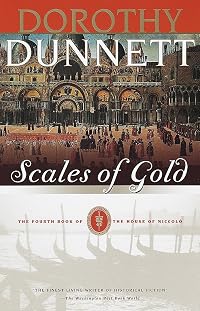
Eager to expand his commercial empire, ambitious merchant banker Nicholas van der Poele travels to Africa, followed by Gelis van Borselen, a determined young woman who blames Nicholas for her sister's death.Tags
Recommendations
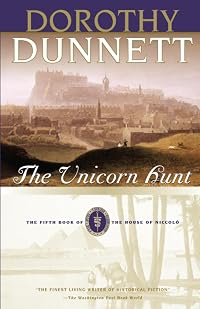
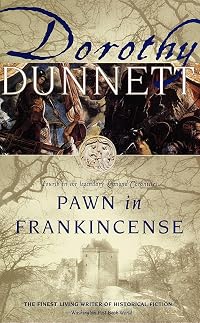













Member Recommendations

marieke54 The link is historical person (15th Cent.) Alvise da Ca’ da Mosto, a merchant explorer who in this 4th book of a terrific series guides protagonist Niccolo along the coast of West Africa. Alvise is mentioned by Francesco da Mosto as an inspiring forebear.
Member Reviews
When I realised I had six chapters left, I decided to read slower. Don’t leave me yet, book! Two chapters away from the end, I started reading the next book in my queue. One chapter away from the end, I continued to read that next book in queue. What do you mean, “who does that?” I do.
What a journey this has been! This series continues to delight, amaze, horrify.
At first, we are in Venice: ”Reclining scented upon her lagoon. Venice was a city of festivals, a city of water-parties and music, of masquerades and stately processions, of entertainments of the circus and entertainments of a more intimate kind, behind silken curtains.” There are assassins, spies, intrigues, glass-makers of Murano... But this is simply a prologue. show more Nicholas has plans (doesn’t he always?). ”Intrigue is his life, as we saw today, as you saw on Cyprus. Intrigue, and danger, and a taste for what he transforms, often enough, into high adventure. But whether he means it or not, people die.”
We are going to Africa! Ships venturing down the West coast of Africa in the 15th century, this is exactly like going to the Moon hundreds of years later. ”There are many dangers; curiosity being the greatest.” Nicholas has unexpected company on this journey – Gelis von Borselen, Katelina’s younger sister; and Bel, her companion. They are both awesome, and the fraught, uneasy relationships and strange friendships forming and reforming, are exhilarating to watch.
”I can’t protect a woman out there.”
”I never thought you could,” said Gelis van Borselen. ”It isn’t your forte.”
Also Gelis:
”…if you could get me a light bow, I could use it. Is the handgun as simple as it looks?”
”Perhaps gold makes men dizzy, like wine. The very ship seems to sing.”
”Do you say?” said Mistress Bel. ”Nothing vulgar, I hope.”
What I really liked was how easily Gelis and Bel became part of the team, competent and respected (ans badass). When you are “going to the Moon”, you are either a team or you die, 15th century gender roles going out of the window. Kudos to the characters, kudos to Dunnett.
Considering the time and the place I should have expected a slave trade plot, but I did not. ”How could you bring people to Christ while stealing their children?” Loppe, a former slave, has an amazing character arc in this book and throughout the series, but I cannot understand his reasons for trying to make a horrible system “better”. He sounded naive to me.
I liked how Dunnett tried to avoid racial stereotypes, making everyone and everything they meet on the journey complex, interesting, different. And yet, as the author writes with a white gaze, stereotypes still seep in, making the reader cringe.
There are Adventures with a sense of wonder, riveting desperate treks across inhospitable lands, treachery and heartbreak. Reader, don’t forget to breathe. When they reach Timbuktu, the description of it is nothing short of amazing. Dunnett is also being sarcastic about Europeans not expecting to find such a centre of learning.
”Light pounced like a lion through the vaults and arcades of Ma’Dughu… [ ] Inside was another dusk, made of gold.”
I loved Gelis’s chapters when she was alone in Timbuktu, making a life for herself, learning new things, learning Arabic.
I loved Nicholas’ journey across the Sahara, seeking absolution for things in his past.
”Understanding, and vision, and peace with oneself. You have to win that war, Nicholas, before you can win any other.”
”He had sailed as an army would sail, to seize its objectives. […] And he had not thought at all, of what that would do to people around him. Many were dead. All were altered. Most of all, late and laggard, himself.”
It is hard, very hard, to come back from a journey such as this. You might be changed, but your old world is the same.
”Nicholas said abruptly, ”Do you have peace?” He said it in Arabic.
She looked up, her lashes aghast like a doll’s. When she answered, it was in harsh Arabic, and not with the called-for response. ”No,” she said. ”I don’t know who I am.”
At the end, Dunnett breaks my heart and gleefully indulges in some character assassination. Team Gelis in my head is standing there, looking forlorn and confused, having dropped all the pom poms. You can wave them at the angsty stuff that is surely to follow in the next book, I tell Team Gelis.
I am also beginning to think that the Crawfords of Dunnett's Lymond Chronicle have nothing on the van der Poeles, de St Pols, van Borselens etc. What a stupid mess this is, really.
Yes, I will be there for the next book. I will be there for all the storytelling joy. show less
What a journey this has been! This series continues to delight, amaze, horrify.
At first, we are in Venice: ”Reclining scented upon her lagoon. Venice was a city of festivals, a city of water-parties and music, of masquerades and stately processions, of entertainments of the circus and entertainments of a more intimate kind, behind silken curtains.” There are assassins, spies, intrigues, glass-makers of Murano... But this is simply a prologue. show more Nicholas has plans (doesn’t he always?). ”Intrigue is his life, as we saw today, as you saw on Cyprus. Intrigue, and danger, and a taste for what he transforms, often enough, into high adventure. But whether he means it or not, people die.”
We are going to Africa! Ships venturing down the West coast of Africa in the 15th century, this is exactly like going to the Moon hundreds of years later. ”There are many dangers; curiosity being the greatest.” Nicholas has unexpected company on this journey – Gelis von Borselen, Katelina’s younger sister; and Bel, her companion. They are both awesome, and the fraught, uneasy relationships and strange friendships forming and reforming, are exhilarating to watch.
”I can’t protect a woman out there.”
”I never thought you could,” said Gelis van Borselen. ”It isn’t your forte.”
Also Gelis:
”…if you could get me a light bow, I could use it. Is the handgun as simple as it looks?”
”Perhaps gold makes men dizzy, like wine. The very ship seems to sing.”
”Do you say?” said Mistress Bel. ”Nothing vulgar, I hope.”
What I really liked was how easily Gelis and Bel became part of the team, competent and respected (ans badass). When you are “going to the Moon”, you are either a team or you die, 15th century gender roles going out of the window. Kudos to the characters, kudos to Dunnett.
Considering the time and the place I should have expected a slave trade plot, but I did not. ”How could you bring people to Christ while stealing their children?” Loppe, a former slave, has an amazing character arc in this book and throughout the series, but I cannot understand his reasons for trying to make a horrible system “better”. He sounded naive to me.
I liked how Dunnett tried to avoid racial stereotypes, making everyone and everything they meet on the journey complex, interesting, different. And yet, as the author writes with a white gaze, stereotypes still seep in, making the reader cringe.
There are Adventures with a sense of wonder, riveting desperate treks across inhospitable lands, treachery and heartbreak. Reader, don’t forget to breathe. When they reach Timbuktu, the description of it is nothing short of amazing. Dunnett is also being sarcastic about Europeans not expecting to find such a centre of learning.
”Light pounced like a lion through the vaults and arcades of Ma’Dughu… [ ] Inside was another dusk, made of gold.”
I loved Gelis’s chapters when she was alone in Timbuktu, making a life for herself, learning new things, learning Arabic.
I loved Nicholas’ journey across the Sahara, seeking absolution for things in his past.
”Understanding, and vision, and peace with oneself. You have to win that war, Nicholas, before you can win any other.”
”He had sailed as an army would sail, to seize its objectives. […] And he had not thought at all, of what that would do to people around him. Many were dead. All were altered. Most of all, late and laggard, himself.”
It is hard, very hard, to come back from a journey such as this. You might be changed, but your old world is the same.
”Nicholas said abruptly, ”Do you have peace?” He said it in Arabic.
She looked up, her lashes aghast like a doll’s. When she answered, it was in harsh Arabic, and not with the called-for response. ”No,” she said. ”I don’t know who I am.”
At the end, Dunnett breaks my heart and gleefully indulges in some character assassination. Team Gelis in my head is standing there, looking forlorn and confused, having dropped all the pom poms. You can wave them at the angsty stuff that is surely to follow in the next book, I tell Team Gelis.
I am also beginning to think that the Crawfords of Dunnett's Lymond Chronicle have nothing on the van der Poeles, de St Pols, van Borselens etc. What a stupid mess this is, really.
Yes, I will be there for the next book. I will be there for all the storytelling joy. show less
This is, in many ways, the last magnificent adventure for Nicholas, the last of his innocence, not that some of the people around him aren't mad at him for being underhanded and secretive and ruthless about his scheming, which of course, he is. To Africa, then, in morally questionable circumstances, unable to escape the tangled web of personal and family complications that cling to him like molluscs, to find riches, but also suffering, and perhaps even love and a glimmer of peace, all to be shattered by one of the cruelest endings of a book since... well since Checkmate by the same author.
It is a big and epic and intricate book full of the bustle and buzz of traders embarking on a major expedition, brilliant with descriptions of people show more and places, the evocation of Timbuktu in particular an absolute masterpiece of historical gorgeousness, a beautiful, vulnerable city of trade and learning that captures the hearts of the characters and the readers. show less
It is a big and epic and intricate book full of the bustle and buzz of traders embarking on a major expedition, brilliant with descriptions of people show more and places, the evocation of Timbuktu in particular an absolute masterpiece of historical gorgeousness, a beautiful, vulnerable city of trade and learning that captures the hearts of the characters and the readers. show less
I thought I'd reread the House Of Noccolo series several times, and I have - but only as far as To Lie With Lions. The last two books I've only read the once, which I find at once slightly shameful, but also delightful since there was so much I'd forgotten that it was almost, if not quite. like reading it for the first time.
Nicholas has gone to Poland, outcast and rejected by family and friends and associates for what he did in Scotland, relentlessly punishing himself by cutting himself off from everything he loves, hanging out with the pirate Benecke, who is determined to make him into a version of himself, for a winter of rough and bloody sport, though not without an ulterior motive. The impending piratical life is interrupted, show more however, by the arrival of familiar faces, including those of Julius and his new wife, and soon Nicholas is prodded and persuaded and bribed and cajoled to journey to the Turk-threatened Crimea, while at home, his family and friends are drawn into the ineptly-prosecuted war of the Duke of Burgundy and look deeper into Nicholas's past which slowly reveals a real current threat to them all.
Vivid and richly detailed as always, the journey of Nicholas, who had given up on himself and everything, but is roused to act to protect the people he loves and possibly climb back to find some sort of redemption, is epic and steeped in mysteries and secrets and terrible revelations, culminating in a dreadful, disastrous snowbound battle that turns into a continent-shaking rout. Dunnett at the full height of her powers, the energy and the skill and the dexterity of her plotting absolutely unflagging. show less
Nicholas has gone to Poland, outcast and rejected by family and friends and associates for what he did in Scotland, relentlessly punishing himself by cutting himself off from everything he loves, hanging out with the pirate Benecke, who is determined to make him into a version of himself, for a winter of rough and bloody sport, though not without an ulterior motive. The impending piratical life is interrupted, show more however, by the arrival of familiar faces, including those of Julius and his new wife, and soon Nicholas is prodded and persuaded and bribed and cajoled to journey to the Turk-threatened Crimea, while at home, his family and friends are drawn into the ineptly-prosecuted war of the Duke of Burgundy and look deeper into Nicholas's past which slowly reveals a real current threat to them all.
Vivid and richly detailed as always, the journey of Nicholas, who had given up on himself and everything, but is roused to act to protect the people he loves and possibly climb back to find some sort of redemption, is epic and steeped in mysteries and secrets and terrible revelations, culminating in a dreadful, disastrous snowbound battle that turns into a continent-shaking rout. Dunnett at the full height of her powers, the energy and the skill and the dexterity of her plotting absolutely unflagging. show less
It was the paperback edition crossing the counter when I was working in a bookshop in 1995 that caught my eye and brought my attention to the Niccolo series, prompting me to order the other books in the series and the Lymond books, which were in the process of being reprinted. Through a series of amazing set-pieces - football with royalty on a castle roof, a Nativity play, a volcanic explosion in Iceland and the dazzling excess of a conference between the Duke of Burgundy and the Holy Roman Emperor, Niccolo brings the plans initiated and then delayed in The Unicorn Hunt to their final fruition as part of his contest with his wife and his feud with his family and as part of the exercise of his own brilliance unfettered by morality or show more ethics. The intricacy of story, the wide-ranging historic settings and incidents, the small army of supporting and antagonising characters, the razor-sharp wit of the writing turns what could be a daunting read into an exhilarating thrill-ride, cumlinating in a showdown that strips all illusions from the main characters, his friends, family and entranced readers alike. show less
It is now the fifteenth century. We are in the Age of Discovery. Nicholas vander Poele is in need of restoring order and fortune to his banking business. He and former slave, Loppe travel to Africa in search of gold. Also traveling along with him is Gelis van Borselen. If you remember the name from Race of the Scorpions, she is on board, secretly seeking revenge. (As an aside, there is always a beautiful woman who has a love-hate relationship with Nicholas and seeking some kind of revenge.) Gelis van Borselen's sister, Katelina, was killed in The Race of the Scorpions. It was mentioned earlier that whenever Nicholas is ill and feverish he spills secrets. This time, struggling with a swamp-induced illness Nicholas tells Gelis he is the show more father of her sister's child. This changes the course of their relationship. Of course it does.
Underlying all the adventure and violence is Dunnett's sly humor. She gives this comedy to Scales of Gold in the form of witty repartee. When Nicholas asks Gregorio if anyone has tried to kill him lately, Gregorio replies, "I suffer from overwork and neglect but apart from that, no" (p 8). show less
Underlying all the adventure and violence is Dunnett's sly humor. She gives this comedy to Scales of Gold in the form of witty repartee. When Nicholas asks Gregorio if anyone has tried to kill him lately, Gregorio replies, "I suffer from overwork and neglect but apart from that, no" (p 8). show less
This feels like the turning point of the 'House of Niccolo' series, much as Checkmate was in the 'Lymond Chronicles.' There's the long, slow build-up of character development throughout the book—for all that much of it takes place in West Africa, in places where Europeans would so rarely have ventured in the fifteenth century, or even in the present day, there is relatively little description of the environment in which Nicholas and his group find themselves. It's much more introverted, about the ways in which going there changes them. (In a way, yes, which does ping a little on the enigmatic-black-folks-mystically-empowering-the-white-people scale).
A leisurely, engaging, if unsurprising read—until, of course, you get to the last show more ten pages or so, when in classic Dunnett style your eyebrows are made to rise higher and higher until you squeak "What?!" very loudly. Not as bad as Checkmate, of course—what ever could be?—but still. What. show less
A leisurely, engaging, if unsurprising read—until, of course, you get to the last show more ten pages or so, when in classic Dunnett style your eyebrows are made to rise higher and higher until you squeak "What?!" very loudly. Not as bad as Checkmate, of course—what ever could be?—but still. What. show less
Another dramatic adventure across the trade routes of the 1460s. This one felt like an another installment in the vein of book 2 and 3, with some evil schemes, a few deaths and competitions between merchants.
After the way the East was presented in book 2, and the various Islamic groups in book 3, I feared this one would do the same with the slave trade in West-Africa.
My expectations weren’t high, but I was almost pleasantly surprised (?)
I feel like this book is more an uneasy product of its time than genuinely awful.
The slave trade was such a large scale business, that Nicholas’s pragmatic solution of taking slaves to Europe and giving them an acceptable life as free servants is considered a better option because the slaves they let show more go free die attempting to get home. For characters in the 1460s and a book from the 80s/90s, I thought it wasn’t bad? It certainly could have been a lot worse.
I liked that Africa is far from homogenous, and unlike Tzani-Bey, the various groups are no better or worse than the Europese lords. They are feuding, backstabbing and trading left and right. Timbuktu is a flourishing city with a history that Nicholas has to adapt to like he had to in Cyprus and Trebizond.
Women are still prizes to be slept with, and are somehow always there to show how great our white Nicholas is. He is also immediately the clever white man to advise the rulers of Timbuktu and even take over parts of it. (Maybe the fact that white and black people are equally fawning over him does the book a small favour? I digress.)
In the meantime, Father Godsalc preaches of converting souls to Christianity like an annoying broken record I wanted to throw out, but also argued for humane treatment of black people and against slavery as a whole. You win some you lose some.
The biggest roles were for Gelis and Loppe.
At first Gelis was the antagonist I had hoped a bitter Katelina would be in book 3. She followed Nicholas everywhere solely to be petty and spite him. I wasn’t sure if she had ulterior motives for at least half of it, and I liked that she was clever and willful enough to adapt to new places and languages.
The attempt at romance between her and Nicholas was laughably bad. Every book these romances get worse? I liked the bits I got from Gelis as a character, but that subplot made no sense. I sincerely hoped she plotted it all only to poison him during their wedding night.
The character I was most excited for was Lopez. Lopez is one of the rare few companions who is not actively skeptical of Nicholas, so I wanted to know how things would develop between them. Would he grow wary of Nicholas too? Or would he turn into the one rare person to crack Nicholas’s facade? The others literally state: “Depending on one’s viewpoint, Loppe was his most loyal friend, or his spy.”
They both started in the waters of Bruges, looked down upon by everyone, and together they climbed their way up to the palazzo near the Rialto bridge in Venice.
To Loppe, his status as high ranking servant managing estates and respected member of the bank was owed to Nicholas, dating back to his apprentice days. To Nicholas, Loppe would have been the one person who did not try to steer him. I did like how Loppe managed to gain to a position that rivalled Nicholas’s, and even had tricks of his own. He more than deserved it. He might also be the only person Nicholas hasn’t majorly misled. (Yet)
The potential was gigantic, but in the end I felt like their friendship was only spoken of, but never really shown. No spoilers, but I am disappointed that it ended the way it did.
After years, Nicholas’s triumphant return to Bruges felt like an achievement and an ending. Once an apprentice, he pretty much achieved all there was to achieve. Status, riches, good standing with a lot of the factions including the Charetty and a famous reputation in every city.
I'll read next book when I feel like another one of these adventures, but by now I think I get the formula. Lots of trading and plotting left and right, Nicholas weaving though them, some rival threatening to ruin the business, an awful romance and when everything seems right at the end, the last few pages contained some sort of twist to lead into the next one. show less
After the way the East was presented in book 2, and the various Islamic groups in book 3, I feared this one would do the same with the slave trade in West-Africa.
My expectations weren’t high, but I was almost pleasantly surprised (?)
I feel like this book is more an uneasy product of its time than genuinely awful.
The slave trade was such a large scale business, that Nicholas’s pragmatic solution of taking slaves to Europe and giving them an acceptable life as free servants is considered a better option because the slaves they let show more go free die attempting to get home. For characters in the 1460s and a book from the 80s/90s, I thought it wasn’t bad? It certainly could have been a lot worse.
I liked that Africa is far from homogenous, and unlike Tzani-Bey, the various groups are no better or worse than the Europese lords. They are feuding, backstabbing and trading left and right. Timbuktu is a flourishing city with a history that Nicholas has to adapt to like he had to in Cyprus and Trebizond.
Women are still prizes to be slept with, and are somehow always there to show how great our white Nicholas is. He is also immediately the clever white man to advise the rulers of Timbuktu and even take over parts of it. (Maybe the fact that white and black people are equally fawning over him does the book a small favour? I digress.)
In the meantime, Father Godsalc preaches of converting souls to Christianity like an annoying broken record I wanted to throw out, but also argued for humane treatment of black people and against slavery as a whole. You win some you lose some.
The biggest roles were for Gelis and Loppe.
At first Gelis was the antagonist I had hoped a bitter Katelina would be in book 3. She followed Nicholas everywhere solely to be petty and spite him. I wasn’t sure if she had ulterior motives for at least half of it, and I liked that she was clever and willful enough to adapt to new places and languages.
The attempt at romance between her and Nicholas was laughably bad. Every book these romances get worse? I liked the bits I got from Gelis as a character, but that subplot made no sense. I sincerely hoped she plotted it all only to poison him during their wedding night.
The character I was most excited for was Lopez. Lopez is one of the rare few companions who is not actively skeptical of Nicholas, so I wanted to know how things would develop between them. Would he grow wary of Nicholas too? Or would he turn into the one rare person to crack Nicholas’s facade? The others literally state: “Depending on one’s viewpoint, Loppe was his most loyal friend, or his spy.”
They both started in the waters of Bruges, looked down upon by everyone, and together they climbed their way up to the palazzo near the Rialto bridge in Venice.
To Loppe, his status as high ranking servant managing estates and respected member of the bank was owed to Nicholas, dating back to his apprentice days. To Nicholas, Loppe would have been the one person who did not try to steer him. I did like how Loppe managed to gain to a position that rivalled Nicholas’s, and even had tricks of his own. He more than deserved it. He might also be the only person Nicholas hasn’t majorly misled. (Yet)
The potential was gigantic, but in the end I felt like their friendship was only spoken of, but never really shown. No spoilers, but I am disappointed that it ended the way it did.
After years, Nicholas’s triumphant return to Bruges felt like an achievement and an ending. Once an apprentice, he pretty much achieved all there was to achieve. Status, riches, good standing with a lot of the factions including the Charetty and a famous reputation in every city.
I'll read next book when I feel like another one of these adventures, but by now I think I get the formula. Lots of trading and plotting left and right, Nicholas weaving though them, some rival threatening to ruin the business, an awful romance and when everything seems right at the end, the last few pages contained some sort of twist to lead into the next one. show less
Members
- Recently Added By
Lists

A Rainbow of Books: Colors in the Title
570 works; 24 members
Author Information

35+ Works 18,088 Members
Dorothy Dunnett was born on August 25, 1923 in Dunfermline, Fife, Scotland. She attended Gillespie's High School for Girls. After graduation she attended Edinburgh College of Art, and transferred, upon her marriage, to Glasgow School of Art. From 1940-1955, she worked for the Civil Service as a press officer. Her first novel, The Game of Kings, show more was published in the United States in 1961 and in the United Kingdom the year after. During her lifetime, she wrote over 20 books including King Hereafter, the six-part Lymond Chronicles, and the eight-part House of Niccolo series. She was also a professional portrait painter and exhibited at the Royal Scottish Academy. In 1992 she was awarded the Office of the British Empire for services to literature. She died from cancer on November 9, 2001 at the age of 78. (Bowker Author Biography) show less
Some Editions
Series

Work Relationships
Has as a reference guide/companion
Common Knowledge
- Canonical title
- Scales of Gold
- Original publication date
- 1991
- People/Characters
- Nicholas vander Poele; Gelis van Borselen
- Important places
- Africa; Venice, Veneto, Italy
- First words
- To those who remembered him, it was typical that Nicholas should sail into Venice just as the latest news reached the Rialto, causing the ducat to fall below fifty groats and dip against the écu.
- Last words
- (Click to show. Warning: May contain spoilers.)'She doesn't know what the word means.'
Classifications
Statistics
- Members
- 764
- Popularity
- 36,724
- Reviews
- 14
- Rating
- (4.43)
- Languages
- English, German, Italian
- Media
- Paper, Audiobook, Ebook
- ISBNs
- 18
- ASINs
- 10