The Castaways of the Flag
by Jules Verne
On This Page
Description
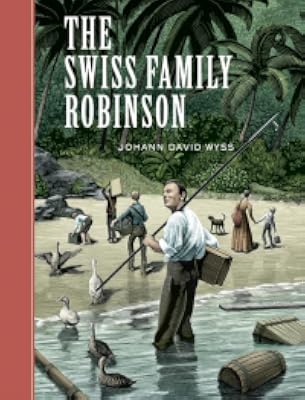
This story is a sequel to "Their Island Home," which takes up the adventures of the Swiss Family Robinson at the place where the author of the original narrative dropped them. "The Swiss Family Robinson"seems to have affected Jules Verne's literary bent as no other book ever did. It gave him that liking for the lonely island life as the basis of a yarn which is conspicuous in much of his work. In a preface to the story of which this is really a part he tells how firmly New Switzerland show more established itself in the fabric of his thoughts, till it became for him a real island inhabited by real people. At last he was compelled to write about it, and "Their Island Home" and "The Castaways of the Flag" are the result. The youth of Europe -- many generations of it -- owes a big debt to the old romancer who worked for so many years in his turret room at Amiens to entertain it. From that room, with its many bookshelves, came volume after volume of adventure, mostly with a big ad-mixture of the scientific. Verne was not one of those who pile hairbreadth escapes one upon another till they become incredible. There are plenty of things happening in his books, but they are the sort of things that would happen, given the circumstances, and he explains why and how they chanced in the most convincing manner possible. In these days of submarines and aeroplanes it is interesting to read again the wonderful Frenchman's forecast of them in such books as "Twenty Thousand Leagues Under the Sea" and "The Clipper of the Clouds." "Round the World in Eighty Days" ---the task would be an easy one now, but at the time when he wrote it required great ingenuity to make it seem possible; and the end of that book is one of the most ingenious things in fiction, though it has for justification a simple geographical fact. Phileas Fogg was a day late, as he believed. He had apparently lost his wager. But, having gone round the world in the right direction, he had gained a day, and just won. If he had gone the other way he would have been two days late, for a day would have been lost to him --- cut right out of the calendar. With the restoration of Fritz Zermatt and his wife Jenny, his brother Frank and the other Castaways of the Flag to their anxious and sorely tried relatives in New Switzerland, the story of "The Swiss Family Robinson" is brought to its proper end. Thereafter, the interest of their domestic life is merged in that of the growth of a young colony. Romance is merged in history and the romancer's work is finished. Jules Verne has here set the coping stone on the structure begun by Rudolph Wyss, and in "The Swiss Family Robinson," "Their Island Home" and "The Castaways of the Flag" we have, not a story and two sequels, but a complete trilogy which judges who survey it must pronounce very good. A word may be permitted about this English version. Jules Verne is a master of pure narrative. His style is singularly limpid and his language is so simple that people with a very limited knowledge of French can read his stories in the original and miss very little of their substance. But to be able to read a book in one language and to translate it into another are very different things. The very simplicity of Jules Verne's French presents difficulties to one who would translate it into English. What the French call "idiotismes" abound in all Verne's writing, and there are few French authors to whose books it is so difficult to impart a really English air in English dress. Whatever the imperfections of these translations may be they cannot, however, mar very greatly the pleasure the stories themselves give to every reader. show lessTags
Recommendations



































Member Reviews
(47) Seconde Patrie (The Castaways of the Flag, aka Second Fatherland, 1900) (2 volumes) 118K words
The 47th Extraordinary Voyage is a sequel to Johann Wyss' novel "The Swiss Family Robinson". It's a story about sailing and castaways, but also about the founding of a colony. It's the second and last Verne novel written as a sequel to a work by another writer (the first was "An Antarctic Mystery", a sequel to Edgar Allan Poe's "The Narrative of Arthur Gordon Pym of Nantucket").
Be careful if reading an English version, because the novel was initially translated as two separate books, the first one titled "Their Island Home" and the second "The Castaways of the Flag". Later editions included the whole novel with the title "The Castaways of show more the Flag" or "Second Fatherland". Therefore, if you get an older book titled "The Castaways of the Flag" you may be getting only the second part of this Verne novel. That's the case, for example, with the free version of "The Castaways of the Flag" available at Project Gutenberg: it's only the second half. If your version has 32 chapters and begins in the island of New Switzerland, with the arrival of the British ship Licorne (Unicorn), then you are reading the complete Verne novel. If your version has 16 chapters and begins with a chapter called "The Castaways", on a boat with a group of castaways at sea, then you only have the second half.
First read or reread?: First read for me.
What is it about?: The story begins by retelling the last chapter of "The Swiss Family Robinson", with the arrival of the Unicorn, a British corvette commanded by Lieutenant Littlestone, whose commission includes the exploration of the waters in which New Switzerland is situated. No longer isolated from the rest of humanity, the former castaways intend to keep living on their island, which has become their home, and start a colony there. For that, some of the members of the family will travel to Europe, while the rest remain on New Switzerland to complete the exploration of the island and prepare it to receive new colonists.
First, I have to say that reading "The Swiss Family Robinson" is not required to understand this novel. Just as he did in "An Antarctic Mystery", Verne gives the reader all the information needed to follow the story. In fact, chapters 4 and 5 of this novel are an extended summary of the events told in "The Swiss Family Robinson". In the case of "An Antarctic Mystery", I recommended reading the Poe novel first, just for reading pleasure. In this case, I don't necessarily recommend reading "The Swiss Family Robinson" first, since I did not enjoy it that much (see my review). But that's just my taste, and your mileage may vary.
Like what happened with Poe's novel in "An Antartic Mystery", Verne presents here "The Swiss Family Robinson" as a real, non-fiction book, based on the journals of Jean Zermatt (the father of the family originally stranded in New Switzerland).
I mentioned in my review of "The Swiss Family Robinson" that I expected the Verne sequel to be better, and it was. Mainly, it was a relief that instead of a collection of random encounters, we have here a traditional novel, with a plot, characters who make long-term projects and carry them out in a logical manner.
The first half of the novel starts with the arrival and departure of the Licorne, and then it involves the original castaways and their new friends the Wolstons preparing New Switzerland to receive more colonists. This part was OK, but it lacked the spark of the best Verne stories, mainly because a story about castaways, where survival is at stake, naturally has more tension than a story about former castaways who have rejoined human civilization and are now working on projects like making a new canal to improve irrigation in order to help feed a future colony. Of course, Verne had already told stories about castaways from the beginning (see "The Mysterious Island", "Two Years' Vacation" and, on a lighter note, "Godfrey Morgan"), but this post-castaways situation is more low-key compared to that.
Fortunately, we move on to an exploration trip to discover the layout of the island, something that inexplicably had not been done in "The Swiss Family Robinson", despite the castaways being there for twelve years. This part was more interesting, including the attempt to ascend the highest peak of the central mountain range, although this is still not the heart of the novel.
The discovery of a group of hostile... well, not "natives", since they are newly-arrived to the island, so let's call them "savages", as the novel does, seeks to add tension to the story. This plot element felt a bit too trope-ish to me, the easy way to add danger on a desert island. Also forced, because, where had these savages come from? If it was from a nearby island, how is it that they had not discovered and colonized New Switzerland, a large and fertile island, much earlier? And if, as the novel suggests, they came from far away and had made a very long canoe trip, how come the group was so numerous?
Then, the second half of the novel, concentrating more on the characters who had left the island to go to Europe, turns out to be the most interesting. The original title of the novel translates to "Second Homeland", and I thought the English title ("The Castaways of the Flag") made reference to the original castaways on New Switzerland, with the "flag" being the banner they had flying at the islet on Deliverance Bay. However, it turns out we get another group of castaways, and the Flag is the name of the ship where there's a mutiny resulting in these characters being abandoned on a boat. Talk about bad luck, some of them becoming castaways for a second time!
I found this part of the story very enjoyable, compensating for the more laid-back beginning.
One thing I was curious about was whether Verne would retcon the surprising variety of animals on New Switzerland. He does not, although he places less emphasis on that. Of course, just like in Wyss' novel, the attitudes towards hunting and killing animals is 19th century rather than modern. This book was published in 1900, almost forty years after "Five Weeks in a Balloon", but Verne's attitude in that sense has not really changed during that time. This can be shocking for modern readers, but it's also authentic. The idea of protecting endangered species would have been an anachronism.
The same can be said about attitudes towards the "savages". The ones in this novel are depicted as an uncivilized, hostile enemy. Of course, it makes sense for the characters to defend themselves, but the attitude towards them is shown by how they keep shooting at the savages even after they have been defeated and are in retreat. Not they way it would have been written today, but it was the prevalent worldview at the time, even for an otherwise humanist writer.
Enjoyment factor: I did enjoy it. I thought the first part lacked some spark, and wondered if maybe it was a natural decline because of the author's old age, but it got better, and ended up being an entertaining adventure novel.
Next up: The Village in the Treetops
See all my Verne reviews here: https://www.sffworld.com/forum/threads/reading-vernes-voyages-extraordinaires.58... show less
The 47th Extraordinary Voyage is a sequel to Johann Wyss' novel "The Swiss Family Robinson". It's a story about sailing and castaways, but also about the founding of a colony. It's the second and last Verne novel written as a sequel to a work by another writer (the first was "An Antarctic Mystery", a sequel to Edgar Allan Poe's "The Narrative of Arthur Gordon Pym of Nantucket").
Be careful if reading an English version, because the novel was initially translated as two separate books, the first one titled "Their Island Home" and the second "The Castaways of the Flag". Later editions included the whole novel with the title "The Castaways of show more the Flag" or "Second Fatherland". Therefore, if you get an older book titled "The Castaways of the Flag" you may be getting only the second part of this Verne novel. That's the case, for example, with the free version of "The Castaways of the Flag" available at Project Gutenberg: it's only the second half. If your version has 32 chapters and begins in the island of New Switzerland, with the arrival of the British ship Licorne (Unicorn), then you are reading the complete Verne novel. If your version has 16 chapters and begins with a chapter called "The Castaways", on a boat with a group of castaways at sea, then you only have the second half.
First read or reread?: First read for me.
What is it about?: The story begins by retelling the last chapter of "The Swiss Family Robinson", with the arrival of the Unicorn, a British corvette commanded by Lieutenant Littlestone, whose commission includes the exploration of the waters in which New Switzerland is situated. No longer isolated from the rest of humanity, the former castaways intend to keep living on their island, which has become their home, and start a colony there. For that, some of the members of the family will travel to Europe, while the rest remain on New Switzerland to complete the exploration of the island and prepare it to receive new colonists.
First, I have to say that reading "The Swiss Family Robinson" is not required to understand this novel. Just as he did in "An Antarctic Mystery", Verne gives the reader all the information needed to follow the story. In fact, chapters 4 and 5 of this novel are an extended summary of the events told in "The Swiss Family Robinson". In the case of "An Antarctic Mystery", I recommended reading the Poe novel first, just for reading pleasure. In this case, I don't necessarily recommend reading "The Swiss Family Robinson" first, since I did not enjoy it that much (see my review). But that's just my taste, and your mileage may vary.
Like what happened with Poe's novel in "An Antartic Mystery", Verne presents here "The Swiss Family Robinson" as a real, non-fiction book, based on the journals of Jean Zermatt (the father of the family originally stranded in New Switzerland).
I mentioned in my review of "The Swiss Family Robinson" that I expected the Verne sequel to be better, and it was. Mainly, it was a relief that instead of a collection of random encounters, we have here a traditional novel, with a plot, characters who make long-term projects and carry them out in a logical manner.
The first half of the novel starts with the arrival and departure of the Licorne, and then it involves the original castaways and their new friends the Wolstons preparing New Switzerland to receive more colonists. This part was OK, but it lacked the spark of the best Verne stories, mainly because a story about castaways, where survival is at stake, naturally has more tension than a story about former castaways who have rejoined human civilization and are now working on projects like making a new canal to improve irrigation in order to help feed a future colony. Of course, Verne had already told stories about castaways from the beginning (see "The Mysterious Island", "Two Years' Vacation" and, on a lighter note, "Godfrey Morgan"), but this post-castaways situation is more low-key compared to that.
Fortunately, we move on to an exploration trip to discover the layout of the island, something that inexplicably had not been done in "The Swiss Family Robinson", despite the castaways being there for twelve years. This part was more interesting, including the attempt to ascend the highest peak of the central mountain range, although this is still not the heart of the novel.
The discovery of a group of hostile... well, not "natives", since they are newly-arrived to the island, so let's call them "savages", as the novel does, seeks to add tension to the story. This plot element felt a bit too trope-ish to me, the easy way to add danger on a desert island. Also forced, because, where had these savages come from? If it was from a nearby island, how is it that they had not discovered and colonized New Switzerland, a large and fertile island, much earlier? And if, as the novel suggests, they came from far away and had made a very long canoe trip, how come the group was so numerous?
Then, the second half of the novel, concentrating more on the characters who had left the island to go to Europe, turns out to be the most interesting. The original title of the novel translates to "Second Homeland", and I thought the English title ("The Castaways of the Flag") made reference to the original castaways on New Switzerland, with the "flag" being the banner they had flying at the islet on Deliverance Bay. However, it turns out we get another group of castaways, and the Flag is the name of the ship where there's a mutiny resulting in these characters being abandoned on a boat. Talk about bad luck, some of them becoming castaways for a second time!
I found this part of the story very enjoyable, compensating for the more laid-back beginning.
One thing I was curious about was whether Verne would retcon the surprising variety of animals on New Switzerland. He does not, although he places less emphasis on that. Of course, just like in Wyss' novel, the attitudes towards hunting and killing animals is 19th century rather than modern. This book was published in 1900, almost forty years after "Five Weeks in a Balloon", but Verne's attitude in that sense has not really changed during that time. This can be shocking for modern readers, but it's also authentic. The idea of protecting endangered species would have been an anachronism.
The same can be said about attitudes towards the "savages". The ones in this novel are depicted as an uncivilized, hostile enemy. Of course, it makes sense for the characters to defend themselves, but the attitude towards them is shown by how they keep shooting at the savages even after they have been defeated and are in retreat. Not they way it would have been written today, but it was the prevalent worldview at the time, even for an otherwise humanist writer.
Enjoyment factor: I did enjoy it. I thought the first part lacked some spark, and wondered if maybe it was a natural decline because of the author's old age, but it got better, and ended up being an entertaining adventure novel.
Next up: The Village in the Treetops
See all my Verne reviews here: https://www.sffworld.com/forum/threads/reading-vernes-voyages-extraordinaires.58... show less
The Castaways of the Flag (French: Seconde patrie, lit. Second Fatherland, 1900) is an adventure novel written by Jules Verne. The two volumes of the novel were initially published in English translation as two separate volumes: Their Island Home and The Castaways of the Flag. Later reprints were published as The Castaways of the Flag.
The story is a sequel to The Swiss Family Robinson by Johann Wyss, picking up where that novel leaves off.
The story is a sequel to The Swiss Family Robinson by Johann Wyss, picking up where that novel leaves off.
Ratings
Members
- Recently Added By
Author Information

2,829+ Works 112,512 Members
Jules Verne was born on February 8, 1828 in Nantes, France. He wrote for the theater and worked briefly as a stockbroker. He is considered by many to be the father of science fiction. His most popular novels included Journey to the Center of the Earth, Twenty Thousand Leagues Under the Sea, and Around the World in Eighty Days. Several of his works show more have been adapted into movies and TV mini-series. In 1892, he was made a Chevalier of the Legion of Honor in France. He died on March 24, 1905 at the age of 77. (Bowker Author Biography) Jules Verne (1828-1905) is the author of numerous adventure stories grounded in popularizations of science. (Publisher Provided) show less
Some Editions
Series
Belongs to Publisher Series
Work Relationships
Is contained in
Common Knowledge
- Canonical title*
- Das zweite Vaterland: Band 2
- Original title
- Seconde Patrie (2/2) (2/2)
- Original language*
- Französisch
- Disambiguation notice
- Part two of Verne's sequel to "The Swiss Family Robinson," "Seconde Patrie."
*Some information comes from Common Knowledge in other languages. Click "Edit" for more information.
Classifications
Statistics
- Members
- 51
- Popularity
- 593,352
- Reviews
- 2
- Rating
- (3.86)
- Languages
- English, German, Spanish
- Media
- Paper, Audiobook, Ebook
- ISBNs
- 7
- ASINs
- 7