On This Page
Description
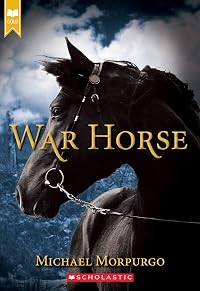
Joey the horse recalls his experiences growing up on an English farm, his struggle for survival as a cavalry horse during World War I, and his reunion with his beloved master.Tags
Recommendations
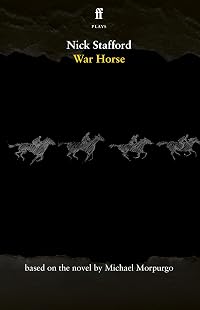
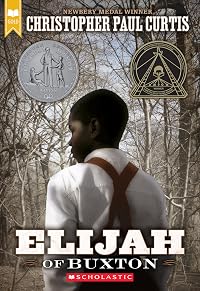
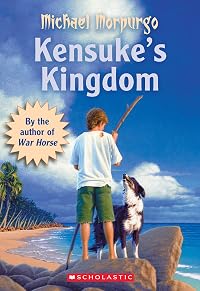
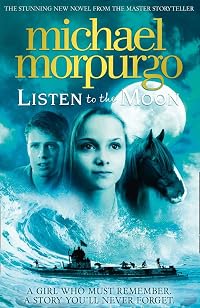

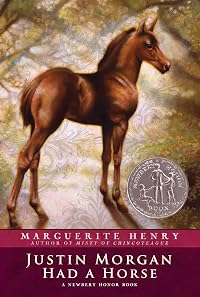

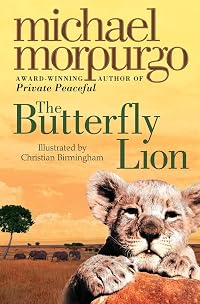
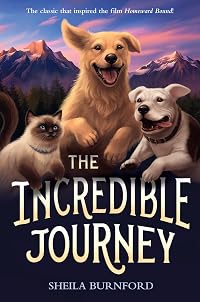
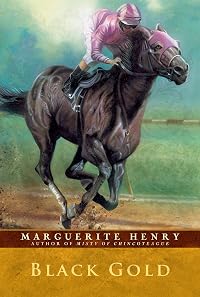
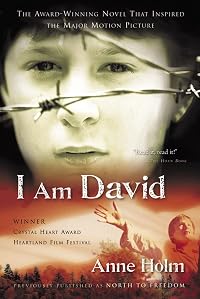


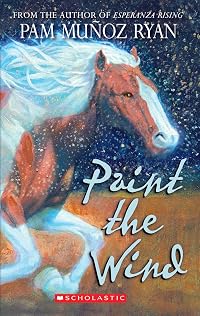
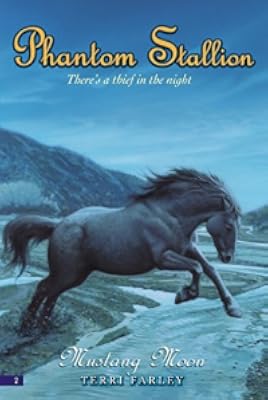
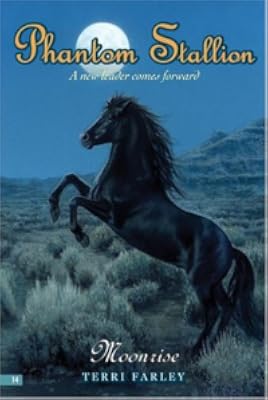
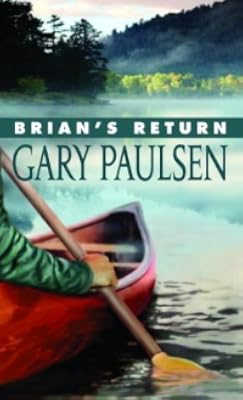

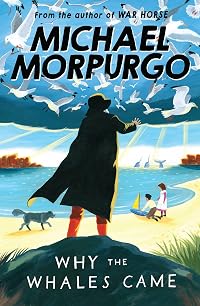
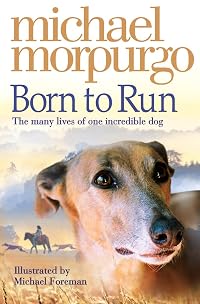


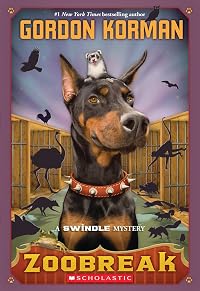
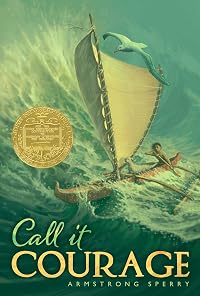
Member Recommendations
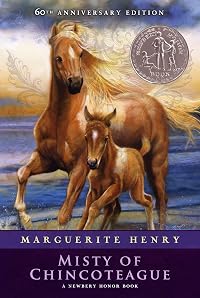
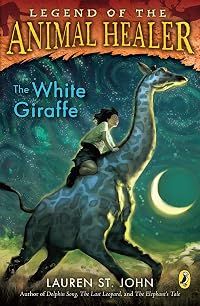
LipstickAndAviators A similar tale of an animal going through various hardships, many different masters and lots of adventures. The setting is very different, being about dogs pulling sleds in the North of America during the goldrush but the strains that the characters (both animals and humans) are under are very similar.
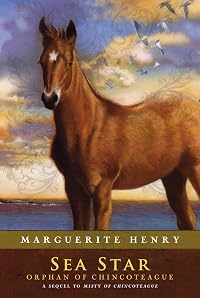
I think Morpurgo was obviously drawing inspiration from this book when he wrote WarHorse.
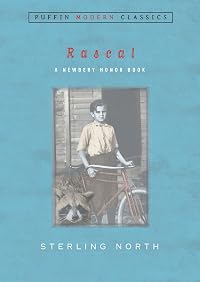
jordantaylor Both books are told from the voice of an animal serving in one of the World Wars. "War Horse" is about a horse caught up in WWI France, "War Dog" is about a dog in WWII France, England, and Italy.

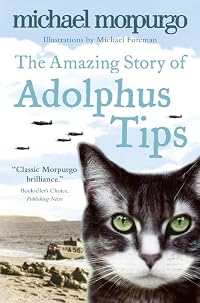
AbigailAdams26 "Tank Commander" and "War Horse" both address the horrors of WWI, and would make good companion pieces for one another, for young people studying what is sometimes called "the first modern war." One focuses on the development of a new form of warfare, the other harks back to a traditional form (the use of horses/cavalry).
Member Reviews
Originally published in 1982, Michael Morpurgo's poignant tale of a horse, and his experiences on the battlefields of World War I, has recently been reprinted, amidst renewed attention arising (I assume) from the stage productions and film that have been made from it. I'm glad that this is so, and that the Children's Fiction Book Club to which I belong chose it as their October selection, as it is incredibly powerful reading experience, one made all the more affecting by its simplicity of narrative, and quiet style, and I might never have picked it up, otherwise.
Told, like the classic Black Beauty, from the horse's perspective, War Horse is the autobiography of Joey, a beautiful red horse who, having been sold as a very young colt to a show more bad tempered farmer, grows to adulthood with the farmer's son - his true friend, caretaker, and guardian, Albert. When Albert's father sells Joey to the army, at the outset of WWI, the young man vows to follow his equine friend to the continent, while Joey himself enters a strange new world, full of terrors previously unknown to him. Trained as a cavalry horse, then captured by the Germans and used as a cart horse, to pull the wounded, and then eventually in a team drawing German guns, Joey experiences kindness from men on both sides, and is made to endure hardship by men on both sides. Will he survive this strange human war? And will he ever see Albert, and the farm, again...?
A story that highlights the stupidity and suffering of war, not just for combatants, but for civilians, and for animals - for all of creation, really - War Horse is a book that reduced me to tears, on more than one occasion. The reader feels with Joey (as she is meant to do), and so the sudden twists and turns in the narrative - the moment when Joey's kind rider is shot off of him; the terrible day that Topthorn, his constant horse companion, dies; the surreal experience of running loose, trying to escape the sound of guns, and finding oneself injured in No Man's Land - have a visceral kind of power. One feels what it must be, to be an animal in a human world, forced to participate in a madness that is not of one's own creation. The differences of nationality, the question of right and wrong (a question that has never really been clear, when it comes to WWI), are reduced to nothing, because we experience events from a horse's perspective. Who cares about Germans or British? Does a man have gentle hands? Does he speak kindly to a horse, and try to lessen his load? Does he care for him, when he is ill? Those are the important questions...
The conclusion of the tale may feel a little less than realistic, in its happiness - the reunion with Albert, the auction and its results - but it does not feel easy. Most importantly, it feels right. I suspect that I will be thinking of this book, and certain moments in it - the conversation between the Welshman and the German who both cross into No Man's Land to help Joey, especially - for a very long time to come. show less
Told, like the classic Black Beauty, from the horse's perspective, War Horse is the autobiography of Joey, a beautiful red horse who, having been sold as a very young colt to a show more bad tempered farmer, grows to adulthood with the farmer's son - his true friend, caretaker, and guardian, Albert. When Albert's father sells Joey to the army, at the outset of WWI, the young man vows to follow his equine friend to the continent, while Joey himself enters a strange new world, full of terrors previously unknown to him. Trained as a cavalry horse, then captured by the Germans and used as a cart horse, to pull the wounded, and then eventually in a team drawing German guns, Joey experiences kindness from men on both sides, and is made to endure hardship by men on both sides. Will he survive this strange human war? And will he ever see Albert, and the farm, again...?
A story that highlights the stupidity and suffering of war, not just for combatants, but for civilians, and for animals - for all of creation, really - War Horse is a book that reduced me to tears, on more than one occasion. The reader feels with Joey (as she is meant to do), and so the sudden twists and turns in the narrative -
The conclusion of the tale may feel a little less than realistic, in its happiness - the reunion with Albert, the auction and its results - but it does not feel easy. Most importantly, it feels right. I suspect that I will be thinking of this book, and certain moments in it - the conversation between the Welshman and the German who both cross into No Man's Land to help Joey, especially - for a very long time to come. show less
A good reputation can be a terrible thing. All I really knew about War Horse before reading it (apart from that it was about war and a horse) was that it was just about the best thing that would ever happen to me in my entire life.
Sadly it wasn't. It wasn't bad, it was very nicely written and made me freshly appreciate the development of warfare over the course of the First World War (particularly the early, pre-trench period that is often passed over) but I didn't feel any special appreciation of it. Clearly the problem is with me; it works for a lot of other people – it works a lot – so the question isn't why the book fails but why I failed to click with it.
For a start I'm not that mad on horses. They're excellent at pulling show more things and looking majestic in adverts for building societies, but I think I lack the romantic idea of animals that you need to favour their viewpoint over that of the many young men being slaughtered around them. Maybe it's the country boy in me. I read Watership Down last year and enjoyed it a lot more, but because I enjoy stories of post-apocalyptic survival not rabbits.
It could also be that this is aimed at fresh young minds who haven't already been told a hundred stories of the First World War. But that seems patronising and unfair. Winnie-the-Pooh, Roald Dahl and The Chronicles of Narnia are all terrific books regardless of your age; the children's authors who fail are those who speak down to their audience, and Michael Morpurgo certainly isn't doing that.
I wonder if there's also a degree of information feedback going on. So much of the originating praise for War Horse seems to come from the stage adaptation (which I'm still assured is just about the best thing that will ever happen to me in my entire life) and it's easy for that to inform opinions of the book as well. But the two are separate texts; that's why you have to pay twice for them on Amazon. Plays articulate ideas through metaphor, staging and stylisation (that famous horse puppetry) that is largely absent in the book. Perhaps I'd enjoy the play more.
And, of course, there's the burden of expectation. A book would have to be The Great Gatsby to hold up to the level of anticipation the world had instilled in me when I came to War Horse, and any book that isn't The Great Gatsby is going to suffer from that.
War Horse isn't bad: it's just not War Horse. show less
Sadly it wasn't. It wasn't bad, it was very nicely written and made me freshly appreciate the development of warfare over the course of the First World War (particularly the early, pre-trench period that is often passed over) but I didn't feel any special appreciation of it. Clearly the problem is with me; it works for a lot of other people – it works a lot – so the question isn't why the book fails but why I failed to click with it.
For a start I'm not that mad on horses. They're excellent at pulling show more things and looking majestic in adverts for building societies, but I think I lack the romantic idea of animals that you need to favour their viewpoint over that of the many young men being slaughtered around them. Maybe it's the country boy in me. I read Watership Down last year and enjoyed it a lot more, but because I enjoy stories of post-apocalyptic survival not rabbits.
It could also be that this is aimed at fresh young minds who haven't already been told a hundred stories of the First World War. But that seems patronising and unfair. Winnie-the-Pooh, Roald Dahl and The Chronicles of Narnia are all terrific books regardless of your age; the children's authors who fail are those who speak down to their audience, and Michael Morpurgo certainly isn't doing that.
I wonder if there's also a degree of information feedback going on. So much of the originating praise for War Horse seems to come from the stage adaptation (which I'm still assured is just about the best thing that will ever happen to me in my entire life) and it's easy for that to inform opinions of the book as well. But the two are separate texts; that's why you have to pay twice for them on Amazon. Plays articulate ideas through metaphor, staging and stylisation (that famous horse puppetry) that is largely absent in the book. Perhaps I'd enjoy the play more.
And, of course, there's the burden of expectation. A book would have to be The Great Gatsby to hold up to the level of anticipation the world had instilled in me when I came to War Horse, and any book that isn't The Great Gatsby is going to suffer from that.
War Horse isn't bad: it's just not War Horse. show less
I've been curious about this book since its dramatization on both stage and film. With this year being the centenary of World War I, it seemed a good time to read it. For a very short book aimed at a young audience, it was surprisingly thought-provoking and moving. Joey, a farm horse, is sold to the British army at the start of the war, leaving the farmer's young son Albert behind. Joey serves as a cavalry horse and an artillery horse, and experiences the war from both the British and German sides. He is affected by both human and animal loss, due to combat and poor living conditions.
The story is told entirely from Joey's perspective. Some events are only loosely explained, because Joey doesn't fully understand what is happening around show more him. The spare narrative actually heightens the emotional impact for the reader, making this book a unique way to expose the folly of war. show less
The story is told entirely from Joey's perspective. Some events are only loosely explained, because Joey doesn't fully understand what is happening around show more him. The spare narrative actually heightens the emotional impact for the reader, making this book a unique way to expose the folly of war. show less
-- What's it about? --
A horse, Joey, experiences life as an army horse during World War One. He changes owner many times, but informs us at the beginning of his story that he has only ever had one true 'master'. By working for both the British and German armies, Joey shows us that despite the inhuman horror of war, soldiers on both sides were capable of kindness and ground down by circumstance.
-- What's it like? --
Evocative. Anthropomorphic. Sentimental.
I loved this story (which is no surprise, considering I also loved Morpurgo's 'Private Peaceful', another story set in World War One), right from the opening pages when I realised, to my slight surprise, that our reflective narrator was a horse:
'My earliest memories are a confusion of show more hilly fields and dark, damp stables, and rats that scampered along the beams above my head. But I remember well enough the day of the horse sale. The terror of it stayed with me all my life.'
Sold to a man who appears to be a sodden brute, our narrator is christened Joey by the man's teenage son, an innocent who announces that:
'But I tell you Joey, if there is a war I'd want to go. I think I'd make a good soldier, don't you? Look fine in a uniform, wouldn't I? And I've always wanted to march to the beat of a band.'
Of course, when Joey becomes a part of the British Army, we see more destruction and pain than fine men in uniform. Joey's first experience of war is seeing the casualties leaving the battlefields to be repaired as best they can and this is a persistent focus of the storyline.
-- What's to like? --
Oh, so much! The simple storyline which follows Joey's fortunes. The way Morpurgo insists (albeit rather clunkily at first) that Albert's father, the sodden brute of the opening chapter, is a man made weak and unpleasant by circumstance, not choice. The presentation of the German and British soldiers as human beings in intolerable circumstances. The acute portrayal of gender differences in response to the news of war.
There's no explicit violence or savagery, as suits a children's book, yet the horror of war is powerfully conveyed. It's possible some older readers may find the tone too didactic:
'How can one man kill another and not really know the reason why he does it, except that the other man wears a different colour uniform and speaks a different language?'
I think including explicit reflections like this one from a German soldier helps to make the horror of war clear to younger readers.
-- Final thoughts --
Joey's ultimate fate relies heavily on coincidence and is very sentimental, which may not suit older readers, but this is clearly a children's story and so it didn't frustrate me the way it might have done in an adult or even YA novel.
I thoroughly enjoyed this and read it in one day. show less
A horse, Joey, experiences life as an army horse during World War One. He changes owner many times, but informs us at the beginning of his story that he has only ever had one true 'master'. By working for both the British and German armies, Joey shows us that despite the inhuman horror of war, soldiers on both sides were capable of kindness and ground down by circumstance.
-- What's it like? --
Evocative. Anthropomorphic. Sentimental.
I loved this story (which is no surprise, considering I also loved Morpurgo's 'Private Peaceful', another story set in World War One), right from the opening pages when I realised, to my slight surprise, that our reflective narrator was a horse:
'My earliest memories are a confusion of show more hilly fields and dark, damp stables, and rats that scampered along the beams above my head. But I remember well enough the day of the horse sale. The terror of it stayed with me all my life.'
Sold to a man who appears to be a sodden brute, our narrator is christened Joey by the man's teenage son, an innocent who announces that:
'But I tell you Joey, if there is a war I'd want to go. I think I'd make a good soldier, don't you? Look fine in a uniform, wouldn't I? And I've always wanted to march to the beat of a band.'
Of course, when Joey becomes a part of the British Army, we see more destruction and pain than fine men in uniform. Joey's first experience of war is seeing the casualties leaving the battlefields to be repaired as best they can and this is a persistent focus of the storyline.
-- What's to like? --
Oh, so much! The simple storyline which follows Joey's fortunes. The way Morpurgo insists (albeit rather clunkily at first) that Albert's father, the sodden brute of the opening chapter, is a man made weak and unpleasant by circumstance, not choice. The presentation of the German and British soldiers as human beings in intolerable circumstances. The acute portrayal of gender differences in response to the news of war.
There's no explicit violence or savagery, as suits a children's book, yet the horror of war is powerfully conveyed. It's possible some older readers may find the tone too didactic:
'How can one man kill another and not really know the reason why he does it, except that the other man wears a different colour uniform and speaks a different language?'
I think including explicit reflections like this one from a German soldier helps to make the horror of war clear to younger readers.
-- Final thoughts --
Joey's ultimate fate relies heavily on coincidence and is very sentimental, which may not suit older readers, but this is clearly a children's story and so it didn't frustrate me the way it might have done in an adult or even YA novel.
I thoroughly enjoyed this and read it in one day. show less
When Joey was auctioned off to a farmer, he formed a tremendous bond with the farmer's son, Albert. But with the declaration of World War I, Joey is sold to the army and becomes a war horse. Albert is too young to enlist in 1914 but promises Joey that if the war is still on when he's old enough, he'll find the young horse. As Joey witnesses the four years of horror that were the Great War, he encounters many different people and horses. But in such a brutal conflict, will Joey ever see Albert again?
I was wary about reading a novel narrated by a horse but this novel surprised me. Joey's voice is clear and straight forward and other than the conceit that Joey understands what every human being says, never becomes unbelievable. Joey is in show more many ways an observer in the novel. Of course, as a war horse, he does a multitude of tasks, but he serves as an intriguing mediator between the reader and the other characters he encounters. The harshness of World War I is depicted masterfully, never flinching from the realities of war but never becoming too gruesome for its target audience of children. A moving narrative of the animals that played such an important role in the war and insanity that is war, the novel is a wonderful story for all ages. show less
I was wary about reading a novel narrated by a horse but this novel surprised me. Joey's voice is clear and straight forward and other than the conceit that Joey understands what every human being says, never becomes unbelievable. Joey is in show more many ways an observer in the novel. Of course, as a war horse, he does a multitude of tasks, but he serves as an intriguing mediator between the reader and the other characters he encounters. The harshness of World War I is depicted masterfully, never flinching from the realities of war but never becoming too gruesome for its target audience of children. A moving narrative of the animals that played such an important role in the war and insanity that is war, the novel is a wonderful story for all ages. show less
Having seen the stage production of this book on the West End (London's answer to Broadway, darling!) I already had a hunch that I might just love it. I had never read any of Morpurgo's work, although I understand that he is quite a prolific childrens' writer, but I feel like I could sit down and read everything this man has written. I was struck by how well he combined things that some children will absolutely love reading about (namely animals, or more specifically, horses) with things that older children probably need to be reading about (war, presented realistically and not glamourised). Using an equine perspective, rather than a human one, worked tremendously well and I think it would have been a mistake to try to tell the story show more from Albert, the boy's, perspective. An absolute must-read - I wish I'd discovered this earlier! show less
First Line: My earliest memories are a confusion of hilly fields and dark, damp stables and rats that scampered along the beams above my head.
Joey was born and raised on an English farm and trained by a young boy named Albert. When World War I begins, Albert's father needs money and sells Joey to the Army as a cavalry horse. Although too young to join up, Albert vows to be reunited with his horse.
Fortunately for Joey, his Army captain is an honorable man who loves horses and takes good care of him, teaching Joey things that will keep him alive in the days ahead. Joey also makes friends with another cavalry horse named Topthorn. One day in battle, both horses' riders are killed, and the horses are captured by the Germans to pull heavy show more munitions. Through it all, Joey never forgets Albert and wonders if they will ever be reunited.
This is a wonderful story-- on par with Black Beauty-- about the effects of war on both animals and people. Morpurgo proves adept at describing the horrors of war without being graphic. As Joey moves from the British side to the German, the people he must deal with show that, no matter the language or the uniform, we are all the same.
Knowing how military strategists on both sides tended to think of the men (and animals) under their command as so much cannon fodder, Joey's fate is not all that certain. Morpurgo makes the reader care about the young horse and what happens to it and the people with whom it comes in contact. I would recommend this book to both young and old. show less
Joey was born and raised on an English farm and trained by a young boy named Albert. When World War I begins, Albert's father needs money and sells Joey to the Army as a cavalry horse. Although too young to join up, Albert vows to be reunited with his horse.
Fortunately for Joey, his Army captain is an honorable man who loves horses and takes good care of him, teaching Joey things that will keep him alive in the days ahead. Joey also makes friends with another cavalry horse named Topthorn. One day in battle, both horses' riders are killed, and the horses are captured by the Germans to pull heavy show more munitions. Through it all, Joey never forgets Albert and wonders if they will ever be reunited.
This is a wonderful story-- on par with Black Beauty-- about the effects of war on both animals and people. Morpurgo proves adept at describing the horrors of war without being graphic. As Joey moves from the British side to the German, the people he must deal with show that, no matter the language or the uniform, we are all the same.
Knowing how military strategists on both sides tended to think of the men (and animals) under their command as so much cannon fodder, Joey's fate is not all that certain. Morpurgo makes the reader care about the young horse and what happens to it and the people with whom it comes in contact. I would recommend this book to both young and old. show less
Members
- Recently Added By
Lists

1001 Children's Books You Must Read Before You Grow Up
774 works; 101 members

Favorite Animal Fiction
359 works; 156 members

Children's Books about World War I (1914-1918)
91 works; 11 members

Best middle grade books
130 works; 24 members

Puffin Books 70th anniversary handbook recommendations
537 works; 10 members

Books Read in 2014
2,343 works; 86 members

Books We Couldn't Put Down
443 works; 197 members

Books Read in 2023
5,547 works; 145 members

THE WAR ROOM
813 works; 24 members

Queen Camilla's Reading Room
65 works; 6 members

Books Read
30 works; 1 member

Animals in the Title
498 works; 11 members

Books Read in 2019
4,052 works; 110 members

Huxley's reading log 2017
45 works; 1 member

Books Read in 2016
4,666 works; 199 members

PRC 2015 Years 7&8
50 works; 1 member
World War I Fiction
94 works; 15 members

Books about World War I
80 works; 14 members

Best Horse Stories or "Back in the Saddle Again"
82 works; 17 members

Horse Books for Kids
376 works; 6 members
Talk Discussions
Past Discussions
Books Illustrated Next Publication: War Horse in Fine Press Forum (July 2023)
War Horse in Pro and Con (January 2012)
Author Information

300+ Works 31,653 Members
British author Michael Morpurgo was born in St. Albans, Hertforshire in 1943. He attended the University of London and studied English and French. He became a primary school teacher in Kent for about ten years. He and his wife Clare started a charity called Farms for City Children. They currently own three farms where over 2000 children a year show more stay for a week and experience the countryside by taking part in purposeful farmwork. He has published over 100 books and several screenplays. He won the 1995 Whitbread Children's Book Award for The Wreck of the Zanzibar, the 1996 Nestle Smarties Book Prize for The Butterfly Lion, and the 2000 Children's Book Award for Kensuke's Kingdom. Private Peaceful won the 2005 Red House Children's Book Award and the Blue Peter Book of the Year Award. Five of his books have been made into movies and two have been adapted for television. He was named as the third Children's Laureate in May 2003. (Bowker Author Biography) show less
Some Editions
Awards and Honors
Awards
Series

Belongs to Publisher Series
Work Relationships
Has the adaptation
Is abridged in
Has as a study
Common Knowledge
- Canonical title*
- Ceffyl rhyfel
- Original title
- War horse
- Alternate titles*
- Warhorse
- Original publication date
- 1982
- People/Characters
- Joey (horse); Albert; Emilie; Captain Nicholls; Topthorn (horse); Zoey (horse)
- Important places
- England, UK; France
- Important events
- World War I (1914-1918)
- Related movies
- War Horse (2011 | IMDb)
- Dedication
- For Lettice
- First words
- My earliest memories are a confusion of hilly fields and dark, damp stables, and rats that scampered along the beams above my head.
Author's note: In the old school they use now for the village hall, below the clock that has stood always at one minute past ten, hangs a small dusty painting of a horse. - Last words
- (Click to show. Warning: May contain spoilers.)But try as I might, I never got to eat any of her pastries, and do you know, she never even offered me one.
- Original language
- English
- Disambiguation notice
- This is the entry for the original, unabridged text; please don't combine with movie/play adaptions!
*Some information comes from Common Knowledge in other languages. Click "Edit" for more information.
Classifications
- Genres
- Fiction and Literature, Children's Books
- DDC/MDS
- 823.914 — Literature & rhetoric English & Old English literatures English fiction 1900- 1901-1999 1945-1999
- LCC
- PZ10.3 .M71577 .W — Language and Literature Fiction and juvenile belles lettres Fiction and juvenile belles lettres Juvenile belles lettres
- BISAC
Statistics
- Members
- 4,507
- Popularity
- 3,257
- Reviews
- 133
- Rating
- (4.01)
- Languages
- 15 — Catalan, Chinese, Danish, Dutch, English, Finnish, French, German, Hungarian, Italian, Japanese, Portuguese, Spanish, Swedish, Welsh
- Media
- Paper, Audiobook, Ebook
- ISBNs
- 104
- UPCs
- 1
- ASINs
- 27