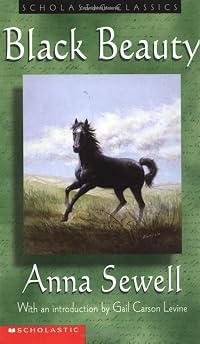
Black Beauty
by Anna Sewell
On This Page
Description
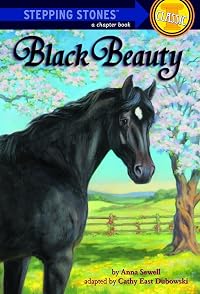
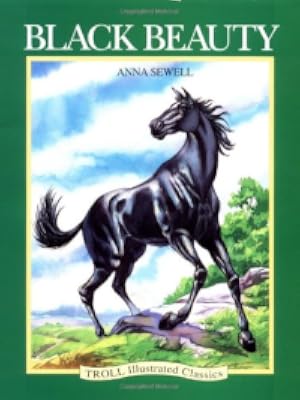
A horse in nineteenth-century England recounts his experiences with both good and bad masters.Tags
Recommendations




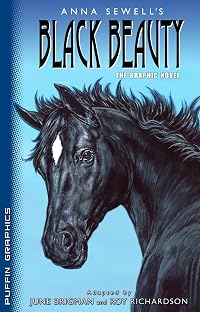



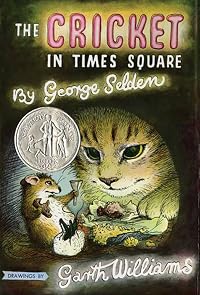

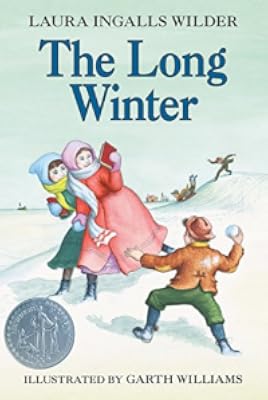
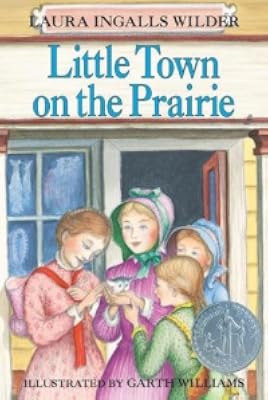
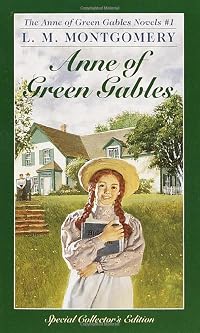

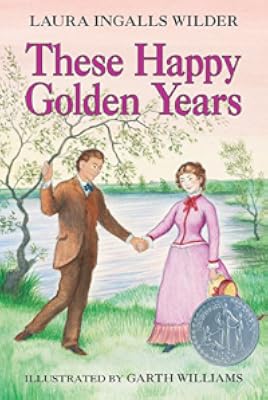
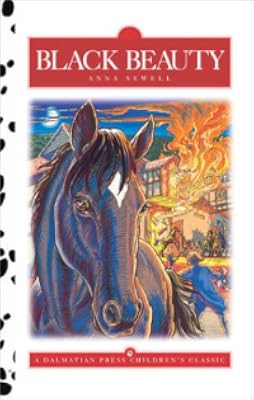
Member Recommendations


by anonymous user


Member Reviews
I think I would have loved this book as a kid. It's one of those books that makes me want to have kids so I can read it to them.
Black Beauty follows the life of a pretty horse from foal-hood, through all the homes and owners he passed through. It invites the reader into a different time when horses were actually useful creatures. It is through this premise that Anna Sewell explains ideas of cruelty, religion, and behaviour. The story is sweet at times, harsh at other times, and all along, she's teaching her readers how to be beautiful humans by treating those who can't speak for themselves - like the animals in our lives - with care, and love, and awareness to their needs. While her main message is one any animal lover could fall in show more love with, I think it applies to everyone and our treatment of all creatures on earth, not just animals. There is so much in this book for everyone to learn about living together and being kind.
It's a beautiful book. And so readable! So, don't be shy of it's 100 year age. Go read it! show less
Black Beauty follows the life of a pretty horse from foal-hood, through all the homes and owners he passed through. It invites the reader into a different time when horses were actually useful creatures. It is through this premise that Anna Sewell explains ideas of cruelty, religion, and behaviour. The story is sweet at times, harsh at other times, and all along, she's teaching her readers how to be beautiful humans by treating those who can't speak for themselves - like the animals in our lives - with care, and love, and awareness to their needs. While her main message is one any animal lover could fall in show more love with, I think it applies to everyone and our treatment of all creatures on earth, not just animals. There is so much in this book for everyone to learn about living together and being kind.
It's a beautiful book. And so readable! So, don't be shy of it's 100 year age. Go read it! show less
77-Εξαιρετικό κλασικό βιβλίο. Είναι η ιστορία για τη ζωή ελόγου από τη στιγμή που έζησε στο αγρόκτημα του πρώτου ιδιοκτήτη του , μέχρι τα γηρατειά του . Η συγγραφέας διηγείται την ιστορία από την οπτική γωνία του ζώου. Η " Μαύρη Καλλονή " δεν είναι απλώς ένα παιδικό βιβλίο . Είναι μια συγκινητική φωνή για τις ευθύνες της κοινωνίας απέναντι στα ζώα . Η εστίαση της αφήγησης σε θέματα όπως η ευημερία των ζώων και η show more ηθική μεταχείριση , είναι εξίσου επίκαιρη σήμερα όσο ήταν και πριν από έναν αιώνα . Αυτό καθιστά το βιβλίο ένα πολύτιμο ανάγνωσμα. show less
One of my all-time favorite books as a horse-mad girl, even though my riding days were cut short by family dynamics. I loved getting into the mind of a horse as best one can, and to see what good treatment vs. unkind treatment yields. I often thought of Ginger and her views on humans, and how many adventures Black Beauty had throughout his long years.
As an adult reading this book I was struck by many things that I didn't notice at the time: the cause of Black Beauty's accident that ruined his knees being caused by the evils of drink. And there were many instances of lectures against alcohol, what was called in the US "Prohibition," together with many instances of an effort for more humane treatment of animals.
The story of Old Captain show more in what was probably the Charge of the Light Brigade during the Crimean War is now something I have historical reference to; then, it was just simply a horse charging into battle. The care of horses' injuries being warm bran mash points out the strides in veterinary medicine since this book was written. But I was glad to read the many instances both animal and human characters advocated for the better treatment of the horse. I just wish there were more of them around! show less
As an adult reading this book I was struck by many things that I didn't notice at the time: the cause of Black Beauty's accident that ruined his knees being caused by the evils of drink. And there were many instances of lectures against alcohol, what was called in the US "Prohibition," together with many instances of an effort for more humane treatment of animals.
The story of Old Captain show more in what was probably the Charge of the Light Brigade during the Crimean War is now something I have historical reference to; then, it was just simply a horse charging into battle. The care of horses' injuries being warm bran mash points out the strides in veterinary medicine since this book was written. But I was glad to read the many instances both animal and human characters advocated for the better treatment of the horse. I just wish there were more of them around! show less
"John had many stories to tell of dogs and horses, and the wonderful things they had done. He thought people did not value their animals half enough, nor make friends of them as they ought to do." (pg. 72)
I'm always pleased when a book surpasses my low expectations and presumptions, so I enjoyed Black Beauty more than its objective quality ought to suggest. Often dismissed as a children's book because it is written in simple prose and concerns animals, Anna Sewell's short novel works on that level but also proves to be much more.
Sewell died just a few months after the book's publication, after a life of sickness and disability, and her modesty and intuitive compassion towards suffering gives Black Beauty a genuine heart. Sentimental but show more never syrupy, and simple but not simplistic, her book was intended for an adult audience and designed to raise awareness of the proper care of animals. Society at that time revolved around the work-horse, and "ninety-nine out of a hundred [people] would as soon think of patting the steam-engine that drew the train" (pg. 200) as of treating a beast of burden with affection. We follow the titular horse Black Beauty throughout his entire life, in a collection of events that each illustrate some moral message about the proper treatment of and behaviour towards horses – or, to Sewell's credit, towards other people.
The effect is rather like Aesop's fables, and though this approach may often seem childlike, the book is rather an affecting one for any age. The moral lessons are told with a humility and clarity that would not be possible nowadays without seeming preachy or cynical. In Sewell's hands, they come across as entirely proper and are heightened by her attention to the horses' characters: there is a level of detail and accuracy about how horses behave, love and feel pain that, even with the anthropomorphism, comes across as realistic, and there are many well-drawn moments of both happiness and sorrow. It shows Sewell's sincerity where modern "children's" books often seem commercially manipulative or committed solely to inflating self-esteem.
You might be thinking why you ought to read a book that, even if not solely a children's read, is concerned primarily with moral instruction regarding horse husbandry – more of a niche concern in our mechanical and electronical age. It is, first of all, interesting, from a literary perspective, to observe a society that did rely so much on the horse, and the legacy of that today. Secondly, Black Beauty is a good example of how literature, however unassuming, can encourage you to stop and look at things from a different perspective, and to a greater purpose. Horses are "used to bear[ing] their pain in silence" (pg. 138), but they "do not suffer less because they have no words" (pg. 237). It's easy to scoff at the earnest pastoralism of Black Beauty, but giving voice to incommunicable suffering is one of the most admirable things a story can do. show less
I'm always pleased when a book surpasses my low expectations and presumptions, so I enjoyed Black Beauty more than its objective quality ought to suggest. Often dismissed as a children's book because it is written in simple prose and concerns animals, Anna Sewell's short novel works on that level but also proves to be much more.
Sewell died just a few months after the book's publication, after a life of sickness and disability, and her modesty and intuitive compassion towards suffering gives Black Beauty a genuine heart. Sentimental but show more never syrupy, and simple but not simplistic, her book was intended for an adult audience and designed to raise awareness of the proper care of animals. Society at that time revolved around the work-horse, and "ninety-nine out of a hundred [people] would as soon think of patting the steam-engine that drew the train" (pg. 200) as of treating a beast of burden with affection. We follow the titular horse Black Beauty throughout his entire life, in a collection of events that each illustrate some moral message about the proper treatment of and behaviour towards horses – or, to Sewell's credit, towards other people.
The effect is rather like Aesop's fables, and though this approach may often seem childlike, the book is rather an affecting one for any age. The moral lessons are told with a humility and clarity that would not be possible nowadays without seeming preachy or cynical. In Sewell's hands, they come across as entirely proper and are heightened by her attention to the horses' characters: there is a level of detail and accuracy about how horses behave, love and feel pain that, even with the anthropomorphism, comes across as realistic, and there are many well-drawn moments of both happiness and sorrow. It shows Sewell's sincerity where modern "children's" books often seem commercially manipulative or committed solely to inflating self-esteem.
You might be thinking why you ought to read a book that, even if not solely a children's read, is concerned primarily with moral instruction regarding horse husbandry – more of a niche concern in our mechanical and electronical age. It is, first of all, interesting, from a literary perspective, to observe a society that did rely so much on the horse, and the legacy of that today. Secondly, Black Beauty is a good example of how literature, however unassuming, can encourage you to stop and look at things from a different perspective, and to a greater purpose. Horses are "used to bear[ing] their pain in silence" (pg. 138), but they "do not suffer less because they have no words" (pg. 237). It's easy to scoff at the earnest pastoralism of Black Beauty, but giving voice to incommunicable suffering is one of the most admirable things a story can do. show less
Book 263 - Anna Sewell - Black Beauty
Another return to a simpler time in the late 1800s and another children’s classic. This one I knew nothing about and it blew me away. Told from the perspective of the horses…it is brilliant…it is emotional and it is dark…so dark…so very dark.
The life of a horse and his journey from kindness to cruelty and back again…as the years progress… we are taken from the English countryside into the city of London as Beauty goes from being owned by the landed gentry to being treated so poorly as a pack horse.
So many of these classics go to the ultimate of dark places…death stalks the characters and sometimes death wins. It shows us how animals were treated and in details that are hard to show more follow…and take in…how they were strapped…controlled and forced to wear bits and other hard metallic items that were so abusive. Horrible times.
It is emotional…and getting into the head and the heart of the horses is genius…what a change of pace and it feels so real…wow
I don’t know if any modern children’s book would ever dare to go to the places this one does. Superb…just superb. show less
Another return to a simpler time in the late 1800s and another children’s classic. This one I knew nothing about and it blew me away. Told from the perspective of the horses…it is brilliant…it is emotional and it is dark…so dark…so very dark.
The life of a horse and his journey from kindness to cruelty and back again…as the years progress… we are taken from the English countryside into the city of London as Beauty goes from being owned by the landed gentry to being treated so poorly as a pack horse.
So many of these classics go to the ultimate of dark places…death stalks the characters and sometimes death wins. It shows us how animals were treated and in details that are hard to show more follow…and take in…how they were strapped…controlled and forced to wear bits and other hard metallic items that were so abusive. Horrible times.
It is emotional…and getting into the head and the heart of the horses is genius…what a change of pace and it feels so real…wow
I don’t know if any modern children’s book would ever dare to go to the places this one does. Superb…just superb. show less
I loved this book when I was little, but it's darker than I remembered. I reread it with my kids and we were all on the edge of our seats. The author's ability to give the reader deep empathy for horses is beautiful. We found ourselves reflecting on the way people can treat animals or those with less power. It's a true reflection of who they are as a person. I still loved it as much as when I was young.
“We call them dumb animals, and so they are, for they cannot tell us how they feel, but they do not suffer less because they have no words.”
“There is no religion without love, and people may talk as much as they like about their religion, but if it does not teach them to be good and kind to man and beast, it is all a sham - all a show more sham, James, and it won't stand when things come to be turned inside out and put down for what they”
“Do you know why this world is as bad as it is?... It is because people think only about their own business, and won't trouble themselves to stand up for the oppressed, nor bring the wrong-doers to light... My doctrine is this, that if we see cruelty or wrong that we have the power to stop, and do nothing, we make ourselves sharers in the guilt.” show less
“We call them dumb animals, and so they are, for they cannot tell us how they feel, but they do not suffer less because they have no words.”
“There is no religion without love, and people may talk as much as they like about their religion, but if it does not teach them to be good and kind to man and beast, it is all a sham - all a show more sham, James, and it won't stand when things come to be turned inside out and put down for what they”
“Do you know why this world is as bad as it is?... It is because people think only about their own business, and won't trouble themselves to stand up for the oppressed, nor bring the wrong-doers to light... My doctrine is this, that if we see cruelty or wrong that we have the power to stop, and do nothing, we make ourselves sharers in the guilt.” show less
How is it that I’ve only just gotten around to reading this classic novel by Anna Sewell? Black Beauty is narrated by a horse who experiences different owners and hardships in 19th century England. Black Beauty endures kind masters and mean, selfish ones.
“With cruelty and oppression, it is everybody's business to interfere when they see it”
Written as a political manifesto against the unnecessary mistreatment of horses, and indeed against cruelty in general, Anna Sewell builds an unmatched picture of Victorian contemporary life, high and low, whilst introducing children to the concept that animals have thoughts and feelings, hopes and fears just as they do.
This book carries a surprisingly up-to-date ecological message – that show more ignorance about the natural world is one of the most dangerous issues facing us today, and that empathy for the creatures with which we share our planet should be uppermost in our dealings with them.
Did you know, Black Beauty isn’t the full title. It’s actually Black Beauty, his grooms and companions; the autobiography of a horse, 'Translated from the original equine by Anna Sewell'. You can see why everyone shortens it. show less
“With cruelty and oppression, it is everybody's business to interfere when they see it”
Written as a political manifesto against the unnecessary mistreatment of horses, and indeed against cruelty in general, Anna Sewell builds an unmatched picture of Victorian contemporary life, high and low, whilst introducing children to the concept that animals have thoughts and feelings, hopes and fears just as they do.
This book carries a surprisingly up-to-date ecological message – that show more ignorance about the natural world is one of the most dangerous issues facing us today, and that empathy for the creatures with which we share our planet should be uppermost in our dealings with them.
Did you know, Black Beauty isn’t the full title. It’s actually Black Beauty, his grooms and companions; the autobiography of a horse, 'Translated from the original equine by Anna Sewell'. You can see why everyone shortens it. show less
Members
- Recently Added By
Lists

Favorite Childhood Books
1,651 works; 519 members

The Guardian's 1000 Novels Everyone Must Read
1,005 works; 549 members

Favorite Animal Fiction
359 works; 156 members
1001 Children's Books You Must Read Before You Grow Up
774 works; 101 members

BBC Big Read
191 works; 46 members

Classics you know you should have read but probably haven't
421 works; 407 members
501 Must-Read Books
529 works; 72 members

Read the book and saw the movie
1,170 works; 195 members

Elevenses
316 works; 87 members

Banned Books Week 2014
268 works; 62 members

Best Horse Stories or "Back in the Saddle Again"
82 works; 17 members
Nonhuman Protagonists
245 works; 35 members

Best Books About Animals
143 works; 48 members

Favourite 19th century fiction
257 works; 62 members

Childhood Favorites
427 works; 24 members
Mensa for Kids Excellence in Reading Award Program (Grades 4-6)
64 works; 9 members

A Child's Book Tour of London
51 works; 7 members
Honey For a Child's Heart
1,152 works; 25 members

Satori Smiles Children's Book List
262 works; 7 members

Publisher's Weekly Bestsellers Prior to 1895 in Chronological Order
95 works; 6 members

Children's Classics Worth Reading
68 works; 9 members

Horse Books for Kids
376 works; 6 members
Books with Colourful Titles
171 works; 8 members

4th Grade Books
312 works; 5 members

CCE 1000 Good Books List
1,033 works; 12 members

Sonlight Books
1,487 works; 25 members

Accessible Classics
8 works; 1 member

Puffin Books 70th anniversary handbook recommendations
537 works; 10 members

6th Grade
68 works; 4 members

Books Read in 2016
4,666 works; 197 members
1970s
657 works; 23 members

Beautiful Feet Books
304 works; 7 members

Recommended Reading List
219 works; 1 member

Ambleside Online Year 4
46 works; 1 member

Queen Camilla's Reading Room
65 works; 6 members
Before Austen Comes Aesop
318 works; 9 members

Books We Loved As Children
610 works; 254 members

The Plague and I's bookshelf in the sanatorium
16 works; 1 member

Books mentioned in Fire and Hemlock by Diana Wynne Jones
33 works; 1 member

Books that changed the world
67 works; 65 members

A Rainbow of Books: Colors in the Title
570 works; 24 members
Books available on Open Library
171 works; 4 members

Graphic Novels Adapted from Other Books
206 works; 1 member

Books Tagged Abuse
152 works; 4 members

Books about Animals
86 works; 4 members
BBC Top Books
78 works; 3 members

Daria Morgendorffer's Bookshelf
70 works; 5 members

Books Read in 2018
4,360 works; 110 members
Overdue Podcast
808 works; 9 members

My Favourite Animal Books
12 works; 1 member
Banned or Challenged Books
402 works; 43 members

Books Read in 2013
1,630 works; 51 members

the dog was the hero
31 works; 5 members

Female Author
1,234 works; 65 members

Unread books
1,063 works; 83 members

el
1,139 works; 1 member
Talk Discussions
Past Discussions
Possible Children's Story From Horse's Perspective in Name that Book (January 2017)
Author Information

215+ Works 27,310 Members
Anna Sewell, March 30, 1820 - April 25, 1878 Anna Sewell was on March 30, 1820 in Yarmouth, Norfolk, England. She was raised a Quaker by her father a bank manager and her mother, a children's novelist. At the age of fourteen, Sewell hurt her knee during a fall and the injury never healed right. Even though she could not walk well, she could still show more ride horses and drive a horse drawn buggy. It was this form of freedom that sparked her concern for the welfare of horses. She wrote "Black Beauty" when she was in her fifties, but died a year after it was published in 1877. While she never earned much from the book while she was alive, after her death, the novel snowballed into a something extraordinary. The book was about the abuses horses sustained in their lifetimes, but was told from the unique viewpoint of the horse. Even though the book was intended for children, it impacted all generations and caused everyone who read it to take a look at the inhumane treatment horses received. In the one hundred plus years since "Black Beauty" had been published, over 30 million copies have been printed. At least eight motion pictures have been made based on the novel and it is a well known children's classic. Anna Sewell died on April 25, 1878 in Old Catton, Norfolk. (Bowker Author Biography) show less
Some Editions
Awards and Honors
Awards
Notable Lists
Series
Belongs to Publisher Series
Classics Illustrated (60)
Dean's Classics (8)
Airmont Classics (23)
Puffin Story Books (64)
Doubleday Dolphin (C78)
Scholastic T (96)
Corticelli [Mursia] (154)
Everyman's Library (748)
Work Relationships
Is contained in
Is retold in
Has the adaptation
Is abridged in
Has as a commentary on the text
Has as a student's study guide
Common Knowledge
- Canonical title
- Black Beauty
- Original title
- Black Beauty: His Grooms and Companions, the Autobiography of a Horse
- Alternate titles
- Black Beauty: The Autobiography of a Horse
- Original publication date
- 1877
- People/Characters
- Black Beauty; Ginger [horse]; Merrylegs [pony]; Captain (horse); Jerry Barker; Squire Gordon (show all 9); Sir Oliver; Miss Ellen; Farmer Grey
- Important places
- London, England, UK; England, UK
- Related movies
- Black Beauty (1994 | IMDb); The Adventures of Black Beauty (1972 | IMDb); Black Beauty (1921/I | IMDb); Black Beauty (1946 | IMDb); Courage of Black Beauty (1957 | IMDb); Black Beauty (1978 | IMDb)
- Dedication
- To my dear and honoured Mother, whose life, no less than her pen, has been devoted to the welfare of others, this little book is affectionately dedicated.
- First words
- The first place that I can well remember, was a large pleasant meadow with a pond of clear water in it.
- Quotations
- .... there is no religion without love, and people may talk as much as they like about their religion, but if it does not teach them to be good and kind to man and beast, it is all a sham....’ — Chapter 13, last paragraph... (show all).
… remember, we shall all have to be judged according to our works, whether they be toward man or toward beast. — Chapter 11 – Plain speaking - Last words
- (Click to show. Warning: May contain spoilers.)My troubles are all over, and I am at home; and often before I am quite awake, I fancy I am still in the orchard at Birtwick, standing with my old friends under the apple trees.
- Original language
- English
- Disambiguation notice
- isbn 0140300643 associated with the novel, not the abridgement.
ISBN 0140366849 is a Puffin edition of Black Beauty.
Please do not combine this work with either books or film adaptations. If you have a copy of this work, please consider supplying the name of the author (in the case of a book) or director (if it is a film).
ISBN 0689842554 is an Aladdin Classics edtion of Black Beauty.
Classifications
Statistics
- Members
- 21,510
- Popularity
- 258
- Reviews
- 234
- Rating
- (3.88)
- Languages
- 24 — Arabic, Chinese, Czech, Danish, Dutch, English, Finnish, French, German, Greek, Indonesian, Italian, Japanese, Korean, Latvian, Norwegian (Bokmål), Norwegian, Romanian, Russian, Spanish, Swedish, Turkish, Welsh, Portuguese (Portugal)
- Media
- Paper, Audiobook, Ebook
- ISBNs
- 990
- UPCs
- 17
- ASINs
- 477