
Fritz Eichenberg (1901–1990)
Author of Ape in a Cape: An Alphabet of Odd Animals
About the Author
Fritz Eichenberg (1901-1991) was one of the world's master wood engravers, renowned for his illustrations of works by Tolstoy, Dostoyevsky, and other literary classics. A German immigrant and Quaker convert, he served as chair of the graphic arts department at the Pratt Institute in New York City show more and authored The Art of the Print, which became a standard text. He achieved a different fame from his forty years of contributions to The Catholic Worker newspaper, represented in this stunning volume. show less
Image credit: Self-portrait, found at Gratefulness.org
Series
Works by Fritz Eichenberg
The Dance of Death: A Graphic Commentary on the Danse Macabre Through the Centuries (1983) 15 copies
Poor Troll: The Story of Ruebezahl and the Princess: Based on the Story by J.K.A. Musaus (1983) 4 copies
Illustrations for Gulliver's Travels 3 copies
Artist's Proof A Magazine of Printmaking Issue No. 5/ Spring-Summer 1963/ Vol. III, No.1 (1963) 3 copies
Puss In Boots 2 copies
Fathers and Sons 2 copies
Dick Whittington and his Cat 1 copy
Orpheus of '76 1 copy
Fritz Eichenberg: Werkkatalog Der Illustrierten Bucher 1922-1987 (Kunstler Monographien Band 6) (1987) 1 copy
Steppenwolf Artist Proof 1 copy
Associated Works
The Long Loneliness: The Autobiography of the Legendary Catholic Social Activist (1952) — Illustrator, some editions — 1,438 copies, 17 reviews
Jane Eyre / Wuthering Heights (1943) — Illustrator, some editions; Illustrator, some editions — 813 copies, 6 reviews
The Gospel in Dostoyevsky: Selections from His Works (1988) — Illustrator, some editions — 274 copies, 1 review
Rainbows Are Made: Poems by Carl Sandburg (1982) — Illustrator, some editions — 107 copies, 2 reviews
Mischief in Fez (1943) — Cover artist, some editions; Illustrator, some editions — 26 copies, 1 review
Tagged
Common Knowledge
- Legal name
- Eichenberg, Fritz
- Birthdate
- 1901-10-24
- Date of death
- 1990-11-30
- Gender
- male
- Education
- Municipal School of Applied Arts (Cologne, Germany)
Academy of Graphic Arts (Leipzig) - Occupations
- artist
printmaker
engraver - Organizations
- Pratt Institute
New School for Social Research
University of Rhode Island - Awards and honors
- May Hill Arbuthnot Lecturer (1984)
- Nationality
- Germany
USA - Birthplace
- Cologne, Germany
- Places of residence
- Cologne, Germany
New York, New York, USA
Leipzig, Germany
Berlin, Germany - Place of death
- Peace Dale, Rhode Island, USA
- Burial location
- cremated
- Associated Place (for map)
- Germany
Members
Discussions
A different Fritz Eichenberg in George Macy devotees (April 2023)
Fritz Eichenberg in George Macy devotees (March 2023)
Reviews
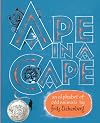
Thanks to wnc college library for holding on to this and several other older Caldecott and Newbery books that my city library couldn't. See if your local college will let you browse their PZ Juv shelves.... ;)
This is a hoot.
The rhymes are terrific for preschoolers being read to. And then beginning independent readers can see the Mouse, readily read the word 'mouse' on the page, repeat 'in a' from the pattern learned on earlier pages, sound out 'bl' and readily say 'blouse.' And pretty soon show more they've read the whole book.
Older children could learn prepositions and could also write (and illustrate) their own entries.
But nevermind the educational value - it's just a kick of a book. The illustrations are such silly fun; I especially giggled at 'Lizard with a wizard.' I hope some day to find [b:Dancing In The Moon: Counting Rhymes|4657344|Dancing In The Moon Counting Rhymes (Voyager Book ; Avb 97)|Fritz Eichenberg|https://d.gr-assets.com/books/1364045817s/4657344.jpg|4707715]. show less
This is a hoot.
The rhymes are terrific for preschoolers being read to. And then beginning independent readers can see the Mouse, readily read the word 'mouse' on the page, repeat 'in a' from the pattern learned on earlier pages, sound out 'bl' and readily say 'blouse.' And pretty soon show more they've read the whole book.
Older children could learn prepositions and could also write (and illustrate) their own entries.
But nevermind the educational value - it's just a kick of a book. The illustrations are such silly fun; I especially giggled at 'Lizard with a wizard.' I hope some day to find [b:Dancing In The Moon: Counting Rhymes|4657344|Dancing In The Moon Counting Rhymes (Voyager Book ; Avb 97)|Fritz Eichenberg|https://d.gr-assets.com/books/1364045817s/4657344.jpg|4707715]. show less

We must remember that Quakers into the 20th century rejected the arts as "encumbrance" and frivolity that hindered true spiritual life and community. Fritz Eichenberg, envisioning and creating art as one of the "instruments of God's peace," was one of the Quaker artists who helped release Friends from this restriction. In this pamphlet, he explains how he sees that art and faith are interrelated, and how art is both a mirror to society and a creative force.
Eichenberg condemns the culture show more and most of the arts of his time; he sees a society of war, commercialism, dissonance and anomie, irresponsibility, and lack of faith and moral concern, with the arts reflecting this culture. The true artist, however, can withdraw from that culture and create beauty and truth, based on faith and "seeing into the soul of things." He concludes with a call to recapture the faith, responsibility, and creativity that our culture has lost.
Eichenberg wrote this in 1952 and added a preface in 1962. His analysis challenges us to consider what we would say about the arts of our day.
An interesting parallel appears between Eichenberg's insistence on voluntary poverty as the only path of integrity for the true artist and the call for voluntary poverty from prophetic Quaker voices, such as Mildred Binns Young (PHPs #6, 12, 19, 90, 109, 145, 177, from 1939 to 1971) to Paul Christiansen (PHP #429) and Steve Chase (PHP #431) in 2015. Eichenberg asserts an artist must withdraw from the corruptions, superficiality, and faithlessness of modern society in order to pursue true art that expresses the true human spirit, while our prophetic Quaker voices have always asserted that living in faithfulness to our spiritual call must lead to a similar withdrawal and a different Way. They seem to be speaking of the same thing. See also PHPs #128 and 232, by Dorothea Blom, for a subtle and insightful view on art and religion.
The pamphlet contains prints of six stunning wood engravings from Eichenberg's series of illustrations for the Hebrew Bible. show less
Eichenberg condemns the culture show more and most of the arts of his time; he sees a society of war, commercialism, dissonance and anomie, irresponsibility, and lack of faith and moral concern, with the arts reflecting this culture. The true artist, however, can withdraw from that culture and create beauty and truth, based on faith and "seeing into the soul of things." He concludes with a call to recapture the faith, responsibility, and creativity that our culture has lost.
Eichenberg wrote this in 1952 and added a preface in 1962. His analysis challenges us to consider what we would say about the arts of our day.
An interesting parallel appears between Eichenberg's insistence on voluntary poverty as the only path of integrity for the true artist and the call for voluntary poverty from prophetic Quaker voices, such as Mildred Binns Young (PHPs #6, 12, 19, 90, 109, 145, 177, from 1939 to 1971) to Paul Christiansen (PHP #429) and Steve Chase (PHP #431) in 2015. Eichenberg asserts an artist must withdraw from the corruptions, superficiality, and faithlessness of modern society in order to pursue true art that expresses the true human spirit, while our prophetic Quaker voices have always asserted that living in faithfulness to our spiritual call must lead to a similar withdrawal and a different Way. They seem to be speaking of the same thing. See also PHPs #128 and 232, by Dorothea Blom, for a subtle and insightful view on art and religion.
The pamphlet contains prints of six stunning wood engravings from Eichenberg's series of illustrations for the Hebrew Bible. show less
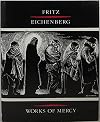
This extraordinary book chronicles the career of Fritz Eichenberg, an artist, teacher, author and social activist, whose life bore witness to the significant political, military and social issues of the 20th century. He began his artistic vocation in Germany under Kaiser Wilhelm during World War I; he ended his career in the U.S. as the Berlin Wall fell and the Soviet Union unravelled. He was sympathetic to the Catholic Worker movement (founded by Dorothy Day), and was best known for his show more artistic contributions to the Catholic Worker magazine.
Like many people, I first encountered Eichenberg in the 1943 illustrated edition of the Bronte sisters (a slipcase set with Jane Eyre and Wuthering Heights). His agonized, almost Gothic wood engravings made a deep impression (to coin a phrase) on me. When as an adult I rediscovered his work, I felt I had encountered a dear old friend.
My favourite work of his, however, involves his illustrations for a 1948 edition of The Brothers Karamazov. In particular, he did an unforgettable wood engraving for the Grand Inquisitor scene (see www.tfaoi.com/am/8am/8am295.jpg) that captures the agony of a "new mandarin" come face to face with a silent, uncomplaining Christ. show less
Like many people, I first encountered Eichenberg in the 1943 illustrated edition of the Bronte sisters (a slipcase set with Jane Eyre and Wuthering Heights). His agonized, almost Gothic wood engravings made a deep impression (to coin a phrase) on me. When as an adult I rediscovered his work, I felt I had encountered a dear old friend.
My favourite work of his, however, involves his illustrations for a 1948 edition of The Brothers Karamazov. In particular, he did an unforgettable wood engraving for the Grand Inquisitor scene (see www.tfaoi.com/am/8am/8am295.jpg) that captures the agony of a "new mandarin" come face to face with a silent, uncomplaining Christ. show less

This wonderful Quaker artist tells of his inspiration and passion in illustrating the classic works of the literature of caring and passion in the face of oppression (Tolstoy, Dostoyevsky, Erasmus, Goethe, and many others). Art in the service of conscience, and the artist as witness, have a powerful role, though a thorny path. The artist witnesses to his own time; let it be with conscience, integrity, and caring. His own woodcuts testify to the follies, tragedy, and hope of his time of the show more nuclear age, war, and poverty, but also Gandhi, Dorothy Day, and the vision of the Peaceable Kingdom.
The woodcuts are wonderful. show less
The woodcuts are wonderful. show less
Lists
Awards


You May Also Like


Associated Authors
Statistics
- Works
- 48
- Also by
- 29
- Members
- 809
- Popularity
- #31,537
- Rating
- 4.1
- Reviews
- 15
- ISBNs
- 31
- Languages
- 1
- Favorited
- 1