

Lucy Grealy (1963–2002)
Author of Autobiography of a Face
About the Author
Lucy Grealy, an award-winning poet, was born in Ireland in 1963. She lived in the UK and in Germany but spent most of her life in New York, where she grew up, and where she died in 2002. She also published a collection of essays, As Seen on TV: Provocations
Image credit: from Lifeinlegacy.com
Works by Lucy Grealy
Associated Works
Mirror, Mirror on the Wall: Women Writers Explore Their Favorite Fairy Tales (1998) — Contributor — 312 copies, 4 reviews
Touchstone Anthology of Contemporary Creative Nonfiction: Work from 1970 to the Present (2007) — Contributor — 219 copies, 3 reviews
Becoming American: Personal Essays By First Generation Immigrant Women (2000) — Contributor — 29 copies
Tagged
Common Knowledge
- Canonical name
- Grealy, Lucy
- Legal name
- Grealy, Lucinda Margaret
- Birthdate
- 1963-06-03
- Date of death
- 2002-12-18
- Gender
- female
- Education
- Sarah Lawrence College
University of Iowa (Iowa Writers' Workshop) - Occupations
- poet
essayist - Awards and honors
- Whiting Writers' Award (1995)
- Relationships
- Grealy, Suellen (sister)
- Nationality
- USA
- Birthplace
- Dublin, Ireland
- Places of residence
- Spring Valley, New York, USA
Bronxville, New York, USA
Iowa City, Iowa, USA - Place of death
- New York, New York, USA
- Associated Place (for map)
- New York, USA
Members
Reviews
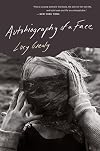
When still in childhood, Lucy is diagnosed with an invasive form of cancer that requires surgery to remove part of her jaw. Of course, before it comes to that, there are many many days in the hospital and countless tests. Being ill becomes not only her entire life, but a large part of her identity. No one fully explains to her what's happening and she has no sense that the forthcoming surgery will alter her appearance forever.
Following the surgery, she must endure over three years of show more chemotherapy treatments as well as radiation. Essentially, her entire life is consumed by her illness. What's worse than the pain and nausea, is the slowly dawning realization that her face is no longer socially acceptable. People openly stare at her and groups of young boys torment and verbally assault her on a daily basis.
Forced to confront the nature of her identity and the cruelty of mankind, she finds herself compelled to pursue surgery after surgery to correct her face sufficiently to recover anonymity. Even though she knows there is great injustice in her treatment, she still needs to live in this world that finds her unacceptable. Much meditation of beauty, ugliness, and society's pressure to conform follows.
This memoir is not for the faint of heart. However, in it's painful detail, I found myself encouraged by what a person can live through. The author calmly narrates what many of us have feared. It's extremely comforting to look directly into the heart of nightmare and death and not flinch away. Ms. Grealy has suffered in ways that most never will. She's been through astonishing pain and cruelty but has not died of it. Her story has power and beauty and much to teach everyone. show less
Following the surgery, she must endure over three years of show more chemotherapy treatments as well as radiation. Essentially, her entire life is consumed by her illness. What's worse than the pain and nausea, is the slowly dawning realization that her face is no longer socially acceptable. People openly stare at her and groups of young boys torment and verbally assault her on a daily basis.
Forced to confront the nature of her identity and the cruelty of mankind, she finds herself compelled to pursue surgery after surgery to correct her face sufficiently to recover anonymity. Even though she knows there is great injustice in her treatment, she still needs to live in this world that finds her unacceptable. Much meditation of beauty, ugliness, and society's pressure to conform follows.
This memoir is not for the faint of heart. However, in it's painful detail, I found myself encouraged by what a person can live through. The author calmly narrates what many of us have feared. It's extremely comforting to look directly into the heart of nightmare and death and not flinch away. Ms. Grealy has suffered in ways that most never will. She's been through astonishing pain and cruelty but has not died of it. Her story has power and beauty and much to teach everyone. show less
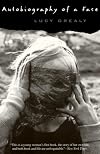
What a wonderful reflection on a difficult life! At the age of 9, Grealy was diagnosed with cancer and subsequently had half of her lower jaw removed. Following this surgery, young Grealy had radiation, chemotherapy and multiple surgeries to repair her dentition and to attempt to reconstruct her jaw. Throughout her childhood and young adulthood, the author essentially defined herself by her illness and treatments, and anticipated that her life would "begin" when her face was fixed.
Grealy's show more style is frank and open, and the reader must admire her relative fearlessness. As an adult writing about her unusual childhood, she honestly assesses her actions and motivations and gives us a picture of a bright, resilient girl. The bulk of the book is spent on her childhood, and the last few chapters rush through her young adulthood and the continuing surgeries, one of which finally restores a portion of her jaw.
Though most of us never have to face disfigurement such as Lucy Grealy did, as a reader I could still identify with her childish belief in "if only." If only her face were not disfigured, everything would be perfect in her life. If only she had a beautiful face she would find love. If only her family were not so "different," life would be ideal. I believe most humans have some glimmer of this belief: if only I were more attractive, more intelligent, thinner, wealthier, THEN everything would be perfect. I found the end of this book to be a bit of a letdown, mostly because I had bought into Grealy's assumption that everything would be fine once her jaw was repaired. Of course it did not live up to her expectations and of course she now has to learn, as all of us do, to live with the cards she's been dealt.
In spite of (or perhaps because of) her hardships, Grealy has been academically and intellectually successful. She is an accomplished poet and teacher, she has had vibrant friendships, she has been able to travel and live in various places, and she seems to have a full life. I did feel that the story ended a bit abruptly. After laying her childhood bare, Grealy seems to have held back with regard to her adulthood. Perhaps her recent experiences are too recent for her to view clearly and comment on.
The bullying and teasing Grealy suffered did not play as large a role in the story as I had expected, although it was clear that the taunts deeply affected the author and her sense of self worth. I was appalled at the behavior she described. I know children can be mean and see depictions of teasing and bullying all the time, but I did not experience this sort of behavior (or I was blissfully unaware of it) and I did not inflict it. I cannot understand people who have no empathy, especially for someone whose appearance and situation are so obviously out of her control.
Overall, I found this to be a thoroughly engrossing and ultimately uplifting memoir. Highly recommended!
I did mark a few passages that stood out to me:
One had to be good. One must never complain or struggle. One must never, under any circumstances, show fear and, prime directive above all, one must never, ever cry. I was nothing if not harsh. Had I not found myself in the role of sick child, I would have made an equally good fascist or religious martyr.
+++
Gradually my earliest memories of Ireland transformed into pure myth. Where I was now was not only no good, it was getting worse all the time. The flawless times of the family were past; I had missed them simply by being born too late. I began a lifelong affair with nostalgia, with only the vaguest notions of what I was nostalgic for.
+++
I resolved to Believe, even in the face of this lack of response. Was it possible to prove my worthiness by repeatedly asking the question, even in the brunt of this painful silence? In the same way I was sure I could prove my love, and lovability, to my mother by showing her I could "take it," I considered the idea that what God wanted from me was to keep trying and trying and trying, no matter how difficult it was. My goal, and my intended reward, was to understand.
+++
In my carefully orchestrated shabbiness, I was hoping to beat the world to the finish line by showing that I already knew I was ugly. Still, all the while, I was secretly hoping that in the process some potential lover might accidentally notice I was wearing my private but beautiful heart on my stained and fraying sleeve. show less
Grealy's show more style is frank and open, and the reader must admire her relative fearlessness. As an adult writing about her unusual childhood, she honestly assesses her actions and motivations and gives us a picture of a bright, resilient girl. The bulk of the book is spent on her childhood, and the last few chapters rush through her young adulthood and the continuing surgeries, one of which finally restores a portion of her jaw.
Though most of us never have to face disfigurement such as Lucy Grealy did, as a reader I could still identify with her childish belief in "if only." If only her face were not disfigured, everything would be perfect in her life. If only she had a beautiful face she would find love. If only her family were not so "different," life would be ideal. I believe most humans have some glimmer of this belief: if only I were more attractive, more intelligent, thinner, wealthier, THEN everything would be perfect. I found the end of this book to be a bit of a letdown, mostly because I had bought into Grealy's assumption that everything would be fine once her jaw was repaired. Of course it did not live up to her expectations and of course she now has to learn, as all of us do, to live with the cards she's been dealt.
In spite of (or perhaps because of) her hardships, Grealy has been academically and intellectually successful. She is an accomplished poet and teacher, she has had vibrant friendships, she has been able to travel and live in various places, and she seems to have a full life. I did feel that the story ended a bit abruptly. After laying her childhood bare, Grealy seems to have held back with regard to her adulthood. Perhaps her recent experiences are too recent for her to view clearly and comment on.
The bullying and teasing Grealy suffered did not play as large a role in the story as I had expected, although it was clear that the taunts deeply affected the author and her sense of self worth. I was appalled at the behavior she described. I know children can be mean and see depictions of teasing and bullying all the time, but I did not experience this sort of behavior (or I was blissfully unaware of it) and I did not inflict it. I cannot understand people who have no empathy, especially for someone whose appearance and situation are so obviously out of her control.
Overall, I found this to be a thoroughly engrossing and ultimately uplifting memoir. Highly recommended!
I did mark a few passages that stood out to me:
One had to be good. One must never complain or struggle. One must never, under any circumstances, show fear and, prime directive above all, one must never, ever cry. I was nothing if not harsh. Had I not found myself in the role of sick child, I would have made an equally good fascist or religious martyr.
+++
Gradually my earliest memories of Ireland transformed into pure myth. Where I was now was not only no good, it was getting worse all the time. The flawless times of the family were past; I had missed them simply by being born too late. I began a lifelong affair with nostalgia, with only the vaguest notions of what I was nostalgic for.
+++
I resolved to Believe, even in the face of this lack of response. Was it possible to prove my worthiness by repeatedly asking the question, even in the brunt of this painful silence? In the same way I was sure I could prove my love, and lovability, to my mother by showing her I could "take it," I considered the idea that what God wanted from me was to keep trying and trying and trying, no matter how difficult it was. My goal, and my intended reward, was to understand.
+++
In my carefully orchestrated shabbiness, I was hoping to beat the world to the finish line by showing that I already knew I was ugly. Still, all the while, I was secretly hoping that in the process some potential lover might accidentally notice I was wearing my private but beautiful heart on my stained and fraying sleeve. show less
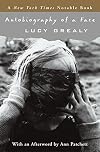
Lucy Grealy was nine years old when she was diagnosed with cancer (Ewing’s sarcoma) and underwent surgery that removed a third of her jaw. She spent the next five years battling the cancer with chemotherapy, radiation, and countless surgeries that were intended to re-shape her jaw. The treatments were brutal, something a child (or anyone, really) should never have to endure. Lucy spent these years in and out of hospitals, where, ironically, she felt most comfortable, as she was among other show more young cancer patients, and her plight was understood, even validated. It was when she finished her treatments and left the safety of the hospital (though she continued the chemotherapy as an outpatient), was when her life shifted, and she was forced to face the grim reality that her conception of who she was, pre-cancer, was inexorably changed forever.
Lucy eventually achieved remission from the cancer, but the aftermath of her illness was where a different journey began. Inevitably, when she returned to school, the vicious teasing, taunting, and bullying was relentless. Lucy did her best to keep her head down (literally), and silently endured the kind of cruelty only known by children, where being different in any way was tantamount to social purgatory. Lucy comes to accept that she is permanently disfigured, and will never truly fit in. Moreover, she realizes that she has endured more hardship than her peers, and finds comfort knowing she was strong enough to survive, and silently wonders if any of her schoolmates would have been strong enough to handle the physical and emotional pain she endured.
From her teens to young adulthood, Lucy underwent countless procedures in an effort to reconstruct her jaw. All of them failed. Her doctors tried grafts and bone reconstruction, but they never held and all were reabsorbed. All hopes that her face would take these procedures left her with hope that was eventually dashed, again and again.
Finding one’s identity is a central theme of the book. Much of Lucy’s identity was tied to her face. In an image-obsessed society, she cannot help but feel like she has failed, that she is a freak, and keeps hoping the next surgery will be the one that works, that her appearance will be nothing like the grotesque facial deformity that has dominated her life. She struggles with yearning to fit in, all while harboring a secret satisfaction that she is “special” in a very distressing way
Lucy was a highly gifted writer. She mainly wrote poetry before turning to memoir, and this book is indeed a poetic meditation on identity, the destructive effects of beauty standards, grievous suffering, and, ultimately, self-acceptance. Lucy was truly a fighter. She was a brave, searingly perceptive, and unabashed soul. Tragically, she died at 39, from a drug overdose.
I first read this book when I was 14. I was grappling with my own fears and insecurities related to how I felt about my own face, my body, my outward appearance, feeling, like many other teenage girls, that I was ugly and imperfect. Lucy’s account certainly put things into perspective. I love this book immensely, and I reread it almost every year. Needless to say, this is one of my most treasured books I own. show less
Lucy eventually achieved remission from the cancer, but the aftermath of her illness was where a different journey began. Inevitably, when she returned to school, the vicious teasing, taunting, and bullying was relentless. Lucy did her best to keep her head down (literally), and silently endured the kind of cruelty only known by children, where being different in any way was tantamount to social purgatory. Lucy comes to accept that she is permanently disfigured, and will never truly fit in. Moreover, she realizes that she has endured more hardship than her peers, and finds comfort knowing she was strong enough to survive, and silently wonders if any of her schoolmates would have been strong enough to handle the physical and emotional pain she endured.
From her teens to young adulthood, Lucy underwent countless procedures in an effort to reconstruct her jaw. All of them failed. Her doctors tried grafts and bone reconstruction, but they never held and all were reabsorbed. All hopes that her face would take these procedures left her with hope that was eventually dashed, again and again.
Finding one’s identity is a central theme of the book. Much of Lucy’s identity was tied to her face. In an image-obsessed society, she cannot help but feel like she has failed, that she is a freak, and keeps hoping the next surgery will be the one that works, that her appearance will be nothing like the grotesque facial deformity that has dominated her life. She struggles with yearning to fit in, all while harboring a secret satisfaction that she is “special” in a very distressing way
Lucy was a highly gifted writer. She mainly wrote poetry before turning to memoir, and this book is indeed a poetic meditation on identity, the destructive effects of beauty standards, grievous suffering, and, ultimately, self-acceptance. Lucy was truly a fighter. She was a brave, searingly perceptive, and unabashed soul. Tragically, she died at 39, from a drug overdose.
I first read this book when I was 14. I was grappling with my own fears and insecurities related to how I felt about my own face, my body, my outward appearance, feeling, like many other teenage girls, that I was ugly and imperfect. Lucy’s account certainly put things into perspective. I love this book immensely, and I reread it almost every year. Needless to say, this is one of my most treasured books I own. show less
When Lucy Grealy was 9 years old she was diagnosed with cancer, requiring a third of her jaw to be removed. While chemotherapy and radiation eventually made her cancer-free, reconstructing her jaw would be a very long and complicated process. Lucy faced her many surgeries with courage; dealing with friends, classmates, and adolescence in general was another matter entirely. More than anything, Lucy wanted not just to be accepted, but to be loved and desired. This book, published when Lucy show more was 31, is her story of personal growth. But it is so much more than a “disease memoir.” My edition included an afterword by her best friend, the author Ann Patchett, who does a far better job than I could at explaining this book as a work of literature, dealing with universal truths in the context of Lucy’s illness:
This is a book that understands how none of us ever feel we are pretty enough while it makes us question the very concept of beauty. It touches on our fears that love and approval are things we will always have to struggle to keep. It takes something so personal and so horrible that it is, for most of us, completely beyond our comprehension, and turns it into a mirror on ourselves.
Lucy was a poet and writer, who sadly died at age 39. Her talent is evident in the way she used her personal story, her quest for “beauty,” to create that mirror. I only wish we could hear more from her. show less
This is a book that understands how none of us ever feel we are pretty enough while it makes us question the very concept of beauty. It touches on our fears that love and approval are things we will always have to struggle to keep. It takes something so personal and so horrible that it is, for most of us, completely beyond our comprehension, and turns it into a mirror on ourselves.
Lucy was a poet and writer, who sadly died at age 39. Her talent is evident in the way she used her personal story, her quest for “beauty,” to create that mirror. I only wish we could hear more from her. show less
Lists
Awards


You May Also Like


Associated Authors
Statistics
- Works
- 2
- Also by
- 10
- Members
- 2,335
- Popularity
- #10,987
- Rating
- 3.9
- Reviews
- 75
- ISBNs
- 23
- Languages
- 2
- Favorited
- 3