On This Page
Description
On a patrol boat near Waterloo Bridge, police superintendent William Monk notices a young couple engaged in an intense discussion. Seconds later, the two plunge to their deaths in the icy waters of the Thames. Was it an accident, a suicide, or a murder? Ever the investigator, Monk learns that the woman, Mary Havilland, had planned to marry the fair-haired man who shared her fate. He also discovers that Mary's father had recently died in a supposed suicide. But Mary's friends share their own show more darks suspicions with Monk, who now faces the mysteries surrounding three deaths. Aided by his intrepid wife, Hester, Monk searches for answers. From luxurious drawing rooms where powerful men hatch their unscrupulous plots, to the sewers beneath the city where poor folk fight crippling poverty, Monk must connect the clues before death strikes again. show lessTags
Recommendations















Member Reviews
One thing I love about this series is how well the author weaves actual London history into her stories. In this installment, Hester and Monk deal with a crime related to the construction of a massive sewage system, intended to clean the River Thames and helped along, at least in part, by the death of Prince Albert of cholera. It seems to me that we often think, about older times - "But, how could they not have known?"
It's interesting to wonder what we're doing now that, in 150 or so years, will cause the residents of Earth to wonder the same about us. (Sadly, though, we can probably predict at least a few of those things.)
As to the story itself, I like that the basic structure of the first several in the series has been tampered with show more quite a bit in the later books. And I love that Scuff seems to be a permanent addition to the cast, as well as Orme, Sutton the rat catcher, and Hester's friends from the clinic. I'm especially grateful that a few of the recent entries in the series have surpassed what was looking like a long, long 3-star stretch. show less
It's interesting to wonder what we're doing now that, in 150 or so years, will cause the residents of Earth to wonder the same about us. (Sadly, though, we can probably predict at least a few of those things.)
As to the story itself, I like that the basic structure of the first several in the series has been tampered with show more quite a bit in the later books. And I love that Scuff seems to be a permanent addition to the cast, as well as Orme, Sutton the rat catcher, and Hester's friends from the clinic. I'm especially grateful that a few of the recent entries in the series have surpassed what was looking like a long, long 3-star stretch. show less
A superintendent in the Thames River Police, William Monk is on a patrol boat near Waterloo Bridge when he and his men notice a young couple standing at the bridge railing, apparently engaged in an intense discussion. The woman waves her arms and places her hands on the man’s shoulders. A caress or a push? He grasps hold of her. To save her or to kill her? Seconds later, the pair plunges to death in the icy waters. Monk can’t help but wonder, has he witnessed an accident, a suicide, or a murder? It seems impossible to determine the truth but, haunted by the woman’s somber beauty, he is impelled to try.
Mary Havilland is her name and until recently she and Toby Argyll, the fair-haired man who shared her fate, had planned to marry. show more Her father, an engineer employed by the Argyll Company, has also recently died - a suicide according to the police and Mary’s sister. But friends tell Monk that Mary suspected her father had been murdered because of his stubborn insistence that the Argyll Company’s current project - participation in the construction of a splendid new sewer system for the metropolis - is so badly flawed that the entire city may be in dire peril from flood and fire.
Already struggling to win the respect of his men, Monk is faced with two urgent mysteries. With his intrepid wife, Hester, he is soon treading a slippery path - from luxurious drawing rooms where powerful men hatch their unscrupulous plots to a world beneath the city where poor folk fight starvation. In nightmarish tunnels, Monk and Hester find true friends, among them Scuff, a young mudlark; Sutton, the ratcatcher, and Snoot, Sutton’s clever terrier. For once, even Monk’s old enemy, Superintendent Runcorn, is on his side. But as rainfall strains the fragile manmade underground, a murderer remains free - and poised to strike again. show less
Mary Havilland is her name and until recently she and Toby Argyll, the fair-haired man who shared her fate, had planned to marry. show more Her father, an engineer employed by the Argyll Company, has also recently died - a suicide according to the police and Mary’s sister. But friends tell Monk that Mary suspected her father had been murdered because of his stubborn insistence that the Argyll Company’s current project - participation in the construction of a splendid new sewer system for the metropolis - is so badly flawed that the entire city may be in dire peril from flood and fire.
Already struggling to win the respect of his men, Monk is faced with two urgent mysteries. With his intrepid wife, Hester, he is soon treading a slippery path - from luxurious drawing rooms where powerful men hatch their unscrupulous plots to a world beneath the city where poor folk fight starvation. In nightmarish tunnels, Monk and Hester find true friends, among them Scuff, a young mudlark; Sutton, the ratcatcher, and Snoot, Sutton’s clever terrier. For once, even Monk’s old enemy, Superintendent Runcorn, is on his side. But as rainfall strains the fragile manmade underground, a murderer remains free - and poised to strike again. show less
I love the Monk series but I am hoping at some point she stops explaining continually his loss of memory...at this point it doesn't seem to matter. I enjoyed this one having no idea what it took to put in sewers etc in London after the plague and typhoid etc. We are so used to them being there that I don't think anyone realizes what a huge undertaking it could be, or how dangerous. A really good plot as always!
This entry in the William & Hester Monk series gives away something that happened in The Shifting Tide, so if you plan to read both books, better read the other one first.
Monk witnesses two deaths off the Waterloo Bridge, but were they suicide-murder, a victim taking her killer with her, an attempted murderer changing his mind too late? Monk can't tell and neither can the other witnesses. The answer matters because the young woman will be given a shameful burial in unhallowed ground if her death is ruled a suicide. That happened to her father. There's a surviving sister and her children who would have to live with the double disgrace.
It's early 1864 and the sewer system of London is being rebuilt after the Great Stink of 1858 and its show more resulting cholera epidemic. I remember how unpleasant it was to drive near the Potomac river in the summer in our family's unair-conditioned station wagon back in the 1960s. The online descriptions I've just read of the Great Stink are so much worse that I'm forcing myself not to gag.
Is this extremely important work being carried out safely or is one of the construction companies involved working too quickly with its improved steam engine? The man who lies in a suicide's grave certainly thought so and his daughter was tracing his actions. It's not just the lives of the workers at stake. There's a chance that the devastating Great Fire of London of 1666 could be repeated, thanks to methane gas and the gas lines for lighting the city. (If you're claustrophobic, you might want to skip the investigation/chase scenes in the sewer tunnels. They're quite nasty.)
I freely admit to not solving the case before Monk did. There are plotlines for characters started that I expect to see carried out in later entries and an old problem may be starting to be resolved. I like Scuff the street urchin. A ratcatcher's dog, Snoot, is also an engaging character.
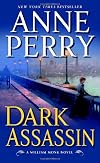
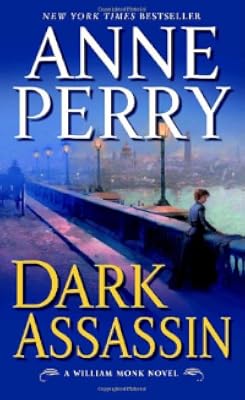
Carl D. Galian is the designer and Danilo Ducak is the artist for the dust jacket with the reddish-haired woman standing in front of a bridge rail and looking down at the water, a row of lamps on the bridge lit, and a cab or cart driving away from the reader -- it has already passed the woman. show less
Monk witnesses two deaths off the Waterloo Bridge, but were they suicide-murder, a victim taking her killer with her, an attempted murderer changing his mind too late? Monk can't tell and neither can the other witnesses. The answer matters because the young woman will be given a shameful burial in unhallowed ground if her death is ruled a suicide. That happened to her father. There's a surviving sister and her children who would have to live with the double disgrace.
It's early 1864 and the sewer system of London is being rebuilt after the Great Stink of 1858 and its show more resulting cholera epidemic. I remember how unpleasant it was to drive near the Potomac river in the summer in our family's unair-conditioned station wagon back in the 1960s. The online descriptions I've just read of the Great Stink are so much worse that I'm forcing myself not to gag.
Is this extremely important work being carried out safely or is one of the construction companies involved working too quickly with its improved steam engine? The man who lies in a suicide's grave certainly thought so and his daughter was tracing his actions. It's not just the lives of the workers at stake. There's a chance that the devastating Great Fire of London of 1666 could be repeated, thanks to methane gas and the gas lines for lighting the city. (If you're claustrophobic, you might want to skip the investigation/chase scenes in the sewer tunnels. They're quite nasty.)
I freely admit to not solving the case before Monk did. There are plotlines for characters started that I expect to see carried out in later entries and an old problem may be starting to be resolved. I like Scuff the street urchin. A ratcatcher's dog, Snoot, is also an engaging character.
Carl D. Galian is the designer and Danilo Ducak is the artist for the dust jacket with the reddish-haired woman standing in front of a bridge rail and looking down at the water, a row of lamps on the bridge lit, and a cab or cart driving away from the reader -- it has already passed the woman. show less
Solid entry in the William Monk series, with one of my favorite characters, scuff, playing a larger role. I especially enjoyed watching the developments in the evolving relationships between Monk and his various current and former co-workers, as well as with his wife and his friend, Rathbone. Oh, and the mystery is good, too.
Monk has decided that the time has come of returning to the police force and has joined the River Police. While patrolling the river, Monk is witness to two young people falling off a bridge and their drownings being unable to reach them before their deaths.
Unsure whether it was a suicide, accident or murder/suicide, Monk investigates finding more dangers than anticipated because of the "apparent" suicide of the victim's father several months previous. Monk must address that death as well bringing him back into connection with Horace Runcorn, his previous superior on the police force.
The interaction between these two characters, the changes in their responses to each other, expanded these characters but other secondary characters show more (Monk's new subordinates)were left without being fully fleshed out.
Hopefully, the next installment will remedy what was lacking here. show less
Unsure whether it was a suicide, accident or murder/suicide, Monk investigates finding more dangers than anticipated because of the "apparent" suicide of the victim's father several months previous. Monk must address that death as well bringing him back into connection with Horace Runcorn, his previous superior on the police force.
The interaction between these two characters, the changes in their responses to each other, expanded these characters but other secondary characters show more (Monk's new subordinates)were left without being fully fleshed out.
Hopefully, the next installment will remedy what was lacking here. show less
A sometimes aggravatingly overwritten police procedural set in London during the massive construction of the London sewer system. The characters are moderately interesting, and there are nice plot twists. I may look at some of the earlier books in the series.
Members
- Recently Added By
Lists

Noirvember: The Best Noir
113 works; 56 members

Best Noir Fiction
160 works; 14 members

Books Read in 2016
4,666 works; 199 members
Author Information

199+ Works 55,113 Members
Anne Perry was born Juliet Hume on October 28, 1938 in Blackheath, London. Sent to Christchurch, New Zealand to recover from a childhood case of severe pneumonia, she became very close friends with another girl, Pauline Parker. When Perry's family abandoned her, she had only Parker to turn to, and when the Parkers planned to move from New Zealand, show more Parker asked that Perry be allowed to join them. When Parker's mother disagreed, Perry and Parker bludgeoned her to death. Perry eventually served five and a half years in an adult prison for the crime. Once she was freed, she changed her name and moved to America, where she eventually became a writer. Her first Victorian novel, The Cater Street Hangman, was published in 1979. Although the truth of her past came out when the case of Mrs. Parker's murder was made into a movie (Heavenly Creatures), Perry is still a popular author and continues to write. She has written over 50 books and short story collections including the Thomas Pitt series, the William Monk series, and the Daniel Pitt series. Her story, Heroes, won the 2001 Edgar Award for Best Short Story. Her title's Blind Justice and The Angel Court Affair made The New York Times Best Seller List. (Bowker Author Biography) show less
Some Editions
Awards and Honors
Awards
Distinctions
Series

Common Knowledge
- Canonical title
- Dark Assassin
- Original title
- Dark Assassin
- Original publication date
- 2006
- People/Characters
- Hester Latterly (as Hester Monk, former Crimean War nurse); William Monk (policeman); Sergeant Orme (River Police); Toby Argyll (of Argyll Company, which digs new sewer tunnels); Mary Havilland (daughter seeking to clear her father's name); Humphrey (ginger-tailed white police station cat) (show all 44); Sergeant Palmer (River Police); Jones (River Police); Butterworth (River Police); Mrs. Porter (Toby Argyll's landlady); Alan Argyll (Argyll Company head, Toby's elder brother); Jenny Havilland Argyll (Alan's wife and Mary's older sister); Clacton (River Police); Kelly (River Police); Cardman (the Havillands' butler); Mrs. Kittredge (the Havillands' housekeeper); James Havilland (Argyll Co. engineer -- murder or suicide?); Superintendant Runcorn (Metropolitan police); Scuff (9-or-10-year-old river urchin, likes Monk); Squeaky Robinson (Portpool Lane Clinic bookkeeper); Claudine Burroughs (Portpool Lane Clinic volunteer); Margaret Ballinger (Sir Oliver Rathbone's fianceé); Sutton (local ratcatcher); Snoot (Sutton's brown & white Jack Russell terrier); Essie Collard (the Andrew Collards' young daughter); Andrew Collard (former navvy who lost a leg in a cave-in); Mrs. Collard; Morgan Applegate (Member of Parliment); Rose Applegate (his wife); Mr. Farnham (Monk's superior); Aston Sixsmith (Argyll Company engineer); Mrs. Pilmpton (the Havillands' cook); Lettie (Havilland maid); Dr. Lamb (of the Chief Surveyor's Office); Blackie (a tosher); police surgeon; John Barclay (the Havillands' neighbor); Alfred (Mr. Barclay's footman); Oliver Rathbone (Sir Oliver Rathbone, barrister); Melisande Barclay Ewart (John Barclay's widowed sister); the Fat Man (a fence); Crow (a young doctor); Mr. Dobie (counsel for the defense); Finger (a navvy called that because he lost a finger)
- Important places
- London, England, UK; Jacob's Island, London, England, UK; River Thames, London, England, UK
- Important events
- Victorian Era (1837 | 1901); London sewerage system rebuilding (1864)
- Dedication
- To Timothy Webb, with belated thanks for your friendship and help
- First words
- Waterloo Bridge loomed in the distance as William Monk settled himself more comfortably in the bow of the police boat.
- Last words
- (Click to show. Warning: May contain spoilers.)He had never meant anything more in his life.
- Blurbers
- Deaver, Jeffery
- Original language*
- Anglais
*Some information comes from Common Knowledge in other languages. Click "Edit" for more information.
Classifications
Statistics
- Members
- 811
- Popularity
- 34,129
- Reviews
- 21
- Rating
- (3.71)
- Languages
- 5 — English, French, German, Italian, Spanish
- Media
- Paper, Audiobook, Ebook
- ISBNs
- 40
- ASINs
- 8