On This Page
Description
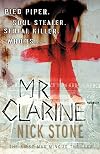
Hired by a powerful white Haitian family to find their young son, who has been missing for two years, Max Mingus struggles to set aside painful memories and tackles a web of local corruption that threatens his tenacious hold on sanity.Tags
Recommendations













Member Reviews
Just who REALLY paid the piper?
Reading an author's debut book sometimes feels like a double edged sword, yes should the they be successful and go on to write a whole series about a particular character then you are starting at the very beginning, on the ground floor so to speak (unless the second offering, as in this case, is a prequal) but then the writing style may not be fully honed as yet and later books are above basement level. On the whole I feel that this a fairly accomplished first novel.
The story revolves around an ex-cop, ex-PI and recent ex-con Max Mingus being employed to search for the missing son of powerful and wealthy parents in Haiti, a brutal and highly superstitious country where death in its many guises is never far show more away.
Now the author has certainly done a lot of background research into Haiti, its people, politics and environment and in particular how its people has been let down both by its own leaders but also the larger world and the UN in particular, some of the descriptions of the squalid living conditions that the majority endure is pretty harrowing. However, in a rather strange way this also had a negative effect on me as I ended up thinking a lot more of their plight and how it might be improved than I did of the main characters.
The main characters are fairly well portrayed from the determined and callous Gustav, the beautiful Chantale, the distraught mother Francesca and the powerful but benevolent drug Baron Vincent Paul. However, there are also a couple of typical sterotypes in particular the weak, gay 'father' Allain. Yet strangely the character that I really found hardest to like was Max himself. He fits too many cliches, he is obviuosly still grieving for his late wife, a recovering alcoholic and is steadfastedly determined to succeed. The typical flawed lead character.
Throughout the book there is an almost palpable undercurrent of violence with a couple of the most excrutiating (from a male point of view at least) punishment sections that I think that I have ever read, but strangely despite Max putting himself in some pretty precarious situations, mainly due to alcohol, and obviously a pretty tough guy himself he is kept pretty well insulated from it all.
The pace of the book starts off slowly, it is a cold case afterall, and then picks up but in the end it felt just a little too rushed, a little too neat. That said my main fault was that I did not feel that Max actually uncovered anything evidence on his own account in the end but was rather led along througthout the story by others rather like a bull with a ring thougth its nose. Also just why did Chantale suddenly have to disappear from the scene after the author had so painstakingly portrayed her.
I was split between awarding this book either 3 or 4 stars but eventually plumped for the latter. As a debut book it certainly showed plenty of promise and perhaps above all it left me thinking about the plight of the people of Haiti, this blighted half of Espanyol.A country I admit I know little about. I mean would the local children really be better off living in other richer countries, althought obviously not with loving families not peadophiles, rather than their own? Even if that meant someone selling them? show less
Reading an author's debut book sometimes feels like a double edged sword, yes should the they be successful and go on to write a whole series about a particular character then you are starting at the very beginning, on the ground floor so to speak (unless the second offering, as in this case, is a prequal) but then the writing style may not be fully honed as yet and later books are above basement level. On the whole I feel that this a fairly accomplished first novel.
The story revolves around an ex-cop, ex-PI and recent ex-con Max Mingus being employed to search for the missing son of powerful and wealthy parents in Haiti, a brutal and highly superstitious country where death in its many guises is never far show more away.
Now the author has certainly done a lot of background research into Haiti, its people, politics and environment and in particular how its people has been let down both by its own leaders but also the larger world and the UN in particular, some of the descriptions of the squalid living conditions that the majority endure is pretty harrowing. However, in a rather strange way this also had a negative effect on me as I ended up thinking a lot more of their plight and how it might be improved than I did of the main characters.
The main characters are fairly well portrayed from the determined and callous Gustav, the beautiful Chantale, the distraught mother Francesca and the powerful but benevolent drug Baron Vincent Paul. However, there are also a couple of typical sterotypes in particular the weak, gay 'father' Allain. Yet strangely the character that I really found hardest to like was Max himself. He fits too many cliches, he is obviuosly still grieving for his late wife, a recovering alcoholic and is steadfastedly determined to succeed. The typical flawed lead character.
Throughout the book there is an almost palpable undercurrent of violence with a couple of the most excrutiating (from a male point of view at least) punishment sections that I think that I have ever read, but strangely despite Max putting himself in some pretty precarious situations, mainly due to alcohol, and obviously a pretty tough guy himself he is kept pretty well insulated from it all.
The pace of the book starts off slowly, it is a cold case afterall, and then picks up but in the end it felt just a little too rushed, a little too neat. That said my main fault was that I did not feel that Max actually uncovered anything evidence on his own account in the end but was rather led along througthout the story by others rather like a bull with a ring thougth its nose. Also just why did Chantale suddenly have to disappear from the scene after the author had so painstakingly portrayed her.
I was split between awarding this book either 3 or 4 stars but eventually plumped for the latter. As a debut book it certainly showed plenty of promise and perhaps above all it left me thinking about the plight of the people of Haiti, this blighted half of Espanyol.A country I admit I know little about. I mean would the local children really be better off living in other richer countries, althought obviously not with loving families not peadophiles, rather than their own? Even if that meant someone selling them? show less
This novel started out good, but as ex-private detective/ex-con/ex-cop Max Mingus begins to unravel the mystery of the missing child Charlie Carver he takes his years and years of training and with complete disregard to protocol throws all of that experience to the wind. He continues to make wrong turn after wrong turn. The way the story evolves reminds me of someone who is driving to their destination and then there GPS breaks, and even though one of the other passengers in the car knows the way, he doesn't ask for help from them or even stop and ask someone else. Max stays in a constant state of lost. For example to show I have no personal disgust with the author (the king of swords was great by the way) her is an example of where Max show more blatantly makes a silly choice. He calls his ex-partner in Miami for help. His buddy Joe Liston says, I will call you tomorrow with ALL of the information I find out. Okay so that was the plan. It makes sense. So then why oh why does Max set out for a freakin' week to find the answers and get his ass beat by some random kids, etc etc. So FINALLy when he does return his ex-partner's phone call it goes something like this: "Okay Max I found out the guy behind the drug ring is..." Max cuts him off " I know it's Vincent Paul" and this just keeps happening like they are two lovers finishing each others sentences. The point is if Max had just waited a mere 15 hours his buddy could have filled in Max as well as the reader a whole lot quicker than the boring roller-coaster ride we just went on for the past week. So all in all the story unravels at the same pace as a newborn baby unwrapping Christmas gifts and when I say newborn I mean just exited the womb! I would like to award this book less stars but at this point I have just ended up feeling sorry for this author's debut book. I'm just glad Nick Stone learned from his previous mistake and made his second book a little faster pace as well as a more interesting landscape than the poverty ridden Haiti. show less
Max Mingus, a Sinatra fan, 46-year old widower and former Miami PD cop turned private investigator, has just completed an 8 year sentence for murder at Rikers Island after killing three child murderers during his last case.
Whilst still inside, he is contacted by wealthy Haitian banker Alain Carver asking him to take on the hunt for his missing, probably dead, son Charlie, who disappeared following a car crash three years previously also involving Carver's wife Francesca and their chauffeur, former Ton Ton Macoute Eddie Faustin.
Mingus warily accepts the case, mainly on the basis of the $10 million pay packet. Even a visit to one of his predecessors on the case, Clyde Beeson, before departing for Haiti, doesn't put him off. Beeson has show more had most of his large intestine cut out by the drug baron and king of the Port-au-Prince slums, Vincent Paul, he assumes because he got too close to the truth.
Most of the clues Max, helped by his ex-partner in the Miami PD Joe Liston, initially picks up point to the half-British Paul, but as he gets to know the man Max discovers he's not all he seems, and neither are the Carver family, particularly Alain's father, the ailing former Duvalier associate Gustave. And just who is the mysterious Mr. Clarinet wooing children away from the slums? And what is the agenda of Canadian journalist Shaun Huxley, still following the Charlie story when every other journalist has given up?
"Mr. Clarinet" is an above average debut thriller by Nick Stone, son of the historian Norman. It won the Ian Fleming Dagger in 2006. Stone spent some of his formative years living in Haiti and makes excellent use of it as a location, as Graham Greene did half a century before him, although the lawless and corrupt nature of the place make it ideal for a thriller.
The book trades on atmosphere as well as plotting. There are a couple of somewhat superfluous voodoo sequences, though, just to ram home the novel's setting. Max ticks all the PI boxes too, a likeably cynical protagonist haunted by his wife's death while he was in prison.
Recommended for fans of action, rather than psychological, thrillers, although you'll need a strong stomach in parts. show less
Whilst still inside, he is contacted by wealthy Haitian banker Alain Carver asking him to take on the hunt for his missing, probably dead, son Charlie, who disappeared following a car crash three years previously also involving Carver's wife Francesca and their chauffeur, former Ton Ton Macoute Eddie Faustin.
Mingus warily accepts the case, mainly on the basis of the $10 million pay packet. Even a visit to one of his predecessors on the case, Clyde Beeson, before departing for Haiti, doesn't put him off. Beeson has show more had most of his large intestine cut out by the drug baron and king of the Port-au-Prince slums, Vincent Paul, he assumes because he got too close to the truth.
Most of the clues Max, helped by his ex-partner in the Miami PD Joe Liston, initially picks up point to the half-British Paul, but as he gets to know the man Max discovers he's not all he seems, and neither are the Carver family, particularly Alain's father, the ailing former Duvalier associate Gustave. And just who is the mysterious Mr. Clarinet wooing children away from the slums? And what is the agenda of Canadian journalist Shaun Huxley, still following the Charlie story when every other journalist has given up?
"Mr. Clarinet" is an above average debut thriller by Nick Stone, son of the historian Norman. It won the Ian Fleming Dagger in 2006. Stone spent some of his formative years living in Haiti and makes excellent use of it as a location, as Graham Greene did half a century before him, although the lawless and corrupt nature of the place make it ideal for a thriller.
The book trades on atmosphere as well as plotting. There are a couple of somewhat superfluous voodoo sequences, though, just to ram home the novel's setting. Max ticks all the PI boxes too, a likeably cynical protagonist haunted by his wife's death while he was in prison.
Recommended for fans of action, rather than psychological, thrillers, although you'll need a strong stomach in parts. show less
One reviewer - can't remember who - said that *with a competent editor* Stone will be in the company of Iles, Hurwitz etc. - a really top-notch thriller writer. I think that's true on both counts. Editing is really called for in the draggy middle. It's odd that a book that really careens along in its action scenes can bog down so much in other spots.
There's a few things going on there: one - again, a thought original to another reviewer - there is too much background on Haiti and its political climate at the time of the book. Far better to tell too little and send readers to wiki to make up the shortfall, than to drag them away from the action for lessons.
Another issue, typical with early efforts but out of place in this otherwise very show more polished (and hardly debut in the sense that Stone is a long-time writer) book is the tendency to show every moment of every day. Many quotidian moments can be eliminated without causing any damage to the narrative: how characters get from point A to B, details of surroundings, irrelevant observations, exposition of secondary and tertiary characters, etc.
As for the level of violence and gore: yeah, there's a lot, and the book would not suffer from bringing it down several notches. That said, it didn't particularly bother me.
A final observation, again lifted from another reviewer: the black buddy partner and hot young sidekick elements are entirely stock and not worthy of the rest of the story which is marked by moments of great originality. Ho, hum - I would have expected better.
I will be reading Stone's next book, which is actually a prequel. show less
There's a few things going on there: one - again, a thought original to another reviewer - there is too much background on Haiti and its political climate at the time of the book. Far better to tell too little and send readers to wiki to make up the shortfall, than to drag them away from the action for lessons.
Another issue, typical with early efforts but out of place in this otherwise very show more polished (and hardly debut in the sense that Stone is a long-time writer) book is the tendency to show every moment of every day. Many quotidian moments can be eliminated without causing any damage to the narrative: how characters get from point A to B, details of surroundings, irrelevant observations, exposition of secondary and tertiary characters, etc.
As for the level of violence and gore: yeah, there's a lot, and the book would not suffer from bringing it down several notches. That said, it didn't particularly bother me.
A final observation, again lifted from another reviewer: the black buddy partner and hot young sidekick elements are entirely stock and not worthy of the rest of the story which is marked by moments of great originality. Ho, hum - I would have expected better.
I will be reading Stone's next book, which is actually a prequel. show less
Excellent book about Max Mingus, ex cop, ex PI and ex con. Picks up one final assignment to find the missing child of the most powerful people in Haiti. Max uncovers a trail of voodoo, murder and mystery on his journey to uncovering the secrets of who took the boy.
From Publishers Weekly
Stone's adrenaline-packed debut is not for the faint of heart. Max Mingus, an ex-Miami cop and PI, wants to get his life back on track after a seven-year stint in Attica for the execution of three child molesters. Grudgingly agreeing to investigate the disappearance of Charlie Carver, the three-year-old son of a wealthy white Haitian family, Max finds himself thrown headfirst into the violent, corrupt world of Haiti in the mid-1990s. Max's search leads him from the sprawling Carver compound to Cité Soleil, the country's most notorious slum, pitting him against powerful drug baron Vincent Paul and the bloody legacy of the Carvers' rise to power. Stone veers too often into the explicitly graphic, with numerous show more extended torture scenes, but readers accustomed to the grittiest of pulp fiction won't be deterred. show less
Stone's adrenaline-packed debut is not for the faint of heart. Max Mingus, an ex-Miami cop and PI, wants to get his life back on track after a seven-year stint in Attica for the execution of three child molesters. Grudgingly agreeing to investigate the disappearance of Charlie Carver, the three-year-old son of a wealthy white Haitian family, Max finds himself thrown headfirst into the violent, corrupt world of Haiti in the mid-1990s. Max's search leads him from the sprawling Carver compound to Cité Soleil, the country's most notorious slum, pitting him against powerful drug baron Vincent Paul and the bloody legacy of the Carvers' rise to power. Stone veers too often into the explicitly graphic, with numerous show more extended torture scenes, but readers accustomed to the grittiest of pulp fiction won't be deterred. show less
Members
- Recently Added By
Lists

Global Mysteries
90 works; 6 members
Author Information

25+ Works 931 Members
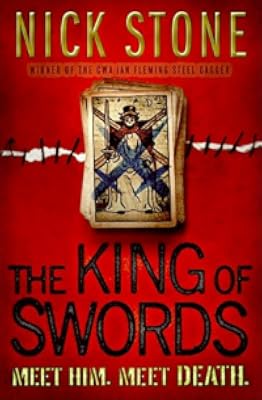
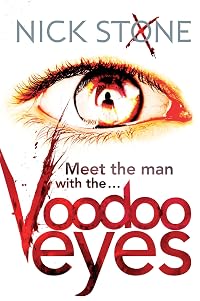
Nick Stone is a British author, born in Cambridge, England in 1966. He lived in Haiti with his grandparents for four years. He returned to England in 1970, where he has lived on and off throughout his life. He is a graduate of Cambridge University in history. Before becoming a writer, he worked as a legal clerk, dishwasher, and various show more white-collar office jobs. In 1996, he returned to Haiti. It is there that he found inspiration for his first novel, Mr. Clarinet (2006). It is the first book in the Max Mingus series and followed by King of Swords (2007), and Voodoo Eyes (2011). His most recent book is The Verdict (2014). He is an award-winning writer. His debut novel, Mr. Clarinet, won him The CWA Steel Dagger (2006), International Thriller Writers Award for Best First Novel (2007), and the Macavity Award for Best First Novel (2007). (Bowker Author Biography) show less
Awards and Honors
Awards
Notable Lists
Series

Common Knowledge
- Alternate titles*
- Il rituale
- Original publication date
- 2006
- Important places
- Haiti; Hispaniola
- First words*
- Ten million dollars if he performed a miracle and brought the boy back alive, five million dollars if he came back with just the body, and anotherfive million if he dragged the killers in with it - their dead-or-alive status ... (show all)was immaterial, as long as they had the kid's blood on their hands.
- Last words*
- (Click to show. Warning: May contain spoilers.)'Home,' Max said, giving the driver the address of his house in Miami Beach. 'Take me home.'
*Some information comes from Common Knowledge in other languages. Click "Edit" for more information.
Classifications
Statistics
- Members
- 426
- Popularity
- 72,446
- Reviews
- 8
- Rating
- (3.50)
- Languages
- 6 — Dutch, English, French, German, Italian, Swedish
- Media
- Paper, Audiobook, Ebook
- ISBNs
- 24
- ASINs
- 7