
On This Page
Description
Nathaniel Hawthorne masterfully grabs the imagination of children with these timeless tales of adventure based on the incomparable Greek mythological heroes' escapades. Children will enter a world of magic and intrigue as they face ferocious beasts, clever enchantresses, and tricky gods, alongside the greatest heroes of all time. Will Theseus escape from the maze that is guarded by the awful Minotaur-half-man, half-bull? Can Jason steal the Golden Fleece from under the nose and claws of a show more vicious dragon? Can Odysseus outsmart the witch whose potion has turned his men into pigs? And will Cadmus rescue his sister from the bull who has kidnapped her-and who turns out to be none other than mighty Zeus himself in disguise? Find out in this enchanting retelling of the classic tales, spun by an American master. show lessTags
Recommendations










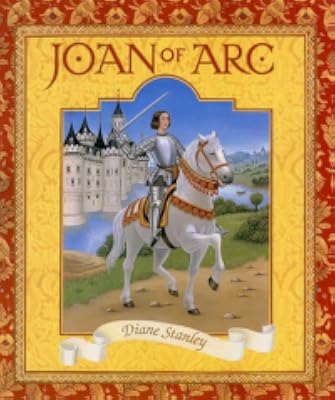
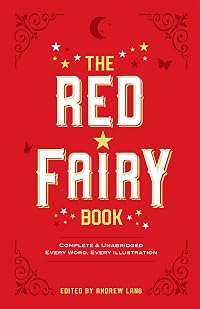
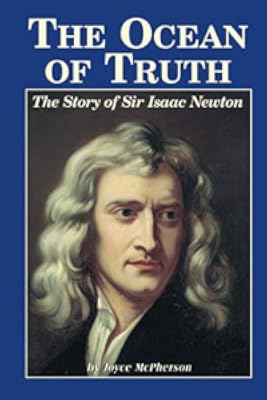
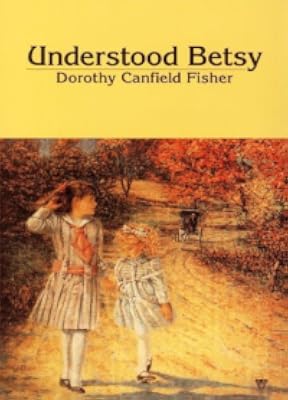





Member Recommendations
themulhern Both are less than faithful retellings of tales from classical mythology. What's interesting to think about in both cases is for whom they were written, and why.
Member Reviews
Interesting, innocent retellings of some Greek myths for children. In this telling of "The Minotaur," Ariadne, daughter of King Minos, does not go with Theseus, because it would be too cruel to leave her father alone---even though she knows it was her father's idea to have the Minotaur eat an annual allotment of young people. Still, she has stopped this from happening in the future---for her tather's sake as much as Theseus'. In fact, the narrator berates "some low-minded people" who say otherwise! [p. 43]
[Perhaps not relevant, but this book was pleasant and fun to read. Unlike what I remember of The Scarlet Letter, which left me wondering how such an exciting plot could be be told in such a dull and distant manner.]
[Perhaps not relevant, but this book was pleasant and fun to read. Unlike what I remember of The Scarlet Letter, which left me wondering how such an exciting plot could be be told in such a dull and distant manner.]
Greek myths retold for a very young audience; Theseus is described as a good king for listening to his mum, and Medea as wicked and naughty.
Parts of this are outdated but my younger self would have still found these stories fun and engaging. Here there’s adventures, a little bit of magic, monsters to fight, some quirky characters and heroic deeds. When the book ended I wanted it to carry on and tell me more stories.
Parts of this are outdated but my younger self would have still found these stories fun and engaging. Here there’s adventures, a little bit of magic, monsters to fight, some quirky characters and heroic deeds. When the book ended I wanted it to carry on and tell me more stories.
More sanitized Greek tales and myths from Hawthorne, this time focused on heroes such as Jason, Theseus, and Odysseus. Still good, but I enjoyed the first book more - they were more fun. The last tale was an attempt to clean up the story of Persephone to 19th century standards for children. It was especially hard to do without mentioning that all of the characters were gods. But Hawthorne gave it his best shot, and almost pulled it off.
I truly enjoyed being able to read this book. Although I may not be the biggest fan of traditional mythology this author did an excellent job in his arrangement of these classic tales. Although Greek myths are often very repetitive in nature where the same hero fights the same type of battle against insurmountable odds and strange creatures, this author changed that through choosing some of the great heroes and explaining where they had come from briefly but skipping to one specific journey or tale and going into more detail about that. For example, when Theseus was traveling to the island of the Minotaur instead of just skipping over the journey the author chose to add the details through saying the young people were not always sad. At show more this point he also related the story to the audience through causing the reader to think about what they would do if there weren't any adults around for that length of time. I also feel the author did an excellent job at telling one part of the lives of these heroes while at the same time not missing any important information from their lives. Although I feel in some ways this book could benefit from more illustration I also appreciate that it may have been a style choice to encourage the use of imagination. The main theme of this book is courage, and bravery, which Greek mythology has always been an excellent way to convey. Overall I feel this would be a great book for a classroom library. show less
This was the book that started my love of mythology. I read these tales over and over at various ages.
A fun retelling of Greek legend, though often using roman names.
Retellings of Greel myths for children. Rather bowdlerized by modern standards.
Members
- Recently Added By
Lists

Folio Society
831 works; 53 members

CCE 1000 Good Books List
1,033 works; 12 members

Satori Smiles Children's Book List
262 works; 7 members

Books mentioned in The Diary of a Provincial Lady
59 works; 4 members

Fiction (Mostly) in Selective Bibliography of American Literature 1775-1900
431 works; 3 members

Ambleside Y2
33 works; 1 member

Classical Conversations Challenge B Exposition
5 works; 1 member

Books Read in 2015
3,299 works; 126 members
Author Information

Nathaniel Hawthorne was born on July 4, 1804 in Salem, Massachusetts. When he was four years old, his father died. Years later, with financial help from his maternal relatives who recognized his literary talent, Hawthorne was able to enroll in Bowdoin College. Among his classmates were the important literary and political figures Horatio Bridge, show more Henry Wadsworth Longfellow, and Franklin Pierce. These friends supplied Hawthorne with employment during the early years after graduation while Hawthorne was still establishing himself as a legitimate author. Hawthorne's first novel, Fanshawe, which he self-published in 1828, wasn't quite the success that he had hoped it would be. Not willing to give up, he began writing stories for Twice-Told Tales. These stories established Hawthorne as a leading writer. In 1842, Hawthorne moved to Concord, Massachusetts, where he wrote a number of tales, including "Rappaccini's Daughter" and "Young Goodman Brown," that were later published as Mosses from an Old Manse. The overall theme of Hawthorne's novels was a deep concern with ethical problems of sin, punishment, and atonement. No one novel demonstrated that more vividly than The Scarlet Letter. This tale about the adulterous Puritan Hester Prynne is regarded as Hawthorne's best work and is a classic of American literature. Other famous novels written by Hawthorne include The House of Seven Gables and The Blithedale Romance. In 1852, Hawthorne wrote a campaign biography of his college friend Franklin Pierce. After Pierce was elected as President of the United States, he rewarded Hawthorne with the Consulship at Liverpool, England. Hawthorne died in his sleep on May 19, 1864, while on a trip with Franklin Pierce. (Bowker Author Biography) show less
Some Editions
Series

Belongs to Publisher Series
Work Relationships
Is contained in
Contains
Has the adaptation
Common Knowledge
- Canonical title
- Tanglewood Tales
- Original title
- Tanglewood Tales for Boys and Girls
- Original publication date
- 1853; 1913
- People/Characters
- Aegeus (Theseus' father); Aethra; Agenor (King of Phoenicia, Europa's father); Antaeus; Ariadne; Cadmus (Europa's brother) (show all 27); Chiron; Cilix (Europa's brother); Circe; Demeter (as Ceres); Europa; Hecate; Hercules; Hermes (as Quicksilver); Medea; Minos; Odysseus (as Ulysses); Orpheus; Pelias; Persephone (as Prosperpina); Phoenix (Europa's brother); Pittheus (Theseus' grandfather); Pluto; Talus (the Man of Brass); Telephassa (Europa's mother); Thasus; Theseus
- Important places
- Delphi, Greece; Greece; Phoenicia
- First words
- A short time ago, I was favoured with a flying visit from my young friend Eustace Bright, whom I had not before met with since quitting the breezy mountains of Berkshire.
- Last words
- (Click to show. Warning: May contain spoilers.)At sight of the glorious radiance of the Golden Fleece, the nine-and-forty heroes gave a mighty shout, and Orpheus, striking his harp, sang a song of triumph, to the cadence of which the galley flew over the water, homeward bound, as if careering along with wings!
- Original language
- English US
Classifications
- Genres
- Fiction and Literature, Children's Books
- DDC/MDS
- 398.20938 — Society, government, & culture Customs, etiquette & folklore Folklore & Folktales Folk literature History, geographic treatment, biography Folklore of the ancient world Folklore of ancient Greece
- LCC
- PZ8.1 .H318 .T — Language and Literature Fiction and juvenile belles lettres Fiction and juvenile belles lettres Juvenile belles lettres
- BISAC
Statistics
- Members
- 1,639
- Popularity
- 13,713
- Reviews
- 9
- Rating
- (3.89)
- Languages
- 6 — English, French, German, Italian, Polish, Spanish
- Media
- Paper, Audiobook, Ebook
- ISBNs
- 141
- UPCs
- 2
- ASINs
- 112