
Friday
by Robert A. Heinlein
On This Page
Description
A beautiful interplanetary agent, a glorious product of genetic engineering, operates from and over a near-future Earth.Tags
Recommendations



























Member Recommendations
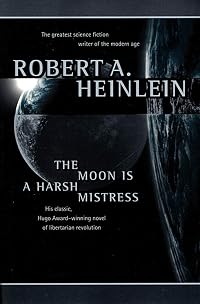
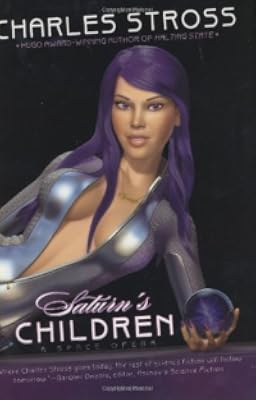
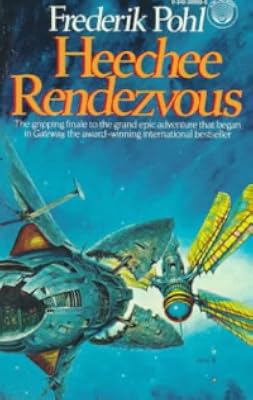
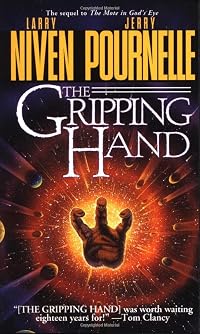
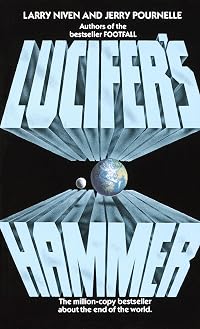
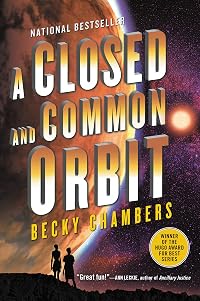
infiniteletters Friday has significantly less science behind it, but does use some of the same ideas.
Member Reviews
Reading the reviews here on Goodreads, this is clearly a divisive book. Folks seem either to love it or hate it. It was nominated for Hugo, Nebula, Locus SF, and Prometheus awards, although it did not end up winning any of them. While it's not Heinlein's best, I think it's a fairly solid effort.
At its core, the story is about what all good science fiction is about: What does it mean to be human? Friday explores that question in the setting of a futuristic world that is rapidly degrading through balkanization and surreptitious control by multinational corporations. The eponymous character, Friday Jones, is an "artificial person" (AP) – what today we would call a genetically engineered person – who has no legal rights, although she is show more technically free, unlike some APs who are slaves or indentured. As an AP, Friday is stronger and more intelligent than "real" people, and she is also immune to many diseases. However, because of rampant prejudice and fear against APs, she hides her talents as much as possible, relying on them only when necessary. As one might expect, it becomes more necessary to rely on those characteristics as the story continues.
I found the mixture of Friday's superhumanness and subhumanness intriguing. Her constant fear of being found out as an AP is tempered by the knowledge that she can, at any time, perform feats that are impossible for the average person. In one way or another, she is almost never among equals, and societal prejudice (and fear of that prejudice) conspires to scuttle any potential moments when she might otherwise have had a meaningful encounter with another AP. The people she meets are constantly drawing lines, both literally and figuratively, to delineate their tolerance, and far too often Friday finds herself on the opposite side of those lines.
Having grown up in the 1980s, I remember some of the discussions (and fear) about test-tube babies and the supposed horrors they would create. Debates today about genetic modifications and human cloning are descendants of those discussions. Also, the way Heinlein portrays people talking about APs also reminded me of some of the ways people today talk about genetically modified organisms (GMOs), using words like "frankenfoods" to incite fear and cynicism.
Some reviewers have criticized the book for having no clear plot, which doesn't make sense to me. What I think they mean is that there is no singular MacGuffin driving the entire story. But there is most definitely a plot: Friday's discovery of her own humanity. Yes, it meanders sometimes, and there is backtracking and indecision at others. But isn't that the way of it in everybody's life? Who wants a story about someone who goes directly from point A to point B? So what if we never find out the full details about Red Thursday? MacGuffins are fine enough for what they can do, but it is wrong to think that a MacGuffin is required to have a plot worth reading.
There is one piece that requires a little more in-depth analysis, partly because it is controversial, but more importantly because I think it highlights what is wrong with some of the criticism of this novel. However, first I must issue a
Trigger Warning
In Chapter 2, Friday gets gang raped. There is no way to discuss this gently.
A lot of reviewers dislike this scene, and it's understandable why. For one thing, it's an incredibly uncomfortable – if such an inadequate word may be used – scene to read, not merely because it is a rape, but because of the detached way in which Friday handles it. First, she criticizes the act of rape as an outdated method of interrogation: "No professional group uses either beating or rape before interrogation today; there is no profit in it; any professional is trained to cope with either or both." Then, Friday outlines three such coping methods: A) "detach the mind and wait for it to be over"; B) "emulate the ancient Chinese adage" (which adage that may be is never revealed, or at least I didn't pick up on it); and C) use the event "as an opportunity to gain an edge" over one's captors. Finally, Friday transitions from academic theory to application, indicating her choice of method C (with a little B) and explaining her calculated responses to the relative unpleasantness of each of the four men who raped her.
The scene (indeed, the whole chapter, which later subjects Friday to a variety of tortures) is both terrible and terrifying. I was eventually able to integrate only by justification of it being part of the extremely harsh world, run nominally by balkanized states but in reality by multinational corporations, in which Friday lives, works and plays. As she narrates later about the probability of her being killed if she continues with a particular job, "If you don't believe that such things can happen, we aren't living in the same world and there is no point in your reading any more of this memoir." Criticism against the way Friday handles being raped seems largely to ignore the realities of the world in which Friday lives, a world in which it is not only prudent but expected that those who trade in secrets (as she does) be trained to handle such methods. I daresay such training occurs in the primary world – not to say that it is right, but that it happens.
There are some who suggest that this scene shows that Heinlein is dismissive of rape, and that Friday's method of handling being raped is somehow commentary by the author that rape itself is not a big deal or that all women who are raped should respond similarly to Friday. This sort of "crit fic" analysis goes directly against the text. Friday acknowledges that she has suffered "bruises, contusions, and multiple personal indignities – even heartbreaking ones had I been an untrained female" (emphasis added). There is no suggestion in the text that every person should be able to handle such a situation in the same way, or that even having such training and being able to handle gang rape in the way Friday did is a good thing. It is an unfortunate – another inadequate word – part of Friday's world that such occurrences exist, but ignoring their existence does not make them go away. Friday has been trained because it makes sense for her to be, given her career and the world she lives in, but it is absurd to extend that idea to propose that Heinlein thinks all real-life women should treat gang rape the same way as a specially trained, genetically engineered woman who lives in a fictional future does.
More striking than the event itself is the later revelation that one of her rapists (known variously as "Mac," "Pete" and "Percival") is a member of Friday's security detail during an off-planet job. When she confronts him and asks why he participated, Pete says, "I did it because I wanted to. Because you are so sexy you could corrupt a Stylite. Or cause Venus to switch to Lesbos. I tried to tell myself I couldn't avoid it. But I [k]new better." This goes against the conventional idea that rape is about power and domination, rather than sex, and the all-to-common excuse that such violation is a compulsion on the part of the perpetrator. In lieu of killing Pete (he even offers to make it look like a suicide), Friday demands various information and explanations from him. She also says that letting her go pee (after the rape, but before the other tortures) was when she decide he was "not totally beyond hope." Later, while making her escape from her employers – whom she deduces are most likely going to kill her once the job is over – Pete helps her, and they eventually get married. That's right: Friday marries one of her rapists. Those who have a problem with how Friday handles the rape scene in situ also dislike these later developments.
Those who criticize this book (and Heinlein) seem to focus more on the fact that Friday has the wrong responses to being gang raped, according to their view, rather than asking why it is that Friday has the reactions she does. Friday is not dehumanized by the assault, nor does she dehumanize her assaulters. Partly this is because she is already dehumanized by the fact of her existence. From the beginning she identifies herself as an Artificial Person, and the entire novel is an exploration of what it means to be human. She travels from place to place seeking to find those who will accept her for who she really is, rather than for the various identities she takes on during the course of her work. It is somewhat ironic that despite this very clear and ubiquitous theme throughout the novel, some readers can't see through their own preconceived notions about rape enough to allow Friday her own thoughts and reactions. show less
At its core, the story is about what all good science fiction is about: What does it mean to be human? Friday explores that question in the setting of a futuristic world that is rapidly degrading through balkanization and surreptitious control by multinational corporations. The eponymous character, Friday Jones, is an "artificial person" (AP) – what today we would call a genetically engineered person – who has no legal rights, although she is show more technically free, unlike some APs who are slaves or indentured. As an AP, Friday is stronger and more intelligent than "real" people, and she is also immune to many diseases. However, because of rampant prejudice and fear against APs, she hides her talents as much as possible, relying on them only when necessary. As one might expect, it becomes more necessary to rely on those characteristics as the story continues.
I found the mixture of Friday's superhumanness and subhumanness intriguing. Her constant fear of being found out as an AP is tempered by the knowledge that she can, at any time, perform feats that are impossible for the average person. In one way or another, she is almost never among equals, and societal prejudice (and fear of that prejudice) conspires to scuttle any potential moments when she might otherwise have had a meaningful encounter with another AP. The people she meets are constantly drawing lines, both literally and figuratively, to delineate their tolerance, and far too often Friday finds herself on the opposite side of those lines.
Having grown up in the 1980s, I remember some of the discussions (and fear) about test-tube babies and the supposed horrors they would create. Debates today about genetic modifications and human cloning are descendants of those discussions. Also, the way Heinlein portrays people talking about APs also reminded me of some of the ways people today talk about genetically modified organisms (GMOs), using words like "frankenfoods" to incite fear and cynicism.
Some reviewers have criticized the book for having no clear plot, which doesn't make sense to me. What I think they mean is that there is no singular MacGuffin driving the entire story. But there is most definitely a plot: Friday's discovery of her own humanity. Yes, it meanders sometimes, and there is backtracking and indecision at others. But isn't that the way of it in everybody's life? Who wants a story about someone who goes directly from point A to point B? So what if we never find out the full details about Red Thursday? MacGuffins are fine enough for what they can do, but it is wrong to think that a MacGuffin is required to have a plot worth reading.
There is one piece that requires a little more in-depth analysis, partly because it is controversial, but more importantly because I think it highlights what is wrong with some of the criticism of this novel. However, first I must issue a
Trigger Warning
In Chapter 2, Friday gets gang raped. There is no way to discuss this gently.
A lot of reviewers dislike this scene, and it's understandable why. For one thing, it's an incredibly uncomfortable – if such an inadequate word may be used – scene to read, not merely because it is a rape, but because of the detached way in which Friday handles it. First, she criticizes the act of rape as an outdated method of interrogation: "No professional group uses either beating or rape before interrogation today; there is no profit in it; any professional is trained to cope with either or both." Then, Friday outlines three such coping methods: A) "detach the mind and wait for it to be over"; B) "emulate the ancient Chinese adage" (which adage that may be is never revealed, or at least I didn't pick up on it); and C) use the event "as an opportunity to gain an edge" over one's captors. Finally, Friday transitions from academic theory to application, indicating her choice of method C (with a little B) and explaining her calculated responses to the relative unpleasantness of each of the four men who raped her.
The scene (indeed, the whole chapter, which later subjects Friday to a variety of tortures) is both terrible and terrifying. I was eventually able to integrate only by justification of it being part of the extremely harsh world, run nominally by balkanized states but in reality by multinational corporations, in which Friday lives, works and plays. As she narrates later about the probability of her being killed if she continues with a particular job, "If you don't believe that such things can happen, we aren't living in the same world and there is no point in your reading any more of this memoir." Criticism against the way Friday handles being raped seems largely to ignore the realities of the world in which Friday lives, a world in which it is not only prudent but expected that those who trade in secrets (as she does) be trained to handle such methods. I daresay such training occurs in the primary world – not to say that it is right, but that it happens.
There are some who suggest that this scene shows that Heinlein is dismissive of rape, and that Friday's method of handling being raped is somehow commentary by the author that rape itself is not a big deal or that all women who are raped should respond similarly to Friday. This sort of "crit fic" analysis goes directly against the text. Friday acknowledges that she has suffered "bruises, contusions, and multiple personal indignities – even heartbreaking ones had I been an untrained female" (emphasis added). There is no suggestion in the text that every person should be able to handle such a situation in the same way, or that even having such training and being able to handle gang rape in the way Friday did is a good thing. It is an unfortunate – another inadequate word – part of Friday's world that such occurrences exist, but ignoring their existence does not make them go away. Friday has been trained because it makes sense for her to be, given her career and the world she lives in, but it is absurd to extend that idea to propose that Heinlein thinks all real-life women should treat gang rape the same way as a specially trained, genetically engineered woman who lives in a fictional future does.
Those who criticize this book (and Heinlein) seem to focus more on the fact that Friday has the wrong responses to being gang raped, according to their view, rather than asking why it is that Friday has the reactions she does. Friday is not dehumanized by the assault, nor does she dehumanize her assaulters. Partly this is because she is already dehumanized by the fact of her existence. From the beginning she identifies herself as an Artificial Person, and the entire novel is an exploration of what it means to be human. She travels from place to place seeking to find those who will accept her for who she really is, rather than for the various identities she takes on during the course of her work. It is somewhat ironic that despite this very clear and ubiquitous theme throughout the novel, some readers can't see through their own preconceived notions about rape enough to allow Friday her own thoughts and reactions. show less
"Friday" is typical of some of Heinlein's style used in some of his not so successful books. Heinlein certainly likes his archetypes, as he should. Jubal Harshaw in “Stranger in a Strange Land,” for example, is just another Boss, a mysterious ultra-rich, cynical genius and Mike is the super-powered innocent growing into his own. I appreciate the feelings more when they are mixed with cunning. Friday was extremely intelligent, but her thoughts, while calculated, were contrived. Her mind had the same feel as the rest of her "just-in-time" powers, which is exactly what deadened her internal conflict for me. Her flip-flops between acting like an alien observer to silly humans, and like a human longing to fit in. So, she's a lot like show more nerds in 80s sitcoms. The problem was her emotional disconnect as an observer is so pronounced that she basically stops appearing human for small pockets of time. When she was raped early in the story, she was able to brush it off with (again, convenient) "mind control" techniques. She didn't walk away from the situation traumatized; although she did have a nearly-murderous grudge.
My point is that even Friday's psychological state is ultimately indestructible, which hurt the only real conflict that seemed to matter in the story. Even the alien mindset thing can be done well if it has an impact on other characters (Dr. Manhattan is a good example again, with whether he's too alienated to care if humanity ends being a big question throughout). I guess Heinlein had to be aware that the character is indestructible to do anything interesting with them; if they're constantly trying to fake the audience out with the character not really being indestructible, they might not even realize what kind of character they've written themselves.
What supports my point of view, by the way, is that in the end, Friday finds "home" but notice that her tension is actually unresolved, because her locus of emotional control is still exterior, rather than one of self-acceptance and "self-belonging." She depends on others for kittens and cuddles, much as she relied on Boss all the way though. She presents the image of a strong, independent woman, but never quite embodies it, despite being in God Mode. show less
My point is that even Friday's psychological state is ultimately indestructible, which hurt the only real conflict that seemed to matter in the story. Even the alien mindset thing can be done well if it has an impact on other characters (Dr. Manhattan is a good example again, with whether he's too alienated to care if humanity ends being a big question throughout). I guess Heinlein had to be aware that the character is indestructible to do anything interesting with them; if they're constantly trying to fake the audience out with the character not really being indestructible, they might not even realize what kind of character they've written themselves.
What supports my point of view, by the way, is that in the end, Friday finds "home" but notice that her tension is actually unresolved, because her locus of emotional control is still exterior, rather than one of self-acceptance and "self-belonging." She depends on others for kittens and cuddles, much as she relied on Boss all the way though. She presents the image of a strong, independent woman, but never quite embodies it, despite being in God Mode. show less
Ah me, where to begin? The story gets off to a cracking, if distasteful, start and this had all the makings of a neat little SF thriller. And maybe picking a late-period Heinlein novel might have been a good thing. But then what does the old goat do? He slams on the brakes and sends our erstwhile heroine, Friday, off to New Zealand for some R n R with her "Group Family". Yes, old Bob is back to expounding his views on polygamy, free love and alternatives ways of living.
But once you derail a story, especially a would-be high-octane thriller, it's hard to get it back on track. Heinlein then proceeds to shunt Friday around the politically realigned federations of North America, throwing in a set of world and space-wide assassinations for show more good measure, along the way forgetting to advance anything remotely resembling a plot. It's almost like he came up with this character, liked her, then didn't quite have a story to tell.
So instead we get a tour of a future Earth where America has fractured into mini-countries, as has Canada. Where petty wars start for no apparent reason and multi-national corporations have the same status as countries. It's all very long winded and repetitive. Friday comes over as a cross between GI Jane and an idiot savant with a voracious sexual appetite for both sexes. But hey, in Bob's future world that's all great because like, traditional family structures and social mores are like sooooo 20th Century, man.
Heinlein could still write zinging prose when he wanted to, but this novel is baggy, weighed down with cod philosophy, plot strands that never get tied up and an ending that seems to be part of an entirely different novel. With judicious editing this could have been a good 200 page SF thriller, instead of a 400 page polished turd.
Disappointing. show less
But once you derail a story, especially a would-be high-octane thriller, it's hard to get it back on track. Heinlein then proceeds to shunt Friday around the politically realigned federations of North America, throwing in a set of world and space-wide assassinations for show more good measure, along the way forgetting to advance anything remotely resembling a plot. It's almost like he came up with this character, liked her, then didn't quite have a story to tell.
So instead we get a tour of a future Earth where America has fractured into mini-countries, as has Canada. Where petty wars start for no apparent reason and multi-national corporations have the same status as countries. It's all very long winded and repetitive. Friday comes over as a cross between GI Jane and an idiot savant with a voracious sexual appetite for both sexes. But hey, in Bob's future world that's all great because like, traditional family structures and social mores are like sooooo 20th Century, man.
Heinlein could still write zinging prose when he wanted to, but this novel is baggy, weighed down with cod philosophy, plot strands that never get tied up and an ending that seems to be part of an entirely different novel. With judicious editing this could have been a good 200 page SF thriller, instead of a 400 page polished turd.
Disappointing. show less
It's a good read, and probably representative of Heinlein's later, well-rehearsed voice. His polyamorous families are very much in play in virtually any family gathering set of episodes, and trigger alert: there is a rape scene at the beginning.
The basic premise is that Friday is an Advanced Person whose status in society is below that of "real" people. She is physically indistinguishable from a human female, including having Cherokee features. One thing that impressed me about Heinlein is that in her EnnZed family (New Zealand in this book), Heinlein confronts the endemic racism of the white family when a daughter marries a Tongan. As in Africa. They are not averse to Friday's AmerIndian bloodlines, nor are they averse to the Maori show more peoples; their rationale is that both groups are "first peoples." But for their daughter to marry a Tongan! She is instantly disowned. Friday risks it all, and loses, when she demonstrates her AP self.
The space flight and transportation makes my head hurt, and the continued sexcapades with all of the people she picks up are a bit much. But Friday does struggle with acceptance into humanity and her story is reasonably well told. show less
The basic premise is that Friday is an Advanced Person whose status in society is below that of "real" people. She is physically indistinguishable from a human female, including having Cherokee features. One thing that impressed me about Heinlein is that in her EnnZed family (New Zealand in this book), Heinlein confronts the endemic racism of the white family when a daughter marries a Tongan. As in Africa. They are not averse to Friday's AmerIndian bloodlines, nor are they averse to the Maori show more peoples; their rationale is that both groups are "first peoples." But for their daughter to marry a Tongan! She is instantly disowned. Friday risks it all, and loses, when she demonstrates her AP self.
The space flight and transportation makes my head hurt, and the continued sexcapades with all of the people she picks up are a bit much. But Friday does struggle with acceptance into humanity and her story is reasonably well told. show less
Hmm. First read this book when it was originally published, a bit over half my life ago. I think I liked it better then. It shares some characters with Gulf, which I need to reread as well.
Perhaps the best part of the novel is the description of Friday's research on an internet-like network. Nicely thought through, and much like some of the research I've done with similar tools. Except written in the early 80s, when Arpanet was mostly a dream.
The story's OK, though it's really just a string of events.
Perhaps the best part of the novel is the description of Friday's research on an internet-like network. Nicely thought through, and much like some of the research I've done with similar tools. Except written in the early 80s, when Arpanet was mostly a dream.
The story's OK, though it's really just a string of events.
She is trained in physical combat and weaponry, incredibly strong, fast, and determined never to fail at her job as a combat courier. She is also sexy, loving, and beautiful (though she'd argue the latter). Her name is Friday...and she's an artificial woman. Simply put, Friday was created in a lab. Thus, while her appearance is completely human, she doesn't fully grasp human emotions, reactions, and customs.
Our story begins with Friday returning from a secret courier mission assigned by her employer, known only to her as "Boss" (until about 3/4 into the story, but no spoilers). However, she is betrayed by one of their own, captured, tortured, and gang-raped until she is rescued by operatives.
However, Friday doesn't appear to sustain show more much, if any, emotional damage from the experience. She is enraged, but not distraught, nor does she seem to suffer the deep trauma and shame that most rape victims experience. I'm not sure if this was due to her training and conditioning or if Heinlein merely downplayed that to keep the story moving.
Friday is almost immediately ready to get back to work but Boss insists that she take downtime. The next several chapters of the book follow Friday as she takes a vacation and ends up signing on to join an extended family in New Zealand. However, when they learn that she is artificial, the head of the family turns on her and breaks Friday's contract.
From there, Friday tries to return to Boss back in California but is sidetracked by terrorist attacks and petty wars between nations. While traveling through Canada, she finds herself taken in by a semi-ballistic ship captain named Ian. He brings her home and introduces her to his wife, a fiercly strong-willed woman named Janet, and her other husband, Georges. Instantly, Friday bonds with Janet, with whom she nearly makes love. She also bonds with Ian and Georges, with whom she does make love.
As the acts of terrorism force states and nations to close borders, Friday finds it ever challenging to return to HQ, taking on many identities, jobs, friends, lovers, and a few near-fatal adventures along the way. When she finally reaches Boss again, in a completely new secret HQ, he takes her off courier duty and places her in academic study, which is disrupted by events outside her control.
Friday then finds herself out of work, but not out of options. She takes one last courier job off-world, one that changes her life drastically and forever.
In the mind-boggling, incredibly detailed world that Heinlein lays out for us, sex comes free and easy. I lost count of how many lovers (men or women) that Friday slept with through the course of the story. However, Heinlein's writing is never pornographic, never erotic. It is merely suggestive and, at times, comedic.
National boundaries no longer exist as we know them. Many of the states are now sovereign countries as are the provinces and territories in Canada. New Zealand and British Canada are the best nations on Earth though society at large is in decay. There may even be another pandemic plague on the horizon. Polygamy and homosexuality are common and as accepted as the green of grass and the blue of sky. Artifical persons, however, not so much.
Families are managed more like corporations, their foundations seemingly driven by finance first, love second. Heinlein is known for presenting ingenious social commentary in his stories and that is prevalent in Friday. Although the term "internet" is never used explicitly, the information and communication technologies described in the story are prescient.
Overall, Friday is an engaging read, drawing you into a society that, to be honest, may not be too far in our own future. show less
Our story begins with Friday returning from a secret courier mission assigned by her employer, known only to her as "Boss" (until about 3/4 into the story, but no spoilers). However, she is betrayed by one of their own, captured, tortured, and gang-raped until she is rescued by operatives.
However, Friday doesn't appear to sustain show more much, if any, emotional damage from the experience. She is enraged, but not distraught, nor does she seem to suffer the deep trauma and shame that most rape victims experience. I'm not sure if this was due to her training and conditioning or if Heinlein merely downplayed that to keep the story moving.
Friday is almost immediately ready to get back to work but Boss insists that she take downtime. The next several chapters of the book follow Friday as she takes a vacation and ends up signing on to join an extended family in New Zealand. However, when they learn that she is artificial, the head of the family turns on her and breaks Friday's contract.
From there, Friday tries to return to Boss back in California but is sidetracked by terrorist attacks and petty wars between nations. While traveling through Canada, she finds herself taken in by a semi-ballistic ship captain named Ian. He brings her home and introduces her to his wife, a fiercly strong-willed woman named Janet, and her other husband, Georges. Instantly, Friday bonds with Janet, with whom she nearly makes love. She also bonds with Ian and Georges, with whom she does make love.
As the acts of terrorism force states and nations to close borders, Friday finds it ever challenging to return to HQ, taking on many identities, jobs, friends, lovers, and a few near-fatal adventures along the way. When she finally reaches Boss again, in a completely new secret HQ, he takes her off courier duty and places her in academic study, which is disrupted by events outside her control.
Friday then finds herself out of work, but not out of options. She takes one last courier job off-world, one that changes her life drastically and forever.
In the mind-boggling, incredibly detailed world that Heinlein lays out for us, sex comes free and easy. I lost count of how many lovers (men or women) that Friday slept with through the course of the story. However, Heinlein's writing is never pornographic, never erotic. It is merely suggestive and, at times, comedic.
National boundaries no longer exist as we know them. Many of the states are now sovereign countries as are the provinces and territories in Canada. New Zealand and British Canada are the best nations on Earth though society at large is in decay. There may even be another pandemic plague on the horizon. Polygamy and homosexuality are common and as accepted as the green of grass and the blue of sky. Artifical persons, however, not so much.
Families are managed more like corporations, their foundations seemingly driven by finance first, love second. Heinlein is known for presenting ingenious social commentary in his stories and that is prevalent in Friday. Although the term "internet" is never used explicitly, the information and communication technologies described in the story are prescient.
Overall, Friday is an engaging read, drawing you into a society that, to be honest, may not be too far in our own future. show less
This was a fine book. Not an excellent read but mildly interesting. It is certainly not up to RAH’s standards of The Moon is a Harsh Mistress or Starship Troopers or his short story collection The Past Through Tomorrow, which I think is outstanding.
Friday has some really interesting themes such as Heinlein’s exploration of racism in the guise of Artificial Persons (i.e., genetically engineered test tube babies). Also, some interesting points about the breakdown of society when it is run by multinationals.
But like much of RAH’s later work there is the running theme of free love. RAH, in his later years continually banged the drum of sex not tied to sexual politics. Is this possible with the way that humans are wired?
If you are show more looking for something to read by Robert A Heinlein there are better places to start. I listed three above. Another excellent read is his Door into Summer. show less
Friday has some really interesting themes such as Heinlein’s exploration of racism in the guise of Artificial Persons (i.e., genetically engineered test tube babies). Also, some interesting points about the breakdown of society when it is run by multinationals.
But like much of RAH’s later work there is the running theme of free love. RAH, in his later years continually banged the drum of sex not tied to sexual politics. Is this possible with the way that humans are wired?
If you are show more looking for something to read by Robert A Heinlein there are better places to start. I listed three above. Another excellent read is his Door into Summer. show less
Members
- Recently Added By
Published Reviews
Ze heet Vrijdag, is even vindingrijk als verblindend mooi en is één van de beste interplanetaire agenten. Bovendien is zij een kunstmens...
Vrijdag wordt geëxploiteerd door een man, waarvan zij niet meer weet dan dat hij haar opdrachtgever is. Opererend vanaf de Aarde, in een tijd dat Amerika nog slechts een samenraapsel is van enkele dozijnen staatjes, waar cultuur nog nauwelijks betekenis show more heeft en een blijmoedig soort chaos heerst, vormt ze een soort speelbal binnen het ogenschijnlijk grillige opdrachtenpatroon van haar baas.
Vrijdag weet haar evenwichtigheid op vaardige wijze te behouden door snelle en creatieve oplossingen, terwijl ze van de ene calamiteit in het volgende probleem verzeild raakt. Vertwijfeld in haar opstelling ten aanzien van de mensen waarmee ze werkt en de relaties die daaruit voortvloeien, weet ze nooit of ze nu een stap voor- of achterloopt op de uiteindelijke lotbeschikking van het menselijke ras. show less
Vrijdag wordt geëxploiteerd door een man, waarvan zij niet meer weet dan dat hij haar opdrachtgever is. Opererend vanaf de Aarde, in een tijd dat Amerika nog slechts een samenraapsel is van enkele dozijnen staatjes, waar cultuur nog nauwelijks betekenis show more heeft en een blijmoedig soort chaos heerst, vormt ze een soort speelbal binnen het ogenschijnlijk grillige opdrachtenpatroon van haar baas.
Vrijdag weet haar evenwichtigheid op vaardige wijze te behouden door snelle en creatieve oplossingen, terwijl ze van de ene calamiteit in het volgende probleem verzeild raakt. Vertwijfeld in haar opstelling ten aanzien van de mensen waarmee ze werkt en de relaties die daaruit voortvloeien, weet ze nooit of ze nu een stap voor- of achterloopt op de uiteindelijke lotbeschikking van het menselijke ras. show less
added by karnoefel
Lists

Best Science Fiction Novels
816 works; 430 members

Best SciFi and Fantasy Classics
53 works; 6 members

What Makes This Book So Great
102 works; 16 members
Speculative Fiction to Read
706 works; 32 members

Favorite Childhood Books
1,646 works; 517 members

Books Read in 2014
2,343 works; 89 members

Female Protagonist
1,056 works; 56 members

ban men from writing
8 works; 1 member

Books Read in 2017
4,249 works; 129 members

Books Read in 2025
4,091 works; 97 members
Favorite Science Fiction
452 works; 216 members

Best Cyberpunk
41 works; 7 members
Author Information

458+ Works 173,999 Members
Robert Anson Heinlein was born on July 7, 1907 in Butler, Mo. The son of Rex Ivar and Bam Lyle Heinlein, Robert Heinlein had two older brothers, one younger brother, and three younger sisters. Moving to Kansas City, Mo., at a young age, Heinlein graduated from Central High School in 1924 and attended one year of college at Kansas City Community show more College. Following in his older brother's footsteps, Heinlein entered the Navel Academy in 1925. After contracting pulmonary tuberculosis, of which he was later cured, Heinlein retired from the Navy and married Leslyn MacDonald. Heinlein was said to have held jobs in real estate and photography, before he began working as a staff writer for Upton Sinclair's EPIC News in 1938. Still needing money desperately, Heinlein entered a writing contest sponsored by the science fiction magazine Thrilling Wonder Stories. Heinlein wrote and submitted the story "Life-Line," which went on to win the contest. This guaranteed Heinlein a future in writing. Using his real name and the pen names Caleb Saunders, Anson MacDonald, Lyle Monroe, John Riverside, and Simon York, Heinlein wrote numerous novels including For Us the Living, Methuselah's Children, and Starship Troopers, which was adapted into a big-budget film for Tri-Star Pictures in 1997. The Science Fiction Writers of America named Heinlein its first Grand Master in 1974, presented 1975. Officers and past presidents of the Association select a living writer for lifetime achievement. Also, the Science Fiction and Fantasy Hall of Fame inducted Heinlein in 1998. Heinlein died in 1988 from emphysema and other related health problems. Heinlein's remains were scattered from the stern of a Navy warship off the coast of California. (Bowker Author Biography) show less
Some Editions
Awards and Honors
Awards
Distinctions
Series
Belongs to Publisher Series
Work Relationships
Has as a commentary on the text
Common Knowledge
- Canonical title
- Friday
- Original title
- Friday
- Original publication date
- 1982-06
- People/Characters
- Friday; Hartley M. Baldwin; Anita Davidson; Betty Farnese; Federico Farnese; Sylvia "Goldie" Havenisle (show all 12); Matilda "Tilly" Jackson; Jerry Madsen; Georges Perreault; Percival "Pete" Roberts; Ian Tormey; Janet Tormey
- Important places
- Botany Bay; Chicago Imperium; Christchurch, New Zealand
- Dedication
- This book is dedicated to Ann, Anne, Barbie, Betsy, Bubbles, Carolyn, Catherine, Dian, Diane, Eleanor, Elinor, Gay, Jeanne, Joan, Judy-Lynn, Karen, Kathleen, Marilyn, Nichelle, Patricia, Pepper, Polly, roberta, Ramea, Rebel, ... (show all)Ursula, Verna, Vivian, Vonda, Yumiko, and always - semper toujours! - to Ginny R.A.H.
- First words
- As I left the Kenya Beanstalk capsule he was right on my heels. He followed me through the door leading to Customs, Health, and Immigration. As the door contracted behind him I killed him.
- Last words
- (Click to show. Warning: May contain spoilers.)It's a warm and happy feeling.
- Blurbers
- Anderson, Poul; Pohl, Frederik; Ellison, Harlan; Pournelle, Jerry; Sturgeon, Theodore
- Original language
- English
- Disambiguation notice
- The Portuguese version of this work comes in three volumes. None should be combined here unless entering all three as a single work.
Classifications
Statistics
- Members
- 5,443
- Popularity
- 2,455
- Reviews
- 75
- Rating
- (3.62)
- Languages
- 13 — Czech, Dutch, English, Estonian, French, German, Hebrew, Italian, Korean, Polish, Portuguese, Russian, Spanish
- Media
- Paper, Audiobook, Ebook
- ISBNs
- 47
- ASINs
- 29