On This Page
Description
Sometime in the twenty-third century, humanity went extinct leaving only androids behind. Freya Nakamichi 47 is a femmebot, one of the last of her kind still functioning. With no humans left to pay for the pleasures she provides, she agrees to transport a mysterious package from Mercury to Mars. Unfortunately for Freya, she has just made herself a moving target for some very powerful, very determined humanoids who will stop at nothing to possess the contents of the package.Tags
Recommendations

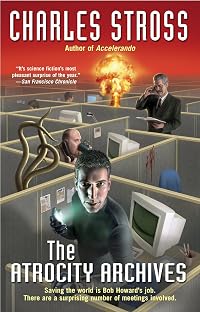
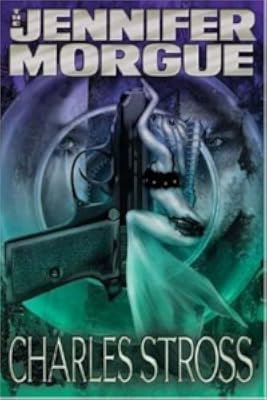
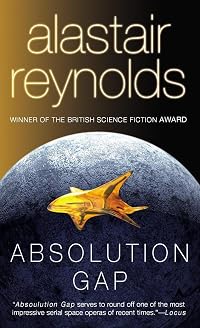
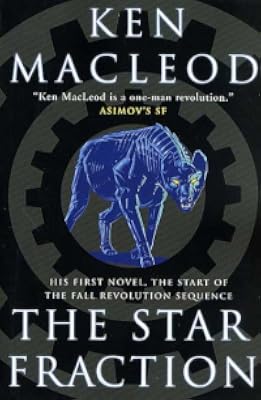


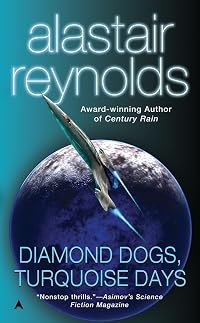
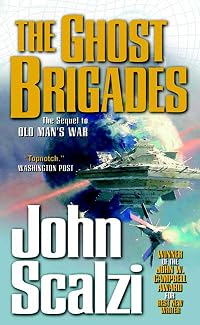
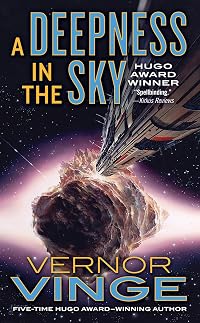
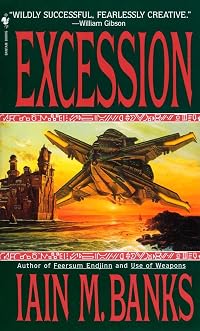

Member Recommendations
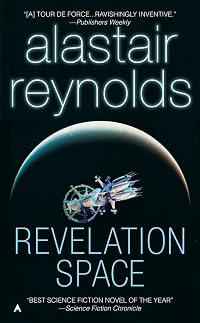
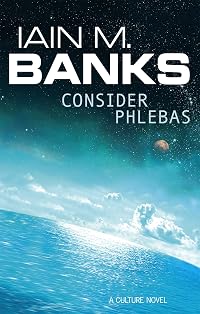
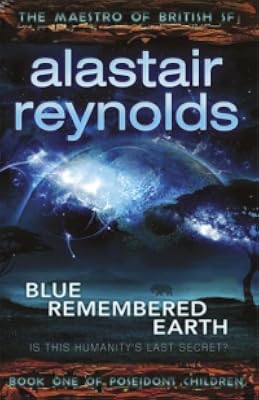
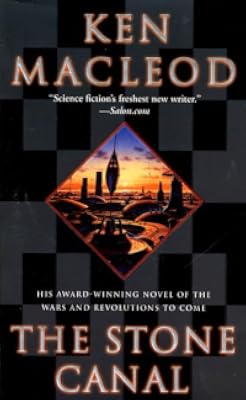
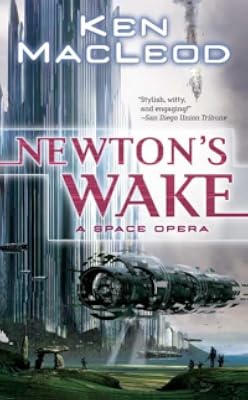
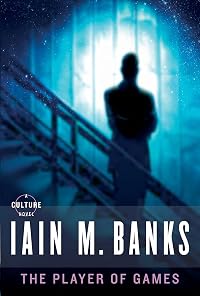
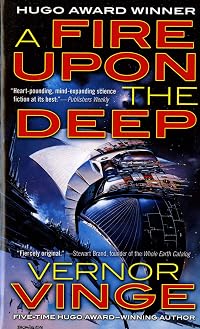
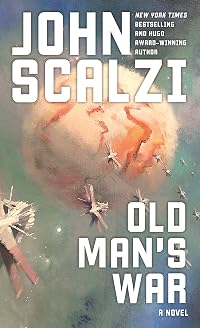
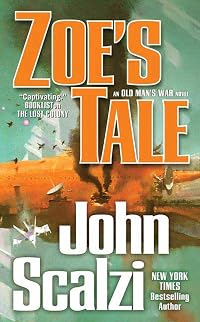
hoddybook Both offer an enjoyable romp with advanced sentient AIs
hoddybook Both have female ai's with a high libido in a dangerous universe.
11
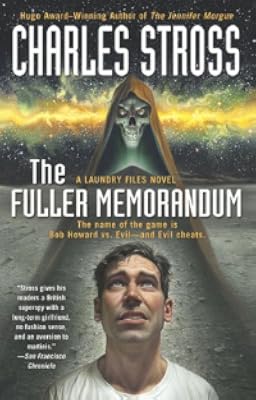
questbird A collection of Isaac Asimov's Robot stories, where he makes his Three Laws of Robotics explicit. These Three Laws have influenced all subsequent science fiction about robots, including 'Saturn's Children', which is a riff on the Laws.

questbird A tale about robots who carry out their duty to protect humanity to an extreme degree, with negative consequences.
Member Reviews
This story is a classic thriller, in which our gorgeous and sexy heroine Freya offends aristocrats, has to flee for her life, travels widely encountering temporary friends and lovers, has several narrow escapes from her pursuers, and finds herself entangled in complex conspiracies. Except that everybody is some form of artificial intelligence, and the human race is extinct.
The characters are very human, because in this universe AI was developed by modelling the human brain. And Freya was built as a courtesan, so she's very human-seeming. And so it's jarring when you're settling into the story and suddenly realise that Freya has packed herself into a box to be mailed off on a decades long trip to another planet, or that she's having sex show more with a multi-tonne spaceship, or getting drunk on sulphuric acid. These off-kilter events give the story both humour and a surprising philosophical depth. Stross doesn't pound in the "what does it mean to be human?" line, but it often sneaks up on you. show less
The characters are very human, because in this universe AI was developed by modelling the human brain. And Freya was built as a courtesan, so she's very human-seeming. And so it's jarring when you're settling into the story and suddenly realise that Freya has packed herself into a box to be mailed off on a decades long trip to another planet, or that she's having sex show more with a multi-tonne spaceship, or getting drunk on sulphuric acid. These off-kilter events give the story both humour and a surprising philosophical depth. Stross doesn't pound in the "what does it mean to be human?" line, but it often sneaks up on you. show less
Freya Nakamachi is a sexbot who was unfortunately "born" shortly after the human race went extinct. So she and her sisters spread out across the solar system, without much meaning in their lives. Since they are so fundamentally useless, they're at the bottom of the social scale. On Venus, Freya accidentally pisses off a very rich and powerful aristocrat. Freya books a quick passage off-world by getting a job as a courier to far-off Eris, and finds out that some of her sisters have been down this road before, and maybe they were up to more than she thought.
This is actually the FIRST book in a series of which I already read the SECOND book, Neptune's Brood. They take place in the same world, but thousands of years apart and there's no show more character overlap. It's really fascinating to see the progression of "human" civilization over the course of so many years. As you might expect, there is some mildly graphic sex in here, but it's not cheesy or flowery, and most of it is sexbot + spaceship or sexbot + robotic sleeping bag, so it's just funny. As with Neptune's Brood, the mostly-female characters are spectacularly written. It's a solidly good read, for sure, but not as fabulous as its sequel. Freya is interesting and believable, but not as awesome as Krina.
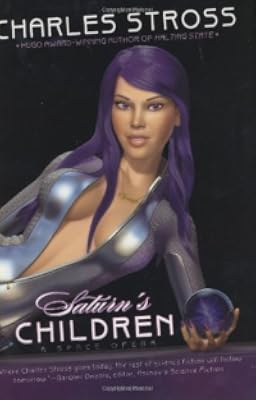
P.S. Don't judge this book by its terrible U.S. cover - the author says on his blog that he doesn't like this cover and he had no say in the matter. show less
This is actually the FIRST book in a series of which I already read the SECOND book, Neptune's Brood. They take place in the same world, but thousands of years apart and there's no show more character overlap. It's really fascinating to see the progression of "human" civilization over the course of so many years. As you might expect, there is some mildly graphic sex in here, but it's not cheesy or flowery, and most of it is sexbot + spaceship or sexbot + robotic sleeping bag, so it's just funny. As with Neptune's Brood, the mostly-female characters are spectacularly written. It's a solidly good read, for sure, but not as fabulous as its sequel. Freya is interesting and believable, but not as awesome as Krina.
P.S. Don't judge this book by its terrible U.S. cover - the author says on his blog that he doesn't like this cover and he had no say in the matter. show less
This is a post-human future with only robots. The title must be a reference to the myth that Saturn ate his own children. However, in this case, it's the children who survive.
The idea that humanity went extinct because we didn't notice global warming until the oceans literally boiled is silly. However, it is deliberately silly, one guesses. The author simply needs this, or something like this, to be true for his setting to hold together, so that's what he posits. Of course it's ridiculous; just note it and move on.
A deeper problem, which kept pulling me out of the story, is that the narrator is constantly explaining her society and the technology that animates the beings in it, in a way that would make no sense in an actual memoir show more written by someone in that society. An analogy: Suppose that you're reading a novel set in the current real world, and you come across this passage:
"I had gone several hours without replenishing my energy stores, so I placed a slab of animal tissue into my mouth. I moved my mandible up and down repeatedly, causing hard bony structures in my mouth to grind the tissue, and then muscles guided the pulped tissue down into my torso. At that point, certain organs would disassemble it chemically, and ultimately use it to construct adenosine triphosphate, which stores energy that my body can draw upon as needed."
Now this would be a bizarre thing for an author to write (though perhaps amusing in small doses), but its analogues pop up constantly in Saturn's Children. We get descriptions, e.g., of what happens when the narrator sleeps, how her body repairs radiation damage, etc. But her contemporaries in this society would already know all this, so she wouldn't bother to explain it for them. Of course, we actual human readers in the early 21st century need to know this stuff, but one wishes it had been handled better.
On to plot elements:
The robots can insert "soul chips" that contain memories of other robots. This feature creates a lot of confusion. This is amplified by the fact that the narrator is a spy who hangs out with other spies, who have incentive to mix up their identities and sow general, well, confusion. What on earth? Who is who? Who was trying to pull a burn on whom, and who got burned? I can't tell if it really is complicated, or it's actually all very simple, and that the only reason it seems complicated is that there really isn't much there, there.
(The references to Heinlein's Friday were fun. E.g., at one point our heroine checks into a hotel under the assumed name "F. Baldwin," and her liaison addresses her as "Fri-" before she interrupts him.) show less
The idea that humanity went extinct because we didn't notice global warming until the oceans literally boiled is silly. However, it is deliberately silly, one guesses. The author simply needs this, or something like this, to be true for his setting to hold together, so that's what he posits. Of course it's ridiculous; just note it and move on.
A deeper problem, which kept pulling me out of the story, is that the narrator is constantly explaining her society and the technology that animates the beings in it, in a way that would make no sense in an actual memoir show more written by someone in that society. An analogy: Suppose that you're reading a novel set in the current real world, and you come across this passage:
"I had gone several hours without replenishing my energy stores, so I placed a slab of animal tissue into my mouth. I moved my mandible up and down repeatedly, causing hard bony structures in my mouth to grind the tissue, and then muscles guided the pulped tissue down into my torso. At that point, certain organs would disassemble it chemically, and ultimately use it to construct adenosine triphosphate, which stores energy that my body can draw upon as needed."
Now this would be a bizarre thing for an author to write (though perhaps amusing in small doses), but its analogues pop up constantly in Saturn's Children. We get descriptions, e.g., of what happens when the narrator sleeps, how her body repairs radiation damage, etc. But her contemporaries in this society would already know all this, so she wouldn't bother to explain it for them. Of course, we actual human readers in the early 21st century need to know this stuff, but one wishes it had been handled better.
On to plot elements:
The robots can insert "soul chips" that contain memories of other robots. This feature creates a lot of confusion. This is amplified by the fact that the narrator is a spy who hangs out with other spies, who have incentive to mix up their identities and sow general, well, confusion. What on earth? Who is who? Who was trying to pull a burn on whom, and who got burned? I can't tell if it really is complicated, or it's actually all very simple, and that the only reason it seems complicated is that there really isn't much there, there.
(The references to Heinlein's Friday were fun. E.g., at one point our heroine checks into a hotel under the assumed name "F. Baldwin," and her liaison addresses her as "Fri-" before she interrupts him.) show less
Well handled post-apocalyptic setting where life after human beings goes on pretty much unfazed in the form of human-equivalent AI robots. Space travel is still rubbish even if you're a robot, underclocking your brain to get through the tedium and confinement with much less and slower awareness doesn't help that much. A brilliant conceit, but then all of Stross's conceits are brilliant. Written as a tribute to late period Heinlein novels so it's a story of sex, intrigue and labyrinthine plotting.
MASSIVE SPOILERS
I think one of the most striking things about this book is that it thinks itself outside of humanity by presenting a world where our veneration of biological life is discarded as irrelevant, because it's the way we think and our show more culture that defines who we are. The robots we built carry that on without us. It's the perfect set up for a post-humanity culture which doesn't agonise about climate change until the Gulf of Mexico hits a rolling boil which is an image that has stuck with me ever since. In this world the prospect of biological humanity returning means nothing good, and it's hard to root for it when experiencing a culture that has outgrown any need for us to exist. show less
MASSIVE SPOILERS
I think one of the most striking things about this book is that it thinks itself outside of humanity by presenting a world where our veneration of biological life is discarded as irrelevant, because it's the way we think and our show more culture that defines who we are. The robots we built carry that on without us. It's the perfect set up for a post-humanity culture which doesn't agonise about climate change until the Gulf of Mexico hits a rolling boil which is an image that has stuck with me ever since. In this world the prospect of biological humanity returning means nothing good, and it's hard to root for it when experiencing a culture that has outgrown any need for us to exist. show less
Thrust into a widening game of spycraft, our android protagonist Freya will grow from a gutter-survivor flotsam-of-society-type to someone in command of her own destiny for a change. The villains and trusted allies swap roles several times, and personalities are likewise interchangeable among robot characters who can swap ‘soul chips' at a moment’s notice. One interesting allowance of this personality exchange mechanism for the story, is that it allows blended flashback narratives from various character viewpoints. After a few iterations, however, it begins to become difficult in telling the various players and their motives apart, and I think this is a deliberate decision on Stross’s part to make the reader identify with show more Freya’s solitary plight. Freya, herself an obsolete sexbot designed to serve humans who have now been extinct for three hundred years, casually alters her appearance frequently and drastically redesigns herself on multiple occasions. Such android adaptability is a theme displayed across the varied locations of the story, and is contrasted against humanity’s own inflexible nature. They exist in the memory of android society as beloved creators, but mysterious and poorly understood. The pacing and action are both healthy, and frequent satirical observations of human foibles through the eyes of our creations are also entertaining. There’s (unsurprisingly) a lot of sex included, though it never feels gratuitous as it occurs as a routine matter for the character; transactional. While the conspiratorial threads come to a satisfying conclusion, I remain unsatisfied with the long-term direction these characters and society are headed, and look forward to some insight from the sequel. show less
3.5 stars
This is one of those books that is so nearly great. Set several hundred years after humanity have died out (due to unspecified causes, but possibly at their own hand through environmental degradation) human influence continues in the solar system in the many intelligent servants (the term 'robot' is the filthiest of insults) that they created, in a society shaped by the psyche of their creators and social power structures of their own making.
The protagonist, Freya, is a - droid? replicant? these machines are alive, fully conscious, thinking and feeling entities - member of a line of courtesan robots, created for the pleasure of men, who find themselves utterly obsolete in a universe where their purpose for being created is long show more gone, and they are physically outmoded, largely because the weight restrictions of space travel have caused smaller, lighter, more compact forms to become more 'fashionable'.
So we have an excellent framework for riffs on free will, social inequality, slavery (while most of the robots were hardwired to serve, some have managed to free themselves from this programming and ruthlessly take the place of vanished humanity, setting themselves up as a new aristocracy), all in the hands of one of the finest SF writers around today. Throw in some great in-jokes (arguments about evolution and religion - "obviously we were made by our creators, so they must have been made by someone else!" - and Freya's programmed, uncontrollable lust-response as a metaphor for love), as well as seriously well thought out hard science that doesn't detract from the fiction (travel between planets in the solar system taking anything between months and years, and being seriously uncomfortable even for the almost indestructible androids), and we have what ought to be a truly great SF novel.
You've probably guessed by this point that there's a problem. I love Stross's writing; his prose is solid, occasionally sparkling, with decent characterisation and, usually, excellent pace and plotting. In Saturn's Children, the main plot driver is in the form of 'soul chips', recording chips for experiences and personality development, from one of Freya's supposedly dead 'sisters', which Freya is slowly absorbing into her own memories, to the extent that she begins to dream her sister's dreams, and even become her in some circumstances (if you read SF this probably makes sense to you, if not the last sentence may be complete gibberish, for which I apologise). Unfortunately, the effect of these changes of perspective and personality, especially toward the end of the book, become extremely confusing and frustrating. While this is Freya's state of mind, and since it is told in the first person this can be argued to be consistent, it does mean that the plot gets rather lost. Which is a great shame, as it is a book that is well worth reading. As long as you don't mind a fair bit of robot sex.
Other books I'd place it with thematically:
Asimov's Robot books (of course), which it frequently references
[a:Justina Robson|224518|Justina Robson|http://www.goodreads.com/images/nophoto/nophoto-F-50x66.jpg]'s {book:Natural History] (possibly the best exploration of human-made machine intelligence I've read)
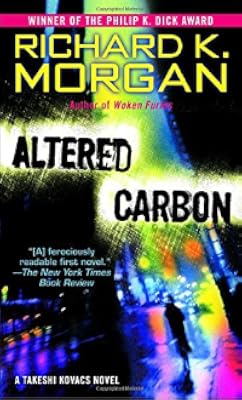
[a:Richard Morgan|16496|Richard K. Morgan|http://photo.goodreads.com/authors/1175224722p2/16496.jpg]'s [b:Altered Carbon|40445|Altered Carbon (Takeshi Kovacs, #1)|Richard K. Morgan|http://ecx.images-amazon.com/images/I/510nes2HGmL._SL75_.jpg|2095852] (a superb noir thriller in future where consciousness can be easily transferred between bodies, with almost pornographic levels of sex and violence) show less
This is one of those books that is so nearly great. Set several hundred years after humanity have died out (due to unspecified causes, but possibly at their own hand through environmental degradation) human influence continues in the solar system in the many intelligent servants (the term 'robot' is the filthiest of insults) that they created, in a society shaped by the psyche of their creators and social power structures of their own making.
The protagonist, Freya, is a - droid? replicant? these machines are alive, fully conscious, thinking and feeling entities - member of a line of courtesan robots, created for the pleasure of men, who find themselves utterly obsolete in a universe where their purpose for being created is long show more gone, and they are physically outmoded, largely because the weight restrictions of space travel have caused smaller, lighter, more compact forms to become more 'fashionable'.
So we have an excellent framework for riffs on free will, social inequality, slavery (while most of the robots were hardwired to serve, some have managed to free themselves from this programming and ruthlessly take the place of vanished humanity, setting themselves up as a new aristocracy), all in the hands of one of the finest SF writers around today. Throw in some great in-jokes (arguments about evolution and religion - "obviously we were made by our creators, so they must have been made by someone else!" - and Freya's programmed, uncontrollable lust-response as a metaphor for love), as well as seriously well thought out hard science that doesn't detract from the fiction (travel between planets in the solar system taking anything between months and years, and being seriously uncomfortable even for the almost indestructible androids), and we have what ought to be a truly great SF novel.
You've probably guessed by this point that there's a problem. I love Stross's writing; his prose is solid, occasionally sparkling, with decent characterisation and, usually, excellent pace and plotting. In Saturn's Children, the main plot driver is in the form of 'soul chips', recording chips for experiences and personality development, from one of Freya's supposedly dead 'sisters', which Freya is slowly absorbing into her own memories, to the extent that she begins to dream her sister's dreams, and even become her in some circumstances (if you read SF this probably makes sense to you, if not the last sentence may be complete gibberish, for which I apologise). Unfortunately, the effect of these changes of perspective and personality, especially toward the end of the book, become extremely confusing and frustrating. While this is Freya's state of mind, and since it is told in the first person this can be argued to be consistent, it does mean that the plot gets rather lost. Which is a great shame, as it is a book that is well worth reading. As long as you don't mind a fair bit of robot sex.
Other books I'd place it with thematically:
Asimov's Robot books (of course), which it frequently references
[a:Justina Robson|224518|Justina Robson|http://www.goodreads.com/images/nophoto/nophoto-F-50x66.jpg]'s {book:Natural History] (possibly the best exploration of human-made machine intelligence I've read)
[a:Richard Morgan|16496|Richard K. Morgan|http://photo.goodreads.com/authors/1175224722p2/16496.jpg]'s [b:Altered Carbon|40445|Altered Carbon (Takeshi Kovacs, #1)|Richard K. Morgan|http://ecx.images-amazon.com/images/I/510nes2HGmL._SL75_.jpg|2095852] (a superb noir thriller in future where consciousness can be easily transferred between bodies, with almost pornographic levels of sex and violence) show less
I am always all over the place with Stross. He is a gifted writer and can really put a story together but sometimes his books just don't knock me out.
This book was good but I admit that I was expecting more and it wasn't nearly as clever as I think it was suppose to be. I will continue to read Stross but I have a feeling he is going to always be one of those writers that just completely wows me or is just all right.
This book was good but I admit that I was expecting more and it wasn't nearly as clever as I think it was suppose to be. I will continue to read Stross but I have a feeling he is going to always be one of those writers that just completely wows me or is just all right.
Members
- Recently Added By
Published Reviews
ThingScore 100
Author Information

119+ Works 45,485 Members
Born in Leeds, England, Charles Stross knew he wanted to be a science fiction writer from the age of six. Despite this, he went to university in London and qualified as a Pharmacist. He made his first writing sale to Interzone in 1986, and sold about a dozen stories elsewhere throughout the late 1980s and early 1990s. He now writes fiction show more full-time, has sold about 16 novels, has won one Hugo award and been nominated nearly a dozen times, and has been translated into about a dozen languages. He is the author of the Merchant Princes series. His latest book, The Revolution Business, is the fifth in this series. He lives in Edinburgh, Scotland, with his wife Feorag. (Bowker Author Biography) show less
Some Editions
Awards and Honors
Awards
Distinctions
Series

Belongs to Publisher Series
Common Knowledge
- Original title
- Saturn's children
- Original publication date
- 2008-07
- People/Characters
- Freya Nakamichi-47; Rhea; Stone; Victor; Milton; Ichiban (show all 32); Lindy; Telemus; High Wire; Cinnabar Paris; Juliette; Blunt; Jeeves; Dr. Knox; Miss Rutherford; Oscar; Dr. Murgatoyd; Bill; Ben; Granita Ford; Reza Agile; Sinbad-15; Mary X. Valusia; Pygmalion; Lyrae twins; Dachus (Daks); Petruchio (Pete); Indefatigable; Bilbo; Reginald; Icarus Express; Ecks
- Important places
- Maxwell Montes, Venus; Cinnabar, Mercury; Bifrost, Mars; Marsport, Deimos; Barsoom, Mars; Hellasport, Mars (fictional) (show all 16); Marsport, Mars; Nerrivik, Callisto; Valhalla Basin, Callisto; Heinleingrad, Eris; Venus; Mercury; Mars; Deimos; Callisto; Eris
- Epigraph
- 'If I have seen further it is by standing on the shoulders of Giants.'
- Sir Isaac Newton - Dedication
- This book is dedicated to the memory of two of the giants of science fiction:
Robert Anson Heinlein (July 7, 1907 - May 8, 1988) and
Isaac Asimov (January 2, 1920 - April 6, 1992) - First words
- Today is the two-hundredth anniversary of the final extinction of my One True Love, as close as I can date it.
- Quotations
- Why bother learning all that biochemistry stuff-or how to design a building, or conn a boat, or balance accounts, or solve equations, or comfort the dying-when you can get other people to do all that for you in exchange for a... (show all) blow job?
- Last words
- (Click to show. Warning: May contain spoilers.)I've got lots of birthdays to look forward to. And none of them need fear being eaten by memories of Rhea.
- Blurbers
- Gibson, William; Vinge, Vernor; Dozois, Gardner
- Original language
- English
Classifications
Statistics
- Members
- 1,427
- Popularity
- 16,545
- Reviews
- 63
- Rating
- (3.47)
- Languages
- English, Estonian, German, Italian
- Media
- Paper, Audiobook, Ebook
- ISBNs
- 21
- ASINs
- 9