On This Page
Description
Crossover is the first novel in a series which follows the adventures of Cassandra Kresnov, an artificial person, or android, created by the League, one side of an interstellar war against the more powerful, conservative Federation. Cassandra is an experimental design -- more intelligent, more creative, and far more dangerous than any that have preceded her. But with her intellect come questions, and a moral awakening. She deserts the League and heads incognito into the space of her former show more enemy, the Federation, in search of a new life.Her chosen world is Callay, and its enormous, decadent capital metropolis of Tanusha, where the concerns of the war are literally and figuratively so many light years away. But the war between the League and the Federation was ideological as much as political, with much of that ideological dispute regarding the very existence of artificial sentience and the rules that govern its creation. Cassandra discovers that even in Tanusha, the powerful entities of this bloody conflict have wound their tentacles. Many in the League and the Federation have cause to want her dead, and Cassandra's history, inevitably, catches up with her.
Cassandra finds herself at the mercy of a society whose values preclude her own right even to exist. But her presence in Tanusha reveals other fault lines, and when Federal agents attempt to assassinate the Callayan president, she finds herself thrust into the service of her former enemies, using her lethal skills to attempt to protect her former enemies from forces beyond their ability to control. As she struggles for her place and survival in a new world, Cassandra must forge new friendships with old enemies, while attempting to confront the most disturbing and deadly realities of her own existence.
. show less
Tags
Recommendations


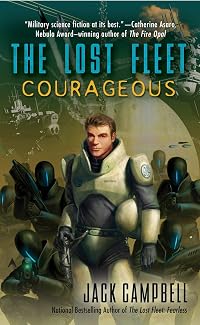
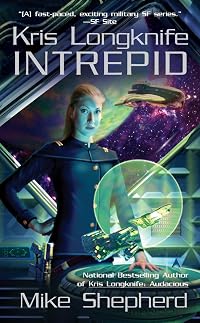
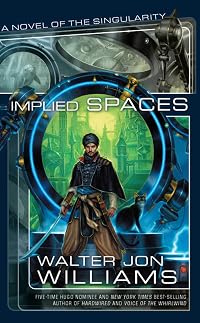


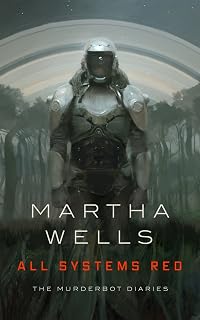
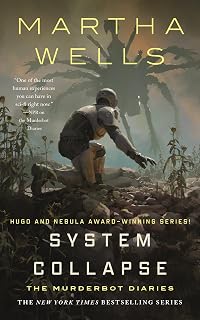
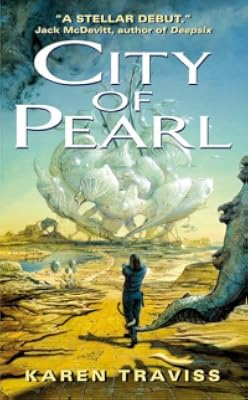
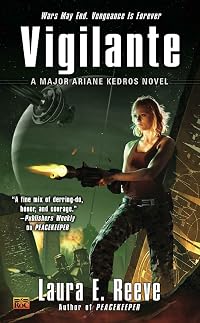
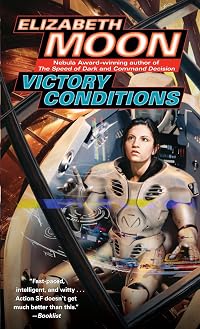
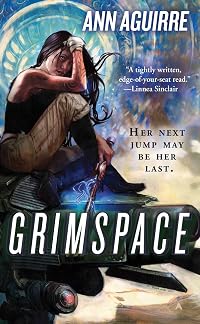
Member Recommendations
Member Reviews
Three things make "Crossover" a good solid science fiction novel: an action-packed cyberpunkish plot about far future inter-stellar political and military intrigue, a willingness to explore the issues around whether an man-made soldier can also be a person and, most of all, strong female characters, especially the artificial soldier herself, Cassandra Kresnov.
Joel Shepard builds his future world with care, paying attention to history. culture, and politics and setting up conflicts that are more complex than good-guys versus bad-guys. He has created a credible, engaging universe that could be the foundation for a good series of books.
The thriller plot has some excellently executed action scenes and just enough political intrigue to vary show more the pace.
Yet this isn't a "Olympus Has Fallen" you have 24 hours to save the universe kind of book. It's main focus is on Cassandra Kresnov who was built to be a super-soldier but has gone AWOL to see if she can do more with her life. A lot of the novel is spent exploring what it means to be sentient but not human, to look human but to be a formidable weapon, even when unarmed. Joel Shepherd gives this debate an excellent via a gruesome scene, early in the novel, where Cassandra is treated like a thing rather than a person and subjected to unbearable cruelty. By the end of this, I had no doubt Cassandra was a person.
Cassandra is not written a human who happens to have a different biology. She is, in many ways, alien and threatening. She knows why she was built, she just doesn't believe that she has to be bound by her maker's intent. We see her as "Captain Kresnov" commanding a crew of super-soldiers, slightly less advanced than her, who she cares for and who virtually worship her. We see her as the wannabe civilian, looking for a job, going to art galleries, picking up a man, trying to build a life. we watch her build trust, suffer grief, be overwhelmed by anger and crippled by fear. We are given every opportunity to like her. The humans she interacts with are more than foils or plot devices, the SWAT squad leader and the President of the planet are drawn with precise, confident strokes that make them easy to imagine.
I found the start of the book a little slow but I suspect this was more to do with how the book was narrated. Later in the book, Dina Pearlman does an excellent job with both the dialogue (wonderful accents and distinct voices for the main characters) and with action scenes, but her reading of the early scene-setting descriptions and some of Kesnov's internal reflections is a little flat and unsympathetic. I also thought the last chapter of the book could have been omitted or given more bite. But these are small complaints. This was a book I read with pleasure, wanting to know what happened next, caring about the characters and kept interested in the diversity of the world in which the action takes place. show less
Joel Shepard builds his future world with care, paying attention to history. culture, and politics and setting up conflicts that are more complex than good-guys versus bad-guys. He has created a credible, engaging universe that could be the foundation for a good series of books.
The thriller plot has some excellently executed action scenes and just enough political intrigue to vary show more the pace.
Yet this isn't a "Olympus Has Fallen" you have 24 hours to save the universe kind of book. It's main focus is on Cassandra Kresnov who was built to be a super-soldier but has gone AWOL to see if she can do more with her life. A lot of the novel is spent exploring what it means to be sentient but not human, to look human but to be a formidable weapon, even when unarmed. Joel Shepherd gives this debate an excellent via a gruesome scene, early in the novel, where Cassandra is treated like a thing rather than a person and subjected to unbearable cruelty. By the end of this, I had no doubt Cassandra was a person.
Cassandra is not written a human who happens to have a different biology. She is, in many ways, alien and threatening. She knows why she was built, she just doesn't believe that she has to be bound by her maker's intent. We see her as "Captain Kresnov" commanding a crew of super-soldiers, slightly less advanced than her, who she cares for and who virtually worship her. We see her as the wannabe civilian, looking for a job, going to art galleries, picking up a man, trying to build a life. we watch her build trust, suffer grief, be overwhelmed by anger and crippled by fear. We are given every opportunity to like her. The humans she interacts with are more than foils or plot devices, the SWAT squad leader and the President of the planet are drawn with precise, confident strokes that make them easy to imagine.
I found the start of the book a little slow but I suspect this was more to do with how the book was narrated. Later in the book, Dina Pearlman does an excellent job with both the dialogue (wonderful accents and distinct voices for the main characters) and with action scenes, but her reading of the early scene-setting descriptions and some of Kesnov's internal reflections is a little flat and unsympathetic. I also thought the last chapter of the book could have been omitted or given more bite. But these are small complaints. This was a book I read with pleasure, wanting to know what happened next, caring about the characters and kept interested in the diversity of the world in which the action takes place. show less
The best science fiction engage readers by posing serious questions. The best adventure stories leave readers on the edge of their seats. Crossover, by Joel Shepherd, the first installment of the Cassandra Kresnov series, does both. The story follows the adventures of Cassandra Kresnov, a war veteran, fugitive, and synthetic person.
The novel begins with Kresnov interviewing at several tech firms on the planet of Callay. Her most recent interview is in the “enormous, decadent capital metropolis of Tanusha.” She has interviews, meets men, and has the occasional one-night stand. From the get go, it noticed two things. The first involved biomechanical modification in Tanusha and its relative normalcy, reminiscent of modifications done show more in the Culture novels of Iain Banks. The second is Cassandra’s sexual assertiveness.
Following a successful interview and a night on the town, Cassandra is captured and vivisected by forces we later find out are part of the Federal Intelligence Agency. But her captors are discovered, she is rebuilt, and she is placed in military custody. Shackled to a hospital bed and heavily sedated, she has to deal with doctors, politicians, and security personnel. Here’s where political background is important. Cassandra fled her home system, the League, and settled in Callay, a wealthy planet belonging to the Federation. Using very broad strokes, the League has a gung ho scientific adventurism combined with an exploratory spirit unshackled by archaic cultural loyalties. By contrast, the Federation is a more staid and conservative political entity. Here the term conservative means Earth-centric and it still favors an architecture and culture reviving and honoring Earth’s history, cultures, and religions. One of the main tenets of the Federation’s political idea is the outright ban on synthetic humans.
Crossover is a tale of the social contract. At the foundation of every social contract is trust. Cassandra feels frustrated while the Callay leadership feels threatened. Unlike garden variety humans, the General Issue (or G.I.) synthetic human used for military operations is stronger and faster. Cassandra has bones made from the same ceramic material used in spacecraft fuselages. But Cassandra isn’t the standard G.I., her model variant represents a major jump in cognitive ability. Previous models have had a basic intelligence, but nothing to match Cassandra’s non-linear and strategic thinking abilities.
The synthetic humans also have emotions, libidos, and an active sexuality. In one of the many flashbacks, we see Cassandra, the superior officer, having sex with her squad. Besides acting as a release valve for tensions accrued on the battlefield, Cassandra and her squad members see it as a means of unit cohesion, an erotic esprit de corps.
Things become complicated when there is an assassination attempt on the Callayan president. Crossover creates a believable political environment, fractious and messy. Cassandra saves the life of the president. The Federation units that attacked the president also used synthetic humans. The long-simmering tension between Cassandra and her political handlers elevates this story from mere “actioner” to something more. Reading the book reminded me of Caprica and how that series attempted to answer questions of politics, faith, and violence.
The political clash occurs when the Callayan president, Katia Neiland, is unseated in a power grab by Governor Dali, an offworlder. Under normal circumstances, the planetary governor is a ceremonial position and the president sees to day-to-day issues. One sees similar arrangements in Commonwealth nations, where the Prime Minister is head of the government and the Governor-General acts as a representative of the Crown. While Shepherd handles the action scenes with gusto, what most impressed me were the political discussions. President Neiland has to figure out how to integrate Cassandra into Callayan society without it becoming an act of political suicide. The best politicians are those able to ride the tiger of fickle public opinion. The challenge Neiland faces is the anti-synthetic human sentiment that has been the philosophical bedrock of the Federation. Neiland has to massage the opposition not only to accept change, but to accept drastic change to their longstanding social order. This is why science fiction is reflective of the present, not necessarily an accurate measure of the future.
The change Neiland seeks is complicated by the fact that Cassandra helped save her life and has been rewarded with a position with the Callayan military security apparatus. Shepherd creates scenes where politicians hash out the issues and controversies facing them. They read like extended college bull sessions.
This is a roundabout way of getting back to the main question, “What does it mean to be human?” In the case of Cassandra Kresnov, it is becoming integrated into Callayan society and becoming a part of the overarching social contract. The implications are enormous, since President Neiland seeks to grant her personal independence and equality. We learn from Cassandra that the League considered synthetic humans nothing more than disposable soldiers, yet another tool that would allow the League to avoid using biological humans in war. It is the great irony that the society most accepting of scientific progress became the one that exploited the synthetic humans so severely. Another irony is that the most vehemently anti-synthetic human society would have politicians brave enough to experiment with human-synthetic equality. Since Crossover is the first in an ongoing series, the tough questions have not been conclusively answered and the threat of the Federal Intelligence Agency has not been completely neutralized.
Cassandra Kresnov is not human in the purely biological sense. She wasn’t born, she was made. At root, she resembles a very smart machine. But when is a machine not a machine? Cassandra’s appearance mimics that of biological humans, but she is made of different, stronger stuff. Since she is a higher-level model, she also possesses more intelligence. Sentience is a dangerous thing, especially when sentience blossoms into personal self-awareness. When non-humans possess intelligence and awareness, it becomes a natural reaction for society to limit non-human power and access. It is also human nature to label people that are different – different race, different sexual orientation, different religion – as something subhuman and other. (Academia uses the term “othering” for such behavior.) This fear has led to oppressive hierarchies and impressive feats of mental contortion. Crossover’s exciting action scenes don’t overshadow the key question, “What would happen to society if we had to integrate human-like machines that are stronger and more dangerous than us?” Would we relegate them to be our slaves and cannon fodder, or would we make them our equals? It is a question worth pondering.
https://driftlessareareview.com/2014/02/27/on-being-human-redux-crossover-cassan... show less
The novel begins with Kresnov interviewing at several tech firms on the planet of Callay. Her most recent interview is in the “enormous, decadent capital metropolis of Tanusha.” She has interviews, meets men, and has the occasional one-night stand. From the get go, it noticed two things. The first involved biomechanical modification in Tanusha and its relative normalcy, reminiscent of modifications done show more in the Culture novels of Iain Banks. The second is Cassandra’s sexual assertiveness.
Following a successful interview and a night on the town, Cassandra is captured and vivisected by forces we later find out are part of the Federal Intelligence Agency. But her captors are discovered, she is rebuilt, and she is placed in military custody. Shackled to a hospital bed and heavily sedated, she has to deal with doctors, politicians, and security personnel. Here’s where political background is important. Cassandra fled her home system, the League, and settled in Callay, a wealthy planet belonging to the Federation. Using very broad strokes, the League has a gung ho scientific adventurism combined with an exploratory spirit unshackled by archaic cultural loyalties. By contrast, the Federation is a more staid and conservative political entity. Here the term conservative means Earth-centric and it still favors an architecture and culture reviving and honoring Earth’s history, cultures, and religions. One of the main tenets of the Federation’s political idea is the outright ban on synthetic humans.
Crossover is a tale of the social contract. At the foundation of every social contract is trust. Cassandra feels frustrated while the Callay leadership feels threatened. Unlike garden variety humans, the General Issue (or G.I.) synthetic human used for military operations is stronger and faster. Cassandra has bones made from the same ceramic material used in spacecraft fuselages. But Cassandra isn’t the standard G.I., her model variant represents a major jump in cognitive ability. Previous models have had a basic intelligence, but nothing to match Cassandra’s non-linear and strategic thinking abilities.
The synthetic humans also have emotions, libidos, and an active sexuality. In one of the many flashbacks, we see Cassandra, the superior officer, having sex with her squad. Besides acting as a release valve for tensions accrued on the battlefield, Cassandra and her squad members see it as a means of unit cohesion, an erotic esprit de corps.
Things become complicated when there is an assassination attempt on the Callayan president. Crossover creates a believable political environment, fractious and messy. Cassandra saves the life of the president. The Federation units that attacked the president also used synthetic humans. The long-simmering tension between Cassandra and her political handlers elevates this story from mere “actioner” to something more. Reading the book reminded me of Caprica and how that series attempted to answer questions of politics, faith, and violence.
The political clash occurs when the Callayan president, Katia Neiland, is unseated in a power grab by Governor Dali, an offworlder. Under normal circumstances, the planetary governor is a ceremonial position and the president sees to day-to-day issues. One sees similar arrangements in Commonwealth nations, where the Prime Minister is head of the government and the Governor-General acts as a representative of the Crown. While Shepherd handles the action scenes with gusto, what most impressed me were the political discussions. President Neiland has to figure out how to integrate Cassandra into Callayan society without it becoming an act of political suicide. The best politicians are those able to ride the tiger of fickle public opinion. The challenge Neiland faces is the anti-synthetic human sentiment that has been the philosophical bedrock of the Federation. Neiland has to massage the opposition not only to accept change, but to accept drastic change to their longstanding social order. This is why science fiction is reflective of the present, not necessarily an accurate measure of the future.
The change Neiland seeks is complicated by the fact that Cassandra helped save her life and has been rewarded with a position with the Callayan military security apparatus. Shepherd creates scenes where politicians hash out the issues and controversies facing them. They read like extended college bull sessions.
This is a roundabout way of getting back to the main question, “What does it mean to be human?” In the case of Cassandra Kresnov, it is becoming integrated into Callayan society and becoming a part of the overarching social contract. The implications are enormous, since President Neiland seeks to grant her personal independence and equality. We learn from Cassandra that the League considered synthetic humans nothing more than disposable soldiers, yet another tool that would allow the League to avoid using biological humans in war. It is the great irony that the society most accepting of scientific progress became the one that exploited the synthetic humans so severely. Another irony is that the most vehemently anti-synthetic human society would have politicians brave enough to experiment with human-synthetic equality. Since Crossover is the first in an ongoing series, the tough questions have not been conclusively answered and the threat of the Federal Intelligence Agency has not been completely neutralized.
Cassandra Kresnov is not human in the purely biological sense. She wasn’t born, she was made. At root, she resembles a very smart machine. But when is a machine not a machine? Cassandra’s appearance mimics that of biological humans, but she is made of different, stronger stuff. Since she is a higher-level model, she also possesses more intelligence. Sentience is a dangerous thing, especially when sentience blossoms into personal self-awareness. When non-humans possess intelligence and awareness, it becomes a natural reaction for society to limit non-human power and access. It is also human nature to label people that are different – different race, different sexual orientation, different religion – as something subhuman and other. (Academia uses the term “othering” for such behavior.) This fear has led to oppressive hierarchies and impressive feats of mental contortion. Crossover’s exciting action scenes don’t overshadow the key question, “What would happen to society if we had to integrate human-like machines that are stronger and more dangerous than us?” Would we relegate them to be our slaves and cannon fodder, or would we make them our equals? It is a question worth pondering.
https://driftlessareareview.com/2014/02/27/on-being-human-redux-crossover-cassan... show less
Shepherd, Joel. Crossover. 2001. Cassandra Kresnov No. 1. Pyr, 2006.
Australian science fiction is sometimes a bit slow to penetrate the U.S. market. Although Joel Shepherd is a writer with more than 20 titles in his list, Crossover is the first one I have read, and I am going to make it a point to read more of his work. His heroine, Cassandra Kresnov, is an android created as a warrior. Star Trek fans will immediately think—Data in a Seven of Nine body with more libido than both of them put together. Post-traumatic stress has caused her to abandon her mission, desert, and try to live in secret in the enemy’s capital. She soon finds herself drawn back into a war that is more morally complex than she ever suspected. Crossover is show more well-plotted, with character-driven action and the R-rated sex and violence one expects from the genre. show less
Australian science fiction is sometimes a bit slow to penetrate the U.S. market. Although Joel Shepherd is a writer with more than 20 titles in his list, Crossover is the first one I have read, and I am going to make it a point to read more of his work. His heroine, Cassandra Kresnov, is an android created as a warrior. Star Trek fans will immediately think—Data in a Seven of Nine body with more libido than both of them put together. Post-traumatic stress has caused her to abandon her mission, desert, and try to live in secret in the enemy’s capital. She soon finds herself drawn back into a war that is more morally complex than she ever suspected. Crossover is show more well-plotted, with character-driven action and the R-rated sex and violence one expects from the genre. show less
This was a reread, and better than I remembered it was.
I have the next 2 in the series on my kindle and had therefore read them more often. In all three, there's a quite a lot of movie-type violence, because what's the point of making an artificial supersoldier if they don't get to super-combat.
But in this first one, there's also quite a lot of philosophical musing about the differences and similarities between artificially created and naturally born humans, and differences in societal consensus and power, and all kinds of interesting stuff.
Also, the two main characters are both women, and their developing friendship is part of the story.
I have the next 2 in the series on my kindle and had therefore read them more often. In all three, there's a quite a lot of movie-type violence, because what's the point of making an artificial supersoldier if they don't get to super-combat.
But in this first one, there's also quite a lot of philosophical musing about the differences and similarities between artificially created and naturally born humans, and differences in societal consensus and power, and all kinds of interesting stuff.
Also, the two main characters are both women, and their developing friendship is part of the story.
Even a re-read was good
I first read this series when it was released in 2010. The SF aspects are fun and inventive, even 9 years later. The melange of cultures and the tangled web of government makes for a very deep world. I’m glad I took the time to reacquaint myself with this universe.
I first read this series when it was released in 2010. The SF aspects are fun and inventive, even 9 years later. The melange of cultures and the tangled web of government makes for a very deep world. I’m glad I took the time to reacquaint myself with this universe.
So despite my stylistic issues, the book was a fun, easy read. Something I can definitely recommend to people (I’m always particular in blanketing recommending something, so I’ll say if you like fast-paced, complex politics and technologies with a human core for stories, you’ll like this), and I look forward to reading the next book in this series. Or trilogy? There’s at least three, I know that much. Whatever Shepherd's up to, this is a promising start to what could be a really fun series. And I think that now that Shepherd has his world and characters under his belt, we’re going to see some interesting stuff in the second book.
And this is totally random, but this is another one of those books that I could see working really show more well as a movie or a television series. :)
For a full review, which may or may not include spoilers, please click here: http://calico-reaction.livejournal.com/19352.html show less
And this is totally random, but this is another one of those books that I could see working really show more well as a movie or a television series. :)
For a full review, which may or may not include spoilers, please click here: http://calico-reaction.livejournal.com/19352.html show less
This book takes place a few hundred years into our future, where the known universe has split into two factions: The League and the Federation. The League is into no-limits science, such as the creation of artificial soldiers known as GIs (General Issues), whereas the Federation sticks to traditional, historic values. However, the lines are blurred when an experimental GI defects from the League to the Federation. This book is heavy on the politics of both League vs. Federation and the in-fighting within the Federation, specifically on the planet that protagonist Cassandra Kresnov flees to. The slow parts of the book, for me, were the descriptions of the sprawling city of Tanusha. Interesting but over-long. The action was excellent, show more with running gun battles and super-heroic feats thanks to Kresnov's artificial body. Kresnov is a likeable, honorable character, as are most of the people she meets. Overall, I enjoyed the book. It didn't blow me away, but it was a good read generally. show less
Members
- Recently Added By
Lists

Read-alike - Murderbot Diaries, Martha Wells
22 works; 1 member
Author Information

26 Works 2,487 Members
Joel Shepherd was born in 1974 in Adelaide, South Australia. He studied film and television arts and international relations, at Curtin University. His books include The Cassandra Kresnov Novels - Crossover, Breakaway, Killswitch, 23 Years on Fire, Operation Shield, and Originator, and The Spiral Wars trilogy (the first two books are The Drysine show more Legacy and Renegade). His series A Trial of Blood and Steel includes Sasha, Petrodor, Tracato, and Haven. (Bowker Author Biography) show less
Some Editions
Awards and Honors
Awards
Series

Common Knowledge
- Canonical title
- Crossover
- Original publication date
- 2006-08-01
- People/Characters
- Cassandra Kresnov; Vanessa Rice
- Dedication
- To my parents, for making everything possible
- Blurbers
- Buckell, Tobias S.; de Pierres, Marianne
Classifications
Statistics
- Members
- 514
- Popularity
- 58,408
- Reviews
- 15
- Rating
- (3.64)
- Languages
- English, German
- Media
- Paper, Audiobook, Ebook
- ISBNs
- 9
- ASINs
- 8