On This Page
Description
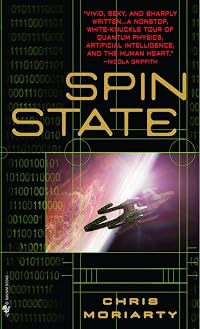
From a stunning new voice in hard science fiction comes the thrilling story of one woman's quest to wrest truth from chaos, love from violence, and reality from illusion in a post-human universe of emergent AIs, genetic constructs, and illegal wetware. . . . UN Peacekeeper Major Catherine Li has made thirty-seven faster-than-light jumps in her lifetime--and has probably forgotten more than most people remember. But that's what backup hard drives are for. And Li should know; she's been show more hacking her memory for fifteen years in order to pass as human. But no memory upgrade can prepare Li for what she finds on Compson's World: a mining colony she once called home and to which she is sent after a botched raid puts her on the bad side of the powers that be. A dead physicist who just happens to be her cloned twin. A missing dataset that could change the interstellar balance of power and turn a cold war hot. And a mining "accident" that is starting to look more and more like murder. . . . Suddenly Li is chasing a killer in an alien world miles underground where everyone has a secret. And one wrong turn in streamspace, one misstep in the dark alleys of blackmarket tech and interstellar espionage, one risky hookup with an AI could literally blow her mind. show lessTags
Recommendations


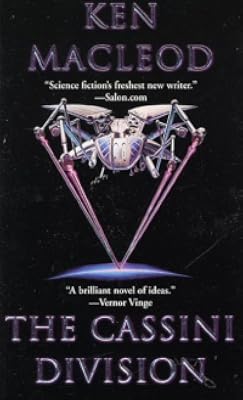
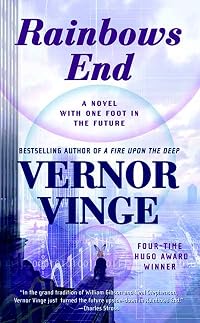
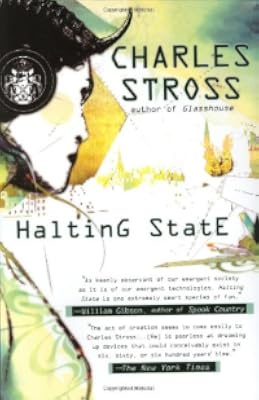
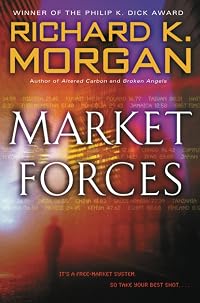


Member Recommendations
mummimamma Loosely connected series
by anonymous user
thegryph Both have military-minded female protagonists in an SF world that has blurry lines between human and machine.
Member Reviews
Oh my yes. Oh MY yes.
Some years ago, I made a conscious effort to switch my home genre from hard SF to fantasy. Fantasy had more women writing in it, and it seemed to be growing and developing as a genre, while SF stagnated. There seemed to be far fewer fantasy books where women existed only as prizes, as nonsentients, as set dressing, as motivation for the Man to do Manly Things for Manly Reasons. There were fewer (though still many, sadly) fantasy books where queer people and brown people just didn't exist. There was heart in fantasy, too, that hard SF seemed to have lost.
At first it was rough, trading spaceships for dragons. But I adjusted.
But this book. This book is everything I once hoped to find in hard SF and gave up on ever show more seeing there. It's smart and fun and imaginative and there's enough science to make you salivate. The characters are real people, the future comes in all colors, and queerness appears to be standard-issue. The technology and science affect society and politics. People remain people, but the world has changed.
And this book is good. It's compelling, it's twisty, it's smart. (Yes, okay, there was a point at like 60% in where I went, "Okay, that's it, that's one twist too many," but I got better.) I read it in a day. (After waiting several days to start it because it begins in my least favorite place: Right Before Everything Goes to Hell. But it's all up from there.) And I finished it wanting more. (And realized it's basically just the setup, and I'm not sure the rest of the series can follow through on the promise of this one. But I'm looking forward to finding out.)
And at the end there was a delightful bonus waiting for me. Most SF books are other genres filtered through an SF lens. Action adventure (but in space)! Court intrigue (but with clones)! Mystery (but with robots)! Literary fiction (but by Philip K. Dick)! It took me until the last 10% of this book to see what genre it's blended with, and once I did, I loved it even more.It's a romance, a romance between an AI and someone who genuinely believes she's incapable of love and has put so much distance between herself and her feelings she can't remember where she put them. (In other words, a romance between my two favorite kinds of people.) And that's something I hardly ever saw in SF in the bad old days (romance is for girls, don't you know). I love it.
Basically, this was awesome and satisfying and made me happy in a way SF hasn't in years. Yes, please, thank you. show less
Some years ago, I made a conscious effort to switch my home genre from hard SF to fantasy. Fantasy had more women writing in it, and it seemed to be growing and developing as a genre, while SF stagnated. There seemed to be far fewer fantasy books where women existed only as prizes, as nonsentients, as set dressing, as motivation for the Man to do Manly Things for Manly Reasons. There were fewer (though still many, sadly) fantasy books where queer people and brown people just didn't exist. There was heart in fantasy, too, that hard SF seemed to have lost.
At first it was rough, trading spaceships for dragons. But I adjusted.
But this book. This book is everything I once hoped to find in hard SF and gave up on ever show more seeing there. It's smart and fun and imaginative and there's enough science to make you salivate. The characters are real people, the future comes in all colors, and queerness appears to be standard-issue. The technology and science affect society and politics. People remain people, but the world has changed.
And this book is good. It's compelling, it's twisty, it's smart. (Yes, okay, there was a point at like 60% in where I went, "Okay, that's it, that's one twist too many," but I got better.) I read it in a day. (After waiting several days to start it because it begins in my least favorite place: Right Before Everything Goes to Hell. But it's all up from there.) And I finished it wanting more. (And realized it's basically just the setup, and I'm not sure the rest of the series can follow through on the promise of this one. But I'm looking forward to finding out.)
And at the end there was a delightful bonus waiting for me. Most SF books are other genres filtered through an SF lens. Action adventure (but in space)! Court intrigue (but with clones)! Mystery (but with robots)! Literary fiction (but by Philip K. Dick)! It took me until the last 10% of this book to see what genre it's blended with, and once I did, I loved it even more.
Basically, this was awesome and satisfying and made me happy in a way SF hasn't in years. Yes, please, thank you. show less
Catherine Li is a UN Operative with a capital O, doing whatever wetwork is required out on the interplanetary frontier to keep humanity safe. And there's a lot of work that needs doing. While people back home in the metropole enjoy arts, culture, and fine food, the survival of baselines humans rests on a narrow beam above the tumultuous posthuman clades of artificial intelligences and genetic syndicates composed of indoctrinated clones bred to endure the rigors of space. UN superiority is maintained by their control of the FTL communication and transport grid, which requires precious Bose-Einstein condensate crystals from Compton's World, mined from coal veins with backbreaking labor.
After a mission goes wrong, Li is given a chance to show more redeem herself by carrying out an investigation/coverup on Compton's World. The UN's greatest physicist, Hannah Sharrif, and the local UN security chief, died along with hundreds of miners in a subterranean fire that seems linked, in some way, to Sharrif's experiments to find a synthetic replacement for Bose-Einstein condensate crystals. The job is a viper's pit of intrigue, and one that has brought Li back to a planet that she has tried very hard to forget.
Because Sharrif and Li are genetically identical, both from the same clone line, separated by 20 years. But while Sharrif has risen as a scientist against human racism, Li has a fabricated past that says she is only a quarter genetic construct, enough to pass the blood purity laws and work as a spy and soldier. Her augmented genetics have been boosted by specialist cybernetic hardware, making her a posthuman weapon, one who has been aimed by hidden hands, but may take control of her own path.
This book fires on all cylinders: Technothriller infiltration sequences shine, and don't outstay their welcome. Compton's World is a vivid Dickensian nightmare of coal dust and child labor, with a few thousand impoverished and exploited workers propping up prosperity for billions. By far my favorite parts of the book involved Cohen, a centuries old AI who sometimes works with Li on UN projects, but always on his own agenda. Cohen is a sybaritic humanophile, who's elegance and love of the finer things in life conceals an entirely alien intelligence. This is not a story about science and war and politics, though there is plenty of that. This is a love story, to it's quantum entangled core.
The hard scifi is full of provocative ideas, the characters are great, the world-building and plot well-trodden but executed with verve. 20 years on is a great time to read this book, and I'm excited for the rest of the series. show less
After a mission goes wrong, Li is given a chance to show more redeem herself by carrying out an investigation/coverup on Compton's World. The UN's greatest physicist, Hannah Sharrif, and the local UN security chief, died along with hundreds of miners in a subterranean fire that seems linked, in some way, to Sharrif's experiments to find a synthetic replacement for Bose-Einstein condensate crystals. The job is a viper's pit of intrigue, and one that has brought Li back to a planet that she has tried very hard to forget.
Because Sharrif and Li are genetically identical, both from the same clone line, separated by 20 years. But while Sharrif has risen as a scientist against human racism, Li has a fabricated past that says she is only a quarter genetic construct, enough to pass the blood purity laws and work as a spy and soldier. Her augmented genetics have been boosted by specialist cybernetic hardware, making her a posthuman weapon, one who has been aimed by hidden hands, but may take control of her own path.
This book fires on all cylinders: Technothriller infiltration sequences shine, and don't outstay their welcome. Compton's World is a vivid Dickensian nightmare of coal dust and child labor, with a few thousand impoverished and exploited workers propping up prosperity for billions. By far my favorite parts of the book involved Cohen, a centuries old AI who sometimes works with Li on UN projects, but always on his own agenda. Cohen is a sybaritic humanophile, who's elegance and love of the finer things in life conceals an entirely alien intelligence. This is not a story about science and war and politics, though there is plenty of that. This is a love story, to it's quantum entangled core.
The hard scifi is full of provocative ideas, the characters are great, the world-building and plot well-trodden but executed with verve. 20 years on is a great time to read this book, and I'm excited for the rest of the series. show less
I read 'Spin State' at the wrong time. It was first published in 2003 and I would have wholeheartedly enjoyed it back then. I still love sci-fi, but in 2020 found this novel extremely predictable as I've read similar plots so many times before. That may sound damning, but don't get me wrong about the novel's quality. It works very well as a hard sci-fi thriller and there are some interesting features. I waited in vain for the plot to surprise me, though. The protagonist is a bisexual woman, which is pleasantly atypical for hard sci-fi. However, she is also a jaded and traumatised soldier with a dark past who, after a mission gone disastrously wrong, is sent back to her home planet to investigate a mysterious death. Who can she trust? show more Will she have to reckon with her repressed traumatic past? Is there a dark conspiracy at work? Etc. The noir tropes are all present and deployed efficiently: brutal boss-guy, femme fatale, jacked-up goons, downtrodden peons, and a mystery item needing to be recovered (dataset, in this instance).
The action is set on a planet that combines the ultra-high tech (genetically engineered clones, AI, interstellar travel) with the archaic (child labour in mines). While the instability of this is shown via wildcat strikes, it did verge upon hyperbole. With the technology available, it seemed counterproductive and frankly stupid to have so few safety monitoring measures. It's bad for profits when the mine is shut down by an explosion that kills hundreds and was entirely preventable! I mean, capitalism can certainly be that way, but the idea that [b:Germinal|28407|Germinal|Émile Zola|https://i.gr-assets.com/images/S/compressed.photo.goodreads.com/books/1388208755l/28407._SY75_.jpg|941651] would still be happening in a situation of seemingly unlimited technology and labour shortage stretches credulity. The mine scenes were suitably alarming and claustrophobic, though. I might have appreciated the whole thing more had it been from the perspective of the miners, actually. Focusing on the futuristic struggle over employment rights would have made for a more original plot structure.
The kids are down the mine digging for a mysterious crystal that allows FTL travel.It is also a sentient alien, which seemed pretty evident from the start. I liked the comparison with the barrier reef, long dead by the time the book takes place. A famous scientist died down there while investigating the crystal and it is up to our protagonist, Li, to discover how, why, and who. Unfortunately, there isn't a lot of mystery about it. Her investigation hits all the expected notes: warnings from a shadowy organisation, uncertainty about who to trust, reminders of her dark past, an elaborate heist, an ill-advised one night stand, and a great deal of exposition. These are all done very competently, I just found them entirely unsurprising. Perhaps my brain is still in the Pynchon Zone after [b:Gravity's Rainbow|415|Gravity's Rainbow|Thomas Pynchon|https://i.gr-assets.com/images/S/compressed.photo.goodreads.com/books/1414969925l/415._SY75_.jpg|866393] and expects fiction to be not just cryptic but incomprehensibly bizarre. The ending was also very standard: the data is released into the public sphere so the truth can be known! Of course. In the book's defense, it is first in a trilogy so may be setting up less predictable events to come.
The most interesting element, to my mind, was Cohen the seductive Jewish AI. I was amused by the fact that everyone could tell when he was piloting a body as they became at least 50% sexier. It was a refreshing reversal of the sexy-lady-robot trope, as not only is Cohen always gendered as male, but his seductiveness seems entirely unrelated to his embodiment. I also liked his memory palace and decadent tastes.His romantic plotline with Li was rather baffling, though. For once, I didn't mind there being a romantic subplot for a female protagonist, as Li definitely needed something in her depressing life other than trauma and murder investigation. I wasn't quite convinced of why they loved each other, though, and they seemed happier as friends. The narrative told me they were in love, but didn't show what this was based on. At times it felt like they were characters from two quite different sci-fi novels who had met by accident. I also appreciated the references to interplanetary diasporas that had survived after humanity left the ruined Earth to colonise the stars. Ireland may have become uninhabitable, but the IRA is still going strong.
Li's constant agonising over who to trust became slightly tiresome. She's in a noir plotline, so obviously should not trust anyone whatsoever. I did sympathise with her, as she's so traumatised and in need of help yet has no support network whatsoever. It baffles me that in hard sci-fi settings like this all kinds of complex cybernetic enhancement and mental manipulation are possible, yet apparently no-one uses them for PTSD treatment so that soldiers can remain functional. Given the publishing date, perhaps this was a comment on young soldiers traumatised by the War on Terror? But why do such people always end up investigating a mysterious death that turns out to be part of a larger conspiracy? It must be a narrative law. show less
The action is set on a planet that combines the ultra-high tech (genetically engineered clones, AI, interstellar travel) with the archaic (child labour in mines). While the instability of this is shown via wildcat strikes, it did verge upon hyperbole. With the technology available, it seemed counterproductive and frankly stupid to have so few safety monitoring measures. It's bad for profits when the mine is shut down by an explosion that kills hundreds and was entirely preventable! I mean, capitalism can certainly be that way, but the idea that [b:Germinal|28407|Germinal|Émile Zola|https://i.gr-assets.com/images/S/compressed.photo.goodreads.com/books/1388208755l/28407._SY75_.jpg|941651] would still be happening in a situation of seemingly unlimited technology and labour shortage stretches credulity. The mine scenes were suitably alarming and claustrophobic, though. I might have appreciated the whole thing more had it been from the perspective of the miners, actually. Focusing on the futuristic struggle over employment rights would have made for a more original plot structure.
The kids are down the mine digging for a mysterious crystal that allows FTL travel.
The most interesting element, to my mind, was Cohen the seductive Jewish AI. I was amused by the fact that everyone could tell when he was piloting a body as they became at least 50% sexier. It was a refreshing reversal of the sexy-lady-robot trope, as not only is Cohen always gendered as male, but his seductiveness seems entirely unrelated to his embodiment. I also liked his memory palace and decadent tastes.
Li's constant agonising over who to trust became slightly tiresome. She's in a noir plotline, so obviously should not trust anyone whatsoever. I did sympathise with her, as she's so traumatised and in need of help yet has no support network whatsoever. It baffles me that in hard sci-fi settings like this all kinds of complex cybernetic enhancement and mental manipulation are possible, yet apparently no-one uses them for PTSD treatment so that soldiers can remain functional. Given the publishing date, perhaps this was a comment on young soldiers traumatised by the War on Terror? But why do such people always end up investigating a mysterious death that turns out to be part of a larger conspiracy? It must be a narrative law. show less
Fast paced with action, evolving alliances, and interesting tech that doesn't get in the way. There's just enough character development to carry it along. Has some significant ideas which are used but mostly treated as background. The main character's relationship with the AI is, I think, a bit too ... romantic? But overall this book was very entertaining and I look forward to reading the next two installments of the series.
Finished reading Chris Moriarty's SF debut, Spin State, and I have to say it was a fantastic read. Not for the SF amateur. This book combines elements of military SF and cyberpunk beautifully and just throws you in. It expects you to swim, and even though I stumbled in the first few pages, I found my footing and the book read at a good, solid pace, though not a pace you want to speed through. It's a complex and detailed plot that focuses on Catherine Li, a genetic construct who snuck her way into the military and, thanks to FTL jumps, forgets more than she remembers. But she does remember the name of her homeworld, and dreads going back there when she's assigned to investigate the murder of a famous physicist who also happens to be Li's show more genetic twin. There's a little bit of everything in this book, battle scenes, Emergent AIs, and a touch of romance (same-sex romance, in some cases). Definitely worth the read for any SF fan.
The full review, which does contain spoilers, is at my journal if anyone's interested. As always, comments and discussion are most welcome.
REVIEW: Chris Moriarty's SPIN STATE
Happy Reading! show less
The full review, which does contain spoilers, is at my journal if anyone's interested. As always, comments and discussion are most welcome.
REVIEW: Chris Moriarty's SPIN STATE
Happy Reading! show less
In the far future, humans cling to relevance through a combination of money and military. They are dependent on sentient AIs with impenetrable motives and on the Bose-Einstein condensates, which enable them to communicate and travel instantaneously through the universe. But the condensates are only found on Compson's World, and humanity's greatest scientist was just killed in a cave-in there. Catherine Li, a UN peacekeeper with secrets of her own, is sent to investigate Hannah Sharifi's death, and find what her latest discovery was.
The universe she lives in is fascinating, teeming with gene modded humans living in hive minded Syndicates, shunting one brain through another body, wiring fighters for greater reflexes and strength...And show more Moriarty mines modern quantum physics for sf ideas, coming up with teleportation that leads to imperceptible loss of people's mental states and memories every time they are reconstituted (because you can perfectly recreate their atoms, but not their constituents' spin). This is a fast paced thriller with excellent action scenes and...yet its also a beautifully sensitive portrait of Li's mind. I loved her vicious fighting style and pragmatic view of social interactions, but I also really felt like I got to know her, inside and out. Li has had to hide parts of herself to maintain her career, but whenshe starts opening up to Cohen she is forced to face the monstrous decisions she's made and lived with. I loved their romance; it's possibly the first time I've ever felt like the vastness and complexity of an AI came across. By the same token, Moriarty also shows us what we might look like to other intelligence forms, ex:
I was so tempted to give this four stars, because the emotions and thought this book evoked were so intense and complex. But I felt like the mystery of Sharifi's death and final discovery were too convoluted, with too many players that I was expected to remember. Nevertheless, an excellent posthuman adventure. show less
The universe she lives in is fascinating, teeming with gene modded humans living in hive minded Syndicates, shunting one brain through another body, wiring fighters for greater reflexes and strength...And show more Moriarty mines modern quantum physics for sf ideas, coming up with teleportation that leads to imperceptible loss of people's mental states and memories every time they are reconstituted (because you can perfectly recreate their atoms, but not their constituents' spin). This is a fast paced thriller with excellent action scenes and...yet its also a beautifully sensitive portrait of Li's mind. I loved her vicious fighting style and pragmatic view of social interactions, but I also really felt like I got to know her, inside and out. Li has had to hide parts of herself to maintain her career, but when
She looked across the little distance between them and had a sudden shadowy glimpse of herself as he saw her. A fierce dark mystery, gloriously tangled in a too-fragile body, slipping away from him down a hall-of-mirrors perspective of increasingly pessimistic statistical wave functions.
I was so tempted to give this four stars, because the emotions and thought this book evoked were so intense and complex. But I felt like the mystery of Sharifi's death and final discovery were too convoluted, with too many players that I was expected to remember. Nevertheless, an excellent posthuman adventure. show less
Possible spoiler alert.
Despite the title and the multiple back references to Quantum Physics, the novel doesn't strike me as "hard sci-fi" at all, more like a typical character driven space opera masquerading as hard sci-fi. The storyline seems at times implausible and convoluted: For example... (1) Li, a soldier with lapses in memory, is sent by the Security Council to investigate the murder of Sharifi and disruption of mining operations. If the mining operations are so important, how about a team of professional investigators and a batallion of peacekeepers for backup? (2) Why would mining of such an essential resource be leased out to some shady company in the first place, especially if there are suspicions of dealings with the show more Syndicates? (3) A love affair with an A.I.? Ahem. Despite somewhat convoluted plot, it was a decent read and a good debut novel. show less
Despite the title and the multiple back references to Quantum Physics, the novel doesn't strike me as "hard sci-fi" at all, more like a typical character driven space opera masquerading as hard sci-fi. The storyline seems at times implausible and convoluted: For example... (1) Li, a soldier with lapses in memory, is sent by the Security Council to investigate the murder of Sharifi and disruption of mining operations. If the mining operations are so important, how about a team of professional investigators and a batallion of peacekeepers for backup? (2) Why would mining of such an essential resource be leased out to some shady company in the first place, especially if there are suspicions of dealings with the show more Syndicates? (3) A love affair with an A.I.? Ahem. Despite somewhat convoluted plot, it was a decent read and a good debut novel. show less
Members
- Recently Added By
Lists

Favorite Science Fiction by Women Authors
741 works; 197 members

Future Green Dragon Group Read Books
80 works; 6 members

sandstone78's AI Reading List
34 works; 4 members
Author Information

6+ Works 2,066 Members
Some Editions
Awards and Honors
Awards
Distinctions
Series

Common Knowledge
- Original publication date
- 2003-09
- People/Characters
- Catherine Li; Hyacinthe Cohen; Bella; Helen Nguyen; Brian McCuen; Haas (show all 7); Korchow
- Important places
- Compson's World
- Epigraph
- Then we encountered a leopard-man who was rumoured to be a cannibal. He must not have thought we looked good to eat; he smiled and let himself be photographed like a veteran tourist guide. After that I started asking everyo... (show all)ne where we could meet real cannibals. I wanted to see them, know them.
"They exist," my hosts told me
"But where?"
"No one knows. But there's nothing special about them. You can't even tell them apart from normal people."
"Ah, but I have to know them, eat with them! I want to eat a person. Just to taste. Just to taste it!"
-- Louis Lachenal, Vertigo Notebooks - Dedication
- For Mitchel
- First words
- They cold-shipped her out, flash-frozen, body still bruised from the last-minute upgrades.
- Last words
- (Click to show. Warning: May contain spoilers.)"In the meantime, I'd like to see you spend some time thinking about the difference between what Korchow can do for you once you reach Earth and what I can do for you down there."
- Blurbers
- Griffith, Nicola; Brin, David; Baxter, Stephen; Kenyon, Kay; Asaro, Catherine; Modesitt, L. E., Jr.
Classifications
Statistics
- Members
- 1,043
- Popularity
- 24,889
- Reviews
- 24
- Rating
- (3.56)
- Languages
- English, German, Spanish
- Media
- Paper, Ebook
- ISBNs
- 7
- ASINs
- 2