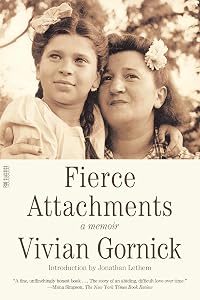
Fierce Attachments: A Memoir
by Vivian Gornick
On This Page
Description
In this deeply etched and haunting memoir, Vivian Gornick tells the story of her lifelong battle with her mother for independence. Gornick's groundbreaking book confronts what Edna O'Brien has called "the principal crux of female despair": the unacknowledged Oedipal nature of the mother-daughter bond. Born and raised in the Bronx, the daughter of "urban peasants," Gornick grows up in a household dominated by her intelligent but uneducated mother's romantic depression over the early death of show more her husband. Next door lives Nettie, an attractive widow whose calculating sensuality appeals greatly to Vivian. These women with their opposing models of femininity continue, well into adulthood, to affect Gornick's struggle to find herself in love and in work. As Gornick walks with her aged mother through the streets of New York, arguing and remembering the past, each wins the listener's admiration: the caustic and clear-thinking daughter, for her courage and tenacity in really talking to her mother about the most basic issues of their lives, and the still powerful and intuitively wise old woman, who again and again proves herself her daughter's mother. show lessTags
Recommendations
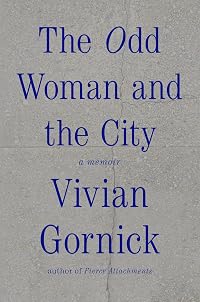
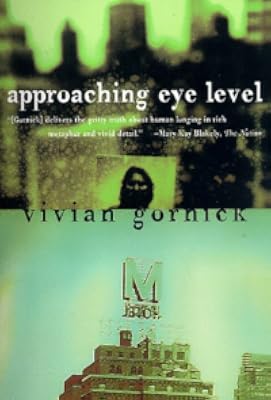
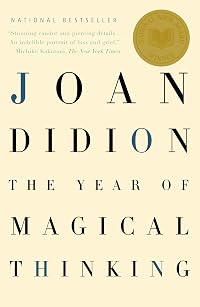
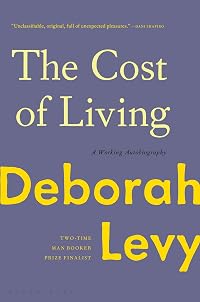
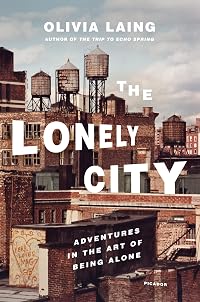
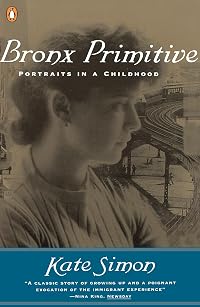

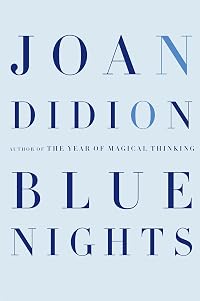


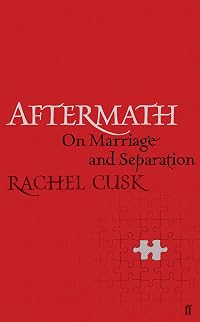
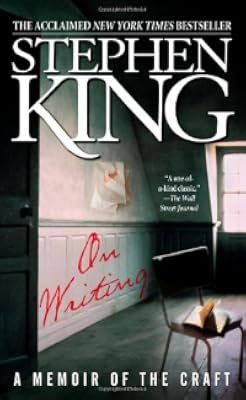
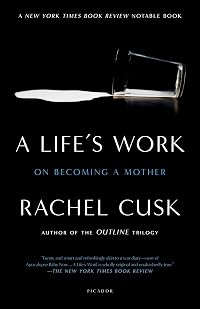
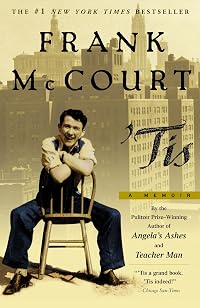

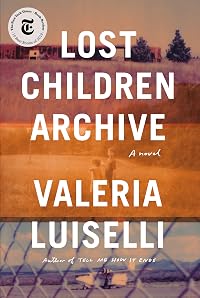
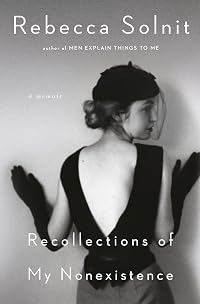

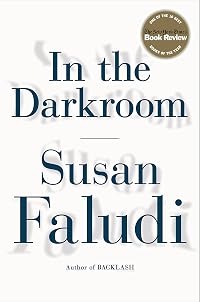
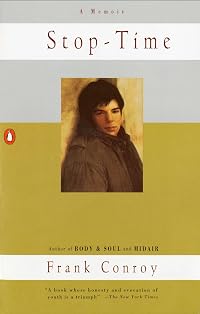
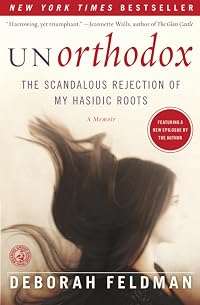
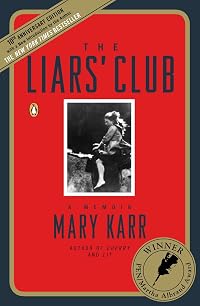




Member Recommendations
Member Reviews
"La relación con mi madre no es buena y, a medida que nuestras vidas se van acumulando, a menudo tengo la sensación de que empeora. Estamos atrapadas en un estrecho canal de familiaridad intenso y vinculante: durante años surge por temporadas un agotamiento, una especie de debilitamiento entre nosotras. Después, la ira brota de nuevo, ardiente y clara, erótica en su habilidad para llamar la atención."
Pocas veces me encuentro con un libro que sea capaz de mostrar la disfuncionalidad de la relación madre-hija y, al mismo tiempo, lo fuerte que está puede ser. Generalmente, en la ficción, este tipo de relaciones son idealizadas, mostrando a madres e hijas como grandes amigas que, ocasionalmente, tienen desacuerdos o bien, como show more complicados nexos durante la infancia/adolescencia que al llegar a la adultez se van reparando, llegando al punto en que no necesariamente es ideal, pero es primordialmente pacífica y cargada de sororidad. Este es el estereotipo, pero las relaciones interpersonales son difíciles y, sí tienes más de 10 años, sabes que el amor no lo puede todo...especialmente cuando rivaliza con otros afectos.
"Una de las dos va a morir a causa de este apego."
Vivian Gornick hace una representación muy humana de como el vínculo sanguíneo no necesariamente lleva a las relaciones más sanas. De manera perfecta muestra como este lazo se entrama con el resto de las afinidades, aquellos que se comunican con Gornick y su madre, y como amistades, amoríos y sueños se convierten en obstáculos para la convivencia.
Todo el contexto de estas mujeres es expuesto para representar porque su relación llegó a ser la que es, como todo se conjuntó para llevar a esta tortura que es el amor que se profesan y como es que se llenaron de resentimiento la una hacia la otra. Es difícil hablar de que este parentesco pueda llegar a este punto, pero sucede. Compartir este tipo de interacción, que no necesariamente es la predominante pero, según mi experiencia, es más común de lo que parece, es romper con el mito, destrozar una fantasía: todos queremos sentir que los nexos irrompibles son los que más nos benefician, los que más nos aportan y los que más nos apoyan, pero no siempre es así y reconocerlo es prácticamente un tabú tan grande que ni siquiera nos atrevemos a aceptar que esto pasa.
Es ahí donde encuentro la importancia de este libro, aún cuando creo que no muchos puedan congeniar con lo que establece, es una conversación que es necesario plantearse al menos a uno mismo: ¿Cómo reconocer que hay obstáculos en la, debería de ser, nuestra relación más importante e influyente? ¿Cómo aceptar con buen agrado que la familia puede ser tóxica? Estas son preguntas que fueron creándose en mi cabeza al notar que lo que narraba Gornik llegaba a incomodarme, ese saltarse la norma y lo bello, para dar paso a una realidad escasa y desagradable puede llegar a ser desgarrador.
Más allá de la historia, hay algo que no se puede negar es lo bien que escribe Gornick. Esta mujer es brutal en la forma que narra, cada frase provoca la alegría, el dolor o el placer de lo que esta descrito; cada persona, inclusive aquellas que tienen poca relevancia, demuestra su valor para la vida de estas mujeres y cada lugar tiene su razón de ser. En pocas palabras, como debió de ser, dado que esto es una autobiografía (con algo de ficción, sí recuerdo correctamente).
Súper recomendado.
"Con una voz sorprendentemente libre de emoción [...] me pregunta:
-¿Por qué no te vas ya?¿Por qué no te apartas de mi vida? No voy a detenerte.
Veo la luz, oigo la calle. La mitad de mi está dentro; la otra mitad, fuera.
-Ya sé que no, mamá" show less
Pocas veces me encuentro con un libro que sea capaz de mostrar la disfuncionalidad de la relación madre-hija y, al mismo tiempo, lo fuerte que está puede ser. Generalmente, en la ficción, este tipo de relaciones son idealizadas, mostrando a madres e hijas como grandes amigas que, ocasionalmente, tienen desacuerdos o bien, como show more complicados nexos durante la infancia/adolescencia que al llegar a la adultez se van reparando, llegando al punto en que no necesariamente es ideal, pero es primordialmente pacífica y cargada de sororidad. Este es el estereotipo, pero las relaciones interpersonales son difíciles y, sí tienes más de 10 años, sabes que el amor no lo puede todo...especialmente cuando rivaliza con otros afectos.
"Una de las dos va a morir a causa de este apego."
Vivian Gornick hace una representación muy humana de como el vínculo sanguíneo no necesariamente lleva a las relaciones más sanas. De manera perfecta muestra como este lazo se entrama con el resto de las afinidades, aquellos que se comunican con Gornick y su madre, y como amistades, amoríos y sueños se convierten en obstáculos para la convivencia.
Todo el contexto de estas mujeres es expuesto para representar porque su relación llegó a ser la que es, como todo se conjuntó para llevar a esta tortura que es el amor que se profesan y como es que se llenaron de resentimiento la una hacia la otra. Es difícil hablar de que este parentesco pueda llegar a este punto, pero sucede. Compartir este tipo de interacción, que no necesariamente es la predominante pero, según mi experiencia, es más común de lo que parece, es romper con el mito, destrozar una fantasía: todos queremos sentir que los nexos irrompibles son los que más nos benefician, los que más nos aportan y los que más nos apoyan, pero no siempre es así y reconocerlo es prácticamente un tabú tan grande que ni siquiera nos atrevemos a aceptar que esto pasa.
Es ahí donde encuentro la importancia de este libro, aún cuando creo que no muchos puedan congeniar con lo que establece, es una conversación que es necesario plantearse al menos a uno mismo: ¿Cómo reconocer que hay obstáculos en la, debería de ser, nuestra relación más importante e influyente? ¿Cómo aceptar con buen agrado que la familia puede ser tóxica? Estas son preguntas que fueron creándose en mi cabeza al notar que lo que narraba Gornik llegaba a incomodarme, ese saltarse la norma y lo bello, para dar paso a una realidad escasa y desagradable puede llegar a ser desgarrador.
Más allá de la historia, hay algo que no se puede negar es lo bien que escribe Gornick. Esta mujer es brutal en la forma que narra, cada frase provoca la alegría, el dolor o el placer de lo que esta descrito; cada persona, inclusive aquellas que tienen poca relevancia, demuestra su valor para la vida de estas mujeres y cada lugar tiene su razón de ser. En pocas palabras, como debió de ser, dado que esto es una autobiografía (con algo de ficción, sí recuerdo correctamente).
Súper recomendado.
"Con una voz sorprendentemente libre de emoción [...] me pregunta:
-¿Por qué no te vas ya?¿Por qué no te apartas de mi vida? No voy a detenerte.
Veo la luz, oigo la calle. La mitad de mi está dentro; la otra mitad, fuera.
-Ya sé que no, mamá" show less
Este libro es en realidad un libro de memorias, con lo que eso supone de malo para la ficción. Pero consigue superar esa propiedad, gracias a dios. Este libro no habla sobre tres mujeres sino sobre la combinación de tres mujeres tomadas de mil en mil fases de sus vidas, algunas de las cuales nos representan en muchos momentos de las nuestras. Y vamos pasando de una de las protagonistas a otra, según nuestros momentos vitales, o nuestros recuerdos, o nuestras ideas. Este libro es, como dice Jonathan Lethen en el prólogo, atemporal y clásico.
Vivian es, a veces, cruel con su madre, con su vecina, con la mujer de su amante, pero también con ella misma, y, en el caso de aquellas que están más cerca de ella, deja intacto siempre el show more amor que las une. Un amor raro, difícil, pero como todos.
Pero lo mejor de este libro es el manejo de la técnica. Este libro es literatura viva. Lo raro es que la autora no haya escrito nunca ficción.
En fin, que este libro, al contrario que un amor que Gormick describe en él, sí que podría redactar leyes y cartografiar territorio. show less
Vivian es, a veces, cruel con su madre, con su vecina, con la mujer de su amante, pero también con ella misma, y, en el caso de aquellas que están más cerca de ella, deja intacto siempre el show more amor que las une. Un amor raro, difícil, pero como todos.
Pero lo mejor de este libro es el manejo de la técnica. Este libro es literatura viva. Lo raro es que la autora no haya escrito nunca ficción.
En fin, que este libro, al contrario que un amor que Gormick describe en él, sí que podría redactar leyes y cartografiar territorio. show less
This aptly-titled memoir for three (one, her father, exits without leaving much of an impression other than vacancy) details the constricted life of writer Gornick and her mother, widowed early, within the confines of their Bronx apartment and neighborhood. Gornick battles her acerbic mother throughout her life and seeks out useful allies. Nettie, another widow and neighbor, a woman who conducts affairs openly in their universe of disapproving housewives ("Drucker, Roseman, Zimmerman, Singer, Kornfeld" - all others faceless, featureless, and identified via husband's name alone) becomes Gornick's purveyor of sensual possibilities. On the death of her father, Gornick's mother hermetically seals herself into histrionics of ceaseless show more mourning and Gornick is unable to wrench herself from her mother's sphere. Interspersed in the story are their walks through Manhattan years later, as they become more companionable yet still combative, in early middle and old age. This is an intense narrative, frustrating as Gornick seems unable to establish her own territory, although we know from her writings in the Village Voice and her body of non-fiction work that she very much does so, just not here. Her words flow as speech would, her rage and her contrasting descriptions of pleasures of the body as vivid as if you were at a long but wholly engaging dinner together.
Quotes: "Suddenly, I am miserable. Acutely miserable. A surge of defeat passes through me, I feel desolated, without direction or focus, all my daily struggles small and disoriented. I become speechless. Not merely silent, but speechless, My mother sees that my spirits have plunged. She says nothing. We walk on, neither of us speaking." show less
Quotes: "Suddenly, I am miserable. Acutely miserable. A surge of defeat passes through me, I feel desolated, without direction or focus, all my daily struggles small and disoriented. I become speechless. Not merely silent, but speechless, My mother sees that my spirits have plunged. She says nothing. We walk on, neither of us speaking." show less
It's wonderful and strange when an author describes a life whose concrete particulars are totally unlike your own—and yet pulls out emotional tenors and patterns that direct both writer's and reader's communal experiences.
Vivien Gornick is a memoirist of dazzling skill. She is among those wonderful writers who, in writing about her own life, cause you to connect with the kaleidoscopic emotions of your own. She is what all good publishers of memoir are aching to find, the kind of writer I wish I source more of. Written before the memoir boom, this book is a seminal example of the genre, a book that readers of all persuasions will adore, and students of life writing will be personally and academically enriched by reading.
In this book, Gornick narrates the series of walks she takes through the streets of New York with her eighty-year old mother. Doing so allows her to reflect upon and detail her past. That sounds like a bland set-up, but in actual fact show more gives way to a superbly crafted narrative framework that allows Gornick to unravel the complexities and contradictions of the mother-daughter relationship – and what she does with it is riveting. The juxtapositioning of time periods allows her to venture back and forth, contextualising her present as conditioned by her past.
Only ten pages in and I am able to form the most cogent of pictures of character - especially her mother’s - that I’ve encountered this side of a thousand Tuesdays. Gornick’s enmeshment with her mother is, at times, almost asphyxiating to read.
Of her she writes: ‘My skin crawled with her. She was everywhere, all over me, inside and out. Her influence clung, membrane-like, to my nostrils, my eyelids, my open mouth. I drew her into me with every breath I took. I drowsed in her etherizing atmosphere, could not escape the rich and claustrophobic character of her presence, her being, her suffocating suffering femaleness.’ (80)
Gornick’s rendering of the death of her father, is set against the spectacular dramatization of it by her mother: ‘Mourning Papa became her profession, her identity, her persona.’ (62/3)
As far as companion characters go, the delicate observations of Nettie (a compadre of her mother’s) are superb and novelistic in their attention to detail.
We experience Nettie, through the retrospective eyes of Gornick as child, as a pivotal character: a confused and needy neighbour, a young widow, who infiltrates the household – astounding in her ineptitude as a young mother, naïve and childlike to the younger Gornick, yet paradoxically also a provocative temptress , even towards the local priest (a union which Gornick duly witnesses, stimulating her early sexual awareness). These are the complexities of life rendered to the page that Gornick excels at.
All of this serves to backdrop Gornick’s thoughtful searching of her deepest nature. It is contrasted against the people who populated her childhood in the Bronx (discussed on the daily walks), and her series of claustrophobic relationships. Taken together, these elements powerfully display the cavernous depths of her internal search. Her portrayals of self and others are exquisitely nuanced by way of elegant prose.
This book heaves and breathes with the weight of Gornick’s articulation of the significant moments of her life. There wasn’t one moment where I felt that it was overwritten, or self-indulgent, and throughout, I was always acutely aware of Gornick’s seeming urgency to accurately convey the formative relationships of her history. The rigor with which she exposes and analyses her own, often unflattering, elements of selfhood is unfaltering. Her humanity presses in on you, evoking those dormant, primal aspects of your own.
I was fortunate enough to discover Gornick by way of a University study of Creative Nonfiction, and I am ecstatic that I did for I consider her a fine, fine writer.
She is also the author of what I believe to be a bordering on brilliant essay, which looks at a particularly affecting moment in Gornick’s career as an academic, one in which she painfully tries to fit into a tight-knit University in a remote community.
The essay, 'At the University: Little Murders of the Soul' can be found in Roorbach's edited collection, [b:Contemporary Creative Nonfiction: The Art of Truth|354951|Contemporary Creative Nonfiction The Art of Truth|Bill Roorbach|http://d.gr-assets.com/books/1348367166s/354951.jpg|345140].
Read her. You won't be sorry. show less
Gornick and her mother are so alike and so different, as portrayed in her memoir. It's an honest reflection on their relationship and that with their friend Nettie. Both women were enormous influences in Gornick's life. It's also a reflection on the lives of women only one generation apart.
This is a great memoir, rich in detail and insightful about character.
Vividly recreates a time and place.
I just loved this book.
Vividly recreates a time and place.
I just loved this book.
Members
- Recently Added By
Published Reviews
added by lemontwist
Lists

Libros que todos deberíamos leer al menos una vez en la vida (Librotea)
14 works; 1 member

Macmillan Publishers
129 works; 3 members

500 Great Books by Women
507 works; 60 members

Deathreads
78 works; 2 members

Books Read in 2021
5,361 works; 114 members
Author Information

19+ Works 3,313 Members
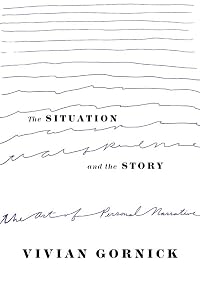
Vivian Gornick is a writer and critic whose work has received two National Book Critics Circle Award nominations and been collected in The Best American Essays 2014. Her works include the memoirs Fierce Attachments and The Odd Woman and the City and the classic text on writing The Situation and the Story.
Some Editions
Awards and Honors
Distinctions
Series
Belongs to Publisher Series
Work Relationships
Common Knowledge
- Canonical title
- Fierce Attachments: A Memoir
- Original title
- Fierce Attachments: A Memoir
- Original publication date
- 2005
- Important places*
- New York, New York, USA
- Original language
- English
*Some information comes from Common Knowledge in other languages. Click "Edit" for more information.
Classifications
- Genres
- Biography & Memoir, Nonfiction, General Nonfiction
- DDC/MDS
- 974.7 — History & geography History of North America Northeastern United States (New England and Middle Atlantic states) New York
- LCC
- HQ755.85 .G67 — Social sciences The family. Marriage, Women and Sexuality The Family. Marriage. Women The family. Marriage. Home Parents. Parenthood
- BISAC
Statistics
- Members
- 664
- Popularity
- 43,552
- Reviews
- 15
- Rating
- (3.87)
- Languages
- 10 — Dutch, English, Finnish, French, German, Galician, Italian, Portuguese, Spanish, Swedish
- Media
- Paper, Audiobook, Ebook
- ISBNs
- 30
- UPCs
- 1
- ASINs
- 8