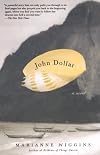
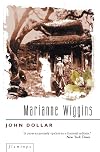
John Dollar
by Marianne Wiggins
On This Page
Description
An earthquake and tidal wave sweep John Dollar, Charlotte, and her pupils into the violent sea. They come to consciousness on the beach huddled around a paralyzed John Dollar.Tags
Recommendations



















Member Reviews
John Dollar (Harper & Row, 1988) was once touted as the female counterpart of Lord of the Flies. It does deal, eventually, with eight young British school girls marooned on an island without adult guidance. Indeed, Marianne Wiggins lets us watch them as they are subjected to an even more catastrophic state than William Golding’s boys. Frankly, however, I think the circumstances, settings, and characters of the two novels make further comparison unenlightening. Furthermore, I am even more skeptical of any critical attempts to generalize about human nature — male or female — from such literary evidence. Hence, it would be too simplistic to conclude that Golding’s boys resort to pseudo-military violence and Wiggins’ girls to a show more pseudo-priestly religion, as tempting as such a generalization might be.
John Dollar is a gripping, provocative, and disturbing novel. It’s also the only book that I ever had censored in my classroom for moral reasons, and this by two adult women, both of them teachers of English literature. I had just moved from the Midwest back into what had become a center of Southern fundamentalism, and was teaching a summer course for teachers. I was shocked. One woman refused to read the novel or attend class because of her Christian sensibility (specifically, her husband’s disapproval); the other read it and attended class, but wanted to have me reprimanded, presumably for feminist as well as religious reasons. So be forewarned. If you are offended, as these women were, by the unpleasant, the horrific, the taboo in fiction, do not read this novel. If you do read it, be prepared for the frank presentation of sex, violence, primitivism, and human degeneration.
Having said this much, I am certainly not going to reveal anything about the “twisted” plot of the story nor quote any of the passages that these women found so offensive. You may read the novel for yourself and make your own judgments.
I originally read it myself partly because of the comparisons reviewers were making to Lord of the Flies, but more for another, less rational reason. At the time Marianne Wiggins was the wife of Salman Rushdie, who had just gone into hiding, having been targeted by a fatwa of Islamic fundamentalists because of his recent novel Satanic Verses. This book is dedicated to him. How, I wondered, could it be that two such provocative novels were being written in the same household at the same time.
What I discovered was a fictional tour de force, a novel that is not about gender and sex so much as it is about racism, colonialism, and the arrogance of human claims to the ownership and dominance of nature. The central occasion is an outing to rename an island in honor of King George. Among the celebrants are some of the girls’ families, who consider themselves loyal British aristocrats, a pack of boy scouts and their scoutmaster, the girls and their teacher as well as a contingent of servants. Speaking of those servants, one of the leaders of the expedition proclaims, “We own everything. They don’t even own their own backsides. We own them. We own them because We’re better. There isn’t anything that we can’t own in any corner of the world wherever we might want it.” This represents the culture that provides the background for the crisis of the novel, a culture broadly satirized in the earlier parts.
To read the novel with understanding, one must adjust to four technical curiosities. First, the story ends before it begins, and after you finish reading it through, you have to go back and read the first seven pages again. They don’t make much sense the first time, especially two or three critical paragraphs, for they tell how the conflict is resolved that has not yet come about—if such a term as resolution may be used for this dark novel. The rest of the book is a sixty-year flashback. The haunting statement at the end is “they walk and they walk and they walk and they walk and they walk.” The one survivor, after sixty years, refuses to see what happened next, at the end of that walk, but in her stream-of-consciousness in the first chapter we have already seen.
Second, John Dollar is the title character, but hardly the main character. The protagonist in the first part of the book is a British war widow in 1917, who emigrates to Burma to make a new life for herself. As Charlotte finds herself, she casts off her British colonial blindness just as she casts off her traditional British costume. Though she serves as the teacher for nine British girls, one of whom is looked down upon as a “half-breed,” she actually walks barefoot into her own world. John Dollar becomes her strong, independent, shrewd, and somewhat mysterious lover. Then in the second half of the novel, Charlotte is — quite literally — struck blind and becomes invisible. On one level, the literal one, John Dollar becomes weak, dependent, and eventually mentally incapacitated and cruelly deceived — a victim of the catastrophe. On quite another level, a ghostly mythic one, he becomes—but you should read the novel to discover this. Suddenly, without the protection of their adult mentors, the girls become the protagonists, as in Lord of the Rings, reenacting the arrogance and foolish realities of their parents’ culture. Their narrow, artificial world has been held in stark contrast to the common sense, the natural adaptation to local sites and people, and the healthy sexuality of John and Charlotte. The girls instead reduce their heritage to an exaggerated, primitive state.
The third curiosity is that, of the eight girls who become a collective protagonist as survivors on the island, six have been presented earlier in brief, well-written vignettes. The two who become their leaders, however, are not given this background treatment, nor are we readers allowed to enter their consciousness nor see the experience from their point of view.
Fourth, underlying the theme of colonial superiority is a proud and uncompromising religious fundamentalism. The book begins (ergo, ends) with an act of rude and heartless discrimination. This serves as the context and narrative framework of the basic action. The “holy” scriptures, the catechism, and the Book of Common Prayer, are used and misused, quoted and misquoted throughout. These are contrasted with John Dollar’s secular canon — the three books he can carry with him on ship board — especially, Leonardo da Vinci’s notebooks, as translated into French. For example, “Avec le temps, tout le monde se change.” This statement of universal mutability is only one of the thematic motifs from da Vinci developed in subsequent events.
I think you can already see the differences between Lord of the Rings and John Dollar. The civilization from which the “innocents” spring is presented directly, and satirically. Their teacher and their captain provide a healthier viewpoint, one in polite rebellion. The story is more complex, but no more profound, and the disasters that befall the girls numerous and horrible. The intervention of a primitive society with its appalling consequences also adds another dimension. I think the symbolism, though not stated directed, is less subtle and less engaging than that of Lord of the Flies. Charlotte’s story, especially her love for John and his ardent love for her, provide a plot line, perhaps more interesting, certainly more credible, than that of the marooned children. “To love is to accept that one might die another death before one dies one’s own.”
In fact, I suspect that a more fascinating study would be a comparison of Satanic Verses with John Dollar, as different on the surface as these two novels are. I do not think it’s quite fair or accurate to call John Dollar a feminine version of Lord of the Flies. It deserves to be read in its own light — and reread. show less
John Dollar is a gripping, provocative, and disturbing novel. It’s also the only book that I ever had censored in my classroom for moral reasons, and this by two adult women, both of them teachers of English literature. I had just moved from the Midwest back into what had become a center of Southern fundamentalism, and was teaching a summer course for teachers. I was shocked. One woman refused to read the novel or attend class because of her Christian sensibility (specifically, her husband’s disapproval); the other read it and attended class, but wanted to have me reprimanded, presumably for feminist as well as religious reasons. So be forewarned. If you are offended, as these women were, by the unpleasant, the horrific, the taboo in fiction, do not read this novel. If you do read it, be prepared for the frank presentation of sex, violence, primitivism, and human degeneration.
Having said this much, I am certainly not going to reveal anything about the “twisted” plot of the story nor quote any of the passages that these women found so offensive. You may read the novel for yourself and make your own judgments.
I originally read it myself partly because of the comparisons reviewers were making to Lord of the Flies, but more for another, less rational reason. At the time Marianne Wiggins was the wife of Salman Rushdie, who had just gone into hiding, having been targeted by a fatwa of Islamic fundamentalists because of his recent novel Satanic Verses. This book is dedicated to him. How, I wondered, could it be that two such provocative novels were being written in the same household at the same time.
What I discovered was a fictional tour de force, a novel that is not about gender and sex so much as it is about racism, colonialism, and the arrogance of human claims to the ownership and dominance of nature. The central occasion is an outing to rename an island in honor of King George. Among the celebrants are some of the girls’ families, who consider themselves loyal British aristocrats, a pack of boy scouts and their scoutmaster, the girls and their teacher as well as a contingent of servants. Speaking of those servants, one of the leaders of the expedition proclaims, “We own everything. They don’t even own their own backsides. We own them. We own them because We’re better. There isn’t anything that we can’t own in any corner of the world wherever we might want it.” This represents the culture that provides the background for the crisis of the novel, a culture broadly satirized in the earlier parts.
To read the novel with understanding, one must adjust to four technical curiosities. First, the story ends before it begins, and after you finish reading it through, you have to go back and read the first seven pages again. They don’t make much sense the first time, especially two or three critical paragraphs, for they tell how the conflict is resolved that has not yet come about—if such a term as resolution may be used for this dark novel. The rest of the book is a sixty-year flashback. The haunting statement at the end is “they walk and they walk and they walk and they walk and they walk.” The one survivor, after sixty years, refuses to see what happened next, at the end of that walk, but in her stream-of-consciousness in the first chapter we have already seen.
Second, John Dollar is the title character, but hardly the main character. The protagonist in the first part of the book is a British war widow in 1917, who emigrates to Burma to make a new life for herself. As Charlotte finds herself, she casts off her British colonial blindness just as she casts off her traditional British costume. Though she serves as the teacher for nine British girls, one of whom is looked down upon as a “half-breed,” she actually walks barefoot into her own world. John Dollar becomes her strong, independent, shrewd, and somewhat mysterious lover. Then in the second half of the novel, Charlotte is — quite literally — struck blind and becomes invisible. On one level, the literal one, John Dollar becomes weak, dependent, and eventually mentally incapacitated and cruelly deceived — a victim of the catastrophe. On quite another level, a ghostly mythic one, he becomes—but you should read the novel to discover this. Suddenly, without the protection of their adult mentors, the girls become the protagonists, as in Lord of the Rings, reenacting the arrogance and foolish realities of their parents’ culture. Their narrow, artificial world has been held in stark contrast to the common sense, the natural adaptation to local sites and people, and the healthy sexuality of John and Charlotte. The girls instead reduce their heritage to an exaggerated, primitive state.
The third curiosity is that, of the eight girls who become a collective protagonist as survivors on the island, six have been presented earlier in brief, well-written vignettes. The two who become their leaders, however, are not given this background treatment, nor are we readers allowed to enter their consciousness nor see the experience from their point of view.
Fourth, underlying the theme of colonial superiority is a proud and uncompromising religious fundamentalism. The book begins (ergo, ends) with an act of rude and heartless discrimination. This serves as the context and narrative framework of the basic action. The “holy” scriptures, the catechism, and the Book of Common Prayer, are used and misused, quoted and misquoted throughout. These are contrasted with John Dollar’s secular canon — the three books he can carry with him on ship board — especially, Leonardo da Vinci’s notebooks, as translated into French. For example, “Avec le temps, tout le monde se change.” This statement of universal mutability is only one of the thematic motifs from da Vinci developed in subsequent events.
I think you can already see the differences between Lord of the Rings and John Dollar. The civilization from which the “innocents” spring is presented directly, and satirically. Their teacher and their captain provide a healthier viewpoint, one in polite rebellion. The story is more complex, but no more profound, and the disasters that befall the girls numerous and horrible. The intervention of a primitive society with its appalling consequences also adds another dimension. I think the symbolism, though not stated directed, is less subtle and less engaging than that of Lord of the Flies. Charlotte’s story, especially her love for John and his ardent love for her, provide a plot line, perhaps more interesting, certainly more credible, than that of the marooned children. “To love is to accept that one might die another death before one dies one’s own.”
In fact, I suspect that a more fascinating study would be a comparison of Satanic Verses with John Dollar, as different on the surface as these two novels are. I do not think it’s quite fair or accurate to call John Dollar a feminine version of Lord of the Flies. It deserves to be read in its own light — and reread. show less
Wiggins is a skilled writer and storyteller. I enjoyed the book enough that I couldn't put it down the night I finished it, despite knowing that it would give me nightmares. Comparisons to Lord of the Flies are inevitable, but it is its own work. Other reviewers have complained of being bored or confused by the first half. I felt the first half established her writing prowess, and overall, I consider this book to be creepy, moralistic fun
To say this was a disappointing book doesn't even come close to articulating the real heartbreak I felt finishing it. Painted as a female answer to Golding's Lord of the Flies, John Dollar describes the days after eight girls, one woman, and one man are washed ashore on a deserted island off Burma.
Writing this review was more challenging than I expected, and I decided to do some quick searching for other thoughts on this novel to see if I was missing some subtle but crucial element. What I discovered quickly is that the release of John Dollar was almost completely overshadowed by a more momentous literary story: the call for death of Wiggins' then-husband, Salman Rushdie.
In some ways, I feel like this book is constantly being show more overshadowed by something more momentous. Wiggins herself seems to be unsure if she is writing an homage to Lord of the Flies or an entirely inventive examination of human nature. (In an interview, Wiggins admits that the landscape she visualized while writing was actually the same scenery from the 1963 film version.)
Almost two-thirds of the book is spent setting us up for the coming Shock and Awe. Charlotte, the schoolteacher, is properly liberal and free-thinking enough to gain our sympathy; the various children represent all the stock characters needed for an examination of colonial life: the zealot, the symbiotic twins, the indigenous servant. John Dollar, the itinerant ship captain, is strapping and handsome. The characters cheerfully recall Robinson Crusoe and Kipling; we the reader are constantly bombarded with hints that the Fall is coming.
Using a technique that seems more clever than helpful, Wiggins peppers the margins with text from other books and strange subheadings. I found it distracted from an already fractured story. When the Horrific and Shocking events occur, the scenes are so veiled and oblique that they are hard to realize; the oomph never really appears. show less
Writing this review was more challenging than I expected, and I decided to do some quick searching for other thoughts on this novel to see if I was missing some subtle but crucial element. What I discovered quickly is that the release of John Dollar was almost completely overshadowed by a more momentous literary story: the call for death of Wiggins' then-husband, Salman Rushdie.
In some ways, I feel like this book is constantly being show more overshadowed by something more momentous. Wiggins herself seems to be unsure if she is writing an homage to Lord of the Flies or an entirely inventive examination of human nature. (In an interview, Wiggins admits that the landscape she visualized while writing was actually the same scenery from the 1963 film version.)
Almost two-thirds of the book is spent setting us up for the coming Shock and Awe. Charlotte, the schoolteacher, is properly liberal and free-thinking enough to gain our sympathy; the various children represent all the stock characters needed for an examination of colonial life: the zealot, the symbiotic twins, the indigenous servant. John Dollar, the itinerant ship captain, is strapping and handsome. The characters cheerfully recall Robinson Crusoe and Kipling; we the reader are constantly bombarded with hints that the Fall is coming.
Using a technique that seems more clever than helpful, Wiggins peppers the margins with text from other books and strange subheadings. I found it distracted from an already fractured story. When the Horrific and Shocking events occur, the scenes are so veiled and oblique that they are hard to realize; the oomph never really appears. show less
Stupefyingly disturbing, but also weirdly toothless in a "been there, done that" kind of way. Maybe I've just become desensitized to "civilization breaks down and everyone starts losing it"-type-narratives?
If you thought Lord of the Flies was disturbing, just wait till you read this. Not recommended for those with a sensitive disposition or highly romanticized views on human nature / religion.
Lord of the Flies with girls
It's been several years since I read this novel, but I remember really liking it. I plan to read more Wiggins.
Members
- Recently Added By
Lists

500 Great Books by Women
507 works; 60 members
Author Information

11+ Works 1,871 Members
Novelist and short-story writer Marianne Wiggins was born in Lancaster, Pennsylvania in 1947. She has received a number of awards, including the Jane Heidiger Kafka Price for Fiction and the Whiting Award. She has written for The Paris Review, Harper's, and The New York Times Book Review. (Bowker Author Biography)
Awards and Honors
Awards
Notable Lists
Series
Belongs to Publisher Series
Common Knowledge
- Canonical title
- John Dollar
- Original publication date
- 1989
- Important places*
- Myanmar
*Some information comes from Common Knowledge in other languages. Click "Edit" for more information.
Classifications
Statistics
- Members
- 335
- Popularity
- 94,299
- Reviews
- 8
- Rating
- (3.46)
- Languages
- 5 — Danish, English, German, Spanish, Swedish
- Media
- Paper
- ISBNs
- 16
- ASINs
- 3