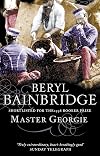
Master Georgie
by Beryl Bainbridge
On This Page
Description
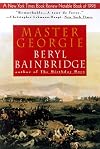
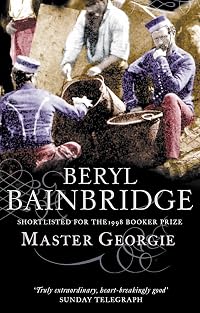
When Master Georgie - George Hardy, surgeon and photographer - sets off from the cold squalor of Victorian Liverpool for the heat and glitter of the Bosphorus to offer his services in the Crimea, there straggles behind him a small caravan of devoted followers; Myrtle, his adoring adoptive sister; lapsed geologist Dr Potter; and photographer's assistant and sometime fire-eater Pompey Jones, all of them driven onwards through a rising tide of death and disease by a shared and mysterious guilt. show more Combining a breathtaking eye for beauty with a visceral understanding of mortality, Beryl Bainbridge exposes her enigmatic hero as tenderly and unsparingly as she reveals the filth and misery of war, and creates a novel of luminous depth and extraordinary intensity. show lessTags
Recommendations
















Member Reviews
Another shortlisted novel from the perennial Booker bridesmaid, this one probably deserved better in 1998 than losing out to Ian McEwan's [b:Amsterdam|6862|Amsterdam|Ian McEwan|https://images.gr-assets.com/books/1403191209s/6862.jpg|933082], which for me was one of the weaker winners.
This book is a fairly short novel with an unusual structure. It has six chapters, each of which bears the title and date of a photographic plate. These tell fragments of the story of George Hardy, a doctor and amateur photographer, told by three narrators each of whom get two chapters, and they all follow him from Liverpool to the Crimean war. The narrators are Myrtle, an adopted sister who has had two of George's children, the chancer, former fireeater and show more photographer Pompey Jones who is also George's lover, and the older Dr Potter, George's brother-in-law, a dull geologist.
The story offers some striking imagery and a wide variety of allusion, starts with plenty of comedy and later becomes visceral and unsentimental in its depictions of the chaos of war. A very impressive novel. show less
This book is a fairly short novel with an unusual structure. It has six chapters, each of which bears the title and date of a photographic plate. These tell fragments of the story of George Hardy, a doctor and amateur photographer, told by three narrators each of whom get two chapters, and they all follow him from Liverpool to the Crimean war. The narrators are Myrtle, an adopted sister who has had two of George's children, the chancer, former fireeater and show more photographer Pompey Jones who is also George's lover, and the older Dr Potter, George's brother-in-law, a dull geologist.
The story offers some striking imagery and a wide variety of allusion, starts with plenty of comedy and later becomes visceral and unsentimental in its depictions of the chaos of war. A very impressive novel. show less
This was my first Beryl and I was a bit mixed on this 1840's Liverpool/1855 Crimean War novel. I struggled early on, and then finally found some connection in the Crimea. The story is of George Hardy, the master of a house in Liverpool after his father passes away suddenly (revealed on page one), and some sort of hangers on, who follow him everywhere. George is a doctor who is into photography, and will become a camp medic in the first war ever heavily photographed, The Crimean War.
My main impression afterwards is on the nature of what a photograph cannot capture. The falsification of photography is extreme here. And photography was ultimately a propaganda tool, an effort to hide the horrors of war. But also photography is limited show more always, but especially here due to the nature of the technology at the time. For example, action was impossible in these 1st cameras that required extended exposure times. For the same reason, corpses would be made to pose as if alive and look alive and did a really good job of keeping still. But these details obscure the deeper point - there is more to the world than what we can or do record, vastly more. Much of that is hidden from any view. And that is maybe Bainbridge's main point.
The reason I can dislike the early parts and like the later parts is that the book has three distinct sections. First we are in 1846 Liverpool, which is also Bainbridge's hometown. We meet our characters. I didn't like this section because it felt very old fashion for a 1998 novel. Traditional, with tropes. It fell a little like it was trying to out-Dickens Dickens. Later we are in Istanbul, which is interesting, but also suffers from the same conservative effect. Here the use of sexual innuendo to liven things up just comes across as ... old fashioned. Finally we reach the war and book becomes a different thing. Much more powerful to me. And the main points I picked up on are compressed here. War is ugly. It left some very specific powerful impressions on me.
One general issue is that I was kind of expecting Beryl Bainbridge the comedic actress from the 1960's British TV. Not a sexually insecure book that feels like it has never seen Muriel Spark or Iris Murdoch, or the 1970s. That's my killer statement. Sorry. I'll probably try Beryl Bainbridge again. But I wasn't smitten.
2026
https://www.librarything.com/topic/384249#9207037 show less
My main impression afterwards is on the nature of what a photograph cannot capture. The falsification of photography is extreme here. And photography was ultimately a propaganda tool, an effort to hide the horrors of war. But also photography is limited show more always, but especially here due to the nature of the technology at the time. For example, action was impossible in these 1st cameras that required extended exposure times. For the same reason, corpses would be made to pose as if alive and look alive and did a really good job of keeping still. But these details obscure the deeper point - there is more to the world than what we can or do record, vastly more. Much of that is hidden from any view. And that is maybe Bainbridge's main point.
The reason I can dislike the early parts and like the later parts is that the book has three distinct sections. First we are in 1846 Liverpool, which is also Bainbridge's hometown. We meet our characters. I didn't like this section because it felt very old fashion for a 1998 novel. Traditional, with tropes. It fell a little like it was trying to out-Dickens Dickens. Later we are in Istanbul, which is interesting, but also suffers from the same conservative effect. Here the use of sexual innuendo to liven things up just comes across as ... old fashioned. Finally we reach the war and book becomes a different thing. Much more powerful to me. And the main points I picked up on are compressed here. War is ugly. It left some very specific powerful impressions on me.
One general issue is that I was kind of expecting Beryl Bainbridge the comedic actress from the 1960's British TV. Not a sexually insecure book that feels like it has never seen Muriel Spark or Iris Murdoch, or the 1970s. That's my killer statement. Sorry. I'll probably try Beryl Bainbridge again. But I wasn't smitten.
2026
https://www.librarything.com/topic/384249#9207037 show less
I had no notion at all what the story was about before starting this novel, even though I'd had it in my possession since 2011 and had heard the title bandied about countless times. All I knew is it had been shortlisted for the Booker and had an excellent reputation, and didn't seek to find out more about it, which is uncharacteristic for me. At the beginning, I thought it would be about photography, which the Georgie in question takes an interest in when the novel begins in the mid-1840s. Then it became a novel about obsession, with one of the narrators, young Myrtle, a foundling who has found a home with George's family, so in love with the young man that she's literally willing to follow his every step. Then it became a novel about show more the Crimean War, more or less as lived close to the front, Georgie now being a doctor and taking care of the horribly maimed and wounded, while Myrtle and his step-brother Dr Potter—who is specialised in geology and well versed ancient literature, but is sickened at the sight of maimed bodies—making camp with our hero in the worst possible conditions. The novel is told by three narrators; the two mentioned above, as well as Pompey Jones, a young man who starts off as a street urchin, then becomes a fire-eater and finally a photographer assigned to Crimea to document the war. We learn about Georgie through those three individual narratives but never get a glimpse into his own thought patterns, which I found a very novel approach which turned George Hardy into a sort of mythical figure, which I suppose he was to the three people most closely involved in his life during the war, and what Beryl Bainbridge probably set out to turn him into, as the title partially implies.
Extremely well written with beautiful language and strong imagery, I can well see why this novel was shortlisted for the Booker prize when it came out in 1998 (it was the novel [Amsterdam] by Ian Mcewan who took it that year; equally deserving in my opinion). Bainbridge was nominated no less than five times for the Booker and passed away from cancer without actually ever winning it. A shame, but all the more reason for me to want to discover more of her work now I have a vivid example of what an excellent writer she was. show less
Extremely well written with beautiful language and strong imagery, I can well see why this novel was shortlisted for the Booker prize when it came out in 1998 (it was the novel [Amsterdam] by Ian Mcewan who took it that year; equally deserving in my opinion). Bainbridge was nominated no less than five times for the Booker and passed away from cancer without actually ever winning it. A shame, but all the more reason for me to want to discover more of her work now I have a vivid example of what an excellent writer she was. show less
George Hardy is Master Georgie, and in this short but complex novel the reader sees him, caught as if in photographic plates, from the perspectives of other characters; in some ways, he is as elusive as the images he and others capture with this then-new technology. The story begins in 1846, narrated by Myrtle, then 12, an abandoned child taken in by the Hardy family who, adoring Master Georgie, then a medical student, follows him around without completely understanding what she is observing and helps him create a deception about a shocking event. It continues with others who were observers/participants of that event as narrators, as the characters eventually head towards Constantinople on the eve of the Crimean War, and then become show more involved in the war itself.
Beyond this outline of plot, the novel derives its power from complexity of the narrating characters -- not only Myrtle, but also the "duck boy" Pompey Jones, a poor boy who becomes a photographer, as well as a schemer, and who never forgets the class both he and Myrtle sprung from, and Dr. Potter, a lover of classics who desires Georgie's sister Beatrice for years before eventually marrying her. The secondary characters are clearly drawn as well. Ultimately, the novel confronts issues of secrets, obsession, perception, complex and unusual personal relationships, both homosexuality and unsanctioned heterosexuality, love, and war (the images of the violence and suffering of the Crimean War are devastating). As always, Bainbridge's writing is both vivid and understated, leaving much for readers to figure out on their own. She is at the height of her powers with this novel. show less
Beyond this outline of plot, the novel derives its power from complexity of the narrating characters -- not only Myrtle, but also the "duck boy" Pompey Jones, a poor boy who becomes a photographer, as well as a schemer, and who never forgets the class both he and Myrtle sprung from, and Dr. Potter, a lover of classics who desires Georgie's sister Beatrice for years before eventually marrying her. The secondary characters are clearly drawn as well. Ultimately, the novel confronts issues of secrets, obsession, perception, complex and unusual personal relationships, both homosexuality and unsanctioned heterosexuality, love, and war (the images of the violence and suffering of the Crimean War are devastating). As always, Bainbridge's writing is both vivid and understated, leaving much for readers to figure out on their own. She is at the height of her powers with this novel. show less
This book was awarded the Booker Prize following Beryl Bainbridge's death this spring and after reading it, I can only wonder why it didn't win one the year it was published.
Set in 1850's England, it documents the lives of a gay man, a sexually-assertive woman, and the bisexual man who loves them both as they struggle to maintain their self-respect and identities in a society in which homosexuality and sodomy are illegal, and women who admit to enjoying sex are labelled whores and ostercized by their peers. Although this is a historical novel, Bainbridge's instictive understanding of the human psyche and sympathy for her characters makes this book feel very contemporary. I felt as though it could be happening anywhere in the world at show more any time. It's a powerful expose of the human cost of enforcing a social expectation of sexual identity, and I recommend it whole-heartedly. show less
Set in 1850's England, it documents the lives of a gay man, a sexually-assertive woman, and the bisexual man who loves them both as they struggle to maintain their self-respect and identities in a society in which homosexuality and sodomy are illegal, and women who admit to enjoying sex are labelled whores and ostercized by their peers. Although this is a historical novel, Bainbridge's instictive understanding of the human psyche and sympathy for her characters makes this book feel very contemporary. I felt as though it could be happening anywhere in the world at show more any time. It's a powerful expose of the human cost of enforcing a social expectation of sexual identity, and I recommend it whole-heartedly. show less
this is the story of the intertwining lives of four principal characters: Myrtle, a foundling girl taken into service in the Hardy family and later elevated to the status of "sister"; Master Georgie, George Hardy, for whom Myrtle has a life-long passion; Dr.Potter who marries another of George's sisters; and Pompey Jones, a poor, but resourceful and bright young fellow who works at one point as a fire-swallower and then becomes a photographer's assistant. To complicate matters, George is bisexual and more attracted to Pompey than he is to Myrtle, although it is Myrtle who bears him two children with the agreement of his wife who is barren and who then raises the children as her own. This most unlikely grouping of people all end up show more together in the staging areas of the hell-hole of the Dardenelles in preparation for the even greater horrors of the Crimean war.
The leitmotif is summed up when the author speculates that, "Perhaps chance and destiny are interdependent, in that the later cannot be fulfilled without the casual intervention of the former". This is very much a story of the interconnection of chance and destiny and of how examples of perfectly ordinary lives–ordinary in the sense that similar scenarios are lived out in millions of replications–cross and influence each other; with the influences of unrequited love, betrayal, lust, obsession, truth, role-playing, identity and how, if one is not careful, the very definition of one's self becomes hostage to constructed images that provide poor support.
Bainbridge is a very fine writer. The story unfolds through the first-person narrative of each of the protagonists, except for George himself. It is an interesting and very well-written book where truths and knowledge are not just presented, but rather emerge, even obliquely, through contact, memory, and reconstruction, much as they do in life.
(Dec/99) show less
The leitmotif is summed up when the author speculates that, "Perhaps chance and destiny are interdependent, in that the later cannot be fulfilled without the casual intervention of the former". This is very much a story of the interconnection of chance and destiny and of how examples of perfectly ordinary lives–ordinary in the sense that similar scenarios are lived out in millions of replications–cross and influence each other; with the influences of unrequited love, betrayal, lust, obsession, truth, role-playing, identity and how, if one is not careful, the very definition of one's self becomes hostage to constructed images that provide poor support.
Bainbridge is a very fine writer. The story unfolds through the first-person narrative of each of the protagonists, except for George himself. It is an interesting and very well-written book where truths and knowledge are not just presented, but rather emerge, even obliquely, through contact, memory, and reconstruction, much as they do in life.
(Dec/99) show less
Six sections, all culminating to a photographic plate of a moment, each section from the point of view of people around George Hardy (his foster sister Myrtle, his (eventual) brother-in-law Dr Potter, the boy up to no good who helps out at a crucial moment in his life and becomes something of a friend), with certain surprises thrown in almost between the lines. And throughout, there's a certain fascination with death, nowhere more clearly than in the final sections out at Crimea.
Members
- Recently Added By
Lists

The Guardian's 1000 Novels Everyone Must Read
1,005 works; 551 members

Booker Prize
491 works; 62 members
Booker Prize Shortlist: Titles Read
103 works; 10 members

Man Booker Prize Longlist 1998
6 works; 2 members

A Good Read (Radio 4)
287 works; 1 member

Fiction with Men's Given Names in the Title
302 works; 11 members
Author Information

41+ Works 6,765 Members
Beryl Bainbridge was born on November 21, 1934, in Liverpool, England. She became an actress at a young age and worked in English repertory theatres and on the radio. Her work contains dark, somber subject matter, deftly mixed with humor. Her writing acts as an outlet for her childhood frustrations, and frequently deals with family relations. In show more her novels, she recalls memories of disappointment and of a bad-tempered, brooding father. During her lifetime, she wrote 18 novels including A Weekend with Claude, Another Part of the Wood, The Bottle Factory Outing, The Birthday Boys, According to Queeney, and Young Adolf. She adapted many of her novels, such as An Awfully Big Adventure, Sweet William, and The Dressmaker, for film. She has received numerous awards and honors including the Whitbread Award in 1977 for Injury Time and in 1996 for Every Man for Himself; the James Tait Black Memorial Prize for fiction in 1998 for Master Georgie; a Guardian Fiction Award, and the David Cohen Prize for Literature in 2003. She was made a dame by Queen Elizabeth II in 2000. She died from cancer on July 2, 2010 at the age of 77. (Bowker Author Biography) show less
Some Editions
Awards and Honors
Awards
Distinctions
Notable Lists
Series
Belongs to Publisher Series
Иллюминатор (27)
Common Knowledge
- Canonical title
- Master Georgie
- Original publication date
- 1998
- People/Characters
- George Hardy; Pompey Jones; Myrtle; Dr. Potter
- Important places
- Liverpool, England, UK; Istanbul, Turkey (as Constantinople); Varna, Bulgaria; Crimea
- Important events
- Crimean War
- First words
- I was twelve years old the first time Master Georgie ordered me to stand stock still and not blink.
- Last words*
- (Click to show. Warning: May contain spoilers.)Behind, on the brow of the hill I saw Myrtle, arms stretched wide, circling round and round, like a bird above a robbed nest.
*Some information comes from Common Knowledge in other languages. Click "Edit" for more information.
Classifications
Statistics
- Members
- 978
- Popularity
- 27,040
- Reviews
- 23
- Rating
- (3.42)
- Languages
- 7 — Dutch, English, French, German, Italian, Russian, Spanish
- Media
- Paper, Audiobook, Ebook
- ISBNs
- 26
- ASINs
- 9