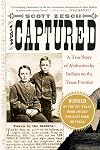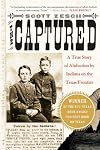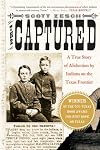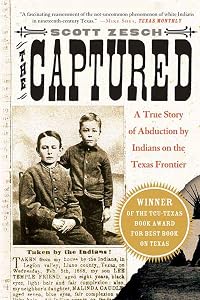
The Captured: A True Story of Abduction by Indians on the Texas Frontier
by Scott Zesch
On This Page
Description
"A carefully written, well-researched contribution to Western history — and to a promising new genre: the anthropology of the stolen." - Kirkus ReviewsOn New Year's Day in 1870, ten-year-old Adolph Korn was kidnapped by an Apache raiding party. Traded to Comanches, he thrived in the rough, nomadic existence, quickly becoming one of the tribe's fiercest warriors. Forcibly returned to his parents after three years, Korn never adjusted to life in white society. He spent his last years in a show more cave, all but forgotten by his family.
That is, until Scott Zesch stumbled over his own great-great-great uncle's grave. Determined to understand how such a "good boy" could have become Indianized so completely, Zesch travels across the west, digging through archives, speaking with Comanche elders, and tracking eight other child captives from the region with hauntingly similar experiences. With a historians rigor and a novelist's eye, Zesch's The Captured paints a vivid portrait of life on the Texas frontier, offering a rare account of captivity.
. Nonfiction. History. show less
Tags
Recommendations



















Member Recommendations

Member Reviews
Scott Zechs’s great-great-great-uncle, Adolph Korn, was captured by Indians in 1870. From family stories, Zesch learned that his relative had difficulties readjusting to a farming life once he returned. He decided to find out more about his Uncle Adolph’s life. Since it had been so long and only a small amount of information specific to his uncle was available, he expanded his research to similar situations. This book describes the capture, captivity, release, and ultimate outcomes for nine such individuals, ranging in age from eight to fourteen at the time of their abduction. Most were held by Apaches or Comanches. All were from the Texas hill country and most were German immigrants.
The former captives spoke highly of their Indian show more families, and the vast majority did not want to leave them. This occurred at the time of the last Indian Wars, just before the native people were forced onto reservations and required to change their culture. Be prepared for descriptions of brutality. Also be prepared for the racism of the time, which is obvious from the newspaper quotes.
Some former captives adjusted well to their return, and others yearned to return to the untamed nomadic life on the plains. Almost all lost their native German or English language and were fluent in their Indian dialect. I did not find it surprising that these young people would adapt to a new life relatively quickly, since these were their formative years and they had no way of knowing if they would ever see their birth families again. They were taken far away, and it would be almost impossible for them to find their way back alone through harsh territory. It is reflective of the resilience of youth.
This book is a well-researched history. It is thoroughly documented in footnotes, some of which supplement the text and are interesting reading. The author, in his Afterward, outlines his research techniques and assumptions in deciding among the different versions and accounts of what transpired. It reminds me that each generation experiences a gradual decline in those that can recall it from experience. In the 1920s and 1930s, it was a gradual fading of memories of life on the frontier. This book does an excellent job of compiling and preserving a subset of these memories. I found it extremely educational and engrossing. show less
The former captives spoke highly of their Indian show more families, and the vast majority did not want to leave them. This occurred at the time of the last Indian Wars, just before the native people were forced onto reservations and required to change their culture. Be prepared for descriptions of brutality. Also be prepared for the racism of the time, which is obvious from the newspaper quotes.
Some former captives adjusted well to their return, and others yearned to return to the untamed nomadic life on the plains. Almost all lost their native German or English language and were fluent in their Indian dialect. I did not find it surprising that these young people would adapt to a new life relatively quickly, since these were their formative years and they had no way of knowing if they would ever see their birth families again. They were taken far away, and it would be almost impossible for them to find their way back alone through harsh territory. It is reflective of the resilience of youth.
This book is a well-researched history. It is thoroughly documented in footnotes, some of which supplement the text and are interesting reading. The author, in his Afterward, outlines his research techniques and assumptions in deciding among the different versions and accounts of what transpired. It reminds me that each generation experiences a gradual decline in those that can recall it from experience. In the 1920s and 1930s, it was a gradual fading of memories of life on the frontier. This book does an excellent job of compiling and preserving a subset of these memories. I found it extremely educational and engrossing. show less
The book, at its heart, is about the author's step relative who was abducted as a child. From family legends, the author knew that his relative, once returned to his family, had a difficult readjustment to the 'white' society he was born. He never lost the lessons and ways of his one-time native family. Through his research, author Zesch found many examples of other children who felt the same way. They never blamed or hated their adopted families.
Zesch does his best to show both sides of the story. Although, at times, segments were difficult to read. Contains graphic violence against women and infants. One capture and escape in particular seemed like a tall-tale: pregnant woman scalped, shot by arrows, walks miles in the snow at night show more to her neighbors who tell her BTW not to bled over everything as the flee without her, and she survives (and has the baby if I remember correctly). I smell an old-timey newspaperman who wanted to sell papers over heresay and terror. show less
Zesch does his best to show both sides of the story. Although, at times, segments were difficult to read. Contains graphic violence against women and infants. One capture and escape in particular seemed like a tall-tale: pregnant woman scalped, shot by arrows, walks miles in the snow at night show more to her neighbors who tell her BTW not to bled over everything as the flee without her, and she survives (and has the baby if I remember correctly). I smell an old-timey newspaperman who wanted to sell papers over heresay and terror. show less
This is a deeply researched and well-written account of the nine white children captured by Indians in Texas Hill Country between 1865 and 1871. It covers all known details about their family lives, their captures, their lives with the Comanche and Apache, their re-captures by whites, and their adult lives. Zesch draws out the similarities and patterns of the case studies, as well as the themes of inconsistency in stories, dehumanization of the other, difficult marriages, and so on.
Zesch notes repeatedly that all the children felt a strong connection to the Indian life they lived for the rest of their lives -- even when they returned to the white world, and even past 1880, when the Indians themselves no longer maintained that way of show more life. That may have been because even the young children of white frontiersmen worked extremely hard without prospering, and the Indian world offered freedom and rewarded cleverness -- or, a hypothesis Zesch doesn't discuss but also seems likely, it may have been because the children who passed the initial capture hazing had a natural personality type that strongly favored Indian mores.
Regardless, the sort of people drawn to the frontier were not the sort of people given to deep reflections and documentation of their experience, and this book is about as factual as any book can be regarding Indian captures. show less
Zesch notes repeatedly that all the children felt a strong connection to the Indian life they lived for the rest of their lives -- even when they returned to the white world, and even past 1880, when the Indians themselves no longer maintained that way of show more life. That may have been because even the young children of white frontiersmen worked extremely hard without prospering, and the Indian world offered freedom and rewarded cleverness -- or, a hypothesis Zesch doesn't discuss but also seems likely, it may have been because the children who passed the initial capture hazing had a natural personality type that strongly favored Indian mores.
Regardless, the sort of people drawn to the frontier were not the sort of people given to deep reflections and documentation of their experience, and this book is about as factual as any book can be regarding Indian captures. show less
This is the story of people who lived on both sides of a line in an irreconcilable conflict between cultures and societies. They experienced a duality of awareness that few in their age could even imagine.
Scott Zesch's biography of his ancestor Adolph Korn, a "White Indian", captured and raised for a few years by the Comanches, is eye opening and enlightening. Zesch explores the historical context of his ancestor and about ten other individuals who were captured on the Texas frontier by Indians from 1865 to 1871. In so doing, he explains the circumstances of Texas settlement by German immigrants (poverty, struggle, fear), differences between English speaking and German settlers in Texas, the cultures of the tribes who captured the show more children (a warrior ethic), their motivations (largely, they wanted more warriors), and the policies of the U.S. government toward native Americans during and after the Civil War. We are reminded that for many of the captives, after about a year of captivity a life as a Plains Indian was preferred, and few wanted to return home. When they were forced to return to their parents and homes, as the US army drove the Indians into reservations, the adjustment was difficult and painful.
Zesch feels himself both to be a descendant of whites and, through the experience of his ancestor Adolph Korn, to be an adoptive descendant of the Comanche. He tells both sides' stories with balance and sympathy. He also explores his own family's ambivalent relationship to its ancestor, and peels back the layers of history, so that we feel not only the reality of the 1860s and 1870s, but the subsequent ways in which the experiences of soldiers, Indians, captives and others were later represented in the early twentieth century, through books, Wild West shows, reunions between former adversaries (White and Indian) and former brothers (the captives and their former fellow warriors.) Family history is woven beautifully together with historical sociology and political history.
The story of "White Indians", in short, cracks open a window on the entire Western reality. The bi-cultural experience of the captives, their struggle to become Indians, and their struggle to return to White society, reveal worlds about both societies. I cannot recommend this highly enough as a lens on American history and the American experience. Focussed on Texas from 1860 to 1880, we understand through the very specific experiences of 10 captives and the activities of those who held them and those who tried to redeem them, something profound about the entirety of 19th century America. show less
Scott Zesch's biography of his ancestor Adolph Korn, a "White Indian", captured and raised for a few years by the Comanches, is eye opening and enlightening. Zesch explores the historical context of his ancestor and about ten other individuals who were captured on the Texas frontier by Indians from 1865 to 1871. In so doing, he explains the circumstances of Texas settlement by German immigrants (poverty, struggle, fear), differences between English speaking and German settlers in Texas, the cultures of the tribes who captured the show more children (a warrior ethic), their motivations (largely, they wanted more warriors), and the policies of the U.S. government toward native Americans during and after the Civil War. We are reminded that for many of the captives, after about a year of captivity a life as a Plains Indian was preferred, and few wanted to return home. When they were forced to return to their parents and homes, as the US army drove the Indians into reservations, the adjustment was difficult and painful.
Zesch feels himself both to be a descendant of whites and, through the experience of his ancestor Adolph Korn, to be an adoptive descendant of the Comanche. He tells both sides' stories with balance and sympathy. He also explores his own family's ambivalent relationship to its ancestor, and peels back the layers of history, so that we feel not only the reality of the 1860s and 1870s, but the subsequent ways in which the experiences of soldiers, Indians, captives and others were later represented in the early twentieth century, through books, Wild West shows, reunions between former adversaries (White and Indian) and former brothers (the captives and their former fellow warriors.) Family history is woven beautifully together with historical sociology and political history.
The story of "White Indians", in short, cracks open a window on the entire Western reality. The bi-cultural experience of the captives, their struggle to become Indians, and their struggle to return to White society, reveal worlds about both societies. I cannot recommend this highly enough as a lens on American history and the American experience. Focussed on Texas from 1860 to 1880, we understand through the very specific experiences of 10 captives and the activities of those who held them and those who tried to redeem them, something profound about the entirety of 19th century America. show less
After reading [b: News of the World|25817493|News of the World|Paulette Jiles|https://images.gr-assets.com/books/1440342988s/25817493.jpg|45674421] and [b: The Son|16240761|The Son|Philipp Meyer|https://images.gr-assets.com/books/1355349098s/16240761.jpg|19110442] this year, I was intrigued by the real-life accounts of kids who were kidnapped and adopted by the Comanche, Apache, and other Southern Plains tribes in the late 1800s. The real stories were every bit as sensational as the fictionalized accounts, and I could definitely see where the authors of those novels drew on historical accounts.
My take-away:
Both sides were pretty brutal, but the Native tribes got screwed the hardest in the long-run.
Being a Native American kid was a lot show more better than being a German-American frontier kid, so it's not a huge mystery why the abductees adapted so quickly and didn't want to return to their actual families.
The after-effects of returning to white society were heartbreaking for most of the abductees. show less
My take-away:
Both sides were pretty brutal, but the Native tribes got screwed the hardest in the long-run.
Being a Native American kid was a lot show more better than being a German-American frontier kid, so it's not a huge mystery why the abductees adapted so quickly and didn't want to return to their actual families.
The after-effects of returning to white society were heartbreaking for most of the abductees. show less
This book was very exciting and informative. I found it thrilling, yet shocking, to hear how these children were captured, basically forgot their old lives, and then were forced back into a society that they felt they no longer belonged to anymore. The shocking acts and rituals that took place as well as how their adult lives went was definitely sad and makes the reader feel some emotions while reading.
I would highly recommend this book for those who want to get a better understanding of life on the Texas frontier near the end of the 1800. He gives an in depth historical perspective of Indians and settlers from every angle as he follows the lives of the captured children from the time of their capture till their death.
I only give it a 4 because it was way too long in many parts.
I only give it a 4 because it was way too long in many parts.
Members
- Recently Added By
Author Information

3 Works 487 Members
Common Knowledge
- Alternate titles
- The Captured
- Original publication date
- 2004
- People/Characters
- Adolph Korn; Clinton Smith
- Important places
- Texas, USA
- Dedication
- For Zach and Ben: This is your heritage
- First words
- If I'd been looking for it, I never would have found it.
Classifications
Statistics
- Members
- 446
- Popularity
- 68,247
- Reviews
- 18
- Rating
- (4.01)
- Languages
- English
- Media
- Paper, Audiobook, Ebook
- ISBNs
- 13
- ASINs
- 4