On This Page
Description
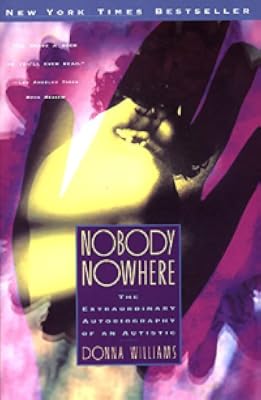
Labeled deaf, retarded, disturbed and insane, Donna Williams lived in a world of her own. Alternating between rigid hostility and extroversion, she waged what she termed her "war against the world." She existed in a dreamlike state, parroting the voices of those around her in the hope that they would leave her alone. Few people understood her, least of all Donna helself. It was not until the age of twenty-five that Donna discovered the word- autism- that would at last give her the show more opportunity to understand herself and begin to build a bridge to join the world as most know it. "Nobody Nowhere, Donna Williams' extraordinary autobiography, is her heroic attempt to come to terms with autism. This eloquent memoir reveals a fierce intelligence, great creativity and much humour. It will shatter many myths and misconceptions. The poetic sensibility and extraordinary insights of "Nobody Nowhere make it inspiring reading for everyone. "From the Trade Paperback edition. show lessTags
Recommendations
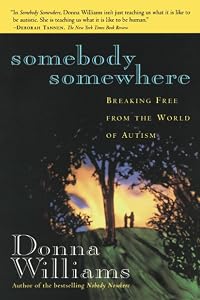
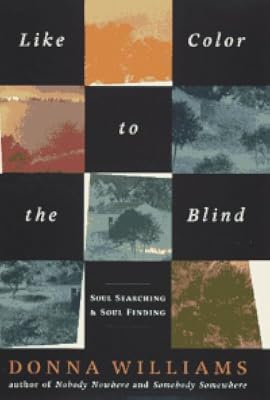
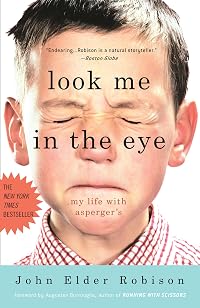
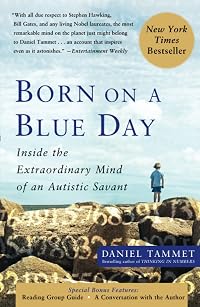
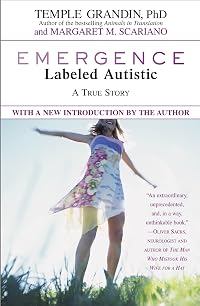
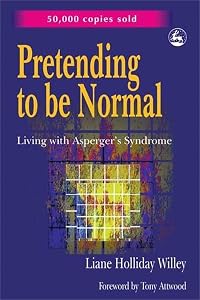
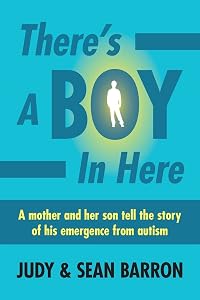
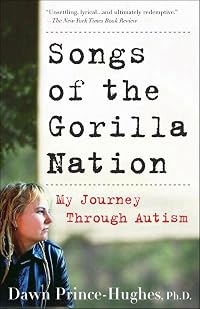




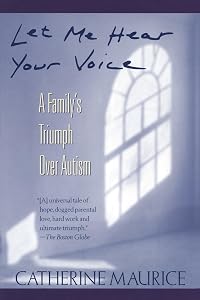

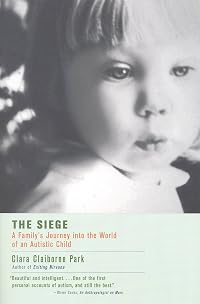
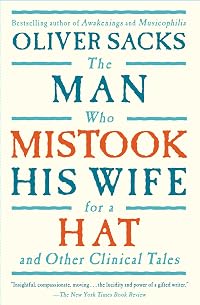

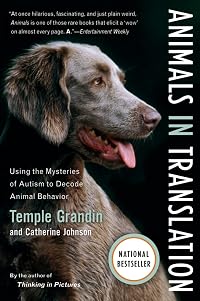
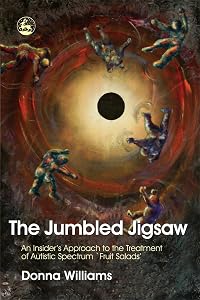
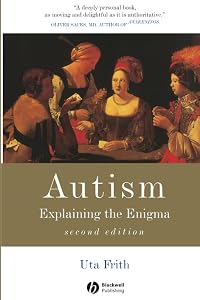
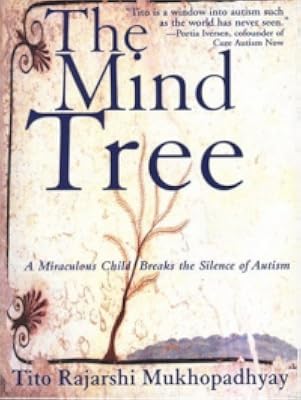
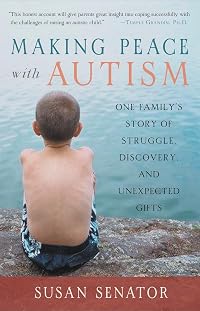


Member Recommendations
charlie68 Also a story also about the awakening of a soul.
Member Reviews
'I believe I was born alienated, and if not, I was certainly so by the time I got left behind in emotional development at about the age of three. Autistic people are not mad, not stupid. They are not fairies, not aliens -just people trapped in invisible, crippled emotional responses. At the same time it would be misleading to think that such people do not feel.'
Every life experience is different. When it comes to autism, Donna Williams (who wasn't diagnosed until she had reached adulthood) certainly ticked many of the expected boxes -the hypersensitivity; the spinning and jumping; loosing herself into objects while trying to avoid people; the obsession with classifying, ordering and copying; the challenging behaviours (by her own show more reckoning: aggressive, uncooperative, disruptive); the lack of common sense; her way of talking 'at' people, not 'with' (which her family pejoratively called 'wonking')… Yet, how much of that was down to autism? How much to her very own personal upbringing?
The thing is, Donna Williams grew up in a dysfunctional family and was particularly abused, as a child, by her mother (who wanted her locked up into an institution against the prevailing wishes of her father). The home dynamic was toxic; and when children grow up into such traumatic environment, whatever the type of abuse being melted upon them it leaves scars that always get carried into adulthood. It's all part of an emotional make up and learnt ways to cope so as to survive. She, of course, didn't escape that, although she mitigates it ('my home life affected some of the forms that my behaviour took, though not the behaviour itself'). She actually went as far as to depersonalise herself, creating herself different personalities to help her cope with the outside world. Was there here an issue with mental illness? Well, she was first diagnosed, wrongly as it turned out, with schizophrenia...
What's truly sad here is to see her repeating self-harming patterns -the abusive boyfriends, the precarious jobs, living on the poverty line when not, at time, being homeless... Beyond autism, here's indeed the autobiography of one of these countless runaway girls fleeing abusive homes, just to end up being abused again and again, until abusing even themselves (e.g. she will reach the point of self-mutilating). Is that steering away from autism as such? Not really. After all, abused childhood or not, autistic people too are at risk of abuses and exploitation, and they too struggle with personal relationships, let alone finding a place in society and on the job market!
We moved a long way from her era, though. She grew up in the seventies, and this book was first published in 1992. What I also found interesting here is the mindset from that period, not so far back in time. There's the taboo if not ignorance (denial?) as to her condition (she was simply labelled 'disturbed', a lack of proper recognition which seriously messed up her schooling to start with, while her mum overall was perceived as being one of those 'refrigerator mother'...). There's the confusion even among the medical profession (again, her misdiagnosis as schizophrenic; a common mistake back then...). One cannot, in fact, but wonder what would have happened had she grew up a few decades later? Her life would certainly (or so we hope) have been very different...
Here's an extraordinary autobiography indeed. Her path might not be the typical path of an autistic, and many things have changed since the seventies and eighties. Nevertheless, the insight into her mind as an autistic, and, the story of her reckoning and triumph through a painful journey remains a powerful and harrowing account. It still worth a read if you have any interest in autism. show less
Amazing book!!
A first person telling of an autistic life. Searing in parts, heartwarming in others, but always a stark telling of the reality of the author's life.
I found it a stunning window onto the life of a person living in the same world as me, but living differently. The writing is so clear and transparent.
I was in awe of the author - to live such a difficult life, and to be able tell the story so vividly and compellingly!!
Published 30 years ago, when autism was not widely understood (or diagnosed), I'm sure that Ms Williams played a out-sized role in lifting the understanding of autism in both the professional and broader communities.
A first person telling of an autistic life. Searing in parts, heartwarming in others, but always a stark telling of the reality of the author's life.
I found it a stunning window onto the life of a person living in the same world as me, but living differently. The writing is so clear and transparent.
I was in awe of the author - to live such a difficult life, and to be able tell the story so vividly and compellingly!!
Published 30 years ago, when autism was not widely understood (or diagnosed), I'm sure that Ms Williams played a out-sized role in lifting the understanding of autism in both the professional and broader communities.
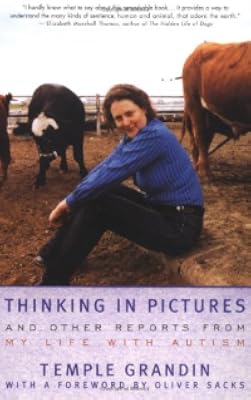
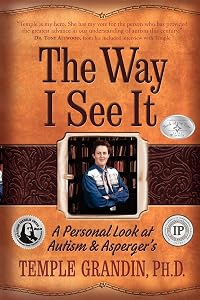
I'm glad I read Temple Grandin's "The way I see it" before reading this. The contrast is absolutely fascinating. Although Donna Williams is quite a bit younger than Grandin (fairly close in age to myself as far as I can work out), this book is very clearly a product of a much earlier era. In fact, the experiences described make me wonder if Australia was way behind the US in its understanding of autism.
Temple Grandin depicts a very logical, scientific background for autism, making it seem clear, straightforward and normal. The foreword to "Nobody nowhere" makes a great, unknowable mystery of it. Where Grandin focuses on ability, the forward to Williams' book focuses on disability. Williams is made to appear as a fascinating specimen and show more her achievements as being wonderful - for someone with a disability. In fact, Williams writes deeply, feelingly (most of the time) and thought-provokingly; she doesn't need to be judged against a lower standard.
There is one thing I really do like about this book. Grandin pushes responsibility to conform onto the person with autism. She encourages individuality, but only insofar as it does not get in the way of conformity with society's norms. That's fair enough, but it leaves me a bit uncomfortable at times. Williams champions the inherent value of a person as they are, without need of meeting someone else's standards of acceptable.
One thing does fascinate me. As soon as Williams described her "wisps" I recognised them immediately. I still see them occasionally. Mine (I assume) are a result of "litter" at the back of my eye. I like to watch them too. But as for the spots, well, um, doesn't everybody see them??? show less
Temple Grandin depicts a very logical, scientific background for autism, making it seem clear, straightforward and normal. The foreword to "Nobody nowhere" makes a great, unknowable mystery of it. Where Grandin focuses on ability, the forward to Williams' book focuses on disability. Williams is made to appear as a fascinating specimen and show more her achievements as being wonderful - for someone with a disability. In fact, Williams writes deeply, feelingly (most of the time) and thought-provokingly; she doesn't need to be judged against a lower standard.
There is one thing I really do like about this book. Grandin pushes responsibility to conform onto the person with autism. She encourages individuality, but only insofar as it does not get in the way of conformity with society's norms. That's fair enough, but it leaves me a bit uncomfortable at times. Williams champions the inherent value of a person as they are, without need of meeting someone else's standards of acceptable.
One thing does fascinate me. As soon as Williams described her "wisps" I recognised them immediately. I still see them occasionally. Mine (I assume) are a result of "litter" at the back of my eye. I like to watch them too. But as for the spots, well, um, doesn't everybody see them??? show less
This book is a fascinating, courageous and true story by a young woman about her childhood. Donna Williams has autism and yet has managed to develop into a perceptive and thoughtful adult who has the ability to look at her own reactions and write about them in a manner that is accurate and detached and, at the same time, intensely personal and full of feeling.
Wow. Definitely recommended reading for therapists and teachers. Maybe not recommended so much for loving parents, because Donna Williams credits her mother's bad parenting for giving her (Donna) the strength to develop her own identity in the world. In that way it reminds me of [b:Look Me in the Eye: My Life with Asperger's|454856|Look Me in the Eye My Life with Asperger's|John Elder Robison|http://photo.goodreads.com/books/1189907494s/454856.jpg|2119898], written by John Elder Robison and influenced by his brother, Augusten Burroughs. Heartwrenching, heartwarming, and educational.
This is quite a challenging book for me to review. It is an autobiographical account by an Australian girl called Donna who has "characters", as she terms them, named Carol and Willie.
Donna adopted the identity of these "characters" at times of need, Willie appeared to her when she was about two and "was no more than a pair of piercing green eyes whcih could only be seen in the darkness". Willie became the self Donna directed to the outside world, with his glaring eyes and clenched fists. Willie had "a look of complete hatred". Carol was a girl Donna met at at early age who brought her home to her house. Donna wanted to live in Carol's world. When Donna became Carol, she smiled and laughed, and could act "relatively normal". Donna show more disappeared and Carol "took the stage".
It would be interesting to learn how Donna's condition with her role-playing characters compares with that of those suffering from multiple personality disorder or whatever the correct term is nowadays.
Though Donna may have had several symptoms characteristic of autism, such as problems with the understanding of certain concepts, she did succeed in establishing several amazingly close, though perhaps absolutely short-term, relationships both as a child and an adult, the adult relationships being with others suffering from similar difficulties as herself. But what I'm trying to say is, I don't connect autism, which is a condition where you not only have your own inner world, as I suppose Donna did, shut others out and often never even learn to speak, with a person capable of fluent speech and who establishes deep relationships. In fact reading this book makes me ponder over the whole matter of diagnoses - I have to think rather that according to the various ways we were treated/abused as children, we all suffer from various flaws in character, and when several/many individuals are discovered to possess a group of similar such flaws, this is then dubbed to be a particular "disorder". In fact, no matter what, we are all individuals, differing considerably from each other.
Donna had various flaws and difficulties, but worked on all these by herself in order to turn into a more normally functioning human being. She explains to us her various cognitive problems, strange patterns of behaviour, etc, etc and it was a long process for her to make her own diagnosis, working as stated mainly on her own, though she did at one point find a nurturing friend and kindred spirit in the form of a psychiatrist, whom she herself sought out.
She has a keen intellect and among her achievements completed a university education.
Her mother was abusive, her father weak and passive, and the whole family (she had two brothers) was thus dysfunctional. The book was complete with photos of Donna as a child and later, and of her brothers and auntie. It was a bit shocking for me that the cover photo of Donna at the age of 3 or 4 is the spitting image of a photo of myself at the same age.
The book is well-expressed, though still I haven't managed to comprehend the way Donna's mind worked and how she processed her early experiences. In the final pages Donna explains her various symptoms, their causes as she understands them and their symbolic meanings.
It bothered me somewhat that the book had no chapters, ans this somehow made it seem a bit chaotic, as though her various experiences, chaotic in themselves, were piled up on top of one another and thrown towards us with no interludes.
An interesting book from the psychological point of view, and well worth reading. show less
Donna adopted the identity of these "characters" at times of need, Willie appeared to her when she was about two and "was no more than a pair of piercing green eyes whcih could only be seen in the darkness". Willie became the self Donna directed to the outside world, with his glaring eyes and clenched fists. Willie had "a look of complete hatred". Carol was a girl Donna met at at early age who brought her home to her house. Donna wanted to live in Carol's world. When Donna became Carol, she smiled and laughed, and could act "relatively normal". Donna show more disappeared and Carol "took the stage".
It would be interesting to learn how Donna's condition with her role-playing characters compares with that of those suffering from multiple personality disorder or whatever the correct term is nowadays.
Though Donna may have had several symptoms characteristic of autism, such as problems with the understanding of certain concepts, she did succeed in establishing several amazingly close, though perhaps absolutely short-term, relationships both as a child and an adult, the adult relationships being with others suffering from similar difficulties as herself. But what I'm trying to say is, I don't connect autism, which is a condition where you not only have your own inner world, as I suppose Donna did, shut others out and often never even learn to speak, with a person capable of fluent speech and who establishes deep relationships. In fact reading this book makes me ponder over the whole matter of diagnoses - I have to think rather that according to the various ways we were treated/abused as children, we all suffer from various flaws in character, and when several/many individuals are discovered to possess a group of similar such flaws, this is then dubbed to be a particular "disorder". In fact, no matter what, we are all individuals, differing considerably from each other.
Donna had various flaws and difficulties, but worked on all these by herself in order to turn into a more normally functioning human being. She explains to us her various cognitive problems, strange patterns of behaviour, etc, etc and it was a long process for her to make her own diagnosis, working as stated mainly on her own, though she did at one point find a nurturing friend and kindred spirit in the form of a psychiatrist, whom she herself sought out.
She has a keen intellect and among her achievements completed a university education.
Her mother was abusive, her father weak and passive, and the whole family (she had two brothers) was thus dysfunctional. The book was complete with photos of Donna as a child and later, and of her brothers and auntie. It was a bit shocking for me that the cover photo of Donna at the age of 3 or 4 is the spitting image of a photo of myself at the same age.
The book is well-expressed, though still I haven't managed to comprehend the way Donna's mind worked and how she processed her early experiences. In the final pages Donna explains her various symptoms, their causes as she understands them and their symbolic meanings.
It bothered me somewhat that the book had no chapters, ans this somehow made it seem a bit chaotic, as though her various experiences, chaotic in themselves, were piled up on top of one another and thrown towards us with no interludes.
An interesting book from the psychological point of view, and well worth reading. show less
1. Labeled deaf, retarded, disturbed, and insane, Donna Williams lived in a world of her own. Alternating between rigid hostility and extroversion, she waged what she termed her war against "the world". She lived in a dreamlike state, withdrawn, viewing her incomprehensible surroundings from the security of a "world under glass", parroting the voices of those around her in the hope that they would leave her alone. Few people understood her, least of all Donna herself. She knew only that something was wrong with her, and she yearned to be "normal". It was not until three years ago, when Donna was twenty-five, that she discovered the word - autism - that would at last give her the opportunity to understand herself and to build a bridge to show more join the real world. Nobody Nowhere, Donna's extraordinary autobiography, is her attempt to come to terms with autism and is a vivid memoir of the titanic struggles she has endured in her quest to merge "my world" with "the world". The book takes readers on an incredible journey into the mind of an autistic person and in the process gives an unprecedented insider's view of a little-understood condition and destroys the many myths and misconceptions about autism. As useful as the label of autism has been for her, her memoir reveals that the label does not define her. This eloquent, often searing book also illuminates her fierce intelligence, creativity, and sense of humor. Hers is a story of incredible courage and inspiration, too. Reared in an extremely hostile environment, Donna faced the ever-present threat of institutionalization. Instead, she ran away from home at a young age, survived on the streets, and even managed to get herself through college.Today she lives independently. While Nobody Nowhere will be a breakthrough book for autistic people and their families, its poetic sensibility and extraordinary insights will make it inspired reading for anyone interested in the soul of the mind. Source: Publisher
2. "This is a story of two battles, a battle to keep out 'the world' and a battle to join it." She inhabits a place of chaos, cacophony, and dancing light--where physical contact is painful and sights and sounds have no meaning. Although labeled, at times, deaf, retarded, or disturbed, Donna Williams is autistic--afflicted by a baffling condition of heightened sensory perception that imprisons the sufferer in a private, almost hallucinatory universe of patterns and colors. Nobody Nowhere is Donna's story in her own words--a haunting, courageous memoir of the titanic struggles she has endured in her quest to merge "my world" with "the world." Source: GoodReads show less
2. "This is a story of two battles, a battle to keep out 'the world' and a battle to join it." She inhabits a place of chaos, cacophony, and dancing light--where physical contact is painful and sights and sounds have no meaning. Although labeled, at times, deaf, retarded, or disturbed, Donna Williams is autistic--afflicted by a baffling condition of heightened sensory perception that imprisons the sufferer in a private, almost hallucinatory universe of patterns and colors. Nobody Nowhere is Donna's story in her own words--a haunting, courageous memoir of the titanic struggles she has endured in her quest to merge "my world" with "the world." Source: GoodReads show less
Members
- Recently Added By
Author Information

14+ Works 1,147 Members
Donna Williams was born in a working class suburb of Melbourne, Australia in 1963. Like many people born in the 1960s and earlier, she was diagnosed with autism quite late, at the age of twenty-five. This is Donna's sixth book in the field of autism-spectrum conditions, with her first two autobiographical works, Nobody Nowhere and Somebody show more Somewhere, becoming major international bestsellers and her two text books shaping much of what is happening in the field today. show less
Awards and Honors
Distinctions
Series

Common Knowledge
- Canonical title*
- Ei kukaan ei missään
- Original title
- Nobody Nowhere
- Original publication date
- 1992
- People/Characters
- Donna Williams; Lawrence Bartak
- Epigraph
- In a room without windows, in the company of shadows,
You know they won't forget you, they'll take you in
Emotionally shattered, don't ask if it mattered,
Don't let it upset you, just start again. - Dedication
- To Sharon, my grandparents, and the Lawries of the world for simply being.
Special thanks to Dr. Lawrie Bartak and the Morgans for helping me to refine the lines of communications. - First words
- Foreword (by Bernard Rimland, Ph.D.) -- This is truly a remarkable book. Donna Williams, against incredible odds, has written a masterpiece -- a haunting, insightful, and electrifying account of her journey from a childhood a... (show all)s a severely withdrawn and bewildered autistic toddler to a university-educated successful writer.
I remember my first dream -- or, at least, the first that I can recall. - Last words*
- (Click to show. Warning: May contain spoilers.)Vaikka vastassa olisikin väistelyä ja etäisyyttä, se ei ole samaa kuin välinpitämättömyys.
*Some information comes from Common Knowledge in other languages. Click "Edit" for more information.
Classifications
- Genres
- Biography & Memoir, Nonfiction, General Nonfiction
- DDC/MDS
- 616.89820092 — Applied science & technology Medicine & health Diseases, Allergies, Skin Conditions Nervous Disorders: Autism, Anorexia, OCD Mental disorders: bi-polar/schizophrenia Schizophrenia
- LCC
- RC553 .A88 .W55 — Medicine Internal medicine Internal medicine Neurosciences. Biological psychiatry. Neuropsychiatry Psychiatry Psychopathology
- BISAC
Statistics
- Members
- 627
- Popularity
- 46,413
- Reviews
- 14
- Rating
- (3.82)
- Languages
- 10 — Czech, Dutch, English, Finnish, French, German, Hungarian, Italian, Norwegian (Bokmål), Swedish
- Media
- Paper, Audiobook, Ebook
- ISBNs
- 24
- ASINs
- 3