
The City of Marvels
by Eduardo Mendoza
On This Page
Description
Eduardo Mendoza's classic novel about the birth of Barcelona as a world city, embodied in the rise of the ambitious and unscrupulous Onofre Bouvila "Though historical in subject matter, this story of Catalonian enterprise and Barcelonan ambition is thoroughly contemporary in spirit" Jonathan Franzen Stung by the realisation that his father is a fraud and a failure, Onofre Bouvila leaves a life of rural poverty to seek his fortune in Barcelona. The year is 1888, and the Catalan capital is show more about to emerge from provincial obscurity to take its place amongst the great cities of the world, thanks to the upcoming Universal Exhibition. Thanks to a tip-off from his landlord's daughter, Onofre gets his big break distributing anarchist leaflets to workers preparing for the World Fair. From these humble beginnings, he branches out as a hair-tonic salesman, a burglar, a filmmaker, an arms smuggler and a political dealmaker, in a multifaceted career that brings him wealth and influence beyond his wildest dreams. But, just as Barcelona's rise makes it a haven for gangsters, crooks and spivs, vice begins to fester in Onofre's heart. And the climax to his remarkable story will come just as a second World Fair in 1929 marks the city's apotheosis. Translated from the Spanish by Nick Caistor show lessTags
Recommendations



























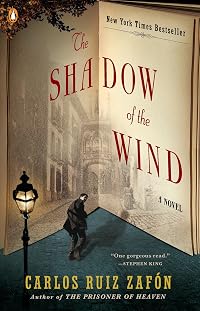
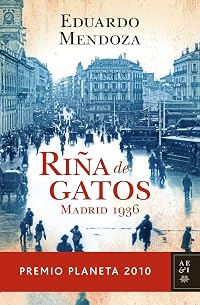


Member Recommendations
ivan.frade Similar "soap opera" style
Member Reviews
En el período comprendido entre las dos Exposiciones Universales de Barcelona de 1888 y 1929, con el telón de fondo de una ciudad tumultuosa, agitada y pintoresca, real y ficticia, asistimos a las andanzas de Onofre Bouvila, inmigrante paupérrimo, repartidor de propaganda anarquista y vendedor ambulante de crecepelo, y su ascensión a la cima del poder financiero y delictivo. Mendoza nos propone un nuevo y singularísimo avatar de la novela picaresca y un brillante carrusel imaginativo de los mitos y fastos locales. Una fantasía satírica y lúdica cuyo sólido soporte realista inicial no excluye la fabulación libérrima
Este libro es un cóctel entre «El Padrino», la Historia de Barcelona y la comedia incoherente de los «Looney Toons». El estilo de escribir de Eduardo Mendoza, claro y refrescante es el que consigue armonizar estos ingredientes improbables dando como resultado una novela entretenida que salta sin aviso de lo sublime a lo trágico y a lo absurdo para volver a lo sublime que, bien pensado, es la definición correcta de la historia de España y de Cataluña. Recomendable para los que disfruten de kafkianos como Mendoza, Bolaño o Murakami.
Mendoza's take on the Spanish picaresque tradition is the story of a peasant lad, Onofre Bouvila, who emigrates to the thriving new metropolis of Barcelona at the end of the XIX century. Neatly set between two World Exhibitions, it tells a wonderful rags to riches story: fortune is achieved, obviously, through petty crime, thuggery, urban speculation (a must) and other semi criminal activities; but also through a great deal of self belief and vision. The familiar story of social ascent is used to present a comic vision of the myths of Barcelona's economic and cultural development. In my opinion,Mendoza is the best comic prose writer in Spanish at the moment, and the best moments of the book are his departures from realism into pure show more comic fancy.A delightful book. show less
I have a feeling that Mendoza is better known in Europe than in North America. I have already read four of his books, none of which has been published here I don’t think. The three were on a lighter side with an insane barber turned detective as the main protagonist- sort of Being There by Kosinski but on a very light side.
Even though all of them are set in Barcelona, this one, The City of Marvels, is about Barcelona itself. Yes, it does have a plot that kept me reading even though my interest petered out by the end, but the main focus is on historical Barcelona. The times that are of special interest to the author are of and between the two International Expositions which took place there in 1888 and 1929 respectively. The main show more character, Onofre, is a peasant who comes to the big city with a plan to get rich and through his intelligence and cunning, crime and lack of scruples in time becomes one of the richest men in Barcelona and Spain. Were I not acquainted with Mendoza, I would probably not know what to make of this main character. He is definitely not a likeable person and for us to like him is not the point. The point Mendoza is making is that this was the way people got rich in Barcelona during that time and this was the way Barcelona acquired its bourgeoisie. That may not be entirely true either, since the whole thing is a satire and I feel that we are to read it as such. All in all it’s the story of the city Mendoza is dying to tell here; Onofre is only an excuse. show less
Even though all of them are set in Barcelona, this one, The City of Marvels, is about Barcelona itself. Yes, it does have a plot that kept me reading even though my interest petered out by the end, but the main focus is on historical Barcelona. The times that are of special interest to the author are of and between the two International Expositions which took place there in 1888 and 1929 respectively. The main show more character, Onofre, is a peasant who comes to the big city with a plan to get rich and through his intelligence and cunning, crime and lack of scruples in time becomes one of the richest men in Barcelona and Spain. Were I not acquainted with Mendoza, I would probably not know what to make of this main character. He is definitely not a likeable person and for us to like him is not the point. The point Mendoza is making is that this was the way people got rich in Barcelona during that time and this was the way Barcelona acquired its bourgeoisie. That may not be entirely true either, since the whole thing is a satire and I feel that we are to read it as such. All in all it’s the story of the city Mendoza is dying to tell here; Onofre is only an excuse. show less
Starts off promisingly but soon becomes rather annoying. The protagonist is a rather repellent character. It's a good satire, though it's not awesome. Witty enough description of social and economic ascent in a mythical cityscape. The comic side of the narrative and the depiction of the evolution of the social tissue in such an essential city as 20th century Barcelona are reasons enough to read it though. Just don't expect marvels...
Written in Spanish in 1986 ( La Cuidad de los Prodigios)and translated into English in 1988 by Bernard Molloy, THE CITY OF MARVELS is a chronicle of the modern age in which historical facts are combined with the story of the rise to power of Onofre Bouvila, a scheming, self-serving peasant boy who comes to Barcelona in search of work.
Set in the time period between 1888 and 1929, Mendoza's vivid portrayal of Barcelona, in all its splendor and squalor, echoes Onofre's rapid ascent to power and fabulous riches; and can be seen as symbolic of the rise of the Barcelona bourgeoisie.
With its multitude of eccentric characters, sardonic asides, and bizarre incidents, THE CITY OF MARVELS is hugely entertaining---a very good read.
Set in the time period between 1888 and 1929, Mendoza's vivid portrayal of Barcelona, in all its splendor and squalor, echoes Onofre's rapid ascent to power and fabulous riches; and can be seen as symbolic of the rise of the Barcelona bourgeoisie.
With its multitude of eccentric characters, sardonic asides, and bizarre incidents, THE CITY OF MARVELS is hugely entertaining---a very good read.
I was a bit disappointed with this one. I have read a few other novels by Mendoza, which I liked best.
Punctuation is weird (different sentences chained together with commas are less legible). The author rarely uses quotation marks or quotation dashes, so it't up to the reader to guess where some character stops speaking, and where the narrator resumes narrating. Full stops are scarce, and Mendoza mixes different situations and times in the same paragraph…
The story itself is entertaining, funny at times. But I felt frustrated every time an actual Historical figure or event was mentioned and Mendoza made up quite a lot of that, adding weird developments to what happened in reality.
Characters aren't well defined. The personality of the show more main character alone is an amorphous mix of a rascal, a businessman and a thug. It is not clear what are his feelings, or his feelings seem to change whimsically. show less
Punctuation is weird (different sentences chained together with commas are less legible). The author rarely uses quotation marks or quotation dashes, so it't up to the reader to guess where some character stops speaking, and where the narrator resumes narrating. Full stops are scarce, and Mendoza mixes different situations and times in the same paragraph…
The story itself is entertaining, funny at times. But I felt frustrated every time an actual Historical figure or event was mentioned and Mendoza made up quite a lot of that, adding weird developments to what happened in reality.
Characters aren't well defined. The personality of the show more main character alone is an amorphous mix of a rascal, a businessman and a thug. It is not clear what are his feelings, or his feelings seem to change whimsically. show less
Members
- Recently Added By
Lists

Las 100 Mejores Novelas en Castellano del Siglo XX
105 works; 13 members

Favorite Books in Translation
320 works; 133 members

Fiction With Familiar Settings
280 works; 93 members

Travel Reads
26 works; 1 member
Author Information

Some Editions
Awards and Honors
Awards
Series
Belongs to Publisher Series
Common Knowledge
- Canonical title
- The City of Marvels
- Original title
- La ciudad de los prodigios
- Alternate titles*
- The City of Marvels
- Original publication date
- 1986
- Important places
- Barcelona, Catalonia, Spain
- Important events
- World's Fair Barcelona (1888); World's Fair Barcelona (1929)
- Original language
- Spanish
*Some information comes from Common Knowledge in other languages. Click "Edit" for more information.
Classifications
- Genres
- Fiction and Literature, General Fiction, Historical Fiction
- DDC/MDS
- 863.64 — Literature & rhetoric Spanish Literature Spanish fiction 20th Century 1945-2000
- LCC
- PQ6663 .E54 — Language and Literature French, Italian, Spanish and Portuguese literatures Spanish literature Individual authors, 1961-2000
- BISAC
Statistics
- Members
- 1,231
- Popularity
- 20,090
- Reviews
- 26
- Rating
- (3.79)
- Languages
- 18 — Catalan, Danish, Dutch, English, Finnish, French, German, Hebrew, Icelandic, Italian, Norwegian (Bokmål), Norwegian, Polish, Portuguese, Russian, Spanish, Swedish, Turkish
- Media
- Paper, Audiobook, Ebook
- ISBNs
- 68
- ASINs
- 14