On This Page
Description
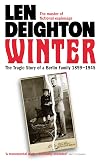
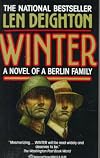
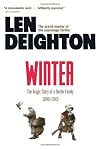
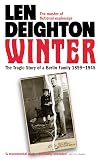
In this gripping prelude to the Game, Set, Match trilogy, spies aren't born—they're made. Winter tells the tale of a Berlin family divided. Two brothers, Peter and Paul Winter, came of age during the Great War; then as Hitler's power spreads through Germany threatening a new era of violence, the brothers are driven apart by differing morals and ambitions. Meticulously researched, this allegory of a nation divided paints a brilliant portrait of the German zeitgeist during those turbulent show more years, and provides a powerful depiction of the rise of the Third Reich.. show less
Tags
Recommendations



















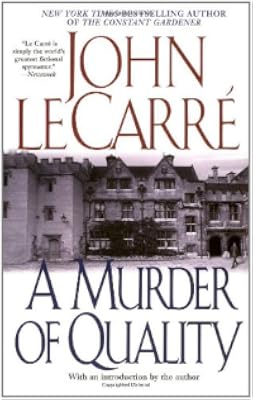


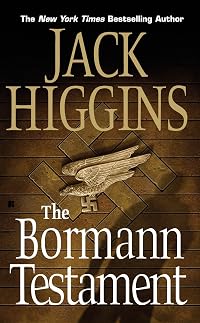


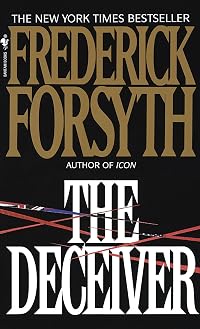

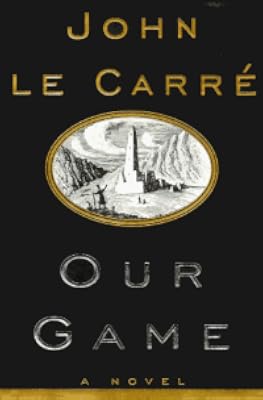









Member Recommendations
Member Reviews
Winter by Len Deighton (1987 620 pages)
This book covers the time period from 1900 to 1945. It is set in Germany and traces the rise of Nazism and its antisemitism by following the lives of three generations of an extended family and shows how their lives were affected by both world wars and the political backdrop to these conflicts.
The story is told beautifully and Deighton did a great job of presenting the socio-economic background in Germany that led to the struggles between the political militias within the country, and the eventual rise of the Nazi Party, and how the party took political control of Germany’s government, police forces, and ultimately, army. It showed how the party wooed the vulnerable and promised all things to the show more dispossessed, and built up national fervour with its slogan, “Make Germany Great Again”.
In this story we see the effect of social stratification, with the aristocratic elite believing themselves to be the decent and reasonable people, even though they were totally ignorant of how the “lower classes” lived. Honour and discipline were seen at the true values, and that when the Nazi government started doing things that the military thought were not right, that the military commanders still felt themselves obligated to stand by and let them happen as they were duty bound to serve the Government. This allowed the introduction of laws and procedures that enabled the Nazis to take anyone into custody, and facilitated the introduction of the concentration camps and death camps.
This book is a good warning of what can happen as it describes what did happen. Unfortunately, it does not necessarily prevent those same horrors from happening again.
This book was a great read, but there is so much in it that is echoed by events around The World today it was frightening at times. show less
This book covers the time period from 1900 to 1945. It is set in Germany and traces the rise of Nazism and its antisemitism by following the lives of three generations of an extended family and shows how their lives were affected by both world wars and the political backdrop to these conflicts.
The story is told beautifully and Deighton did a great job of presenting the socio-economic background in Germany that led to the struggles between the political militias within the country, and the eventual rise of the Nazi Party, and how the party took political control of Germany’s government, police forces, and ultimately, army. It showed how the party wooed the vulnerable and promised all things to the show more dispossessed, and built up national fervour with its slogan, “Make Germany Great Again”.
In this story we see the effect of social stratification, with the aristocratic elite believing themselves to be the decent and reasonable people, even though they were totally ignorant of how the “lower classes” lived. Honour and discipline were seen at the true values, and that when the Nazi government started doing things that the military thought were not right, that the military commanders still felt themselves obligated to stand by and let them happen as they were duty bound to serve the Government. This allowed the introduction of laws and procedures that enabled the Nazis to take anyone into custody, and facilitated the introduction of the concentration camps and death camps.
This book is a good warning of what can happen as it describes what did happen. Unfortunately, it does not necessarily prevent those same horrors from happening again.
This book was a great read, but there is so much in it that is echoed by events around The World today it was frightening at times. show less
Like a number of English speakers with German names, I'm a bit obsessed with the Hitler years, and I find this book an intelligent treatment of how the ghastly catastrophe started and took hold of a civilized state. I'm obviously not a believer in the "Germans are just like that"" school, and firmly believe in the "It could happen here !"school. But the book is good quality Deighton and pretty fair-minded.
The prequel to the Bernard Samson Books. While not necessary to be read to enjoy the Cold War series, it is a great background to the people who appear in the Samson books.
I found it gave a great insight into how Germans drifted into nazism and wwii from a very personal viewpoint. It also highlighted the tragedy for Germany as its old rigid but cultured past was replaced by something less attractive between 1914 and 1945. The book covers this by focusing on its people on that personal level, as families were stressed and torn apart, as well as towns, neighbourhoods and favourite buildings and so on were gradually ruined.
Spoiler alert - the tragic story line is further underscored by the lack of nay happy endings.
I found it gave a great insight into how Germans drifted into nazism and wwii from a very personal viewpoint. It also highlighted the tragedy for Germany as its old rigid but cultured past was replaced by something less attractive between 1914 and 1945. The book covers this by focusing on its people on that personal level, as families were stressed and torn apart, as well as towns, neighbourhoods and favourite buildings and so on were gradually ruined.
Spoiler alert - the tragic story line is further underscored by the lack of nay happy endings.
Winter is a nice-to-have, though less than vital, prequel novel to Len Deighton's three Bernard Samson trilogies (Game, Set, and Match; Hook, Line, and Sinker; Faith, Hope, and Charity), which were set at the tail end of the Cold War and immediately after the collapse of the Soviet Union. Winter follows the vicissitudes of the Winter family (as well as the families of several other characters in the Samson novels, with one or two characters who actually appear in the later-set novels thrown in for good measure) against the backdrop of Germany from 1899 to 1945.
While Winter does have some good and interesting elements -- the description of a German aerial bombardment of London, via zeppelin, during World War I is a highlight for show more military buffs, and Deighton's deft sketch of the legal maneuverings to justify the Nazi regime's policies ("Leave the presidency vacant -- what a great idea") recalls in a way the very good 2001 made-for-TV movie about the 1942 Wansee Conference (wherein General Reinhard Heydrich chaired a secret meeting to hammer out the Nazis' "Final Solution"), Conspiracy -- it is, on the whole, disappointing. The lack of character development is painfully obvious in this updating of a 19th century family chronicle; the characters are stock, pat, and rote, and it's only at roughly the halfway point (the mass market paperback edition of this book is 536 pages long) -- say, from 1929 onwards -- that there are sufficient plot complications so as to make this lack less glaring.
Come to that, characterization wasn't really the point of Deighton's Game, Set, and Match trilogy (consisting of Berlin Game, Mexico Set and London Match) either, for all that he effectively plunked the reader into Bernard Samson's skin (the middle-aged British spy who is the first person narrator/protagonist of the trilogy), imparting Samson's anxieties, desires, seething anger towards his bosses, and brief flashes of terror. But Winter covers a larger canvas, and, while it never is exactly boring, it never rises above the level of a good, not great, TV movie.
Deighton necessarily has to compress or wholly elide events to keep his story moving (and to avoid the book from becoming a two thousand-paged tome), but, even so, he makes some puzzling choices: for one thing, I was surprised that Deighton didn't mention, even in passing, the assassination of the German foreign minister Walter Rathenau by Freikorps thugs on 24 June 1922, given how much the Nazis promoted it after they assumed power in 1933 (they declared 24 June a holiday) and how much weight various right-wing conspiracy theorists have given to Rathenau's off-hand remarks about certain highly-placed Jews holding an inordinate amount of influence in world affairs. (Rathenau was rather prejudiced against and embarrassed by the Ashkenazim, and felt that no German Jew should be a Zionist or self-segregating.) For another, given how much of a build-up Deighton gave the zeppelin industry, I was surprised that the Hindenburg disaster of 1937 -- which precipitated the once-promising industry's utter collapse -- didn't even merit an aside.
However, Deighton is skillful at pointing out how relatively few hardcore ideologues there were among the Nazis: Pauli, the younger Winter brother (and, here, the legal mastermind behind the Nazis' consolidation of power) himself isn't -- he isn't even anti-Semitic -- but he is a German nationalist, a patriot, and he hates arguments in his personal life (all the more interesting that he became a lawyer after WWI and the suppression of the various Freikorps bands): he goes along to get along, and constantly tries to get his friends and family to be friendly with each other, where most sensible people would keep the non-compatible parties discretely compartmentalized. The older Winter brother, Peter, proves in the end to be not quite as stiff as he appears earlier in the book; he too is a German nationalist and patriot, and it is through sheer dumb luck -- and an accident of birth (his mother is American) and the happenstance of his choice of spouse (his wife is a Jew from California) -- that he ends up working for U.S. intelligence against the Nazis, at least until V-E Day, and through the preliminary stages of the Nuremberg trials. Deighton successfully suggests that the real reason for the Nazis' success was due to enough Germans acquiescing, if not actively supporting, their program; the Nazis tried to be all things to all "Aryan" Germans, tailoring their speeches and pamphlets to the different socio-economic classes as necessary. (That said, I have another bone of contention about Winter: Deighton never even hints at the many foreign corporations -- many of them American -- who actively supported Hitler's regime, or of the many groups of Americans who were either indifferent to or supportive of the Nazis and their agenda.)
Winter doesn't seem like that vital a prequel to the three Bernard Samson trilogies; Bernard's father Brian is a negligible presence, and Bernard's boss Brett Rensselaer's character isn't really illuminated by Veronica Winter (née Rensselaer) -- Peter & Paul's mother -- her brother Glenn, or their father Cyrus. (Brett is one of Cyrus's stepsons: he remarries a woman named Dott, who has three sons from a previous marriage, after his first wife dies; one of these sons is Brett.) Still, I'm glad I read it, even if I didn't like it, on the whole, quite as much as any of the books in the Game, Set and Match trilogy. show less
While Winter does have some good and interesting elements -- the description of a German aerial bombardment of London, via zeppelin, during World War I is a highlight for show more military buffs, and Deighton's deft sketch of the legal maneuverings to justify the Nazi regime's policies ("Leave the presidency vacant -- what a great idea") recalls in a way the very good 2001 made-for-TV movie about the 1942 Wansee Conference (wherein General Reinhard Heydrich chaired a secret meeting to hammer out the Nazis' "Final Solution"), Conspiracy -- it is, on the whole, disappointing. The lack of character development is painfully obvious in this updating of a 19th century family chronicle; the characters are stock, pat, and rote, and it's only at roughly the halfway point (the mass market paperback edition of this book is 536 pages long) -- say, from 1929 onwards -- that there are sufficient plot complications so as to make this lack less glaring.
Come to that, characterization wasn't really the point of Deighton's Game, Set, and Match trilogy (consisting of Berlin Game, Mexico Set and London Match) either, for all that he effectively plunked the reader into Bernard Samson's skin (the middle-aged British spy who is the first person narrator/protagonist of the trilogy), imparting Samson's anxieties, desires, seething anger towards his bosses, and brief flashes of terror. But Winter covers a larger canvas, and, while it never is exactly boring, it never rises above the level of a good, not great, TV movie.
Deighton necessarily has to compress or wholly elide events to keep his story moving (and to avoid the book from becoming a two thousand-paged tome), but, even so, he makes some puzzling choices: for one thing, I was surprised that Deighton didn't mention, even in passing, the assassination of the German foreign minister Walter Rathenau by Freikorps thugs on 24 June 1922, given how much the Nazis promoted it after they assumed power in 1933 (they declared 24 June a holiday) and how much weight various right-wing conspiracy theorists have given to Rathenau's off-hand remarks about certain highly-placed Jews holding an inordinate amount of influence in world affairs. (Rathenau was rather prejudiced against and embarrassed by the Ashkenazim, and felt that no German Jew should be a Zionist or self-segregating.) For another, given how much of a build-up Deighton gave the zeppelin industry, I was surprised that the Hindenburg disaster of 1937 -- which precipitated the once-promising industry's utter collapse -- didn't even merit an aside.
However, Deighton is skillful at pointing out how relatively few hardcore ideologues there were among the Nazis: Pauli, the younger Winter brother (and, here, the legal mastermind behind the Nazis' consolidation of power) himself isn't -- he isn't even anti-Semitic -- but he is a German nationalist, a patriot, and he hates arguments in his personal life (all the more interesting that he became a lawyer after WWI and the suppression of the various Freikorps bands): he goes along to get along, and constantly tries to get his friends and family to be friendly with each other, where most sensible people would keep the non-compatible parties discretely compartmentalized. The older Winter brother, Peter, proves in the end to be not quite as stiff as he appears earlier in the book; he too is a German nationalist and patriot, and it is through sheer dumb luck -- and an accident of birth (his mother is American) and the happenstance of his choice of spouse (his wife is a Jew from California) -- that he ends up working for U.S. intelligence against the Nazis, at least until V-E Day, and through the preliminary stages of the Nuremberg trials. Deighton successfully suggests that the real reason for the Nazis' success was due to enough Germans acquiescing, if not actively supporting, their program; the Nazis tried to be all things to all "Aryan" Germans, tailoring their speeches and pamphlets to the different socio-economic classes as necessary. (That said, I have another bone of contention about Winter: Deighton never even hints at the many foreign corporations -- many of them American -- who actively supported Hitler's regime, or of the many groups of Americans who were either indifferent to or supportive of the Nazis and their agenda.)
Winter doesn't seem like that vital a prequel to the three Bernard Samson trilogies; Bernard's father Brian is a negligible presence, and Bernard's boss Brett Rensselaer's character isn't really illuminated by Veronica Winter (née Rensselaer) -- Peter & Paul's mother -- her brother Glenn, or their father Cyrus. (Brett is one of Cyrus's stepsons: he remarries a woman named Dott, who has three sons from a previous marriage, after his first wife dies; one of these sons is Brett.) Still, I'm glad I read it, even if I didn't like it, on the whole, quite as much as any of the books in the Game, Set and Match trilogy. show less
Back-story to the Bernard Samson spy novels introducing his father, Brian. A series of episodes following the lives of the Winter family through the First World War, the rise of the Nazis and to the end of WW2. Well constructed.
Just too long and not gripping enough although well written.
A history of people his spy man meets in Berlin
Members
- Recently Added By
Lists

Best Espionage (Fiction)
55 works; 20 members

Stories set in Western Europe
36 works; 1 member

Reading LIst
648 works; 1 member
Author Information

79+ Works 24,297 Members
Len Deighton was born in London, England on February 18, 1929. He served in the Royal Air Force Special Investigations Branch and graduated from the Royal College of Art in 1955. Before becoming the master of the modern spy thriller, he worked as an airline steward and as an illustrator. His first novel, The Ipcress File, was published in 1962. show more His other novels include Funeral in Berlin, Berlin Game, Mexico Set, London Match, Spy Hook, Spy Line, and Spy Sinker. He also writes television plays and cookbooks. (Bowker Author Biography) show less
Awards and Honors
Distinctions
Series

Belongs to Publisher Series
Work Relationships
Is a (non-series) prequel to
Common Knowledge
- Canonical title*
- Winter: Una Familia Berlinesa, 1899-1945
- Original title
- Winter. A Berlin Family, 1899-1945
- Original publication date
- 1987
- Important places
- Germany; Berlin, Germany
- Epigraph
- '. . . readers should remember that the opinions expressed by the characters are not necessarily those of the author . . . '
James Jones - First words
- Winter entered the prison cell unprepared for the change that the short period of imprisonment had brought to his friend.
- Last words
- (Click to show. Warning: May contain spoilers.)To General Glenn Rensselaer it seemed as if Peter's arm was reaching out towards his younger brother's shoulder.
- Original language*
- Inglés
*Some information comes from Common Knowledge in other languages. Click "Edit" for more information.
Classifications
Statistics
- Members
- 893
- Popularity
- 30,199
- Reviews
- 8
- Rating
- (3.73)
- Languages
- 9 — Danish, Dutch, English, Finnish, German, Italian, Norwegian, Spanish, Swedish
- Media
- Paper, Audiobook, Ebook
- ISBNs
- 37
- ASINs
- 18