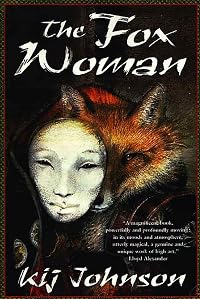
On This Page
Description
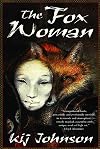
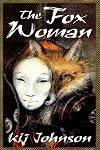
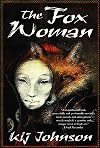
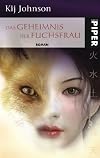
Kij Johnson has created an achingly beautiful love story, a fable wrapped in smoke and magic set against the fabric of ancient Japan. Johnson brings the setting lovingly to life, describing a world of formalities and customs, where the exchange of poetry is a form of conversation and everything has meaning, from the color of the silks on wears to how one may address others. Yoshifuji is a man fascinated by foxes, a man discontented and troubled by the meaning of life. A misstep at court show more forces him to retire to his long-deserted country estate, to rethink his plans and contemplate the next move that might return him to favor and guarantee his family's prosperity. Kitsune is a young fox who is fascinated by the large creatures that have suddenly invaded her world. She is drawn to them and to Yoshifuji. She comes to love him and will do anything to become a human woman to be with him. Shikujo is Yoshifuji's wife, ashamed of her husband, yet in love with him and uncertain of her role in his world. She is confused by his fascination with the creatures of the wood, and especially the foxes that she knows in her heart are harbingers of danger. She sees him slipping away and is determined to win him back from the wild...for all that she has her own fox-related secret. Magic binds them all. And in the making (and breaking) of oaths and honors, the patterns of their lives will be changed forever. The Fox Woman is a powerful first novel, singing with lyrical prose and touching the deepest emotions. A historically accurate fantasy, it gives us a glimpse into, and an understanding of, the history that shaped the people of one of our world's greatest nations. But it is also a story about people trying to understand each other and the times they live in, people trying to see through illusions to confront the truth of who they are. show lessTags
Recommendations








Member Reviews
Retelling of a Japanese fairy tale/legend about a fox who falls into infatuation/lust/love with a nobleman, becomes a woman and then his wife. Even with tragedy threaded through the whole story, we are still left with a note of optimism.
With gorgeously lyrical prose with tiny details of customs, strongly evoking medieval Japan, the author has also given us poetry from that period in epigraphs at the head of each part. The three main characters write poetry all through. This novel was a window into a bygone world.
Kitsune the Fox speaking: "We make our own worlds. My brother had fashioned his world; it seemed madness to me, but it was not mine to judge. I have fashioned and refashioned my own reality. It was the fox world, then it was show more magic, then a human world of sorts: robes and poetry and at its heart, Yoshifuji....
Human legends are full of fox men and fox women. Most fail and fall back into foxness. Or become human, lost in pain. Some humans learn joy and some foxes grow souls. Thieves, princes, dancers, charcoal burners--they are connected in that they have discovered this path for themselves." show less
With gorgeously lyrical prose with tiny details of customs, strongly evoking medieval Japan, the author has also given us poetry from that period in epigraphs at the head of each part. The three main characters write poetry all through. This novel was a window into a bygone world.
Kitsune the Fox speaking: "We make our own worlds. My brother had fashioned his world; it seemed madness to me, but it was not mine to judge. I have fashioned and refashioned my own reality. It was the fox world, then it was show more magic, then a human world of sorts: robes and poetry and at its heart, Yoshifuji....
Human legends are full of fox men and fox women. Most fail and fall back into foxness. Or become human, lost in pain. Some humans learn joy and some foxes grow souls. Thieves, princes, dancers, charcoal burners--they are connected in that they have discovered this path for themselves." show less
A fox falls in love with a human and does everything in her power to win him for herself, no matter what. The biggest problem, other than her being a fox and him human, is that he's already married to a woman he loves. She ignores her grandfather's warnings and the numerous times she's chased off or outright attacked by the humans. She's in love and doesn't care the cost. But Yoshifuji, the object of her love, is equally fixated on the foxes. And his wife, Shikujo, who believes that foxes are evil tricksters dangerous to humans, watches as the obsession consumes her husband. All three are caught in a web of dishonesty, guilt and forbidden desires, and all three must find their own way out. One of the best endings I've read in recent show more memory.
Recommended if you enjoy historically accurate retellings based on Japanese fairy tales told in diary form.
3.5 stars
(SPOILER)My favorite part was when Yoshifuji goes to live with Kitsune in the fox world. I loved how time was different in their world within a world. How the fox magic manifested all around them - in the house, ladies-in-waiting, clothes, etc. Like a magical bubble in the backyard. "I think I wouldn't have seen my fox wife's illusion if I hadn't wanted it so much. That was a world where no one aged. My fox wife was eternally beautiful." (END SPOILER)
A few passages I bookmarked:
"I didn't wish I were still a mere fox, but I wished being a woman were less of a burden." (Kitsune)
"But perhaps there is something more correct even than elegance. My father owns a set of sake cups, a treasure that has been in his family for a thousand years (or so he says). They are hand-formed of rough pottery randomly splashed with black and green and silver. There is nothing delicate, nothing elegant, about them...As a child, I liked them better than the facile perfection of porcelain. 'They are honest,' my father said then. 'They do not break when you drink wine.' Perhaps honesty could be stronger, more beautiful than elegance and correctness." (Shikujo)
"...and so instead I take my tiny steps toward honesty and whisper the great truth here in my pillow book, and perhaps someday into my husband's ear (whether Yoshifuji or another). Perhaps there is a Pure Land where we go when we die. But perhaps there is not. And either way, it is wise to live well, here and now. I will not run. I will be alive. The fox woman, my husband and I. Of us all, she understood this best." (Shikujo)
"If he sees the ball rolled across the snow, I will be so happy, but it does not matter; I will still build a world of the best of all these things." (Kitsune) show less
Recommended if you enjoy historically accurate retellings based on Japanese fairy tales told in diary form.
3.5 stars
(SPOILER)
A few passages I bookmarked:
"I didn't wish I were still a mere fox, but I wished being a woman were less of a burden." (Kitsune)
"But perhaps there is something more correct even than elegance. My father owns a set of sake cups, a treasure that has been in his family for a thousand years (or so he says). They are hand-formed of rough pottery randomly splashed with black and green and silver. There is nothing delicate, nothing elegant, about them...As a child, I liked them better than the facile perfection of porcelain. 'They are honest,' my father said then. 'They do not break when you drink wine.' Perhaps honesty could be stronger, more beautiful than elegance and correctness." (Shikujo)
"...and so instead I take my tiny steps toward honesty and whisper the great truth here in my pillow book, and perhaps someday into my husband's ear (whether Yoshifuji or another). Perhaps there is a Pure Land where we go when we die. But perhaps there is not. And either way, it is wise to live well, here and now. I will not run. I will be alive. The fox woman, my husband and I. Of us all, she understood this best." (Shikujo)
"If he sees the ball rolled across the snow, I will be so happy, but it does not matter; I will still build a world of the best of all these things." (Kitsune) show less
I came to Kij Johnson’s The Fox Woman after reading her award winning short story, 26 Monkeys, Also The Abyss. From these two works it would seem that Johnson is an author of sensitivity. She deftly weaves wonder, beauty and sorrow together while preserving mystery, and a respect for both her characters and her readers. She leaves room within the stories for her characters to breathe, and for her readers to reflect without heavy-handed explanations of theme or meaning.
The Fox Woman takes the form of an epistolary novel, with the events and—more significantly—the internal development of the characters being revealed through the journal entries of Kaya no Yoshifuji, his wife, Shikujo, and Kitsune, a little fox who is infatuated with show more Yoshifuji. The story develops slowly, rather like a tree awakening into bloom. While some readers seem to have been put off by this oblique development, I find that it gives breathing space for the characters, a narrative legitimacy, and helps give the reader time to realize that the real nature of this novel is not that of a neatly plotted series of events, but rather more a meditation upon the realities of our own lives, our fantasies ritualized into legitimacy, our own courteous lies and kindnesses.
The characters in this book are not heroic. Nor are they idealized. Yoshifuji has failed at court, and he is increasingly distant from his wife and son. Kitsune, his wife, who takes as her models the idealized characters of monogatari tales, is ever-perfect in her wifely courtesy, and unintentionally aloof in her perfection. The fox woman, herself, is not treated with the light hand of the fantasist, but is constantly faced with the all too real consequences of her actions. One reviewer expressed a desire “to stab all of the characters in the eye with sharpened sticks,” for their sin of irritating the reader. Others have indicted the characters of the crime of dullness. I think these readers are missing the point. Yoshifuji, Shikujo, and Kitsune act as we act, think as we think, dream as we dream. They are guilty of being infected with our own misguided mediocrity. If we recognize our kinship to them, we stand to gain from their painful if fictional lives. If we stand over them, accusing them, failing to recognize how we are never very far from their delusional mendacity, then we will continue to live as they lived–fictional lives, built on a thin and failing glamour, doomed to face the truth only when there is no less painful delusion in which to escape.
Kij Johnson gives us beauty and sensitivity. She gives us a chance to see some small way into the truth of our lives, and she does so gently and without judgment. In this, she gives us a gift worthy of reverence.
[Originally posted at http://www.tuirgin.com/2010/06/27/review-the-fox-woman ] show less
The Fox Woman takes the form of an epistolary novel, with the events and—more significantly—the internal development of the characters being revealed through the journal entries of Kaya no Yoshifuji, his wife, Shikujo, and Kitsune, a little fox who is infatuated with show more Yoshifuji. The story develops slowly, rather like a tree awakening into bloom. While some readers seem to have been put off by this oblique development, I find that it gives breathing space for the characters, a narrative legitimacy, and helps give the reader time to realize that the real nature of this novel is not that of a neatly plotted series of events, but rather more a meditation upon the realities of our own lives, our fantasies ritualized into legitimacy, our own courteous lies and kindnesses.
The characters in this book are not heroic. Nor are they idealized. Yoshifuji has failed at court, and he is increasingly distant from his wife and son. Kitsune, his wife, who takes as her models the idealized characters of monogatari tales, is ever-perfect in her wifely courtesy, and unintentionally aloof in her perfection. The fox woman, herself, is not treated with the light hand of the fantasist, but is constantly faced with the all too real consequences of her actions. One reviewer expressed a desire “to stab all of the characters in the eye with sharpened sticks,” for their sin of irritating the reader. Others have indicted the characters of the crime of dullness. I think these readers are missing the point. Yoshifuji, Shikujo, and Kitsune act as we act, think as we think, dream as we dream. They are guilty of being infected with our own misguided mediocrity. If we recognize our kinship to them, we stand to gain from their painful if fictional lives. If we stand over them, accusing them, failing to recognize how we are never very far from their delusional mendacity, then we will continue to live as they lived–fictional lives, built on a thin and failing glamour, doomed to face the truth only when there is no less painful delusion in which to escape.
Kij Johnson gives us beauty and sensitivity. She gives us a chance to see some small way into the truth of our lives, and she does so gently and without judgment. In this, she gives us a gift worthy of reverence.
[Originally posted at http://www.tuirgin.com/2010/06/27/review-the-fox-woman ] show less
This lyrical novel is based on a traditional Japanese folk tale about a fox who becomes a human woman. I'm not usually very interested in fantasy novels, but this one really hooked me. The characters - particularly the young female fox who falls in love with a human man - were complex, passionate and richly alive, something I don't often find in fantasy novels. The setting in medieval Japan (the Heian era, for those who know some Japanese history) felt well researched to me, but even more important, it leapt off the page and wrapped right around me, especially when the human couple arrives at their decaying country estate after the humiliation of the man's failure to obtain a court position. The fox was so real, I could almost feel her show more fur - from the inside - and the ache and strangeness of her transformation into a woman. The theme is about love and wildness. Does love make fools of us? Or are the fools those who hold themselves back from the edge of love's abyss?
Longer review at HistoricalNovels.info show less
Longer review at HistoricalNovels.info show less
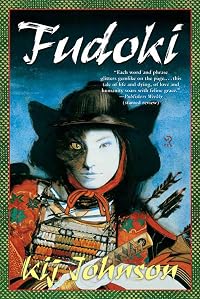
A really beautiful retelling of a Heian-era Japanese folk-tale, The Fox Woman tells of the intersecting lives of disillusioned nobleman Kaya no Yoshifuji, his wife Shikujo and his fox-wife Kitsune. Johnson uses the story to look at what it is to be human, what it is to be real, what it is to be true to yourself, and manages it with some skill, particularly towards the close of the novel. That said, for some reason I didn't find The Fox Woman to be quite as effective or as affecting as the other novel of Johnson's that I've read, Fudoki; the characters didn't come alive so vividly, and the book was perhaps a quarter again as long as it needed to be. Those flaws aren't enough to make me regret reading it, however, and I do think it makes show more a good companion to her other works. show less
Kij Johnson turns the conventional portrayal of kitsune on its ear, showing us life from the point of view of a family of foxes who live in the garden of a Japanese nobleman’s country home. They live happily enough together there until the day that the nobleman, Kaya no Yoshifuji, brings his wife Shikujo and their family and retainers to live at the country estate. The young female fox, simply named Kitsune, falls in love with Yoshifuji and his strange, un-fox-like habits of poetry and contemplation.
Yearning to understand him and to enter a way of life she perceives to be beautiful, Kitsune persuades her wise grandfather to work fox magic and create an illusory world to entrap Yoshifugi. It works, and Yoshifugi sees the fox’s den show more as a glittering palace and Kitsune herself as a beautiful and desirable young woman. Trapped in the magic of the foxes, Yoshifugi marries Kitsune, forgetting completely about his own wife who has returned to the capital with their son.
But the magic is not perfect, and though Kitsune desperately tries to cling to her human husband and to understand the poetry that he writes and the way in which he sees the world, she fears that eventually it will unravel and Yoshifugi will find himself scrabbling in the dirt with a fox.
Despite the anthropomorphic elements and the very strong overtones of magical realism and fantasy, “The Fox Woman” is also a moving and sensual portrait of love, marriage, and the continual struggle to understand the hearts and minds of others. show less
Yearning to understand him and to enter a way of life she perceives to be beautiful, Kitsune persuades her wise grandfather to work fox magic and create an illusory world to entrap Yoshifugi. It works, and Yoshifugi sees the fox’s den show more as a glittering palace and Kitsune herself as a beautiful and desirable young woman. Trapped in the magic of the foxes, Yoshifugi marries Kitsune, forgetting completely about his own wife who has returned to the capital with their son.
But the magic is not perfect, and though Kitsune desperately tries to cling to her human husband and to understand the poetry that he writes and the way in which he sees the world, she fears that eventually it will unravel and Yoshifugi will find himself scrabbling in the dirt with a fox.
Despite the anthropomorphic elements and the very strong overtones of magical realism and fantasy, “The Fox Woman” is also a moving and sensual portrait of love, marriage, and the continual struggle to understand the hearts and minds of others. show less
For a while now, I have been interested in the myths of the Kitsune, so stumbling across this book at my Barnes and Noble was a unexpected surprise.
The book is well-researched for the era it is set in, and I really enjoyed the way the story shifted between three perspectives, so you could get more out of this tale by seeing it from different points of views. The ending surprised me a bit, but I would LOVE to see a sequel to this book!
The book is well-researched for the era it is set in, and I really enjoyed the way the story shifted between three perspectives, so you could get more out of this tale by seeing it from different points of views. The ending surprised me a bit, but I would LOVE to see a sequel to this book!
Members
- Recently Added By
Lists

Top Five Books of 2013
1,562 works; 721 members

Myth (Reuse and Retelling)
188 works; 24 members

BingoDOG - Animals in Adult Fiction
78 works; 20 members

KayStJ's to-read list
1,616 works; 11 members
Author Information

47+ Works 3,483 Members
Awards and Honors
Awards
Series

Common Knowledge
- Original publication date
- 2000
- People/Characters
- Kitsune; Kaya no Yoshifuji; Shikujo; Tadamaro
- Important places
- Japan
- Dedication
- For Chris and for Bob. I am a lucky dog.
- First words
- Diaries are kept by men: strong brushstrokes on smooth mulberry paper, gathered into sheaves and tied with ribbon and places in a lacquered box.
- Last words
- (Click to show. Warning: May contain spoilers.)I hear his footsteps.
- Blurbers
- Alexander, Lloyd; de Lint, Charles; Yolen, Jane; Bisson, Terry; Anderson, Kevin J.
Classifications
- Genres
- Fiction and Literature, Fantasy, General Fiction, Historical Fiction, Romance
- DDC/MDS
- 813.54 — Literature & rhetoric American literature in English American fiction in English 1900-1999 1945-1999
- LCC
- PS3560 .O379716 .F69 — Language and Literature American literature American literature Individual authors 1961-
- BISAC
Statistics
- Members
- 627
- Popularity
- 46,576
- Reviews
- 24
- Rating
- (3.82)
- Languages
- English, German
- Media
- Paper, Ebook
- ISBNs
- 5
- ASINs
- 1