The Forgotten Planet
by Murray Leinster
On This Page
Description
Murray Leinster was a prolific and outstanding writer of Science fiction. He was born William Fitzgerald Jenkins on June 16, 1896 in Norfolk, Virginia and finished his formal education at the age of 13. With the loss of his father's job and subsequent downturn in the family's fortunes, Leinster would not be able to pursue the career in chemistry that he had longed for. But he would go on to another significant achievement—publishing more than 1,500 short stories, novellas, and novels in show more his lifetime. As well as science fiction, Leinster wrote love stories, murder mysteries, adventure stories, westerns, fantasy, television and film scripts, and mainstream fiction. Leinster wrote variously over the years as Will F. Jenkins (mostly for mainstream magazines such as Colliers or The Saturday Evening Post), Murray Leinster (mostly for sci-fi), William F. Jenkins, William Fitzgerald, and even as Louisa Carter Lee for romance novels and potboilers. Leinster was definitely a renaissance man of words and ideas. But he is remembered for his remarkable prescience and vision in the sci-fi genre, especially around innovations in science and communications technologies.. show less
Tags
Recommendations










Member Reviews
Murray Leinster’s “The Forgotten Planet” is as perfect an example of classic science fiction as one could hope to find. It’s a 1950s’ ”fix-up” novel of a few stories from the 1920s. In that sense, it is almost a century old.
On the surface it qualifies as pure adventure, and without the clunky sophomoric (as-if teen-imagined) view of romance that used to dominate pulp sf. (You know: pulchritudinous blonde daughter of a bespectacled scientist thrown together with a teen athlete boy or a nerd.) But it is rigorously worked out from a simple premise, and is as “hard science” as this sort of thing can be.
It is, in fact, the best example of a fix-up that I can think of, for it is seamless in its construction. Well, not show more exactly, I guess: the prologue and epilogue are the most obvious fix-up parts, a tad more elegantly written than the crisply narrated body of the text. But that’s apt, too.
It really is impressive.
And it is an apparent inspiration for Brian Aldiss’s masterwork, “Hothouse.”
A very few typos in this edition. I have another, early Ace edition of this book, but cannot find it. When I find it I’ll sell one of them. Or both? I hate to get rid of books I may need to refer to again. show less
On the surface it qualifies as pure adventure, and without the clunky sophomoric (as-if teen-imagined) view of romance that used to dominate pulp sf. (You know: pulchritudinous blonde daughter of a bespectacled scientist thrown together with a teen athlete boy or a nerd.) But it is rigorously worked out from a simple premise, and is as “hard science” as this sort of thing can be.
It is, in fact, the best example of a fix-up that I can think of, for it is seamless in its construction. Well, not show more exactly, I guess: the prologue and epilogue are the most obvious fix-up parts, a tad more elegantly written than the crisply narrated body of the text. But that’s apt, too.
It really is impressive.
And it is an apparent inspiration for Brian Aldiss’s masterwork, “Hothouse.”
A very few typos in this edition. I have another, early Ace edition of this book, but cannot find it. When I find it I’ll sell one of them. Or both? I hate to get rid of books I may need to refer to again. show less
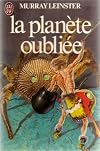
Fun classic pulp. The primitive descendants of a forgotten crashed ship struggle to survive on a forgotten planet. There are fights with giant spiders and other giant insects.
The best 'primitive man vs giant insect' story I've read
Once the main story is underway, it cracks along well. There is no let up, no down-time in the tale. It’s a real-time non-stop adventure from beginning to just about the end.
Complete review at: The Great Gnome Press Science Fiction Odyssey, and a close-up examination of the book itself.
Complete review at: The Great Gnome Press Science Fiction Odyssey, and a close-up examination of the book itself.
The Survey-Ship Tethys made the first landing on the planet, which had no name. It was an admirable planet in many ways. It had an ample atmosphere and many seas, which the nearby sun warmed so lavishly that a perpetual cloud-bank hid them and most of the solid ground from view. It had mountains and continents and islands and high plateaus. It had day and night and wind and rain, and its mean temperature was within the range to which human beings could readily accommodate. It was rather on the tropic side, but not unpleasant.
But there was no life on it.
No animals roamed its continents. No vegetation grew from its rocks. Not even bacteria struggled with its stones to turn them into soil. So there was no soil. Rock and stones and gravel show more and even sand—yes. But no soil in which any vegetation could grow. No living thing, however small, swam in its oceans, so there was not even mud on its ocean-bottoms. It was one of that disappointing vast majority of worlds which turned up when the Galaxy was first explored. People couldn't live on it because nothing had lived there before. show less
But there was no life on it.
No animals roamed its continents. No vegetation grew from its rocks. Not even bacteria struggled with its stones to turn them into soil. So there was no soil. Rock and stones and gravel show more and even sand—yes. But no soil in which any vegetation could grow. No living thing, however small, swam in its oceans, so there was not even mud on its ocean-bottoms. It was one of that disappointing vast majority of worlds which turned up when the Galaxy was first explored. People couldn't live on it because nothing had lived there before. show less
Indeholder kapitlerne: "1. Den skæbnesvangre forglemmelse", "2. Galskabens planet", "3. Flygtningen", "4. Purpurbjergene", "5. Den store dræber", "6. Mand jager kød", "7. Det røde støv", "8. Rejsen gennem døden", "9. På flugt igen", "10. En plads i solen", "11. Fra dyr til menneske", "12. Blodets bånd", "13. Den nye verden".
Planeten uden navn bliver glemt efter at menneskehedens rumskibe over nogle århundreder har været forbi og terraformet den ved at udsætte bakterier, planter og insekter. En dag nødlander de overlevende fra et forlist rumskib, Icarus, på planeten, men de har ikke nogen mulighed for at sende nødsignaler, så gradvist henfalder deres efterkommere i det rene barbari. 40 generationer senere har de glemt show more alting og gemmer sig frygtsomt for de kæmpeinsekter, der har udviklet sig, fordi der aldrig nåede at blive sat dyreliv ud på planeten. Burl på ca 20 år finder på at bruge hornet fra en kæmpebille som spyd. Han fanger en fisk, men bliver til gengæld ført af floden et godt stykke væk fra stammen og pigen Saya han er forelsket i. Han ryger i spindet fra en kæmpeedderkop, men får sig kæmpet fri mod alle odds ved at tænke sig om. Og så begynder han som den første i flere generationer at tænke sig om.
Han fører sin lille familiegruppe fra lavlandet op i højlandet, hvor svampe, dyr og planter er nede i normal størrelse i forhold til Jorden. De støder på en flok hunde, der stadig har en racehukommelse for samhørighed med mennesker og de finder ud af at leve sammen.
Nogle uger senere lander et rumfartøj ret tilfældigt på planeten og efter lidt tid med en indlæringsspole er Burl og de andre med i civilisationen igen.
Man optager handel mellem planeten og de øvrige beboede verdener og fx er mølpels i høj kurs. Jagtselskaber arrangeres også gerne og alle nyder at udrydde de modbydelige kæmpeedderkopper.
Det er en meget tynd science-fiction skal udenom en eventyrfortælling om mennesker, der skal klare sig i en verden, hvor de er meget små og planter og insekter er meget store. Andre bøger i samme genre er: Lewis Carroll: Alice i Eventyrland og Gordon Williams: Micronauts og Richard Matheson: Edderkoppen. Burl og hans gruppes rejse gennem lavlandet ligner gennemførelsen af et platformspil. show less
Planeten uden navn bliver glemt efter at menneskehedens rumskibe over nogle århundreder har været forbi og terraformet den ved at udsætte bakterier, planter og insekter. En dag nødlander de overlevende fra et forlist rumskib, Icarus, på planeten, men de har ikke nogen mulighed for at sende nødsignaler, så gradvist henfalder deres efterkommere i det rene barbari. 40 generationer senere har de glemt show more alting og gemmer sig frygtsomt for de kæmpeinsekter, der har udviklet sig, fordi der aldrig nåede at blive sat dyreliv ud på planeten. Burl på ca 20 år finder på at bruge hornet fra en kæmpebille som spyd. Han fanger en fisk, men bliver til gengæld ført af floden et godt stykke væk fra stammen og pigen Saya han er forelsket i. Han ryger i spindet fra en kæmpeedderkop, men får sig kæmpet fri mod alle odds ved at tænke sig om. Og så begynder han som den første i flere generationer at tænke sig om.
Han fører sin lille familiegruppe fra lavlandet op i højlandet, hvor svampe, dyr og planter er nede i normal størrelse i forhold til Jorden. De støder på en flok hunde, der stadig har en racehukommelse for samhørighed med mennesker og de finder ud af at leve sammen.
Nogle uger senere lander et rumfartøj ret tilfældigt på planeten og efter lidt tid med en indlæringsspole er Burl og de andre med i civilisationen igen.
Man optager handel mellem planeten og de øvrige beboede verdener og fx er mølpels i høj kurs. Jagtselskaber arrangeres også gerne og alle nyder at udrydde de modbydelige kæmpeedderkopper.
Det er en meget tynd science-fiction skal udenom en eventyrfortælling om mennesker, der skal klare sig i en verden, hvor de er meget små og planter og insekter er meget store. Andre bøger i samme genre er: Lewis Carroll: Alice i Eventyrland og Gordon Williams: Micronauts og Richard Matheson: Edderkoppen. Burl og hans gruppes rejse gennem lavlandet ligner gennemførelsen af et platformspil. show less
Oct 10, 2014 (Edited)Danish
Ratings
Members
- Recently Added By
Lists

Top Five Books of 2023
767 works; 317 members
Author Information

294+ Works 6,207 Members
Series
Belongs to Publisher Series
Work Relationships
Is contained in
Has as a commentary on the text
Common Knowledge
- Canonical title
- The Forgotten Planet
- Original publication date
- 1954
- First words
- In all his lifetime of perhaps twenty years, it had never occurrred to Burl to wonder what his grandfather had thought about his surroundings.
- Last words
- (Click to show. Warning: May contain spoilers.)But Saya took it for granted.
Classifications
Statistics
- Members
- 211
- Popularity
- 154,218
- Reviews
- 6
- Rating
- (3.48)
- Languages
- 6 — Danish, English, French, Italian, Portuguese, Swedish
- Media
- Paper, Audiobook, Ebook
- ISBNs
- 20
- ASINs
- 14