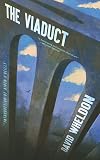
The Viaduct
by David Wheldon
On This Page
Description
A political prisoner, A., has just been released from a long term of imprisonment for writing a seditious book. Fearing re-arrest, he decides to leave town, setting off on foot along a disused railway track running over a huge viaduct that looms over the city. As his journey progresses through a surreal and nightmarish landscape, he passes through strange towns and villages and meets other travelers following the same path for reasons of their own, with his pursuers always at his heels. A. show more does not know what he may find at the terminus of the railroad line, and the ultimate horrific revelation of what lies at the end of his journey will linger with the reader long after finishing the book.The Viaduct (1983), the first novel by David Wheldon (1950-2021), was chosen by Graham Greene and William Trevor as the winner of the Triple First Award and earned praise from critics on both sides of the Atlantic, who compared it to the works of Franz Kafka and Samuel Beckett. A haunting, enigmatic novel told in a stark prose style that reinforces the book's surreal, dreamlike quality, it is a story that is both compulsively readable and endlessly thought-provoking. This reissue of Wheldon's cult classic is the first in decades and features a new introduction by Aiden O'Reilly. show lessTags
Recommendations






















Member Reviews
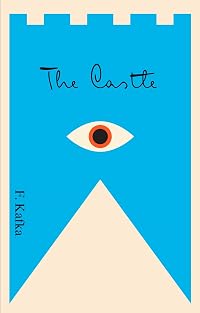
When I was younger I read David Wheldon's book 'The Course of Instruction' and it made a big impression on me. A book about a man who, out of the blue, receives a letter summoning him to join a course, for no apparent reason. He attends at the stated time and place, but nothing about the course or the reason for the letter is ever made clear. A reviewer described the book as 'Kafkaesque' and so of course I had to next read some of Kafka's works to find out why.
Twenty-five years on I've finally come across another of Wheldon's books, 'The Viaduct', which was his first novel, described by Grahame Greene, no less, as 'A remarkable novel'. At the time it won the 'Triple First Award' (instituted to 'encourage new writing'). Sadly however the show more author, the book and even the award seem to have sunk into obscurity.
The book is about a man, released from prison who is driven to walk a disused railway along with many fellow travellers. It is indeed Kafkaesque in its feel and it seems to be set in a time and place like, but subtly different from, the one we are familiar with.
I have to say that it took me a while to read this book, despite it being a somewhat slim volume. This is never a good sign. One thing that I dislike about a book like this is that it feels like a metaphor or analogy, which I'm just not getting. The journey along the railway obviously feels like the passage through life, but the author explicitly refers to this interpretation and seems to discount it! "He was drawing the analogy between the railway and the passing of time. That's an old story." (p125). So what is the metaphor? Maybe there just isn't one, or maybe I'm not clever enough to figure it out.
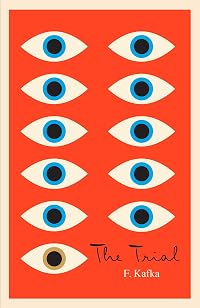
The book is also too kafkaesque in that it's strongly reminiscent of 'The Trial' in parts. I think the book will remain vivid in my imagination for some time, as the central theme forms a powerful image, but I didn't find it an easy or particularly fulfilling read. show less
Twenty-five years on I've finally come across another of Wheldon's books, 'The Viaduct', which was his first novel, described by Grahame Greene, no less, as 'A remarkable novel'. At the time it won the 'Triple First Award' (instituted to 'encourage new writing'). Sadly however the show more author, the book and even the award seem to have sunk into obscurity.
The book is about a man, released from prison who is driven to walk a disused railway along with many fellow travellers. It is indeed Kafkaesque in its feel and it seems to be set in a time and place like, but subtly different from, the one we are familiar with.
I have to say that it took me a while to read this book, despite it being a somewhat slim volume. This is never a good sign. One thing that I dislike about a book like this is that it feels like a metaphor or analogy, which I'm just not getting. The journey along the railway obviously feels like the passage through life, but the author explicitly refers to this interpretation and seems to discount it! "He was drawing the analogy between the railway and the passing of time. That's an old story." (p125). So what is the metaphor? Maybe there just isn't one, or maybe I'm not clever enough to figure it out.
The book is also too kafkaesque in that it's strongly reminiscent of 'The Trial' in parts. I think the book will remain vivid in my imagination for some time, as the central theme forms a powerful image, but I didn't find it an easy or particularly fulfilling read. show less
Ratings
Members
- Recently Added By
Published Reviews
ThingScore 25
The Viaduct purports to be an existential allegory of life, the journey of and, by definition, the experience of. It tells the story of A, a man tried, convicted and served of sedition, and his journey / flight from subsequent retrial and sentence. It begins on a viaduct and the railway it bears, which runs straight and unerringly forward, and along which A makes the acquaintance of figures show more deemed to suit the metaphor ... show less
added by rcorfield
Author Information
4+ Works 40 Members
David Wheldon was an author, poet, and pathologist. He was born in 1950 in Moira, Leicestershire, England. He practiced medicine throughout England and Wales. He wrote four novels, The Viaduct (1983), which won the 1982 Triple First Award, The Course of Instruction (1984), A Vocation (1986), and At the Quay (1990). He wrote five collections of show more short stories and numerous poems and essays. He put his literary work on hold to work on a treatment for multiple sclerosis. He had returned to writing in recent years. David Wheldon died on January 7, 2021. He was 71. (Bowker Author Biography) show less
Classifications
Statistics
- Members
- 23
- Popularity
- 1,106,916
- Reviews
- 1
- Rating
- (2.67)
- Languages
- English
- Media
- Paper, Ebook
- ISBNs
- 5
- ASINs
- 1